


Telecom COTS Power Supply Modules installed in next-gen 5G cell tower infrastructure
High-efficiency synchronous rectifier power modules undergoing engineering test
Industrial and telecom automated rack power architecture using COTS converter modules
High-Density 48V Infrastructure Solutions

Telecom COTS Power Supply Modules: Architecting Next-Gen 5G, Open RAN & AI Edge Networks

Engineered with pioneer-grade synchronous rectification, wide -48V DC input compliance, and uncompromised thermal margins. Built in the USA under AS9100 / ISO-9001 quality systems for multi-decade reliability.

Up to 96%Peak Efficiency via Synchronous Rectification
-36V to -75VContinuous Telecom Input Bus Voltage
AS9100 / ISO-9001U.S. Manufacturing Traceability
Multi-DecadeObsolescence Protection & Form-Fit-Function
Executive Technical Insight

Why Global Telecom Procurement Managers are Transitioning to High-Efficiency Telecom COTS Power Supply Modules

As telecommunications operators globally accelerate the expansion of 5G Standalone (SA) architectures, Open RAN (Radio Access Network) initiatives, and ultra-low latency AI edge computing nodes, power delivery has emerged as the critical bottleneck. System architects and global procurement teams no longer view power supplies as secondary commoditized components. Instead, modern high-density hardware demands Telecom COTS Power Supply Modules—Commercial-Off-The-Shelf isolated DC-DC bricks, AC-DC front-ends, and transient filtering modules—that deliver maximum power conversion efficiency within severe physical space and thermal dissipation constraints.

Historically, telecom OEMs relied heavily on fully custom power supply units (PSUs) or inefficient diode-rectified converters. However, custom designs introduce immense Non-Recurring Engineering (NRE) expenses, prolong project schedules by 12 to 18 months, and create severe single-source supply chain vulnerabilities. Conversely, standard industrial power modules often lack the rigorous transient immunity, wide thermal window (-40°C to +100°C baseplate operational limits), and stringent Telcordia GR-1089-CORE / ETSI EN 300 132 compliance mandatory for central offices and remote outdoor cell sites.

By leveraging advanced Telecom COTS Power Supply Modules engineered with synchronous-rectifier topology, network equipment manufacturers (NEMs) gain immediate architectural advantages: plug-and-play form factors (quarter-brick, half-brick, and full-brick industry-standard footprints), deterministic thermal behavior, zero-NRE deployment speed, and guaranteed long-term component availability. This technical guide explores the architectural requirements, thermal physics, future technology trajectories, and strategic buyer considerations defining modern telecommunications power engineering.

Information Gain: Thermal Dissipation & Operating Cost Mechanics in 48V Distributed Architectures

In a standard 48V distributed power architecture feeding a 1kW remote radio head (RRH) or edge server tray, conversion efficiency directly dictates enclosure size, cooling requirements, and Mean Time Between Failures (MTBF). Consider the thermodynamic comparison between a conventional diode-rectified 48V-to-12V intermediate bus converter operating at 90% efficiency and a SynQor synchronous-rectifier COTS module operating at 96% efficiency:

  • Conventional Diode Converter (90% Efficient): Wastes 100 Watts of heat per kilowatt of load. Requires heavy forced-air fan assemblies, bulky heatsinks, and frequent field maintenance due to mechanical fan wear.
  • SynQor Synchronous Rectifier Converter (96% Efficient): Wastes only 40 Watts of heat per kilowatt of load—representing a dramatic 60% reduction in thermal dissipation.

This massive reduction in dissipated heat allows system engineers to eliminate active cooling fans entirely, transitioning to sealed, IP67-rated conduction-cooled outdoor enclosures. Over a 10-year network lifecycle across tens of thousands of cell sites, this thermal delta translates into millions of dollars saved in field maintenance, operational energy consumption (PUE minimization), and reduced hardware failure rates.

Technical Breakdown: Standard Industrial Modules vs. Optimized Telecom COTS Power Modules

To assist procurement managers and system engineering leads in evaluating converter options, the following matrix highlights key technical performance metrics essential for telecommunication applications:

Performance Metric Generic Commercial Power Modules SynQor Telecom COTS Power Supply Modules Impact on Telecom Deployment
Input Bus Tolerance Narrow -36V to -60V DC; minimal transient margin Ultra-wide continuous -36V to -75V DC; 100V 100ms transient rating Immunity to severe battery line surges & lightning strikes
Rectification Topology Conventional Schottky Diodes (High Vf losses) Patented Actively-Driven Synchronous Rectification Reduces power dissipation by up to 60%; peak efficiency to 96%
Cooling Profile Requires airflow (>400 LFM) & large fins Conduction-Cooled Baseplate (-40°C to +100°C) Enables sealed, fanless outdoor enclosures (IP67 / NEMA 4X)
EMC / EMI Performance Requires bulky external filtering network Matched Filter-Converter pairing meeting EN 55032 / CISPR 32 Accelerates FCC/CE compliance without unexpected noise spikes
Obsolescence Protection Short 3–5 year commercial EOL cycles Multi-Decade Form-Fit-Function product lifecycle guarantee Protects long-life central office & infrastructure investments

Product Recommendations: High-Performance Telecom COTS Power Supply Modules

SynQor’s portfolio of Telecom COTS Power Supply Modules encompasses isolated DC-DC converters, intermediate bus converters (IBC), non-isolated point-of-load (POL) regulators, active PFC front-ends, and transient EMI suppression filters. Below are featured module lines optimized for 5G wireless networks, datacom routers, fiber optical nodes, and remote telecom power cabinets.
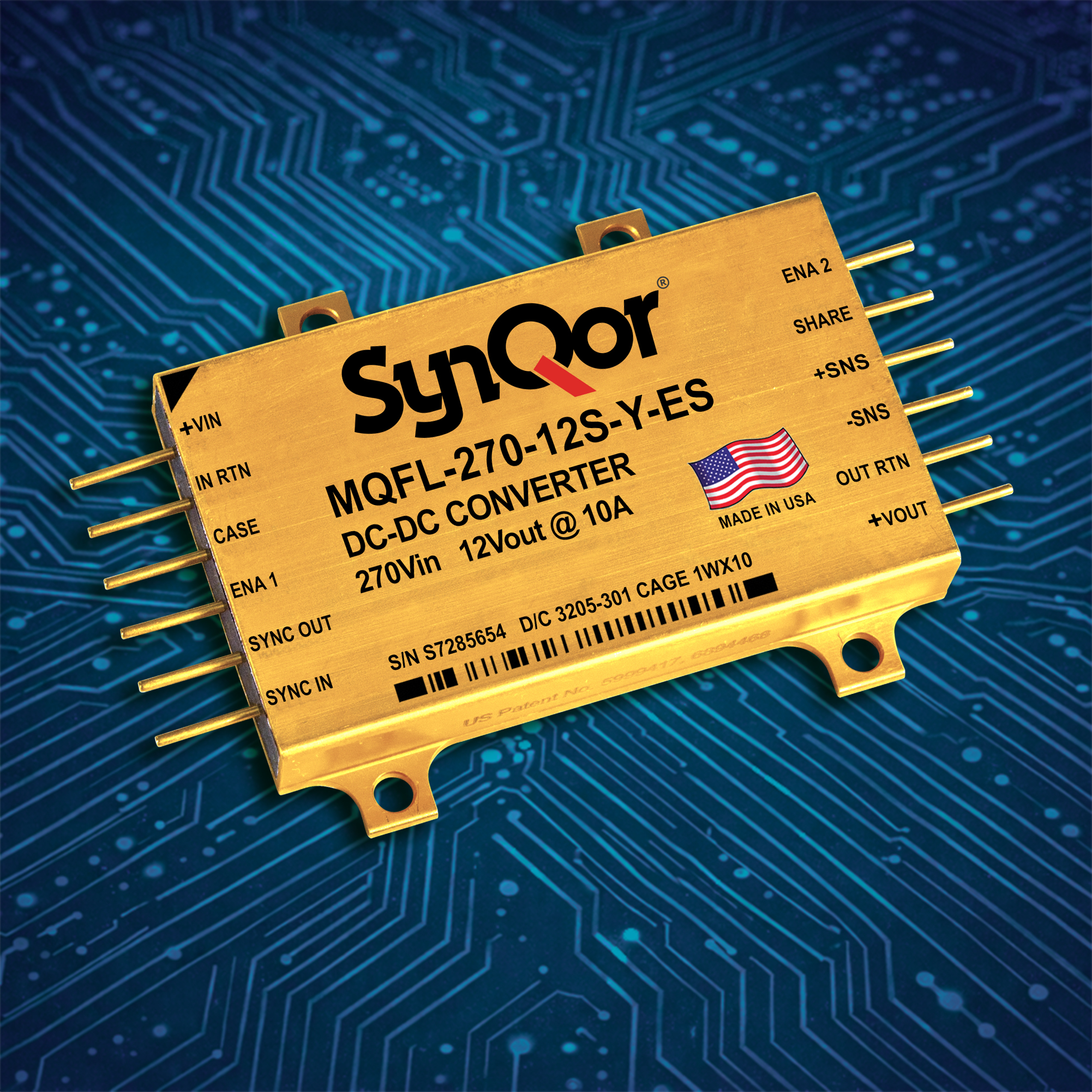
Telecom DC-DC Bus Converters

High-power quarter-brick and half-brick isolated modules delivering tight output regulation, up to 96% efficiency, and wide -48V bus inputs (-36V to -75V DC).

Get a Quote

Telecom COTS DC-DC power supply module for network infrastructure

Hi-Rel Isolated Power Bricks

Fully encapsulated DC-DC converters designed for mission-critical telecom edge nodes and extreme outdoor environments with baseplate conduction cooling.

Get a Quote

SynQor Hi-Rel isolated power module brick

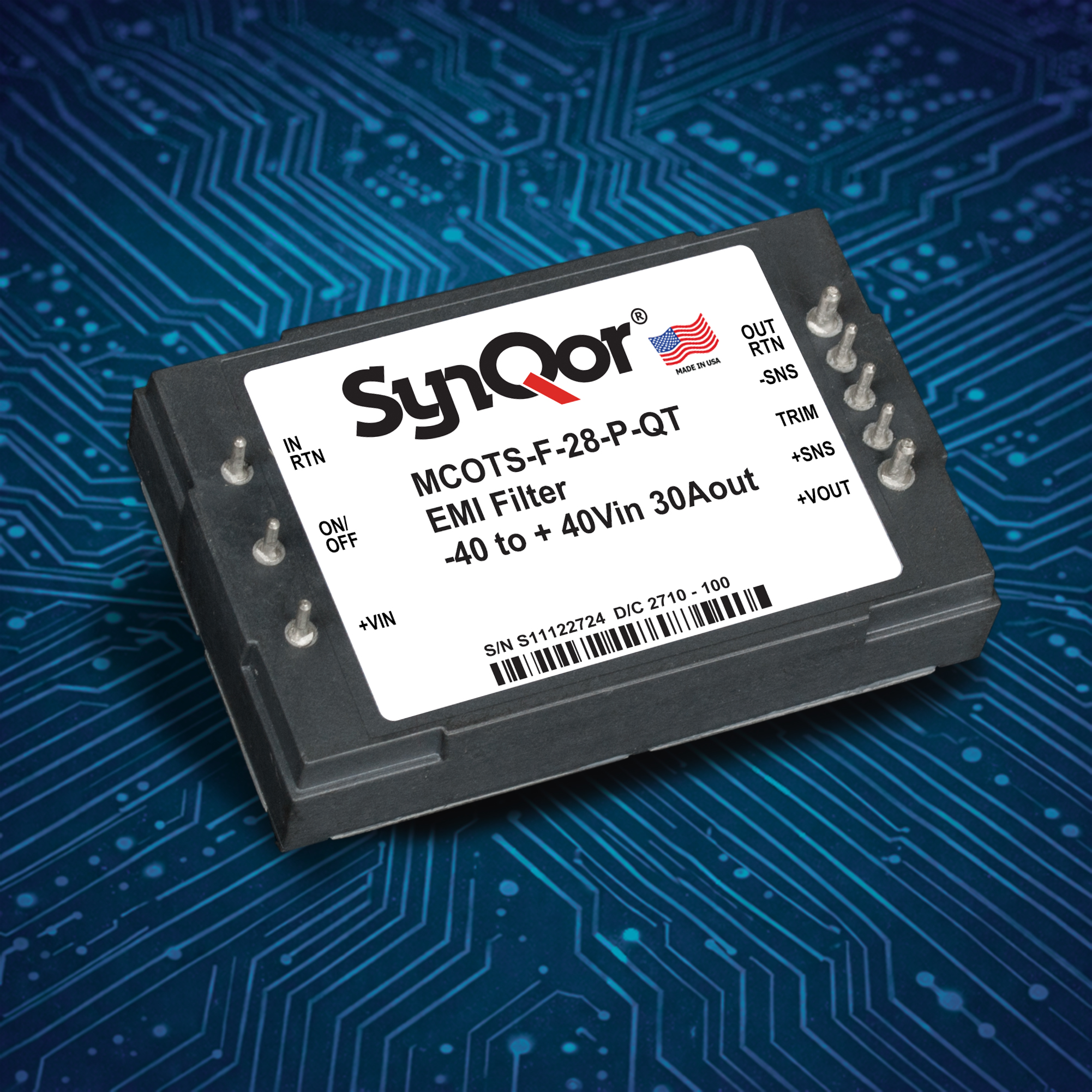
Telecom Transient EMI Filters

Half-brick and full-brick input filters designed to protect downstream telecom converters against line transients while satisfying CISPR 32 Class B noise limits.

Get a Quote

SynQor transient EMI filter module for telecom and defense

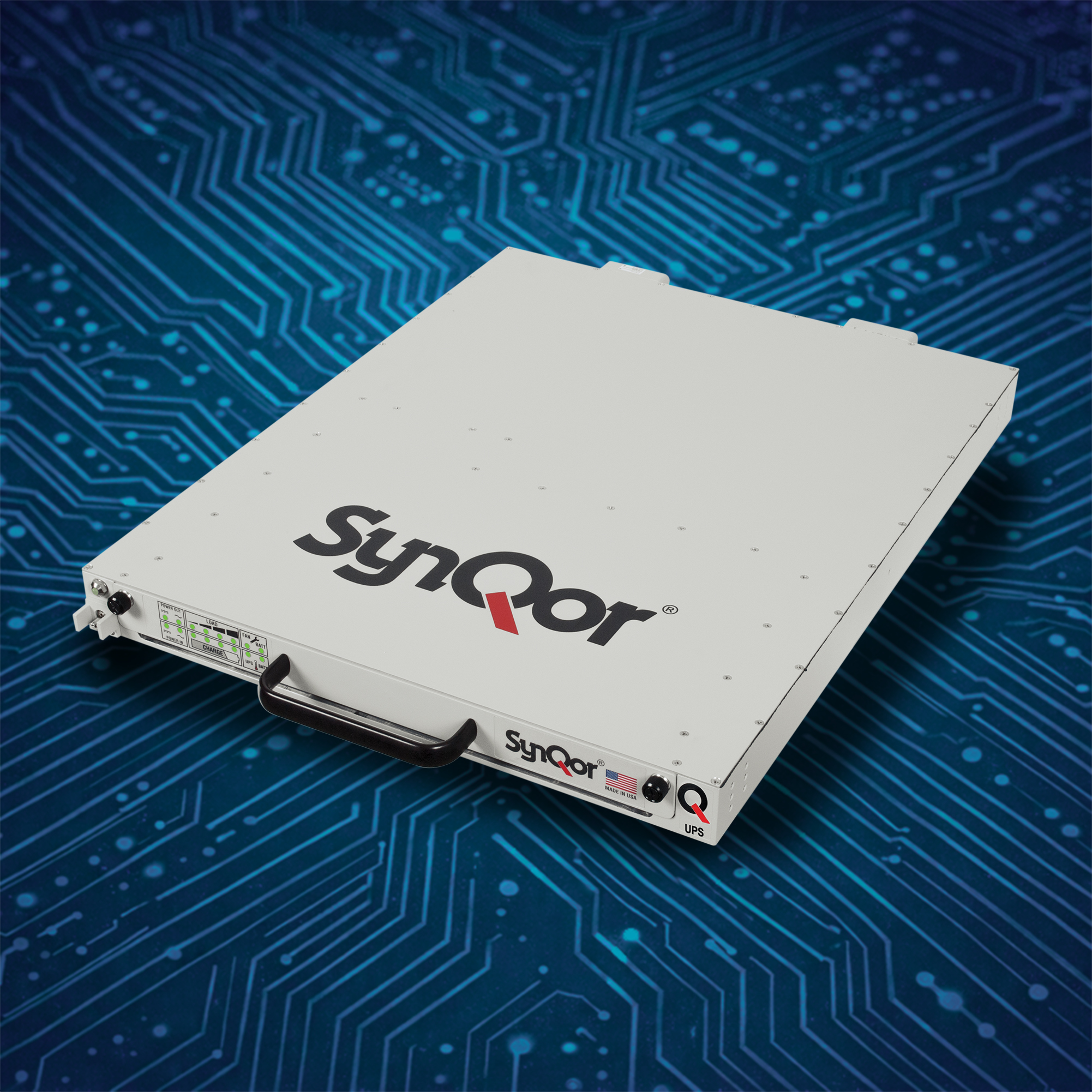
Field-Grade Outdoor UPS Systems

Uninterruptible rack-mount power systems engineered for remote telecom huts, 5G base stations, and naval/coastal communication hubs requiring backup power.

Get a Quote

SynQor field-grade uninterruptible power system

Future Procurement Trends in Global Telecommunications Power Hardware

Global procurement directors and supply chain managers operating in the telecommunications sector face a rapidly evolving landscape characterized by geopolitical supply security concerns, aggressive ESG (Environmental, Social, and Governance) power reduction targets, and radical architectural shifts. When sourcing Telecom COTS Power Supply Modules, modern procurement strategies focus on four macro trends:

1. Open RAN Hardware Standardization & Vendor Neutrality

The transition from proprietary radio access networks to vendor-neutral Open RAN (O-RAN) architectures requires equipment manufacturers to design modular, standardized hardware trays. Procurement leads are prioritizing COTS power modules with industry-standard brick pinouts (IEEE / DOSA standards) that facilitate dual-sourcing options without layout redesigns. Standardized COTS converters shorten product qualification timelines and prevent vendor lock-in.

2. Aggressive Power Usage Effectiveness (PUE) & ESG Mandates

Telecommunications operators account for nearly 2% of total global electricity consumption, with radio access networks representing over 70% of a carrier's operational energy consumption. Regulatory agencies and corporate sustainability goals now dictate strict conversion efficiency minimums across all load conditions (10% light-load to 100% full-load profiles). Sourcing COTS modules built with synchronous rectification directly reduces base station carbon footprints and lowers operational expenditure (OPEX).

3. Resilient Supply Chains & Onshore Manufacturing Security

Recent global supply chain disruptions exposed the extreme vulnerability of relying solely on low-cost overseas power module assembly. Leading telecom OEMs are restructuring procurement mandates to mandate suppliers with vertically integrated, domestic manufacturing capabilities. SynQor’s state-of-the-art facility in Salem, New Hampshire, USA, provides complete component traceability, AS9100 quality control, and immunity to international shipping delays or geopolitical trade friction.

4. Multi-Decade Product Availability & Obsolescence Risk Mitigation

Telecommunication network lifecycles routinely span 15 to 20 years. Commercial off-the-shelf components from high-volume consumer chipmakers frequently face End-of-Life (EOL) notices within 3 to 5 years, forcing costly equipment redesigns and recertification cycles. Forward-thinking buyers are mandating contractual long-lifecycle commitments, form-fit-function redesign guarantees, and comprehensive qualification archive access from power module suppliers.

Next-Generation Technology Trends in Telecom COTS Power Supply Design

The power electronics industry is undergoing rapid technological shifts driven by semiconductor advancements, digital control protocols, and novel thermal management techniques. Understanding these technical vectors allows system architects to future-proof their telecommunication system designs:

Gallium Nitride (GaN) and Silicon Carbide (SiC) Integration

Wide bandgap (WBG) semiconductors, such as GaN switches, offer significantly faster switching speeds and reduced parasitic capacitance compared to traditional Silicon MOSFETs. Integrating GaN into high-frequency isolated DC-DC bus converters allows power engineers to shrink magnetic components (transformers and inductors), dramatically increasing power density beyond 500 Watts per cubic inch while driving conversion efficiency past 96.5%.

Digital Power Management & PMBus 1.3 Telemetry

Modern telecom central offices and edge data centers rely on intelligent remote management. Next-generation Telecom COTS Power Supply Modules incorporate PMBus 1.3 digital interfaces over I2C buses. System controllers can monitor real-time parameters including input voltage spikes, output current draw, internal junction temperatures, and fault flags. This enables predictive maintenance algorithms to identify failing network nodes before catastrophic outage events occur.

Advanced Conduction & Direct Liquid Cooling Compatibility

With 5G Massive MIMO active antenna units (AAU) and AI edge processing nodes operating in compact outdoor enclosures without fan forced airflow, thermal conduction through baseplates has become mandatory. Modern COTS modules utilize aluminum substrate printed circuit boards, high thermal conductivity encapsulants, and zero-air-void potted assemblies to seamlessly transfer heat directly to external chassis fins or cold-plate liquid cooling loops.

Enterprise Authority & EEAT

Why Global Telecom OEMs Trust SynQor Power Converters

For over a quarter century, SynQor has set the benchmark for power conversion efficiency, process control, and field reliability across defense, industrial, and telecommunication infrastructure worldwide.

Get a Quote

Pioneer of Commercial Synchronous Rectification

SynQor revolutionized isolated DC-DC converters by replacing lossy Schottky diodes with actively-driven MOSFETs in a proprietary two-stage topology, cutting internal dissipation by half.

100% U.S. Design, Qualification & Manufacturing

All engineering, thermal stress screening, automated SMT assembly, and final testing are conducted at our state-of-the-art facility in Salem, New Hampshire, ensuring full supply chain transparency.

Exceeding ISO-9001 & AS9100 Quality Discipline

Our process-driven quality management system provides full lot traceability, documented derating analysis, and comprehensive qualification data packages to streamline audit approval.

Procurement & Engineering FAQ

Frequently Asked Questions Regarding Telecom COTS Power Supply Modules

Answers to key technical, regulatory, and procurement questions raised by global network engineers and buyers when selecting COTS telecom power modules.

SynQor pioneered the commercial implementation of synchronous-rectifier technology in isolated DC-DC converters. Replacing lossy secondary output diodes with actively driven, ultra-low RDS(on) MOSFETs, combined with a optimized two-stage power topology, dramatically reduces conduction losses. This delivers conversion efficiencies up to 96%, lowering internal heat generation by up to 60%, extending field life in sealed conduction-cooled telecom enclosures, and reducing system cooling requirements.

SynQor telecom modules and transient filter assemblies are engineered to meet or exceed key industry standards, including ETSI EN 300 132-2 (equipment operated by -48V DC supply), Telcordia GR-1089-CORE / GR-63-CORE (NEBS requirements), EN 55032 / CISPR 32 Class B for conducted and radiated emissions, EN 61000-4 series for electrostatic discharge and surge immunity, as well as UL/EN 62368-1 safety certification for audio/video, information and communication technology equipment.

SynQor supports multi-decade telecommunications, defense, and industrial programs with long product lifecycles. We guarantee form-fit-function replacement strategies, maintain active manufacturing lines for mature product families, archive qualification data, and provide direct access to application engineers for derating, thermal, and EMI analysis. This protects program managers from forced PCB redesigns caused by third-party EOL announcements.

All SynQor products are engineered, qualified, and manufactured at our world-class, U.S.-based facility in Salem, New Hampshire. Our manufacturing operations strictly adhere to quality management systems exceeding ISO-9001 and AS9100 requirements, guaranteeing complete supply chain visibility, rigorous process control, and full component traceability.

SynQor Telecom COTS modules typically accept a wide continuous input range of -36V to -75V DC, fully accommodating nominal -48V and -60V telecom battery distribution architectures. Furthermore, modules feature built-in input over-voltage and under-voltage lockout (UVLO) circuitry, with transient withstand capabilities rated up to 100V for 100ms to safeguard system electronics against lightning surges and load dump spikes.

Yes. While SynQor offers a comprehensive catalog of standard commercial off-the-shelf brick converters with single, dual, and triple outputs ranging from 1.2V to 48V DC, our U.S. engineering team regularly collaborates with tier-1 telecom OEMs to deliver modified COTS (MCOTS) solutions. These include customized output trim ranges, specialized pin lengths, unique baseplate geometries, and pre-integrated filter combinations to meet tight chassis constraints.

Ready to Optimize Your Telecom Power Architecture?

Consult with SynQor’s application engineering team to evaluate your input voltage profiles, thermal envelopes, EMI compliance, and board space requirements. Let us help you select or customize the perfect COTS power solution.

Get a Quote Contact Engineering Support