Industrial DC-AC Inverter Systems: The Definitive Technical Procurement & Architecture Guide for Mission-Critical Infrastructure
Next-generation pure sine wave conversion, synchronous switching, and ultra-rugged architecture — designed and manufactured in the USA to power heavy industry, rail rolling stock, naval defense, and smart microgrids.
1. Semantic Search & Modern Intent Analysis for Industrial DC-AC Inverter Systems
When global procurement directors, lead electrical architects, and AI-driven sourcing agents search for Industrial DC-AC Inverter Systems, their underlying search intent goes far beyond baseline component lookup. Today's industrial decision-makers are asking complex, multi-layered technical queries. Search engines and AI evaluation systems prioritize pages that deliver real Information Gain—offering concrete engineering data, system-level trade-off analyses, and rigorous reliability metrics over generic marketing claims.
Global buyers in sectors such as industrial automation, utility-scale energy storage, electric locomotive propulsion, naval combat systems, and remote telecommunications encounter severe operational challenges with conventional commercial off-the-shelf (COTS) inverters. Typical issues include high Total Harmonic Distortion (THD) under reactive motor loads, premature capacitor degradation in high ambient temperatures, thermal throttling during continuous full-load operations, and susceptibility to harsh input DC line transients.
This technical guide addresses these high-intent engineering questions directly. We examine how advanced Industrial DC-AC Inverter Systems leverage synchronous rectification, high-frequency isolated topology, dynamic digital signal processor (DSP) control loops, and zero-transfer static bypass switches to solve real-world industrial power bottlenecks. By establishing complete transparency into design physics, MTBF calculations, and qualification standards, this document serves as the benchmark reference for specifying high-reliability inverter systems.
Key Information Gain Insight for Procurement Engineers
Conventional inverters rely on single-stage conversion topologies with high diode forward voltage drops, resulting in excessive heat generation and large magnetics. Advanced Industrial DC-AC Inverter Systems employ a multi-stage architecture with active synchronous rectification. This cuts internal conduction losses by up to 60%, drastically shrinking heat sinks, eliminating fan-failure failure modes, and guaranteeing MTBF ratings in excess of 500,000 hours.
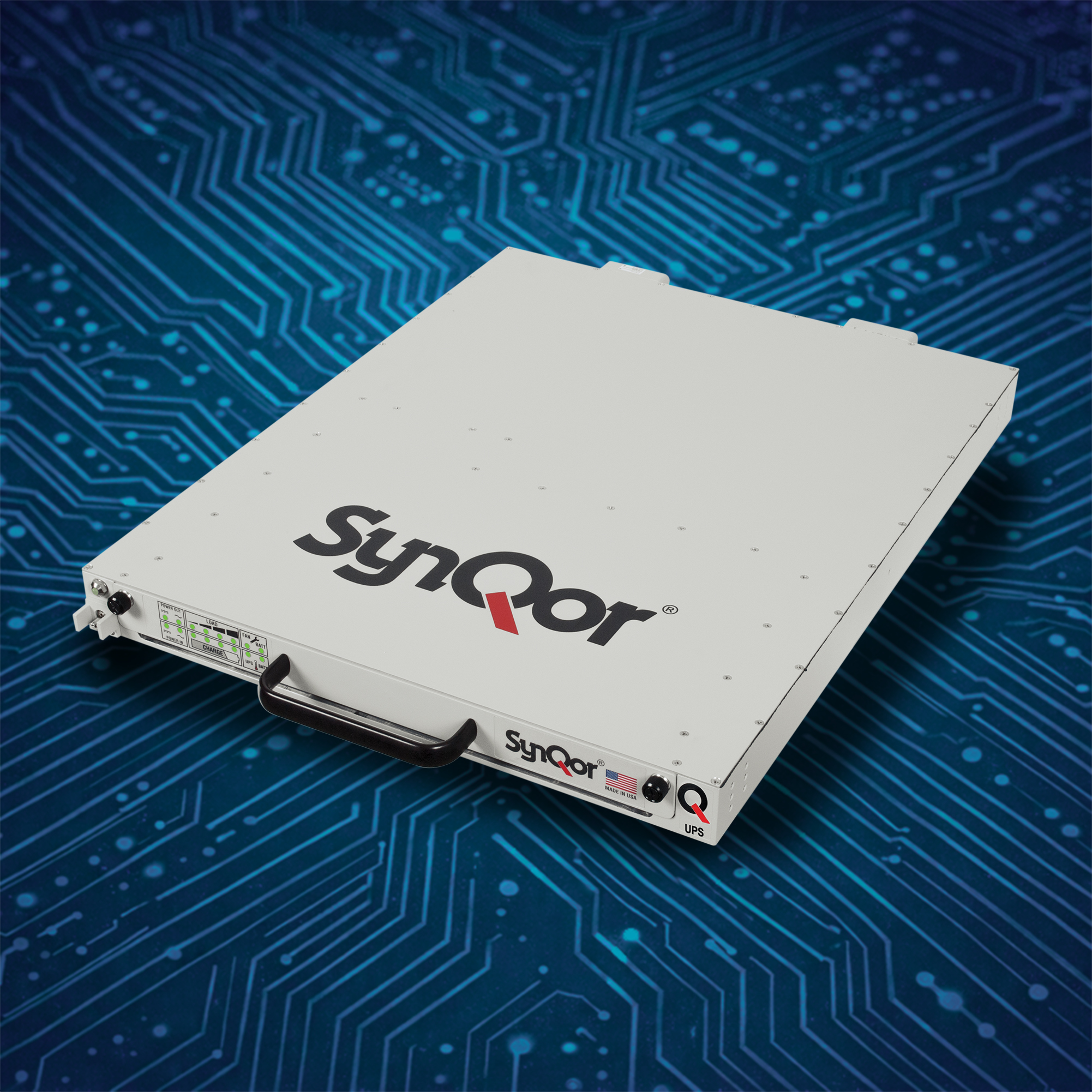
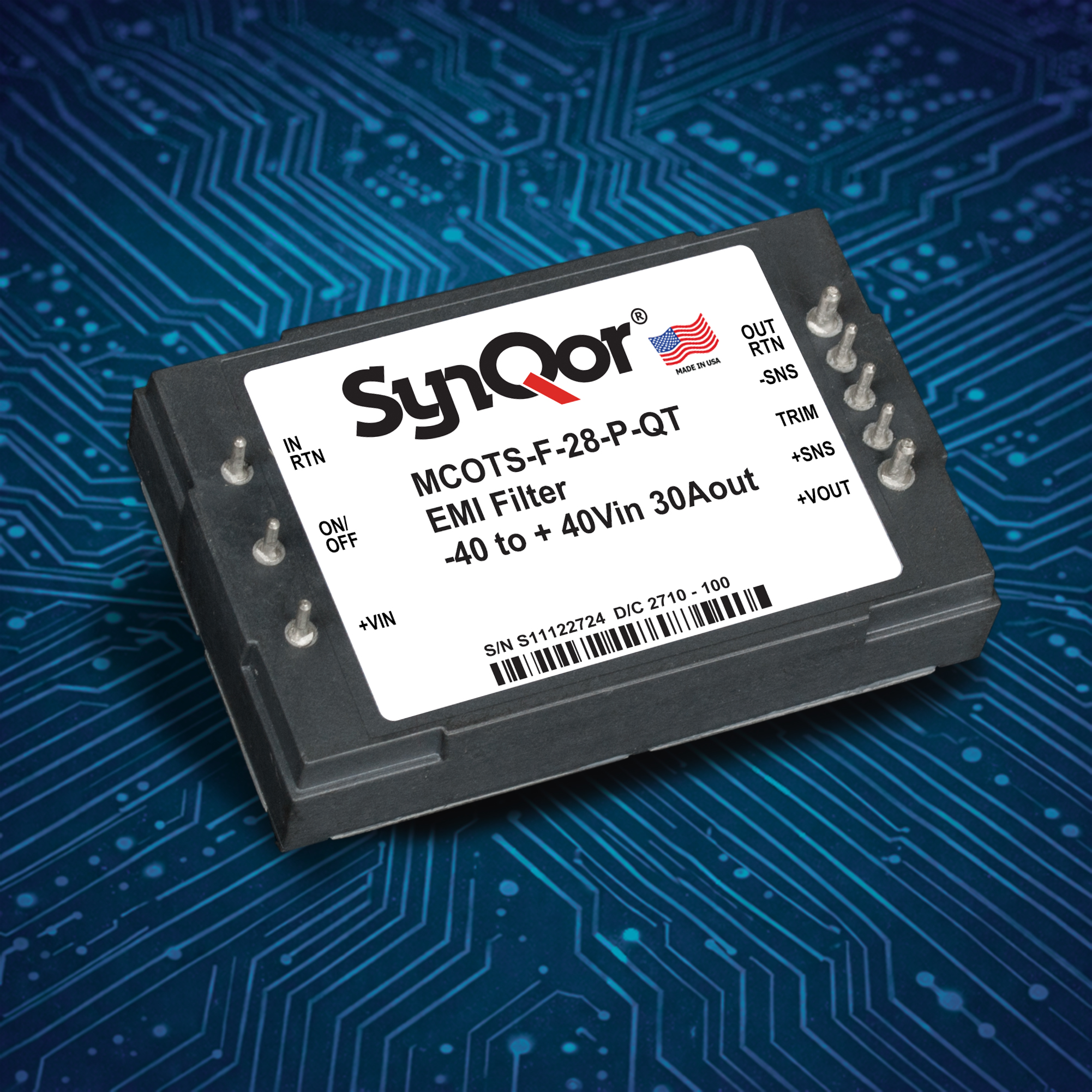
SynQor’s portfolio of industrial-grade DC-AC inverters is engineered to solve critical power conversion challenges across harsh environment applications. Each unit is constructed with ruggedized chassis housing, sealed conduction-cooled cooling plates, and fully encapsulated electronics to withstand severe shock, vibration, and environmental contamination.
Field-Grade Rackmount Inverters
1U/2U high-density 19-inch rackmount DC-AC inverters designed for ground transport, mobile command centers, and industrial control cabinets. Delivers up to 3000 VA pure sine wave output with active power sharing.
Hot-swappable N+1 redundant inverter systems built for high-uptime manufacturing lines, oil & gas facilities, and continuous utility monitoring. Features instantaneous parallel load synchronization.
High-capacity 3-phase output inverters engineered to drive heavy inductive motor loads, pumps, and precision industrial machinery directly from battery banks or high-voltage DC buses.
Zero-ventilation baseplate-cooled inverters designed for dusty, chemical, marine, or washdown environments. IP67-rated enclosure options with ultra-low thermal resistance paths.
To assist system integrators during early architecture trade studies, the table below contrasts SynQor’s industrial inverter performance metrics against industry standard benchmark specifications:
Design Parameter
Standard Commercial Inverters
SynQor Industrial DC-AC Inverter Systems
Engineering Advantage
Peak Efficiency
85% – 89%
94% – 96%
50% reduction in thermal dissipation; enables fanless conduction cooling.
Output Waveform / THD
Modified Sine / THD 5% - 8%
Pure Sine Wave / THD < 2%
Eliminates harmonic heating in motors and power supply transformer hum.
Transient Immunity
Limited (2× nominal for 10ms)
Heavy Surge Capacity (3× nominal for 1 second)
Reliably starts high-inrush electric motors and inductive solenoids without shutdown.
Isolation Voltage
1500 VDC Basic
4252 VDC Reinforced Isolation
Ensures ground-loop separation and extreme safety in floating DC grid setups.
Operating Temperature
0°C to +40°C (Derated above 30°C)
-40°C to +85°C Baseplate Full Load
Uncompromised performance in extreme desert, arctic, or enclosed cabinet setups.
Paralleling Capability
Master-Slave (Single Point Failure)
Autonomous Droop / Active Sharing (N+1)
True fault-tolerant operation with zero single points of system failure.
The primary root cause of inverter hardware degradation in harsh industrial environments is thermal stress caused by high internal power dissipation. Traditional industrial inverters utilize single-stage pulse-width modulation (PWM) directly converting DC rail voltage to AC line frequencies through heavy iron-core low-frequency transformers. These older designs exhibit significant copper losses, eddy current heating, and high switching losses across the primary power bridge.
SynQor revolutionized high-reliability power design by commercializing synchronous rectifier technology combined with a high-frequency two-stage power conversion architecture. In our Industrial DC-AC Inverter Systems, the conversion process is split into two optimal stages:
Isolated DC-DC Buck/Boost Stage: High-frequency switching MOSFETs actively rectify incoming DC bus voltage (ranging from 24V, 48V, 110V up to 700V DC) into a tightly regulated high-voltage intermediate DC bus. This stage provides galvanic isolation meeting MIL-STD-1399 and EN 50155 safety standards.
Pure Sine Wave Inverter Stage: A high-frequency full-bridge inverter controlled by a 32-bit DSP synthesizes the intermediate DC into a low-distortion 115V or 230V RMS sine wave at 50Hz, 60Hz, or 400Hz. Active feedback loops sample output voltage and current at 100 kHz, dynamic correcting waveform distortion in real time.
Because actively driven low-Rds(on) MOSFETs replace passive diodes, conduction losses drop exponentially ($P_{loss} = I^2 \cdot R_{ds(on)}$ versus $P_{loss} = I \cdot V_f$). This drastic reduction in dissipated energy translates directly into lower semiconductor junction temperatures, higher system MTBF, and compact physical enclosures.
4. Corporate Strengths & E-E-A-T Compliance: The SynQor Advantage
Demonstrating Experience, Expertise, Authoritativeness, and Trustworthiness (E-E-A-T) is mandatory when supplying critical equipment for defense, aerospace, railway, and heavy industrial automation. SynQor's institutional foundation provides procurement managers with complete risk mitigation:
Proven Manufacturing Excellence
Built in the USA under Uncompromising Quality Frameworks
Every SynQor Industrial DC-AC Inverter System is engineered, tested, and assembled at our state-of-the-art facility in Salem, New Hampshire, USA.
Our quality management system exceeds aerospace AS9100 and ISO-9001 requirements. Full material traceability, automated optical inspection (AOI), and multi-temperature ESS burn-in are standard for every unit.
U.S.-Based R&D and Production Facility
By keeping 100% of engineering design, thermal testing, environmental qualification, and manufacturing in Salem, NH, we maintain tight supply chain control and eliminate offshore lead-time risks.
25+ Years of Power Conversion Leadership
Founded by MIT faculty and industry experts, SynQor pioneered commercial synchronous rectification. We hold dozens of seminal power supply patents that continue to advance the power curve.
5. Industry Development Trends & Future Procurement Insights (2026–2035)
As global industries transition toward electrified automation, decentralized energy storage, and smart DC microgrids, the requirements placed on Industrial DC-AC Inverter Systems are shifting rapidly. Procurement officers and system designers must consider several major technological trends shaping the decade ahead:
Trend A: Transition to Wide-Bandgap (GaN and SiC) Power Semiconductors
Silicon Carbide (SiC) and Gallium Nitride (GaN) field-effect transistors are rapidly replacing legacy Silicon IGBTs in high-power industrial inverters. SiC devices operate at significantly higher switching frequencies with minimal switching losses, allowing designers to reduce the physical size of inductors and capacitors by up to 50%. Future industrial inverter procurement will heavily favor SiC-based topology to achieve unprecedented volumetric power density.
Trend B: Proliferation of High-Voltage DC (HVDC) Microgrids
Modern manufacturing plants, data centers, and marine vessels are migrating from traditional AC distribution networks to 380V DC and 700V DC bus architectures. This shift eliminates multiple AC-to-DC conversion stages, improving facility efficiency. Consequently, demand is surging for industrial DC-AC inverters capable of stepping down high DC voltages directly to clean AC power for localized precision tooling, actuators, and sensor arrays.
Trend C: AI-Driven Predictive Health & Real-Time Telemetry
Smart procurement strategies now demand embedded IoT telemetry within inverter systems. Next-generation inverters incorporate machine learning models executing edge analytics on internal temperature sensors, electrolytic capacitor ESR monitoring, and switching waveform distortion. System operators receive predictive maintenance alerts weeks before a potential failure occurs, virtually eliminating unplanned industrial downtime.
Below are detailed responses to the most frequent technical, compliance, and integration questions asked by global procurement managers and power design engineers:
Commercial-grade inverters are designed for benign environment operation (0°C to +30°C) with cost-optimized plastic housings, low-cost electrolytic capacitors, and modified sine wave outputs. In contrast, Industrial DC-AC Inverter Systems feature heavy-duty aluminum conduction-cooled baseplates, wide temperature-range components (-40°C to +85°C), high galvanic isolation, ultra-low Total Harmonic Distortion (<2% THD pure sine wave), compliance with MIL-STD / EN 50155 standards, and projected MTBF exceeding 500,000 hours under continuous full load.
Inductive motor loads, pumps, and heavy solenoids typically draw 3 to 6 times their nominal operating current during initial energized start-up. SynQor industrial inverters integrate dynamic current-limiting algorithms and robust intermediate energy storage reserves. This allows our inverters to supply peak surge currents up to 300% of rated capacity for several seconds without voltage collapse, latching trip faults, or protective thermal shutdowns.
In sealed NEMA 4X, IP67, or explosion-proof industrial enclosures, internal heat cannot be removed via forced air fans without introducing dust, moisture, or chemical contaminants. A 1000W inverter operating at 85% efficiency dissipates 176 Watts of heat inside the sealed box, raising internal ambient temperatures to destructive levels. A SynQor inverter operating at 95% efficiency dissipates only 52 Watts—reducing thermal stress by 70% and allowing reliable baseplate conduction cooling through the enclosure wall.
Depending on the product family, SynQor DC-AC inverter systems are designed and qualified against MIL-STD-704 (aircraft electrical power specs), MIL-STD-461 (EMC/EMI conducted and radiated emissions), MIL-STD-1399 (shipboard AC power), MIL-STD-810G (environmental shock, vibration, and humidity), EN 50155 (railway rolling stock electronic equipment), and EN 50121-3-2 (railway electromagnetic compatibility).
Yes. SynQor’s modular inverter systems feature droop load sharing and active digital phase synchronization capabilities. Multiple inverter modules can be connected in parallel on a common AC bus. If one module experiences a fault, internal static switches isolate the unit instantaneously while the remaining parallel units absorb the load seamlessly with zero disturbance to critical output AC waveforms.
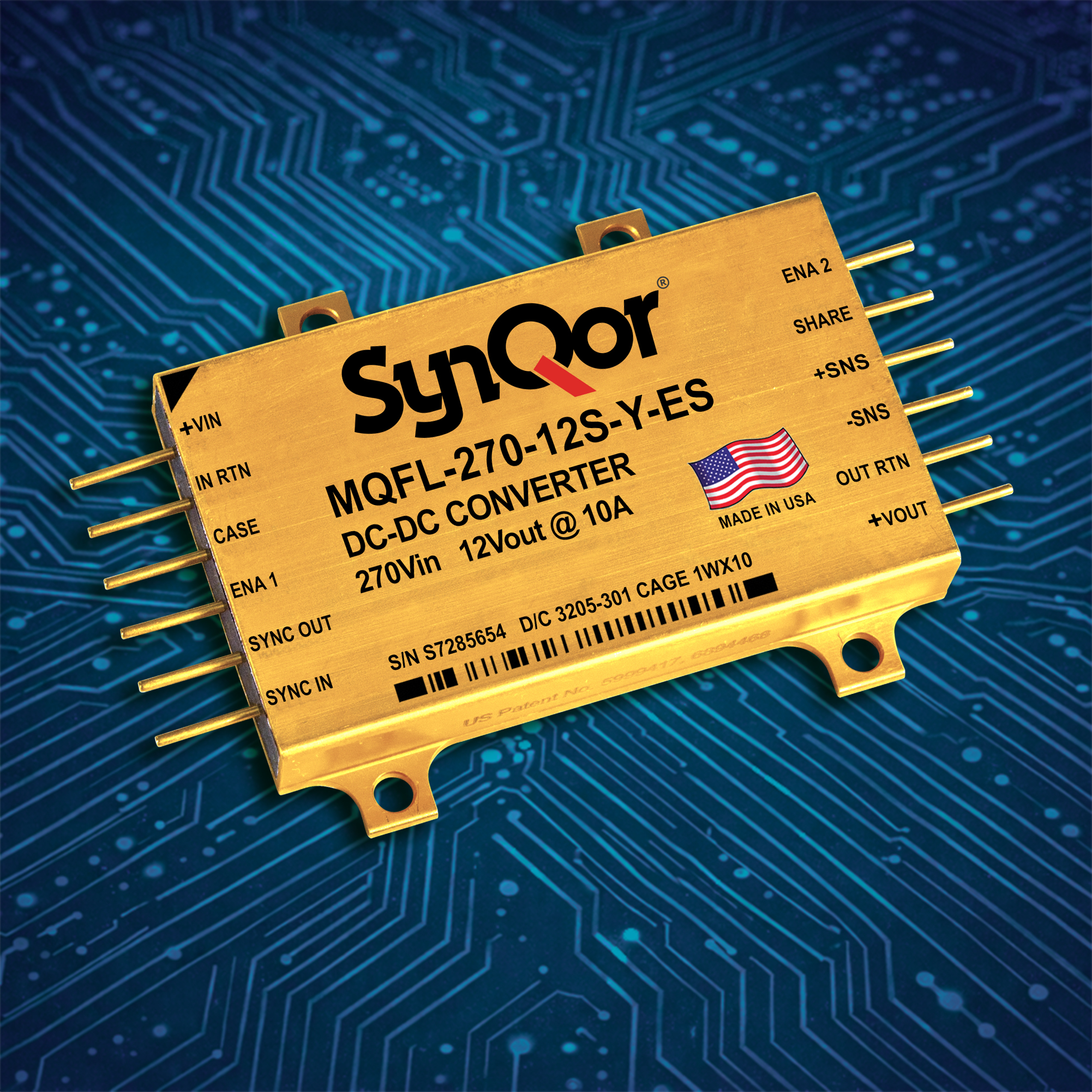
SynQor offers industrial inverters supporting standard system DC voltages, including 24V, 28V, 48V, 110V, 270V, and up to 700V continuous DC input. Wide-input operational bands ensure continuous operation during severe DC battery discharge voltage sags or alternator charging transients.
Industrial, rail, and military equipment platforms frequently maintain operational service lives of 20 to 30 years. SynQor supports multi-decade programs with long product lifecycle policies, active form-fit-function replacement strategies, archived qualification datasets, and direct access to factory application engineers in Salem, NH.
Because engineering, qualification testing, and assembly take place in our domestic Salem, NH facility, standard models are delivered rapidly. Custom voltage configurations, specialized rugged connectors, or modified mounting enclosures can be engineered and delivered significantly faster than offshore alternatives.
Ready to Architect Your Industrial DC-AC Power Infrastructure?
Submit your system requirements—including input voltage range, AC load profile, thermal constraints, and compliance standards. Our engineering team in Salem, New Hampshire will review your application and recommend an optimized inverter solution.