


Fuel Cell Unit Power Converters for defense and heavy industry
Ruggedized power systems for harsh-environment hydrogen fuel cell platforms
Industrial automation equipment powered by fuel cell DC-DC power converters
Engineering validation of high-efficiency fuel cell unit power converters
Next-Generation Fuel Cell Power Conditioning

High-Efficiency Fuel Cell Unit Power Converters: Technical Engineering & Global Procurement Guide

Engineered for Proton Exchange Membrane (PEM) and Solid Oxide Fuel Cell (SOFC) stacks. Delivering wide input voltage adaptation, ultra-low input current ripple, peak conversion efficiency up to 96%, and defense-grade ruggedness built entirely in the USA.

25+ YearsOf synchronous-rectifier innovation
Up to 96%Efficiency in fuel cell power conversion
AS9100 / ISO-9001Fully certified U.S. manufacturing
Ultra-Wide VinDynamic fuel cell V-I curve matching
Technical Deep Dive & Information Gain

Solving Power Conditioning Challenges in Modern Fuel Cell Stacks

Integrating hydrogen fuel cell stacks into heavy transport, stationary power generation, aerospace, and defense platforms introduces severe electrical and thermal challenges that standard off-the-shelf power modules cannot resolve.

01 — POLARIZATION CURVE SWINGS

Wide Input Range Adaptation

Hydrogen fuel cells display severe voltage variation (up to 2.5:1 ratio between open-circuit voltage and full-load operation). SynQor's Fuel Cell Unit Power Converters utilize a proprietary two-stage topology that maintains tight output voltage regulation without efficiency degradation across the entire V-I polarization curve.
02 — MEMBRANE LIFESPAN PROTECTION

Low Input Ripple Current Suppression

High-frequency current ripple drawn by conventional switching converters induces thermal hotspots and accelerates catalyst degradation in PEM stacks. Our advanced power converters incorporate integrated multi-phase interleaved power stages to restrict current ripple to fractional percentages, preserving stack longevity.

03 — CONDUCTION COOLING INTEGRATION

Extreme Thermal & Environmental Protection

Harsh operating environments demand fanless operation. SynQor's fully encapsulated, baseplate-cooled converter bricks feature thermal conduction pathways designed to operate at full continuous output up to 100°C baseplate temperatures in sealed dust-proof and water-proof enclosures.

Product Recommendations & Selection Matrix

Engineered Fuel Cell Unit Power Converters & Systems

Whether powering high-voltage propulsion buses, 28V auxiliary Balance of Plant (BoP) controls, or microgrid buffer batteries, SynQor provides fully qualified, highly reliable conversion hardware.

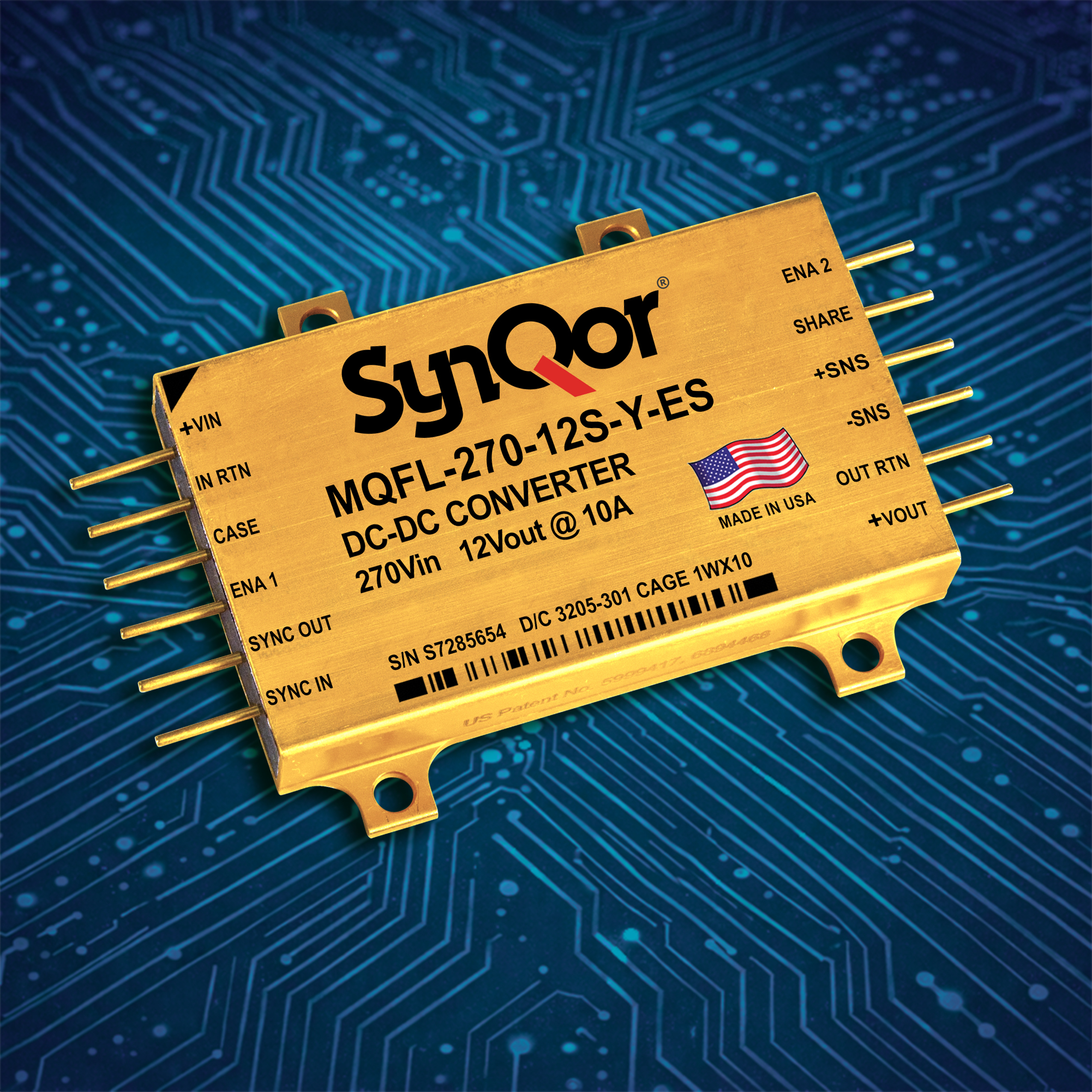
Wide Input DC-DC Converters

High-power isolated quarter-brick, half-brick, and full-brick modules optimized for low-to-medium voltage fuel cell stacks with up to 96% efficiency.

Get a Quote

Wide Input Isolated Fuel Cell DC-DC Converter Module

3-Phase PFC & Auxiliary Converters

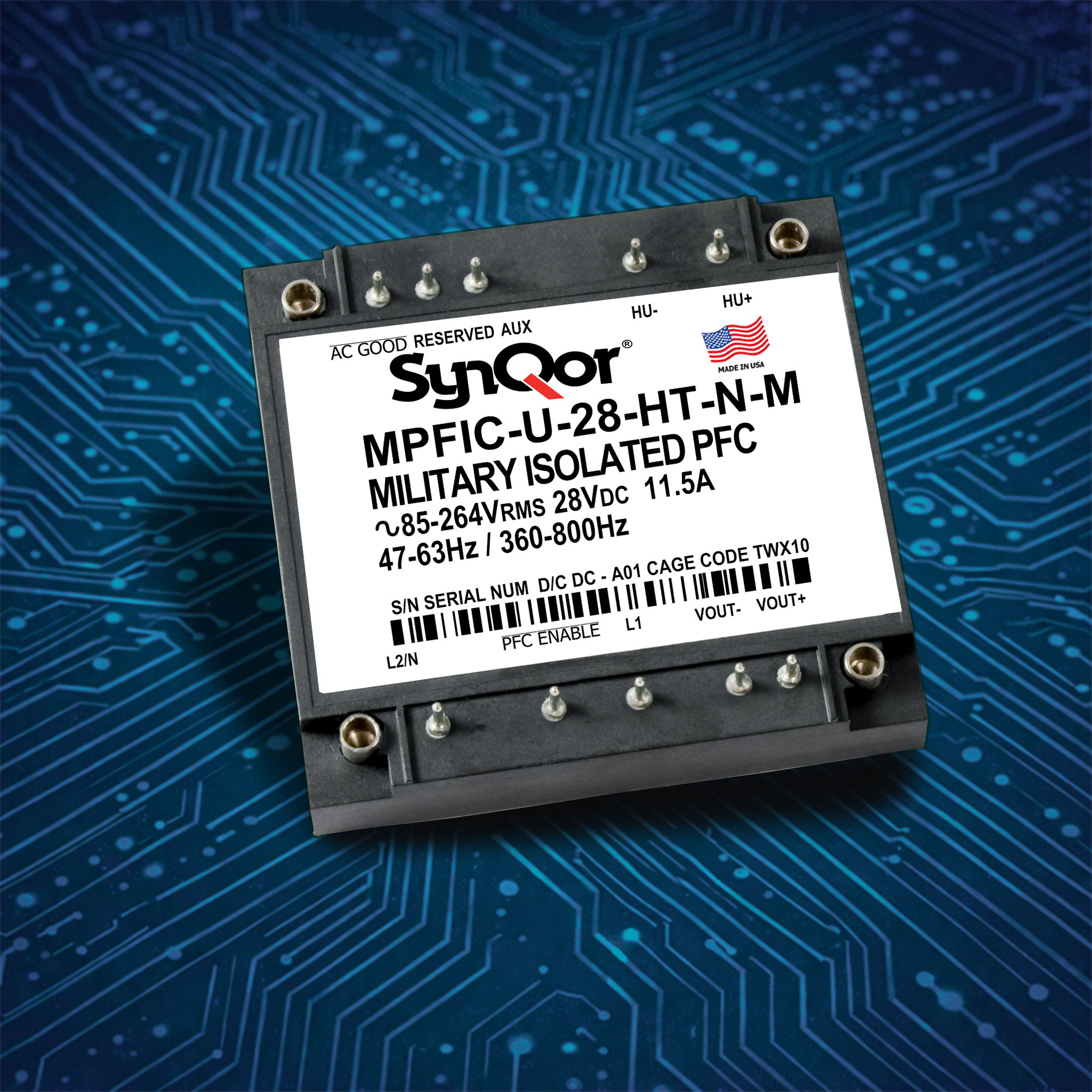
Active power factor correction and BoP power units for pumps, compressors, and electronic control units (ECUs) in hydrogen fuel cell powerplants.

Get a Quote

Fuel Cell Auxiliary Power & PFC Converter Module

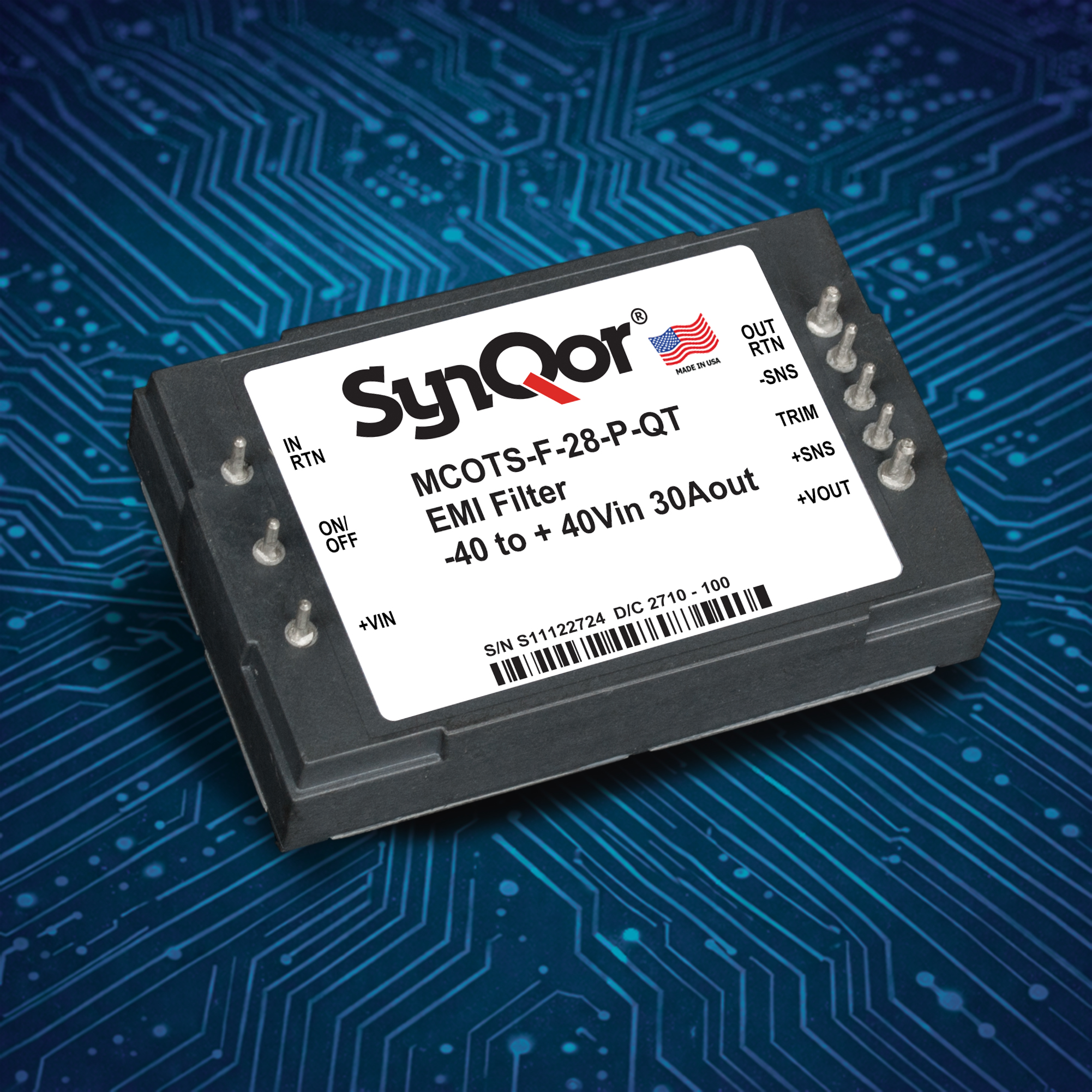
Transient EMI Filter Modules

Half-brick and full-brick input filters tailored for fuel cell DC power buses to meet MIL-STD-461, RTCA DO-160, and EN 50155 EMC requirements.

Get a Quote

Fuel Cell Transient EMI Filter Module

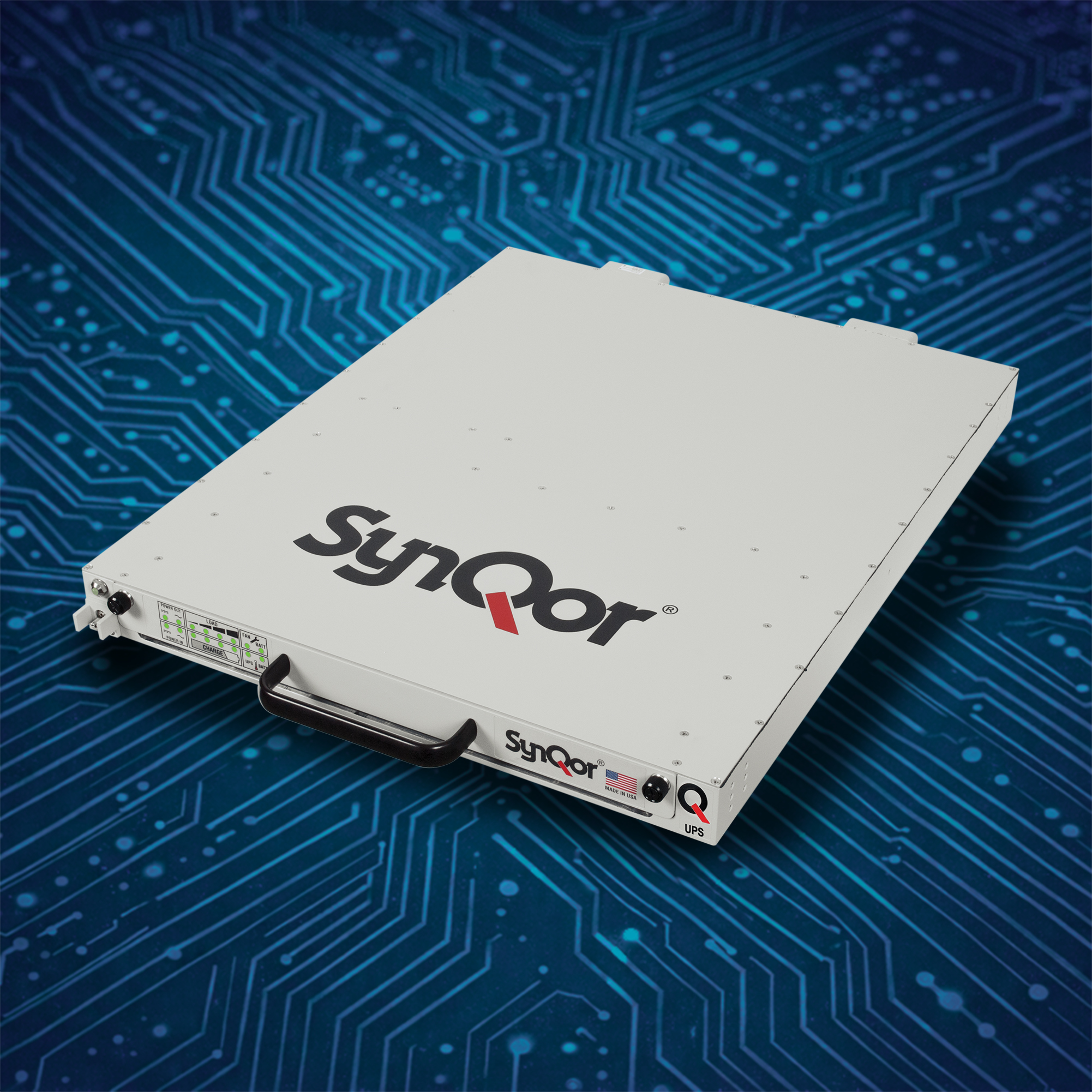
Ruggedized Fuel Cell Power Systems

Rack-mount and chassis-mount integrated power conditioning units with CANbus/PMBus digital telemetry, fault monitoring, and parallel load sharing.

Get a Quote

Ruggedized Field-Grade Fuel Cell Power System
Industry Applications

Fuel Cell Power Conversion Across Mission-Critical Markets

Select your operational environment to explore how SynQor's synchronous-rectifier fuel cell converters satisfy strict regulatory and operational constraints.

Tactical Defense & Silent Watch Fuel Cell Systems

Unmanned ground vehicles (UGVs), naval vessels, and remote forward operating bases utilize hydrogen fuel cells for silent watch operations. SynQor's MilQor® series converters deliver ultra-quiet EMI signatures, wide thermal ranges, and compliance with rigorous defense standards while delivering power to critical sensor arrays and communications equipment.

  • MIL-STD-704 (A-F)
  • MIL-STD-461 (C-F)
  • MIL-STD-1275D/E
  • MIL-STD-810G Shock/Vibe
Get a Quote
Military tactical vehicle using fuel cell power conversion

Heavy Transportation & Commercial Mining Trucks

Heavy-duty fuel cell trucks, buses, and mining haulers demand robust DC-DC conversion to step down stack output voltages (400V–800V DC) to low-voltage 24V/12V vehicle control buses. Our modules provide continuous full-power capability under intense vibration, wide thermal cycling, and high dust exposure.

  • High Isolation (2250Vdc)
  • 96% Operating Efficiency
  • Conduction Cooled Baseplate
  • CANbus Telemetry Ready
Get a Quote
Heavy transportation hydrogen fuel cell power module

Stationary Hydrogen Generators & Microgrid Power Units

Stationary fuel cell plants demand long continuous run-times without maintenance shutdowns. SynQor converters provide dual-stage synchronous rectification, reducing waste heat generation and power consumption in Balance of Plant (BoP) air compressors, cooling pumps, and central inverter interfaces.

  • Ultra-Wide Vin (4:1)
  • Remote Sensing & Output Trim
  • Over-Voltage & Over-Temp Protection
  • Paralleling Current Share
Get a Quote
Industrial fuel cell power generator and balance of plant converter

EN 50155 Compliant Rail & Hydrail Rolling Stock

Hydrogen-powered passenger trains (Hydrail) encounter high electrical transients on catenary and battery-buffered lines. SynQor RailQor® converters feature 100 ms hold-up options, high surge immunity, and rugged baseplate encapsulation certified against EN 50155 and EN 45545-2 fire safety standards.

  • EN 50155 / EN 50121-3-2
  • EN 45545-2 Fire & Smoke
  • Class S2 / C1 Hold-Up
  • Rugged Encapsulated Package
Get a Quote
Hydrail fuel cell power conversion module

AeroQor® Hydrogen Electric Flight & eVTOL Aviation

Zero-emission regional aviation relies on high power density hydrogen fuel cells. AeroQor® units combine lightweight planar magnetics with ultra-high power density to supply regulated DC power to airborne avionics, flight control actuators, and auxiliary thermal management systems under RTCA DO-160G rules.

  • RTCA DO-160G Compliant
  • Lightweight Planar Topology
  • 400Hz Input Filtering Option
  • Extended Altitude Rating
Get a Quote
Aerospace hydrogen fuel cell unit power converter

Telecom Infrastructure Hydrogen Backup Generators

Replacing legacy diesel generators with fuel cell backup units requires seamless DC bus regulation. SynQor's telecom-grade fuel cell power converters convert variable fuel cell output directly into stable -48V DC bus power with high efficiency, reducing thermal buildup inside sealed outdoor cabinets.

  • Standard Quarter/Half Brick
  • Telcordia GR-1089-CORE
  • High MTBF (> 2.5M Hours)
  • Hot-Swappable Capability
Get a Quote
Telecom fuel cell backup power converter
Enterprise Advantages & E-E-A-T Guarantee

Why Global OEMs & System Integrators Partner With SynQor

SynQor’s process-centered engineering architecture enforces rigid discipline from initial circuit topology simulation through automated qualification testing and USA manufacturing—ensuring every Fuel Cell Unit Power Converter exceeds customer specifications.

Get a Quote

Patented Synchronous Rectification Architecture

SynQor commercialized synchronous rectification in isolated converters, replacing lossy output diodes with actively controlled MOSFETs to deliver market-leading power density and efficiency up to 96%.

100% U.S. Engineering & Manufacturing Facility

Designed, qualified, and built in Salem, New Hampshire. Exceeds AS9100 and ISO-9001 quality management requirements, delivering total supply chain transparency and defense-grade component traceability.

Multi-Decade Obsolescence Protection & Direct Support

We support long-lifecycle platforms with form-fit-function replacement guarantees, archived qualification data, and direct access to senior application engineers for thermal, derating, and EMI analysis.

Technology & Industry Trends

As fuel cell stack power outputs scale from kilowatts to megawatts, the underlying power electronic architectures are undergoing critical technological shifts.

TREND 01

Wide Bandgap (GaN/SiC) Integration

The adoption of Silicon Carbide (SiC) and Gallium Nitride (GaN) switching devices allows higher switching frequencies, drastically reducing the physical volume of planar transformers and inductors while boosting full-load thermal efficiency beyond traditional limits.

TREND 02

Bidirectional Fuel Cell & Battery Interface

Modern hybrid clean-power powertrains require bidirectional DC-DC conversion. Power flow must seamlessly switch between stepping down fuel cell stack power to charge high-voltage battery buffers and boosting battery power during peak acceleration or heavy system transients.

TREND 03

Digital Telemetry & Predictive Diagnostics

Integration of PMBus and CANbus digital communications enables real-time voltage monitoring, thermal reporting, phase-current balancing, and dynamic response tuning. Predictive algorithms alert system controllers to impedance shifts in the fuel cell stack before failures occur.

Procurement Strategy

Engineering and procurement teams face evolving global supply chain demands when specifying high-reliability fuel cell power converters.

Strategic Sourcing

Total Cost of Ownership (TCO) vs. Initial Purchase Price

Global procurement managers are shifting focus from module unit price to long-term operational efficiency. A 3% to 5% efficiency gain in a continuous fuel cell converter saves thousands of dollars per unit in avoided heat dissipation, reduced cooling infrastructure, and extended stack lifetime.

Supply Chain Resilience

Mitigating Component Obsolescence & Geopolitical Risk

Long-lifecycle hydrogen projects (rail, naval, utility) require power suppliers with domestic manufacturing footprints and stringent supply chain controls. U.S.-manufactured converters eliminate import friction, tariff volatility, and unannounced component end-of-life (EOL) redesigns.

Compliance Standardized

Pre-Certified Modular Solutions Shorten Time-to-Market

Designing custom power conditioning circuitry adds 12 to 18 months of EMC and safety qualification risks. Buying pre-qualified brick modules certified against MIL-STD, RTCA DO-160, and EN 50155 standards dramatically accelerates global project commissioning.

Buyer & Engineering FAQ

Frequently Asked Questions: Fuel Cell Unit Power Converters

Proton Exchange Membrane (PEM) and Solid Oxide (SOFC) fuel cell stacks exhibit highly dynamic electrical characteristics. Their output voltage drops significantly as current load increases (the V-I polarization curve). Furthermore, fuel cells cannot absorb negative reverse currents or high-frequency current ripple without experiencing rapid catalyst degradation and membrane damage. Specialized Fuel Cell Unit Power Converters are engineered with ultra-wide input voltage capability, active current ripple suppression, and soft-starting circuits to stabilize fuel cell output while protecting the stack.

SynQor pioneered the commercial application of synchronous rectification in isolated power modules. By replacing conventional Schottky diodes with high-performance, actively driven MOSFETs and employing a two-stage topology, conduction losses are drastically reduced. This elevates full-load conversion efficiency to up to 96%. Lower power dissipation directly translates to reduced heat generation, smaller heatsink sizes, sealed conduction-cooled enclosures, and substantially increased system Mean Time Between Failures (MTBF).

SynQor manufactures isolated DC-DC converter bricks and custom power systems supporting continuous input ranges from low-voltage DC (9–36 Vdc, 18–75 Vdc) up to high-voltage traction ranges (34–160 Vdc, 200–800 Vdc). Custom voltage trim and wide continuous operating windows allow system designers to match fuel cell stacks across their entire aging profile and transient load operating conditions.

SynQor designs and qualifies complete power conversion chains—matching our isolated DC-DC converters directly with complementary transient EMI filter modules (such as the MCOTS-F and RailQor filter series). Because the filter and converter topologies are tuned to work together, systems achieve seamless compliance with MIL-STD-461 (C-F), RTCA DO-160G, and EN 50121-3-2 without unexpected filter resonance or EMI leaks during compliance testing.

All SynQor industrial and military-grade converter modules feature fully encapsulated aluminum baseplate designs suitable for conduction cooling. Heat is transferred directly through the baseplate into cold plates, liquid-cooled cooling loops, or sealed metallic enclosure walls. This eliminates the need for internal cooling fans, preventing dust, moisture, and chemical contaminants from damaging sensitive power electronics.

All SynQor engineering design, qualification testing, and manufacturing operations are conducted at our state-of-the-art corporate facility in Salem, New Hampshire, USA. SynQor operates under a Quality Management System certified to AS9100 and ISO-9001, ensuring complete supply chain transparency, full component lot traceability, and long-term obsolescence management for long-term programs.

Ready to Optimize Your Fuel Cell Power Architecture?

Send our application engineers your stack polarization data, input voltage swings, output power demands, thermal constraints, and EMI target standards. We will review your filter-to-converter topology and provide a optimized solution.

Get a Quote Talk to an Engineer