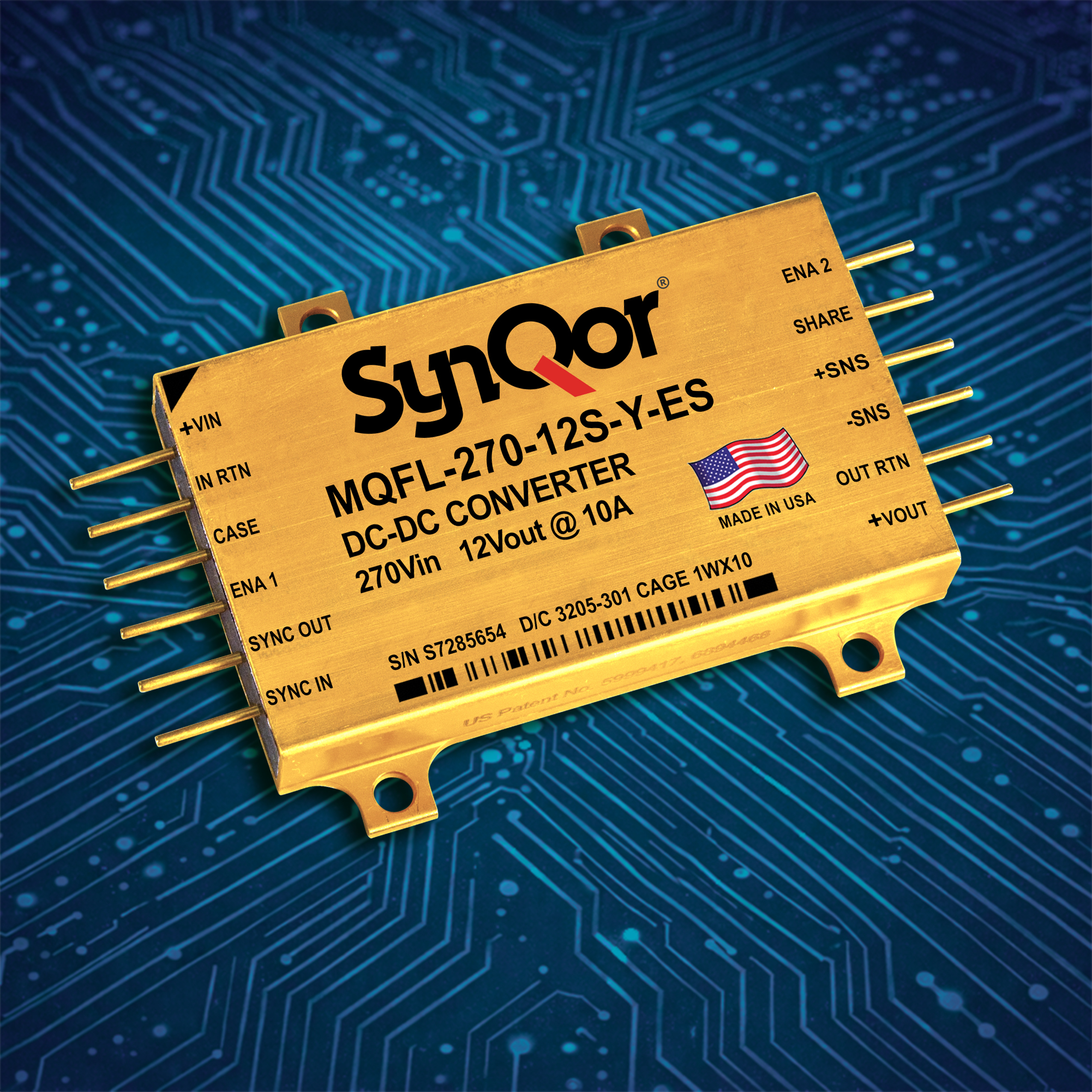
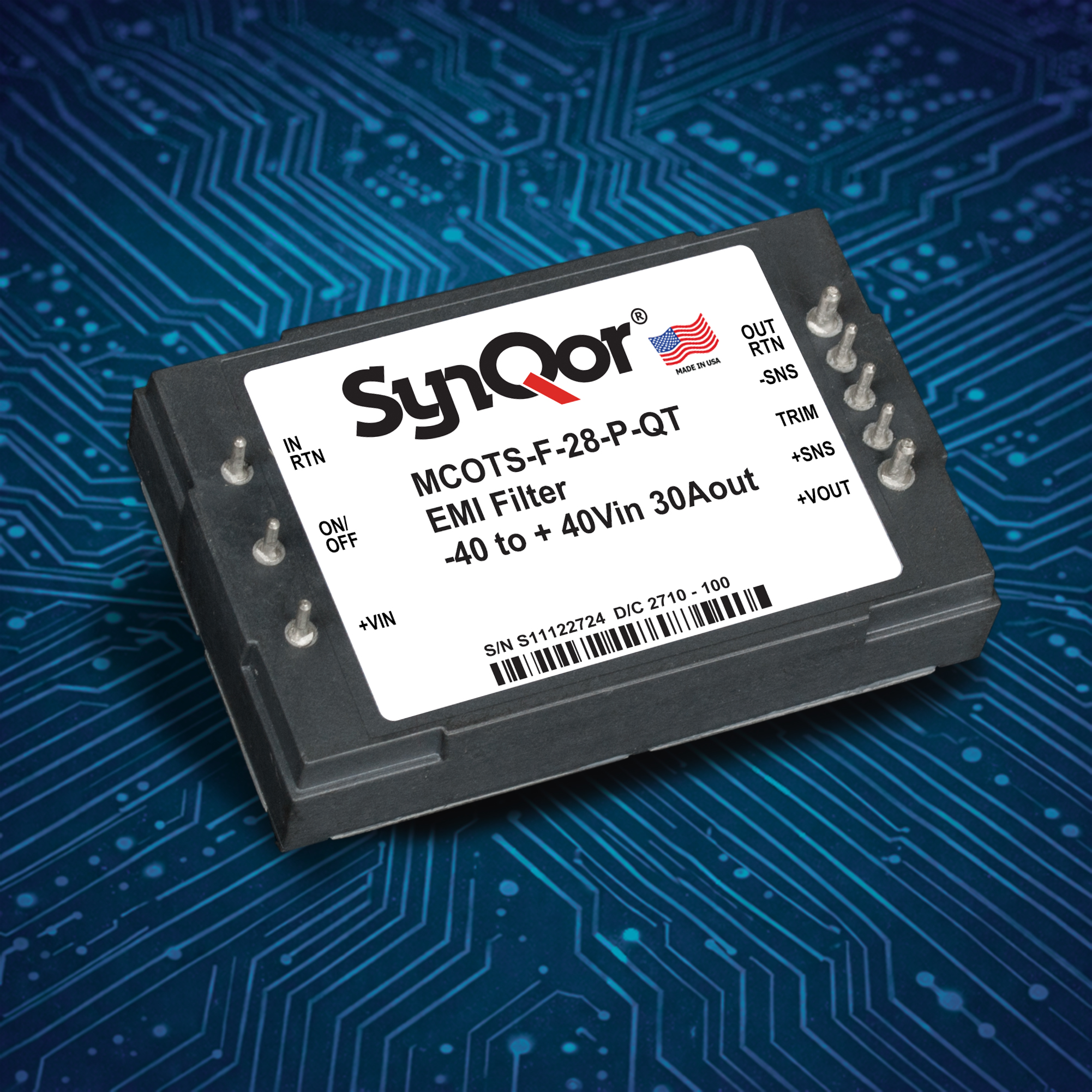
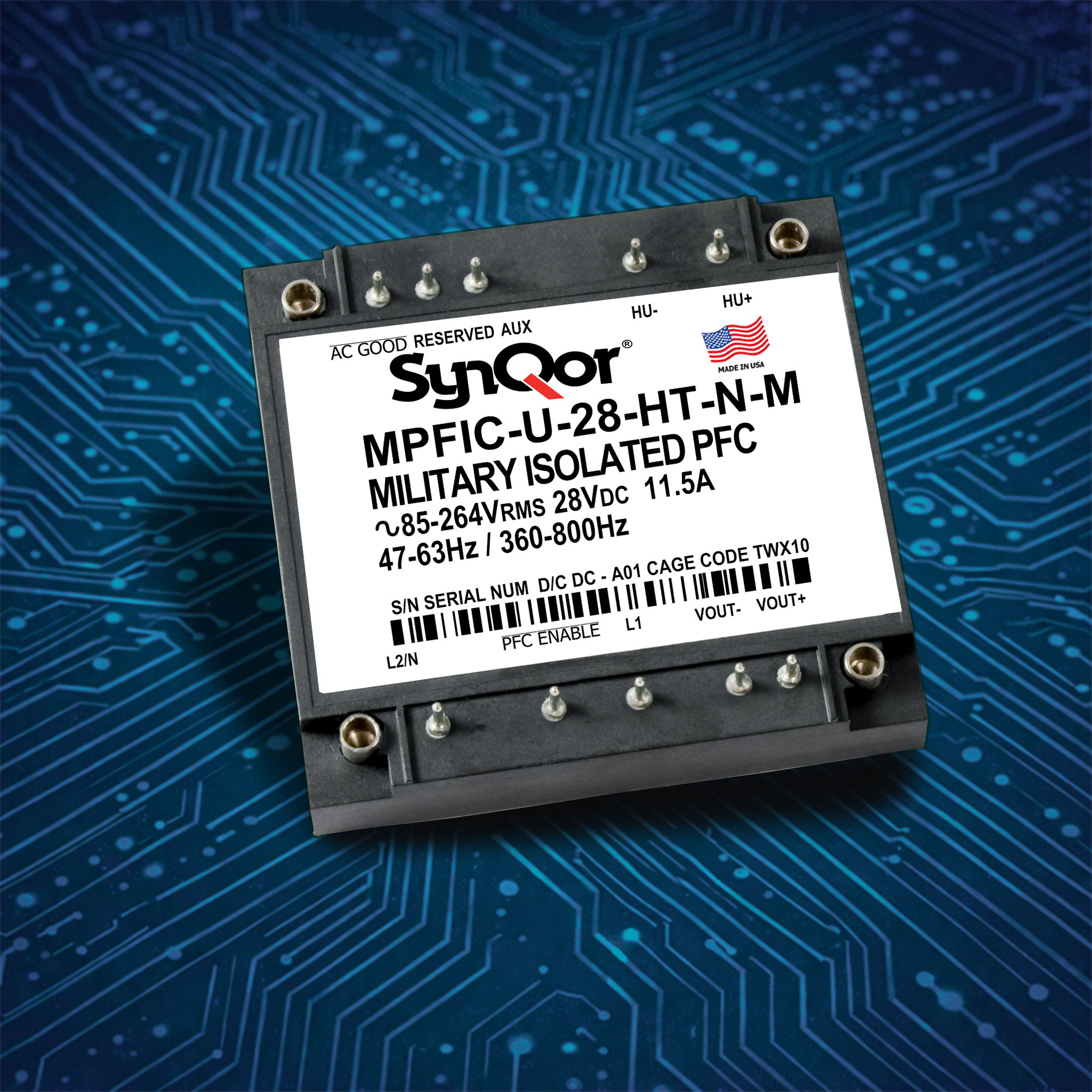
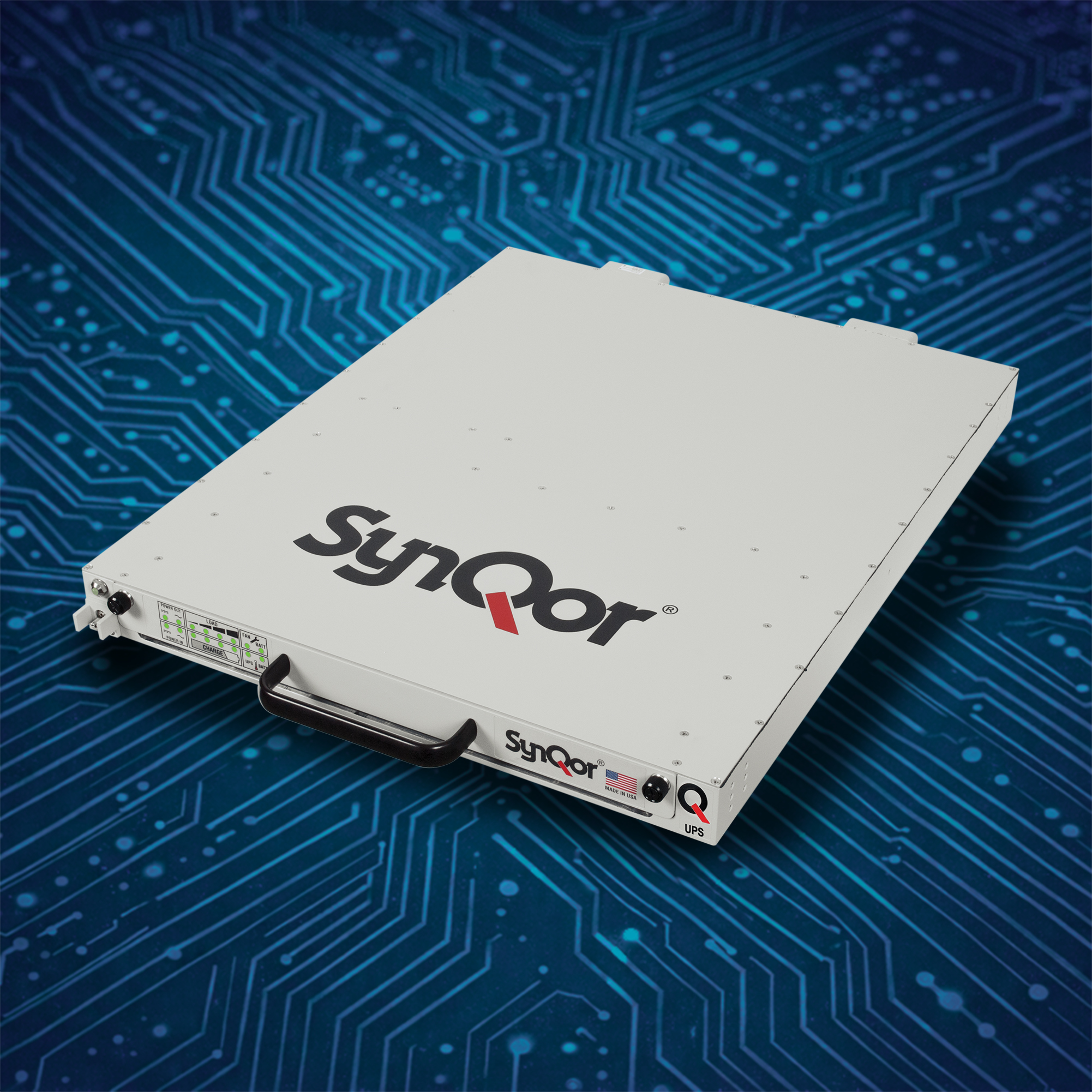
In modern military applications—such as sealed tactical land vehicle electronics boxes, underwater UUV hulls, and avionics pod assemblies—forced-air fan cooling is unfeasible due to dust, moisture, salt fog, and reliability limitations. All heat generated by internal power conversion components must be transferred via thermal conduction through the module baseplate into a chassis cold plate or heat-sink frame.
In a standard diode-rectified converter, the secondary output diodes exhibit a forward voltage drop ($V_f$) of approximately 0.5V to 0.9V. At high output currents (e.g., 50A at 3.3V or 5V output), the secondary rectification stage alone dissipates:
P_{loss} = V_f \times I_{out} = 0.7\text{V} \times 50\text{A} = 35\text{W}
Generating 35W of pure waste heat in the secondary stage elevates semiconductor junction temperatures, reduces system MTBF, and severely restricts full-power operation at high ambient temperatures.
SynQor’s synchronous rectification technology replaces lossy Schottky diodes with actively driven, low $R_{DS(on)}$ N-channel MOSFETs. Because MOSFET conduction channel resistance is extremely low (often under $2\text{ m}\Omega$), the conduction loss drops dramatically:
P_{loss} = I_{out}^2 \times R_{DS(on)} = (50\text{A})^2 \times 0.002\Omega = 5\text{W}
This 85% reduction in secondary stage waste heat enables full-load conversion efficiency of up to 96%. Lower internal heat dissipation enables the converter baseplate to operate continuously at +100°C while maintaining junction temperatures well within NAVMAT P-4855-1A reliability derating guidelines.