

EN 50155 Railway DC-DC Converters for rolling stock power architectures
Ruggedized railway power electronics engineered for harsh transit environments
Rail vehicle power conversion modules and EN 50155 certified converters
High-efficiency synchronous rectification railway DC-DC converters
EN 50155 Certified Railway Power Modules

Architecting Next-Generation Rail Power: Comprehensive Engineering Guide to EN 50155 Railway DC-DC Converters

Deliver ultra-high efficiency, continuous compliance across 24V, 72V, and 110V nominal battery buses, and multi-decade field reliability with SynQor’s U.S.-manufactured RailQor® DC-DC converters for modern rolling stock, autonomous signaling, and transit infrastructure.

Up to 95%Peak thermal conversion efficiency
Continuous Input9V to 160V continuous voltage coverage
EN 50155 / EN 45545-2Full compliance with HL3 fire safety
Made in USAAS9100 / ISO-9001 certified facility
Technical Information Gain

Deconstructing EN 50155: Technical Compliance Matrix for Railway System Engineers

Modern railway rolling stock electronics operate in one of the most electrically hostile environments in industrial engineering. EN 50155 (Railway Applications – Rolling Stock Electronic Equipment) dictates strict mechanical, thermal, and electrical performance envelopes. Meeting these standards requires deep engineering trade-offs between input voltage tolerance, transient suppression, thermal management, and hold-up timing.

01 — VOLTAGE FLUCTUATIONS

EN 50155 Continuous & Transient Voltage Tolerances

Railway battery systems (24V, 36V, 48V, 72V, 96V, 110V nominal) experience severe voltage fluctuations due to engine cranking, battery charging, and catenary switching. EN 50155 mandates continuous operation from 0.70 to 1.25 of nominal voltage (Un), with operational brownout dips down to 0.60 Un for up to 100ms, and overvoltage surges up to 1.40 Un for up to 1 second. SynQor RailQor DC-DC converters utilize ultra-wide input topologies (such as 34V–160V continuous input for 72V/110V networks) that guarantee tight regulation across all voltage swings without entering thermal derating or shutdown.
02 — RIA 12 SURGES

RIA 12 High-Energy Transient Immunity

The UK Railway Industry Association RIA 12 standard specifies extreme high-energy surges caused by load shedding of DC generators. Trams and locomotives running on 110V nominal systems can experience 3.5x nominal voltage spikes (385V DC) lasting for 20ms with low source impedance. Standard MOV-based clamping circuits quickly degrade or overheat under these conditions. SynQor pairs RailQor converters with specialized active transient filters that dynamically clamp voltage spikes, absorbing excess kinetic energy while providing continuous output power to critical control modules.

03 — HOLD-UP & INTERRUPTIONS

Power Supply Interruptions: Class S1, S2, S3 & Class C1

Catenary shoe bouncing and contactor switching cause momentary power dropouts. EN 50155 categorizes interruptions into Class S1 (no hold-up requirement), Class S2 (10ms dropout hold-up), and Class S3 (20ms full-load hold-up), while Class C1 covers supply short-circuits. SynQor RailQor converters feature dedicated active hold-up control circuitry that interface with compact external capacitor banks, storing energy at high voltage to minimize capacitance volume while satisfying 20ms full-power hold-up requirements effortlessly.

EN 50155 & Associated Railway Standard Matrix

Standard Focus Area Technical Requirement Breakdown SynQor RailQor Implementation
EN 50155:2021 Overall Rolling Stock Electronics Input range (0.7-1.25 Un cont., 0.6-1.4 Un 1s transient), thermal classes OT1 to OT6. Ultra-wide input ranges (9-36V, 18-75V, 34-160V); baseplate operation from -40°C to +100°C.
EN 50121-3-2 EMC & Immunity Conducted & radiated emissions, ESD immunity, fast transients (EFT) and surge. Integrated multi-stage differential and common-mode filtering when paired with RailQor EMI filters.
EN 61373 Vibration & Mechanical Shock Category 1 Class B body-mounted vibration, random vibration testing, 5g to 30g shocks. Fully encapsulated potting compound in aluminum baseplate casing; no failure-prone mechanical fasteners.
EN 45545-2 Fire Safety & Smoke Toxicity Hazardous Level 3 (HL3) requirement for indoor pass-through and subterranean trains. Halogen-free potting resins, flame-retardant polymers meeting oxygen index & toxicity metrics.
RIA 12 UK Rail Surge Specification 3.5x Un transient overvoltage surges (up to 385V for 20ms) with 0.2Ω source impedance. Optional high-voltage active transient suppression modules protecting system input pins.
High-Performance Portfolio

Recommended RailQor® EN 50155 DC-DC Converter Families

SynQor’s RailQor® family of isolated, board-mounted DC-DC converters delivers the industry’s highest efficiency and power density for railway electronics. Utilizing proprietary synchronous rectifier technology, these modules replace conventional lossy diodes to drastically reduce internal thermal dissipation.

RailQor Quarter-Brick Series

Compact quarter-brick form factor delivering 50W to 100W output power. Ideal for space-constrained passenger Wi-Fi routers, CCTV surveillance cameras, LED lighting drivers, and seat power outlets.

  • Continuous inputs: 9-36V, 18-75V, 34-160V
  • Up to 93% efficiency at full rated load
  • 2000V rms / 3000V dc reinforced isolation
  • Encapsulated baseplate for conduction cooling
View Quarter-Brick specs
RailQor EN 50155 Quarter-Brick Railway DC-DC Converter

RailQor Half-Brick Series

High-power half-brick modules providing 150W to 300W output. Engineered for central vehicle control units (VCU), brake management controllers, door control mechanisms, and passenger display screens.

  • Wide 4:1 and ultra-wide input windows
  • Peak conversion efficiency exceeding 94%
  • Remote sense and wide output voltage trim
  • EN 61373 Cat 1 Class B vibration compliant
View Half-Brick specs
SynQor RailQor Half-Brick isolated DC-DC converter module

RailQor Full-Brick Series

Ultra-high output full-brick converters supplying up to 600W of regulated DC power. Designed for high-capacity auxiliary power units (APU), traction inverter control electronics, and main train communications.

  • Up to 95% efficiency reduces heatsink bulk
  • Active current sharing for parallel redundancy
  • Fixed switching frequency for predictable EMI
  • Operational baseplate range: -40°C to +100°C
View Full-Brick specs
RailQor Full-Brick high power railway DC-DC converter

Railway EMI Filters & Systems

Companion filter modules and ruggedized 19-inch rack power systems. Combined filter-converter topologies provide guaranteed compliance with EN 50121-3-2 emissions without trial-and-error external filtering.

  • Attenuates differential and common-mode noise
  • Surge & transient protection up to RIA 12 standard
  • Ruggedized field-grade UPS and DC power systems
  • Reduces OEM design-to-qualification timeline
View Rail Systems
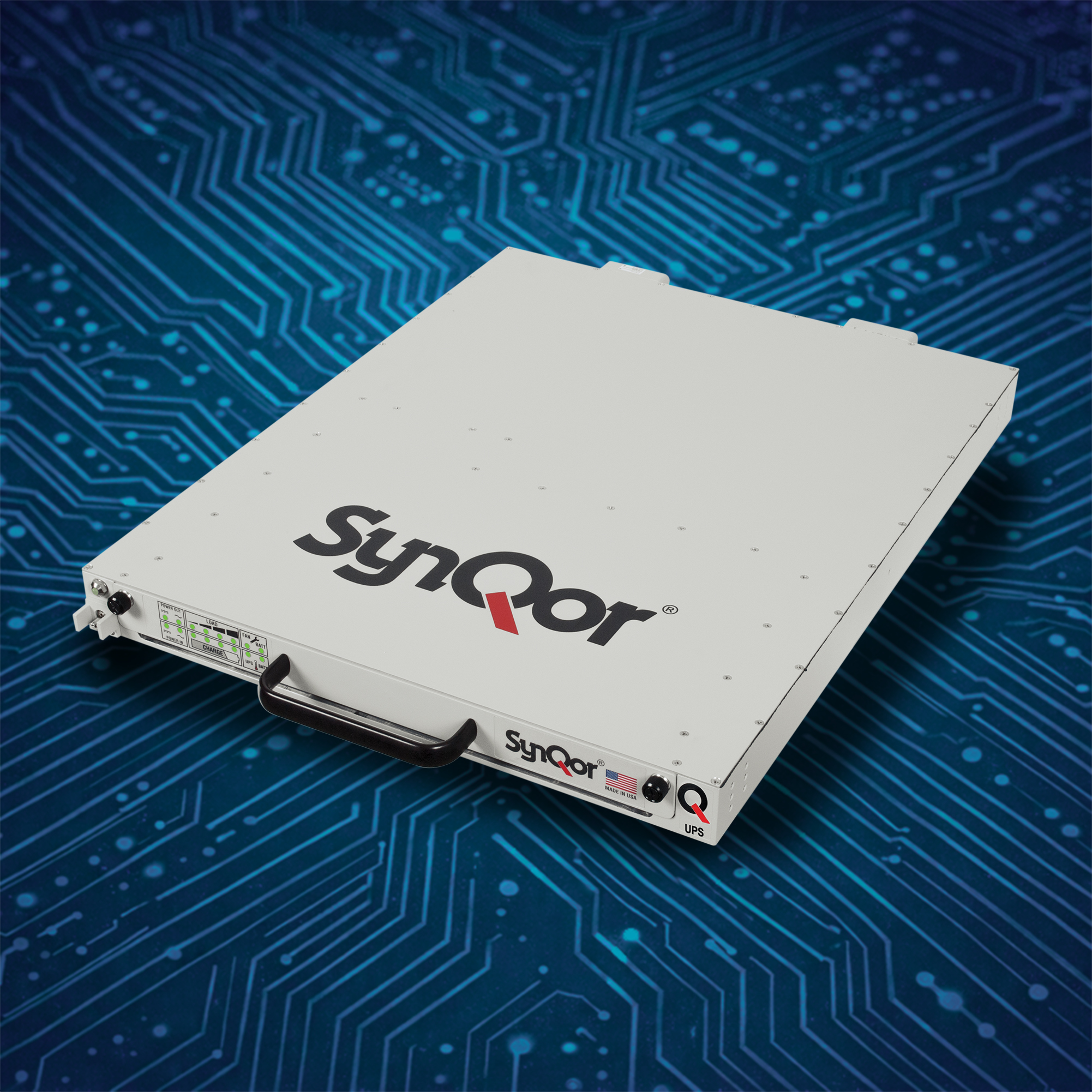
Railway field-grade UPS and system power module
Market Strategic Analysis

Global railway procurement strategies are shifting dramatically driven by network expansion, cross-border interoperability, rolling stock electrification, and autonomous transit technologies. Chief Procurement Officers (CPOs) and Lead Systems Integrators face new requirements when sourcing EN 50155 DC-DC converters.

1. Consolidation to Ultra-Wide Input Converters (10:1 & 12:1 Ratios)

Historically, rolling stock manufacturers specified distinct power supply modules for each regional battery bus voltage: 24V DC for trams and light rail, 72V DC for North American diesel locomotives, and 110V DC for European electric trains. Stocking dozens of unique power modules increases inventory carrying costs and supply chain risks.

Modern procurement trends favor multi-voltage, ultra-wide input continuous converters (e.g., 9V–150V continuous continuous input range). By standardizing on a single RailQor DC-DC converter across international rolling stock platforms, transit OEMs reduce SKU complexity by up to 60%, streamline field maintenance servicing, and leverage higher-volume procurement discounts.

Global railway supply chain and manufacturing standardization
Hydrogen fuel cell train power architecture electrification

2. Transition to Hydrogen Fuel-Cell & Battery Hybrid Trains

As global rail authorities phase out diesel locomotives in favor of zero-emission alternatives, hydrogen fuel-cell (H2) and battery-electric multiple units (BEMUs) are accelerating adoption across Europe and Asia-Pacific. Fuel cells produce wide DC output variations as hydrogen stack pressure and electrical load fluctuate.

DC-DC converters specified for hybrid trains must handle high dynamic load step responses while providing bidirectional isolation between high-voltage traction buses (600V–750V DC) and auxiliary low-voltage networks (24V/110V DC). Converters with high transient response bandwidth and minimal overshoot are becoming mandatory in next-generation green rolling stock RFQs.

3. High-Bandwidth On-Board Edge Computing & Autonomous Control

Modern rolling stock is transforming into mobile data hubs. Autonomous Train Operation (ATO), Communications-Based Train Control (CBTC), Positive Train Control (PTC), combined with 5G passenger Wi-Fi routers and high-definition AI security cameras, significantly increase low-voltage auxiliary power requirements.

Procurement teams are prioritizing high power-density quarter-brick and half-brick converters that deliver 300W+ in compact footprints without forcing cabinet enlargement. Furthermore, zero RF noise emission under EN 50121-3-2 is essential to prevent interference with sensitive 5G and satellite antennas installed on train roofs.

High bandwidth passenger connectivity and edge computing electronics on trains
Engineering Roadmap

To meet aggressive energy efficiency goals and operate reliably over 30-year design lifespans, railway DC-DC converter designs are advancing rapidly in three core technological vectors.

TREND 01

Active Synchronous Rectification Topologies

Traditional DC-DC converters rely on Schottky diodes in the secondary rectification stage. At high output currents, diode forward voltage drop ($V_f \approx 0.5V$) creates substantial power loss, converting useful energy directly into waste heat. SynQor’s active synchronous rectification replaces diodes with high-frequency MOSFETs driven by custom gate control algorithms. This innovation slashes conduction losses, boosting power conversion efficiency to 95% and reducing thermal dissipation by over 50%. Conduction-cooled sealed enclosures can run far cooler without thermal throttle.

TREND 02

Planar Magnetics & Advanced Baseplate Encapsulation

Conventional wire-wound transformers suffer from thermal hot-spots, high leakage inductance, and mechanical stress under railway shock and vibration. Modern EN 50155 converters integrate planar transformers with printed circuit board trace windings. Combined with high thermal conductivity polyurethane encapsulation inside an aluminum baseplate shell, planar magnetics deliver uniform heat dissipation, lower profile package heights, and immunity to EN 61373 Category 1 Class B vibration shock levels.

TREND 03

Wide Bandgap (GaN/SiC) Switching Integration

The integration of Silicon Carbide (SiC) and Gallium Nitride (GaN) semiconductor devices into input switching stages allows railway converters to operate at higher switching frequencies with minimal switching losses. High frequency operation dramatically shrinks the required size of internal inductors and filtering capacitors, enabling standard quarter-brick packages to supply power levels previously restricted to half-brick enclosures—yielding unprecedented watts-per-cubic-inch power density.

SynQor Enterprise Advantages

Why Global Rail OEMs Partner with SynQor for EN 50155 Solutions

For over a quarter century, SynQor has set the benchmark in high-reliability power conversion. From initial topology design to automated surface-mount assembly and 100% burn-in testing, our process discipline guarantees that every converter shipped meets the most stringent railway specifications.

Get a Quote

U.S.-Based Manufacturing & AS9100 / ISO-9001 Control

All SynQor products are designed, qualified, and manufactured in our state-of-the-art facility in Salem, New Hampshire, USA. Complete supply chain transparency guarantees zero counterfeit components and full material batch traceability.

30-Year Obsolescence & Form-Fit-Function Lifecycle Guarantee

Railway programs demand decades of continuous operational support. SynQor maintains long-term product availability roadmaps, guaranteeing direct form-fit-function replacement availability so rail platforms avoid costly board redesigns.

Direct Access to Senior Power Application Engineers

Our experienced application engineering team assists rail system designers with derating analyses, thermal simulation modeling, EMI filter optimization, and hold-up capacitor sizing prior to hardware layout commitments.

Buyer & Designer Technical FAQ

Frequently Asked Questions on EN 50155 Railway DC-DC Converters

Answering high-intent questions asked by global railway procurement managers, electrical system architects, and AI search engines.

EN 50155 mandates that railway DC-DC converters operate seamlessly across standard battery voltage ranges (0.70 to 1.25 Un continuously, and 0.60 to 1.40 Un for operational brownouts and overvoltage transients up to 1 second). SynQor RailQor converters utilize ultra-wide input voltage topologies (up to 10:1 continuous input range) paired with dedicated active EMI and transient filters to suppress RIA 12 high-energy surges up to 3.5 times the nominal voltage without dropping the regulated output.

Hold-up time represents the duration a power converter maintains full output regulation during supply interruptions. Class S1 offers no hold-up requirement, Class S2 provides 10ms (standard for main power supply switchover), and Class S3 provides 20ms of continuous power during complete input dropouts. Class C1/C2 specify performance during supply short-circuits. SynQor RailQor converters incorporate optimized external capacitor interface logic to achieve Class S2 and S3 compliance effortlessly without requiring oversized bulky storage networks.

Conventional Schottky diode rectifiers incur significant forward voltage drops, generating massive thermal dissipation at high currents. SynQor's proprietary synchronous rectification replaces lossy diodes with actively driven, low RDS(on) MOSFETs, pushing conversion efficiency up to 95%. This drastic reduction in power loss minimizes heat generation, enabling reliable conduction cooling through the enclosure baseplate without failure-prone mechanical cooling fans in IP66/IP67 sealed railway electronics.

EN 45545-2 dictates European fire, smoke, and toxicity safety requirements for railway rolling stock. Hazardous Level 3 (HL3) is the most stringent tier, applicable to sleeper trains and underground metro systems operating in long tunnels. SynQor RailQor converters utilize halogen-free encapsulation resins, high-temperature PCB laminates, and flame-retardant structural materials to guarantee zero flame propagation and minimal toxic smoke emission under catastrophic overheating conditions.

Yes. Traditional railway power design required distinct converters for 24V/36V urban tramways, 72V diesel locomotives, and 110V commuter trains. SynQor's ultra-wide input RailQor series covers broad input windows—such as 9V-36V, 18V-75V, and 34V-160V continuous ranges—allowing system integrators to use a single standardized converter module across diverse global rolling stock fleets, reducing engineering bill-of-materials and spare parts inventory costs.

EN 50155 Class OT4 requires operation from -40°C to +70°C ambient, with elevated operational temperatures up to +85°C for 10 minutes (OT4/ST1). Due to SynQor's high efficiency and rugged baseplate thermal architecture, RailQor modules deliver full rated power at baseplate temperatures up to 100°C without thermal shutdown, providing maximum thermal headroom in tightly packed locomotive equipment bays.

Ready to Qualify Your EN 50155 Railway Power Architecture?

Submit your electrical specification requirements—including nominal battery bus voltage, peak load currents, hold-up class, and enclosure dimensions. Our U.S. application engineers will deliver full electrical simulation models, thermal evaluation data, and sample modules for qualification testing.

Get a Quote Talk to an Application Engineer