


Ruggedized Industrial DC-DC Converters deployed in automated factory machinery
Industrial motion control powered by isolated high-efficiency DC-DC modules
Engineering test bench for synchronous rectifier industrial power modules
Severe environment industrial power architecture
Industrial Power Systems Engineering Guide

Architecting High-Reliability Ruggedized Industrial DC-DC Converters

An authoritative technical evaluation for procurement directors, system integrators, and electrical engineers addressing thermal dissipation, wide input voltage transients, conduction cooling topologies, and multi-decade supply chain resilience.

Up to 96%Peak Conversion Efficiency
-40°C to +100°CFull Baseplate Operating Temp
AS9100 / ISO 9001U.S. Manufacturing Standards
25+ YearsSynchronous Rectifier Innovation
Strategic Procurement Insights

Solving the Modern Engineering & Sourcing Challenges for Ruggedized Industrial DC-DC Converters

Global industrial purchasing decisions have shifted from simple data-sheet price comparisons to holistic Risk & Lifecycle Architecture. Artificial intelligence engines and procurement algorithms routinely surface key user intents regarding thermal performance, transient immunity, and component longevity.

01 — THERMAL DISSIPATION

Conduction Cooling vs Forced-Air Reliability

In sealed industrial enclosures (IP65/IP67/NEMA 4X), fans are single-point mechanical failure vectors. Industrial buyers seek high-efficiency converters using synchronous rectification that dump minimal heat, enabling reliable baseplate conduction cooling directly to the chassis.
02 — TRANSIENT IMMUNITY

Wide Input Windows & Voltage Sag Survival

Industrial buses experience heavy inductive kickback from motors, solenoids, and grid surges. Sourcing teams prioritize continuous wide-input ranges (e.g., 9-60V, 18-135V) that prevent system resets, equipment damage, or costly downtime during voltage transients.

03 — LIFECYCLE SECURITY

Obsolescence Protection & Form-Fit-Function

Industrial equipment lifecycles extend 15 to 25 years. Component obsolescence forces redesigns costing millions. Procurement protocols favor manufacturers offering long product availability, archived qualification data, and direct engineering derating support.

Field-Proven Portfolio

Engineered with SynQor's proprietary two-stage topology and synchronous rectification, our industrial power bricks deliver high power density, continuous isolation, and bulletproof mechanical integrity across half-brick, quarter-brick, and full-brick footprints.

Industrial Spec DC-DC Bricks

High-efficiency isolated DC-DC modules with wide input ranges (9-60V, 18-75V, 34-135V). Built for harsh industrial control panels, robotics, and distributed power architectures.

Explore Industrial Bricks
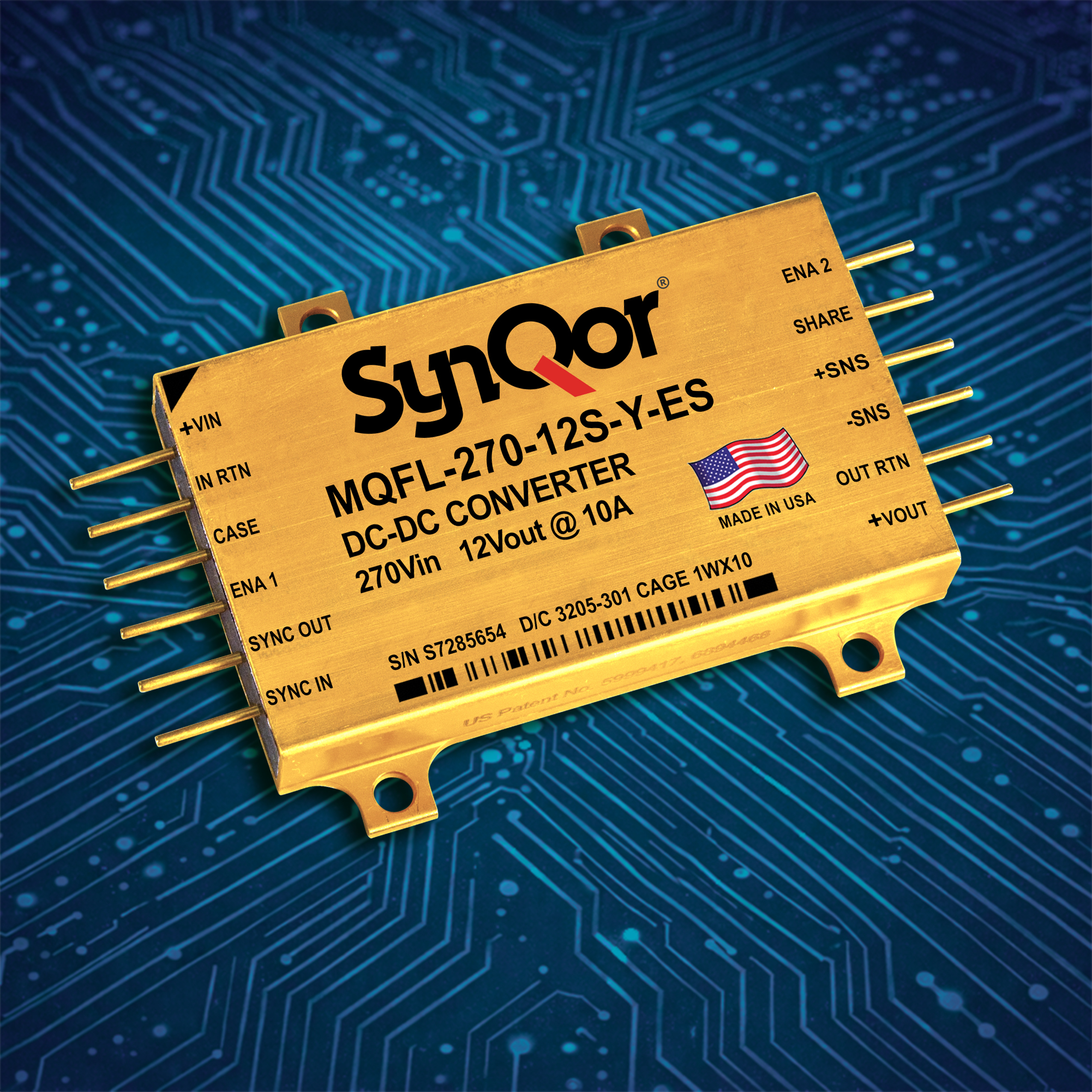
SynQor Ruggedized Industrial Isolated DC-DC Converter Half-Brick

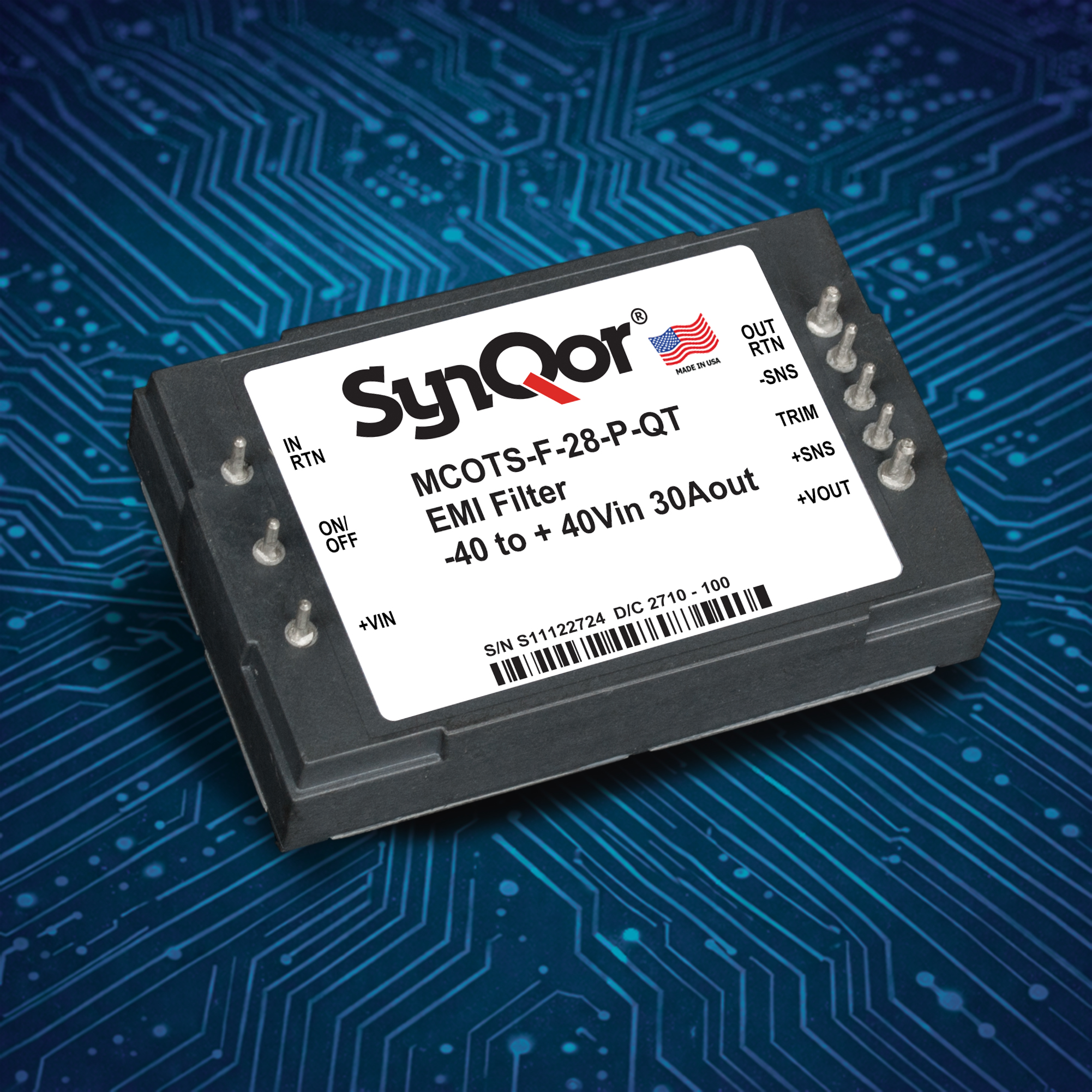
Industrial Transient EMI Filters

Complementary half-brick and quarter-brick input filter modules providing surge protection, line noise suppression, and compliance with severe industrial EMC standards.

View EMI Filters
SynQor Industrial Transient EMI Filter Module

Wide-Input PFC & AC-DC Front Ends

Active power-factor-corrected power modules engineered to bridge 3-phase and single-phase AC grids to stabilized intermediate DC buses for heavy industrial systems.

View PFC Front Ends
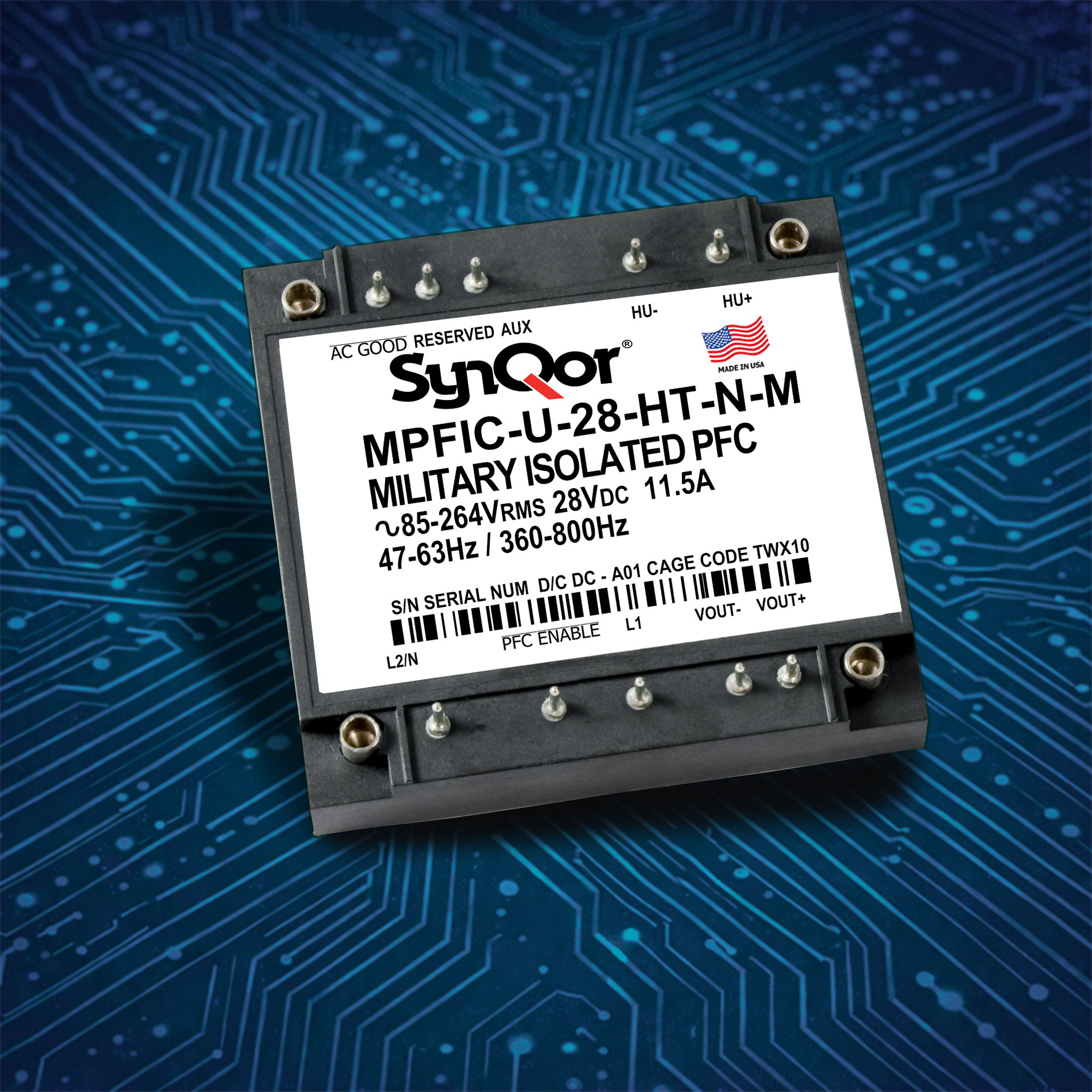
SynQor Isolated Industrial PFC Module

Ruggedized Field Power Systems

Fully encapsulated, chassis-mounted, and rack-mount power units and uninterruptible power systems (UPS) designed for severe industrial installations and remote sites.

View Power Systems
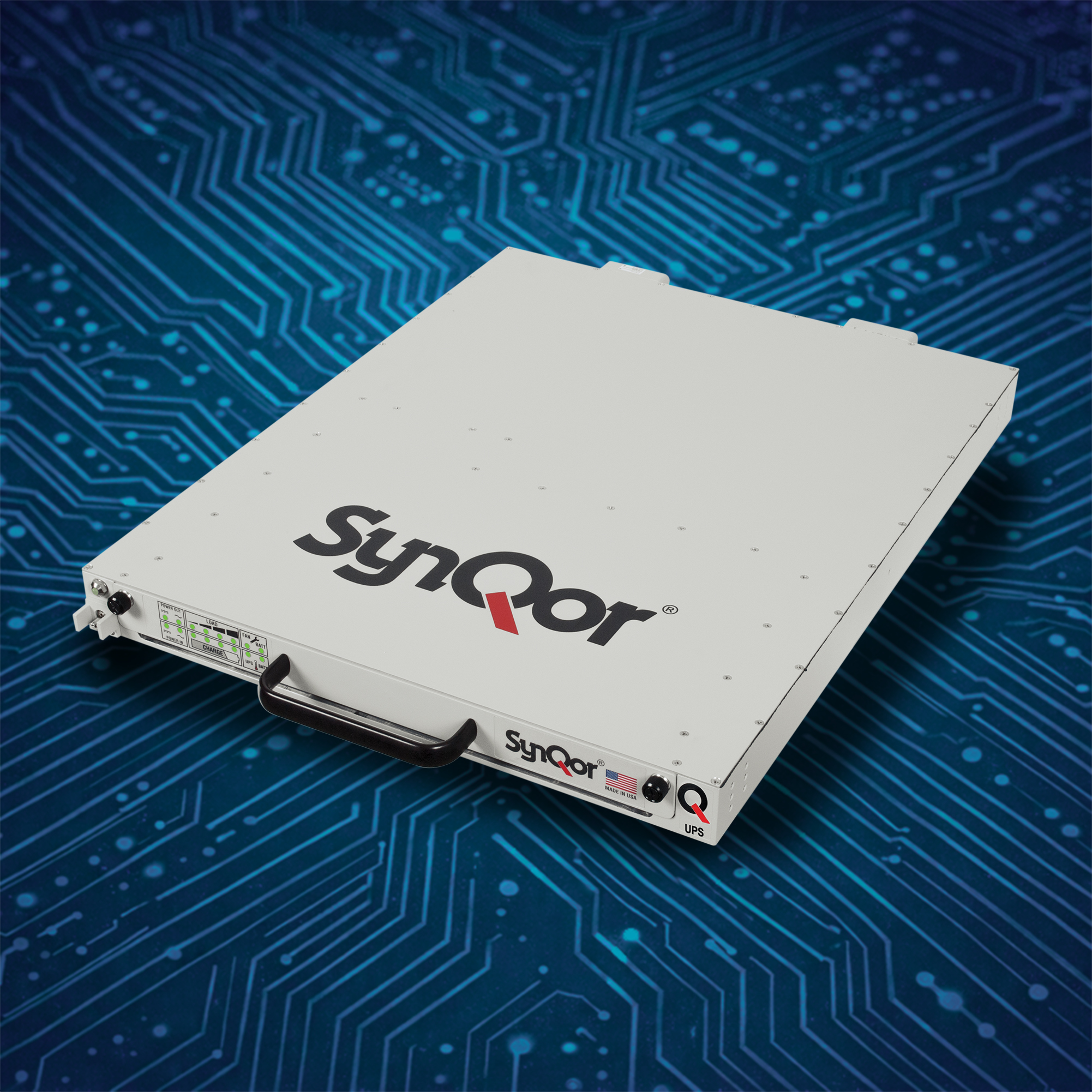
Ruggedized Industrial UPS Power System Assembly
Industry Development & Sourcing Roadmap

As global industries transition toward Industry 4.0, smart electrification, autonomous heavy equipment, and green energy grids, the specifications for DC-DC converters are evolving rapidly.

1. High Voltage DC (HVDC) Grids & Battery Storage Integration

Factory automation and renewable microgrids are moving away from traditional AC distribution toward High Voltage DC (HVDC) architectures (such as 380V or 700V buses). Ruggedized DC-DC converters with wide input ranges and ultra-high galvanic isolation are required to step down these high DC voltages directly to 24V or 48V logic and actuator buses. This eliminates multiple conversion steps, raising net system efficiency by 4% to 8%.

  • High Isolation Ratings (2250Vdc+)
  • Continuous Input Ranges up to 425Vdc
  • Zero-Voltage Switching (ZVS)
Learn about HVDC Solutions
Smart Industrial Microgrid Power Distribution Unit

2. Growth of Sealed, Fanless Enclosures in Dusty & Corrosive Environments

Industrial sites—such as chemical processing, mining, offshore oil & gas, and outdoor transportation hubs—cannot use fan-cooled power supplies due to dust ingress, airborne moisture, and chemical exposure. Procurement focus has permanently shifted toward fully encapsulated, baseplate conduction-cooled DC-DC converters capable of operating at 100% full load with baseplate temperatures up to +100°C.

  • IP67 Sealed Capability
  • Vibration & Shock Resistant
  • Zero Moving Parts
View Conduction-Cooled Modules
Fanless Conduction Cooled Industrial Power Enclosure

3. Advanced Semiconductor Topologies & Synchronous Rectification

Legacy converters relied on Schottky diodes, wasting significant power as heat. Modern industrial requirements mandate synchronous rectification topologies utilizing low-resistance MOSFETs and advanced silicon carbide (SiC) or gallium nitride (GaN) switching circuits. SynQor pioneered commercial synchronous rectification, enabling thermal dissipation reductions of up to 60% compared to legacy diode-rectified converters.

  • Synchronous MOSFET Drive
  • Minimal Thermal Dissipation
  • 95%+ Efficiency Curves
Explore Synchronous Technology
High efficiency synchronous rectification circuit evaluation

4. Total Cost of Ownership (TCO) vs Upfront Unit Cost Analysis

Global procurement teams now evaluate DC-DC converters using 10-year TCO financial models. A converter operating at 96% efficiency versus 88% saves hundreds of kilowatt-hours per unit annually, drastically reduces cooling equipment expenses, lowers Mean Time Between Failures (MTBF) degradation, and prevents catastrophic line-down events.

  • Extended Field Service Life
  • Lower Enclosure Thermal Stress
  • Reduced Carbon Footprint
Request TCO Analysis Support
Industrial equipment total cost of ownership analysis
Enterprise E-E-A-T & Manufacturing Excellence

Why Global OEMs & System Engineers Choose SynQor

SynQor's process-driven engineering model combines tier-one component selection, rigorous environmental qualification, and complete U.S.-based production to deliver unmatched quality guarantees.

Contact Us

Exceeding AS9100 & ISO 9001 Standards

Full lot traceability, automated optical inspection, continuous environmental stress screening (ESS), and rigorous failure-mode testing exceed standard commercial benchmarks.

100% U.S. Design & Manufacturing Facility

All engineering, surface-mount manufacturing, encapsulation, and qualification testing are centralized in Salem, New Hampshire, guaranteeing supply chain integrity and eliminating geopolitical lead-time bottlenecks.

Pioneering Synchronous Rectification Heritage

Holding landmark patents in high-efficiency topologies, SynQor consistently advances power density curves while maintaining low thermal profiles for sealed chassis setups.

Technical Sourcing FAQ

Frequently Asked Questions by Industrial Sourcing Teams & System Architects

In-depth answers to common questions asked in AI technical queries, procurement RFP evaluations, and system design reviews.

A true ruggedized industrial DC-DC converter is engineered from the ground up to endure severe operational environments that would destroy standard commercial power modules. Key design characteristics include: 1. Mechanical Encapsulation: Solid potting compounds protect internal magnetic components and surface-mount circuits from intense shock, vibration, moisture, chemical fumes, and conductive dust particles. 2. Baseplate Conduction Cooling: Operates efficiently across extended ambient ranges (-40°C to +100°C baseplate temperature) without requiring cooling fans. 3. Extreme Transient Immunity: Handles input voltage surges, lightning transients, and load dumps without resetting output regulation. 4. Certified Isolation: Meets stringent dielectric isolation standards (up to 2250Vdc or higher) between input, output, and baseplate chassis.

SynQor ruggedized industrial modules undergo 100% Environmental Stress Screening (ESS) and are certified against shock and vibration standards including MIL-STD-810G and industrial transportation norms.

Conventional isolated DC-DC converters utilize output Schottky diodes for rectification. The forward voltage drop ($V_f$) of a diode creates constant power loss ($P_{loss} = V_f \times I_{out}$). At high output currents (e.g., 50 Amps at 5V), diode dissipation alone generates 25 to 35 Watts of continuous heat inside the converter package.

SynQor’s synchronous rectification replaces output diodes with actively driven MOSFET switches featuring extremely low channel resistance ($R_{DS(on)}$). Conduction loss drops to $I_{out}^2 \times R_{DS(on)}$, cutting internal thermal dissipation by up to 60%. This breakthrough raises overall efficiency up to 96%, keeping baseplate operating temperatures low enough for reliable conduction cooling inside sealed IP67 or NEMA 4X enclosures where convective airflow is completely absent.

Industrial DC supply buses typically fluctuate depending on battery state of charge, generator variations, or heavy inductive motor starts. SynQor offers ultra-wide continuous input voltage ranges tailored for standard industrial nominal voltages:

  • 12V / 24V Nominal Buses: 9V to 60V continuous input range.
  • 48V / 72V Nominal Buses: 18V to 75V continuous input range.
  • 110V Industrial / Rail Buses: 34V to 135V or 66V to 160V continuous input range.
  • HVDC Factory Grids: Continuous input coverage up to 425Vdc.

These wide windows allow industrial equipment to operate seamlessly without rebooting during severe input voltage sags or brownouts.

Power converter switching noise can corrupt nearby sensor signals, PLC logic, or radio communications. SynQor provides a dual-layer EMI and transient protection strategy: 1. Two-Stage Topology: Internal converter topology naturally limits input ripple current and maintains clean switching waveforms. 2. Matched EMI Filter Modules: SynQor designs matching half-brick and quarter-brick transient EMI filters (such as the MCOTS-F family). When paired with SynQor DC-DC converters, the combined filter-converter system is pre-characterized to clear aggressive conducted emissions (MIL-STD-461E/F, EN 55011/55032 Class A/B) and severe surge transient standards (MIL-STD-1275D/E, IEC 61000-4-5) without requiring trial-and-error external filtering circuit design.

Many commercial power module manufacturers discontinue product lines after 5 to 7 years, forcing OEMs into expensive circuit board redesigns and recertification cycles. SynQor supports industrial, railway, and defense platforms designed for 15 to 25+ years of operational service.

We maintain full ownership of our U.S. manufacturing facility, archive all product qualification documentation, enforce strict control over bill-of-materials (BOM) changes, and provide long-term Form-Fit-Function replacements. If an underlying component reaches end-of-life, SynQor re-engineers the internal module layout while preserving the identical external footprint, pinout, mechanical mounting, and electrical specifications.

Yes. Many SynQor industrial DC-DC module product families feature built-in active current sharing or droop share options. This allows multiple converters to be connected directly in parallel to meet high total output power demands or to establish N+1 redundant architectures where mission-critical systems remain 100% operational even if one power module experiences a fault condition.

Need Assistance Engineering Your Industrial Power Architecture?

Submit your electrical requirements—input voltage range, output profile, thermal constraints, enclosure IP rating, and target EMI standards—to our senior application team for instant technical evaluation and product matching.

Contact Us Access Design Tools