Explore our precision-engineered synchronous rectifier power modules, rugged uninterruptible power supplies (UPS), and high-reliability DC-DC/AC-DC converters tailored for Swedish industrial automation, maritime, energy, and telecom infrastructure.
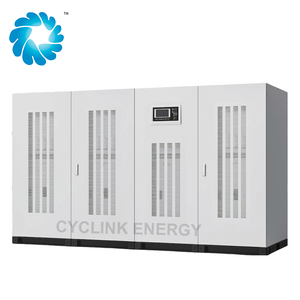
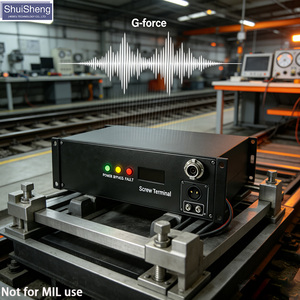
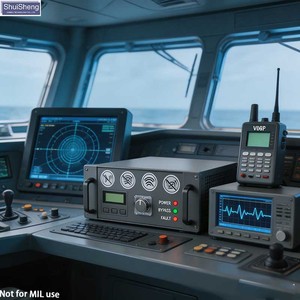
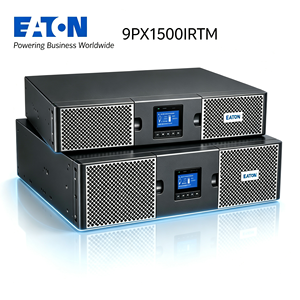
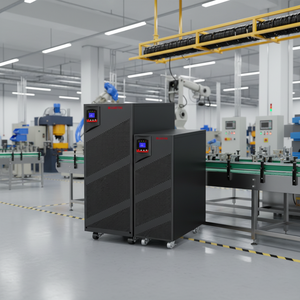
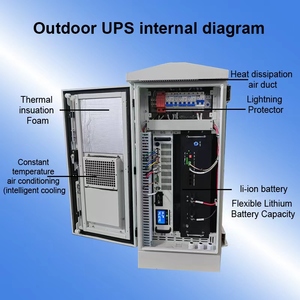
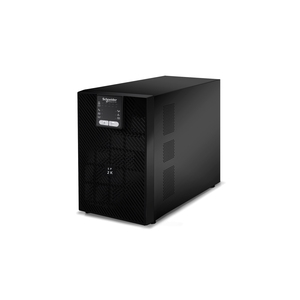
In high-power industrial, naval, and telecom energy architectures, thermal dissipation is the primary bottleneck for system miniaturization and long-term reliability. Traditional DC-DC and AC-DC power modules rely on Schottky diode rectification in the secondary stage. While simple, diode rectification suffers from a fixed forward voltage drop ($V_F \approx 0.4\text{V to } 0.7\text{V}$), resulting in static conduction losses proportional to output current ($P_{loss} = I_{out} \cdot V_F$). At high output currents—such as 50A or 100A bus rails—diode dissipation alone can exceed 35 to 50 Watts, mandating bulky heat sinks, forced-air cooling fans, and large enclosure footprints.
Synchronous Rectification (SR) technology fundamentally disrupts this physical limitation by replacing secondary lossy diodes with actively driven, ultra-low $R_{DS(on)}$ N-channel MOSFETs. Because power MOSFET conduction losses follow an ohmic power law ($P_{loss} = I_{rms}^2 \cdot R_{DS(on)}$), advancing semiconductor manufacturing allows $R_{DS(on)}$ to drop into the single-milliohm range ($< 1.5\text{ m}\Omega$). Consequently, power module conversion efficiency shifts dramatically upward—from historical 82%–88% benchmarks to an industry-leading 96.4% peak efficiency across wide load profiles.
By bypassing the fixed junction voltage of silicon diodes, SR modules decrease secondary dissipation by up to 75%. This allows full-power operation in sealed, conduction-cooled enclosures without relying on air filters or mechanical cooling fans subject to icy Nordic dust clogging.
Our proprietary two-stage topology incorporates resonant Zero-Voltage Switching on the primary side coupled with adaptive gate-drive algorithms on the secondary side. This eliminates high-frequency switching spikes and dramatically lowers conducted EMI noise to satisfy strict MIL-STD-461 and EN 55032 standards.
Thermally optimized aluminum baseplates and planar magnetics ensure low thermal resistance ($\theta_{JC} < 0.8^\circ\text{C/W}$). Systems can deliver 100% rated output power at baseplate temperatures ranging from extreme arctic conditions (-40°C) up to severe industrial heat (+100°C).
From sub-arctic mining in Kiruna to offshore wind integration in the Baltic Sea, Swedish industrial primes require power conversion components engineered for cold climates, extreme grid transients, and uncompromising reliability.
Sweden’s northern mining hubs in Kiruna and Gällivare (LKAB, Boliden) operate deep underground autonomous loaders, continuous ventilation grids, and heavy-duty battery electric vehicles (BEVs). Equipment operates under intense ambient vibration, high humidity, and extreme magnetic fields.
The Solution: Our ruggedized synchronous rectifier DC-DC converters feature fully potted quarter-brick and half-brick form factors certified to MIL-STD-810G shock/vibration specs. The high-efficiency active rectifier eliminates internal hotspots, preventing thermal fatigue under continuous 24/7 excavation duty cycles.
Sweden’s clean energy grid relies heavily on northern hydropower stations and expanding Baltic offshore wind installations (such as projects along the Gulf of Bothnia). Offshore power conversion hardware is exposed to corrosive marine salt spray, wide voltage surges, and lightning transients.
The Solution: Auxiliary control systems inside wind turbine nacelles deploy our IP68 anti-corrosion synchronous AC-DC rectifiers and active PFC front-ends. Featuring EN 61000-4-5 Class 4 surge immunity and conformal-coated PCBs, these power modules guarantee uninterruptible turbine pitching and telemetry backhaul during severe Nordic winter storms.
As Swedish telecom leaders expand 5G standalone networks across sparsely populated northern regions, base station cabinets must operate in sealed, unheated outdoor enclosures where fan failure means immediate node shutdown.
The Solution: SynQor-architected synchronous bus converters accept -48V nominal telecom inputs (35V–75V wide range) and deliver tightly regulated 12V or 28V intermediate rails with over 96% conversion efficiency. Conduction cooling via aluminum baseplate mounting ensures zero moving parts, drastically lowering site maintenance calls in remote Swedish terrain.
Sweden’s defense OEMs require strict compliance with military standards for airborne radar systems, naval combat electronics (Visby-class stealth corvettes), and armored vehicle tactical communications.
The Solution: Our Mil-COTS synchronous rectifier modules are engineered against MIL-STD-704(A-F) airborne transients, MIL-STD-1275 28V vehicle spikes, and MIL-STD-1399 shipboard power specs. Built in AS9100-certified facilities, these modules offer full supply-chain traceability for Swedish defense procurement.
The Swedish industrial sector is undergoing a rapid transition toward carbon-neutral production, summarized by national initiatives like Fossil Free Sweden (Fossilfritt Sverige) and massive green steel ventures in northern Sweden (HYBRIT, H2 Green Steel). This decarbonization drive imposes stringent energy efficiency mandates on every embedded sub-system and power supply deployed within the Kingdom.
System architects in Sweden face three primary technological trends when specifying power conversion components:
We combine pioneer-level synchronous rectification patents with military-grade manufacturing discipline to deliver zero-defect power hardware.
All design, qualification, and manufacturing processes take place under rigorous quality controls, guaranteeing lot-to-lot consistency and total component traceability for defense and medical OEM programs.
As commercial pioneers of synchronous rectification in isolated DC-DC converters, our design team holds foundational intellectual property in active gate control, planar transformer integration, and multi-stage power conversion.
We supply matched transient filters (MCOTS-F family) evaluated alongside our power converters as a unified front-end chain, eliminating common EMC qualification failures during MIL-STD-461 or EN 55032 testing.
We support long-lifecycle industrial and military programs with strict non-obsolescence commitments. Form-fit-function replacement paths ensure your hardware line stays active for 20+ years without forced redesigns.
Swedish OEM clients work directly with senior field application engineers (FAEs) for thermal modeling, worst-case stress analysis (WCSA), derating reviews, and custom pinout modifications.
Established supply routes and export compliance protocols ensure fast, reliable delivery to major Swedish industrial hubs including Stockholm, Gothenburg, Malmö, Västerås, and Kiruna.
While low temperatures improve MOSFET conduction resistance ($R_{DS(on)}$ decreases as silicon cools), extreme cold poses cold-start challenges for conventional magnetics and capacitors. Our modules are designed with industrial sub-zero components rated for reliable -40°C cold startup. Furthermore, because synchronous rectifiers dissipate minimal heat during normal operation, thermal shock cycles across internal solder joints are vastly reduced, extending field MTBF in outdoor cabinets across Norrland.
Yes. All standard AC-DC front-ends and DC-DC converter series carry CE marking and satisfy the EU Low Voltage Directive (2014/35/EU) and EMC Directive (2014/30/EU). Modules deployed in grid-connected systems incorporate active Power Factor Correction (PFC > 0.99) to exceed SS-EN 61000-3-2 specifications. Comprehensive RoHS 3 and REACH compliance documentation is provided for regulatory filings.
Absolutely. In addition to standard 24V, 48V, 110V, and 270V nominal input converters, our engineering team routinely delivers customized brick configurations. Whether you require tailored output trim ranges, specialized thermal baseplate geometries, or conformal coating against severe Baltic salt moisture, our US-based manufacturing facility can execute custom qualification protocols.
The vast majority of compliance delays occur when pairing converters with third-party EMI filters. We eliminate this risk by publishing full conducted emissions data for our pre-tested Converter-Plus-Filter combinations. By using our matched filters, systems routinely pass MIL-STD-461 (C, D, E, F) and EN 50121-3-2 (Railway EMC) on the first test pass.
Standard commercial off-the-shelf (COTS) and Mil-COTS modules maintain stock availability or expedited 4-to-6 week build cycles. Ruggedized industrial UPS assemblies and high-power 3-phase systems are manufactured to order with standard lead times of 8 to 12 weeks. Shipments to Sweden are handled via expedited air freight directly to Arlanda (ARN) or Landvetter (GOT) airports with complete customs documentation.
Component junction temperature ($T_J$) is the single largest multiplier in Arrhenius thermal stress equations for MTBF. Because synchronous rectification lowers internal operating temperatures by 15°C to 30°C compared to diode rectifiers, semiconductor thermal stress drops exponentially. This translates directly to calculated MTBF figures exceeding 2,500,000 hours at +40°C baseplate temperatures.
Consult with our senior power engineers today. Whether you are designing next-generation sub-arctic mining automation, 5G telecom nodes, or defense avionics for the Swedish market, we provide comprehensive thermal, electrical, and EMI review before layout commitment.
