Direct from ISO-certified production lines: Mission-critical pure sine wave inverters, lithium-integrated online UPS systems, and rugged outdoor power architectures tailored for Kenya's enterprise sector.
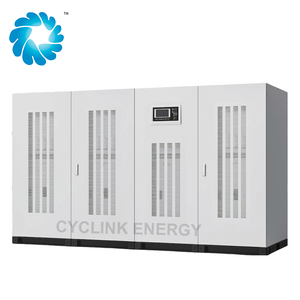
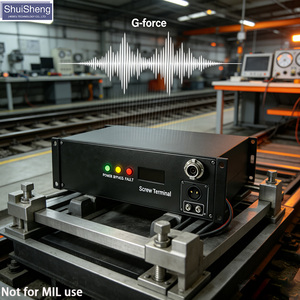
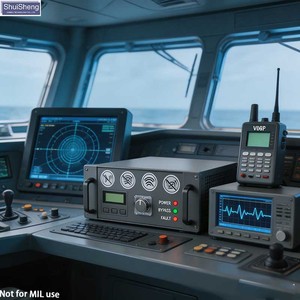
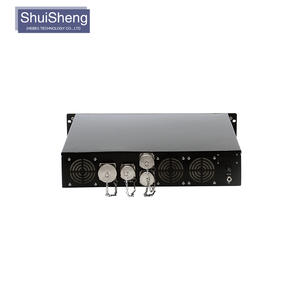
Kenya is rapidly solidifying its status as East and Central Africa’s primary industrial, financial, and technological powerhouse. From the Silicon Savannah technology corridors in Konza Technopolis to the agricultural processing hubs in Eldoret, Nakuru, and Kisumu, commercial enterprises rely heavily on continuous, uncompromised power supply. However, the national grid infrastructure—managed primarily by Kenya Power and Lighting Company (KPLC)—presents unique operational challenges. Commercial facilities face frequent voltage sags, transient power surges, high total harmonic distortion (THD), and seasonal outages driven by climate volatility and transmission congestion.
To establish long-term operational resilience, corporate buyers, MEP contractors, and telecommunication infrastructure developers in Kenya require heavy-duty, factory-engineered pure sine wave power inverters and industrial double-conversion online UPS systems. Procurement strategies must shift from low-cost initial acquisition toward total cost of ownership (TCO), thermal derating capabilities, high-speed maximum power point tracking (MPPT) for hybrid solar integration, and high IP-rated environmental resilience.
Ultra-wide dynamic input range (110V AC – 300V AC) eliminates frequent transfers to battery mode, extending LiFePO4 battery service life beyond 10 years under fluctuating grid conditions.
True double-conversion online technology guarantees 0ms transfer time between utility power, battery backup, and solar PV strings, safeguarding sensitive data center hardware.
Custom heatsink design with conformal coating protects power modules against high humidity, coastal salt mist in Mombasa, and ambient temperatures up to 55°C without power derating.
Understanding the foundational topology of power converters is critical for Kenyan engineering teams selecting power backup infrastructure for heavy industrial motors, healthcare facilities, and telecommunications.
When selecting a power inverter factory or manufacturing partner for the East African market, decision-makers must evaluate the trade-offs between low-frequency copper-transformer isolation and high-frequency transformerless topologies. Below is a structural engineering comparison designed to guide procurement specifications for EPRA (Energy and Petroleum Regulatory Authority) compliance and long-term durability.
Core Topology: Heavy-duty iron-core toroidal transformer coupled with low-frequency switching MOSFETs/IGBTs.
Surge Capacity: Up to 300% peak rated capacity for 10-20 seconds. Ideal for high-inrush inductive loads.
Grid Isolation: Complete physical galvanic isolation between DC battery bank and AC utility grid, protecting connected equipment from severe lightning strikes and extreme high-voltage spikes common in the Great Rift Valley region.
Best Application: Heavy industrial machinery, tea/coffee processing plants, mining operations, and medical imaging systems (MRI/CT scanners).
Core Topology: High-frequency ferrite core switching with advanced DSP (Digital Signal Processor) control loops.
Efficiency Rating: Peak efficiency up to 97.5%, minimizing internal thermal dissipation and overall rack footprint.
Solar Integration: Built-in dual MPPT controllers capable of high DC voltage input (up to 500V DC), facilitating direct coupling with modern high-wattage monocrystalline solar arrays.
Best Application: Commercial office buildings, cloud data centers, residential solar setups, and modern banking branch IT rooms in Nairobi.
Core Topology: Sealed aluminum die-cast enclosure with advanced conduction cooling and anti-salt/anti-corrosion protection.
Environmental Rating: IP68 / NEMA 6P dustproof and waterproof, equipped with integrated air-to-air heat exchangers.
Grid Resilience: Built-in multi-stage Class II lightning surge protection (Up to 40kA) designed for remote tower sites along logistics corridors.
Best Application: 4G/5G cellular base stations, remote rail signaling along the SGR network, and edge computing nodes in harsh rural environments.
Custom engineered power solution deployments solving specific sector challenges from the Port of Mombasa to the agricultural heartlands of Mount Kenya.
Hospitals in Nairobi, Nakuru, and Eldoret require zero interruption for intensive care unit (ICU) ventilators, surgical suite lighting, and cold-chain vaccine storage. Deploying 10kVA to 100kVA online double-conversion UPS systems with lithium (LiFePO4) battery chemistry ensures zero-millisecond power transfer during grid failures, coupled with clean pure sine wave power that prevents voltage-sensitive medical telemetry distortion.
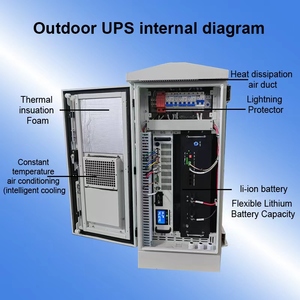
Telecom operators expanding 4G LTE and 5G fiber backhauls into remote counties (such as Turkana, Garissa, and Marsabit) face unpaved logistics paths, high ambient dust, and extreme heat. Deploying IP68 all-weather outdoor UPS units equipped with anti-corrosion, anti-mold coatings and smart remote SNMP monitoring guarantees 99.999% uptime while minimizing expensive diesel generator service runs.
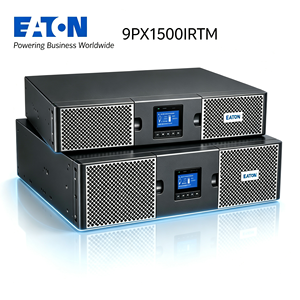
Nairobi’s Upper Hill and Kilimani banking hubs host complex financial transaction engines and cloud data centers. Custom industrial rack-mounted 1500W to 10kVA UPS systems provide high-density power protection against harmonic distortion and rapid voltage transients, enabling smooth generator synchronization during utility changeovers.
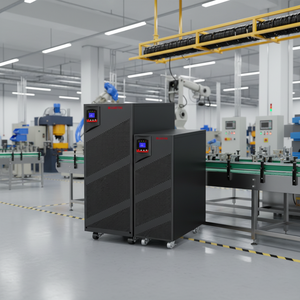
Horticultural packhouses and tea processing factories across Naivasha, Kericho, and Nyeri operate heavy electric motors and sorting machinery. Low-frequency industrial inverters featuring robust surge capacity absorb motor start-up current spikes without tripping protection switches or causing brownouts across connected office IT equipment.
Delivering end-to-end power conversion technology with full OEM/ODM customization, stringent testing protocols, and complete supply chain transparency.
Our power converters utilize state-of-the-art synchronous rectification topologies, replacing lossy diodes with actively controlled MOSFETs. This lowers heat dissipation by up to 40%, shrinking physical enclosure sizes and extending component operational lifespans in sealed, fanless environments.
Every inverter and UPS assembly undergoes 100% full-load burn-in testing, thermal imaging evaluation, and automated vibration stress screening. Our quality control system exceeds basic ISO standards to comply with military-grade and aviation-grade power reliability demands.
Engineered with multi-protocol communication (CANbus, RS485, Modbus), our inverters seamlessly interface with major Lithium Iron Phosphate (LiFePO4) Battery Management Systems, guaranteeing precise state-of-charge (SoC) management and active cell balancing.
Essential technical guidance regarding imports, EPRA compliance, sizing, solar hybrid coupling, and grid optimization in East Africa.
Our industrial online UPS systems and power inverters feature an ultra-wide AC input voltage window (160V to 300V AC full load, and as low as 110V AC at partial load). This prevents the system from unnecessarily switching to battery power during routine brownouts, preserving battery reserve energy for actual blackout emergencies.
Yes. All systems comply with international safety standards including IEC/EN 62040-1 (UPS Safety), IEC/EN 62040-2 (EMC), CE, and ISO-9001 quality guidelines, meeting requirements for import approval by the Energy and Petroleum Regulatory Authority (EPRA) and the Kenya Bureau of Standards (KEBS) PVOC certification program.
Modified sine wave inverters produce high total harmonic distortion (THD), causing electric motors to overheat, sensitive medical monitors to show artifact noise, and server power supplies to buzz or shut down unexpectedly. Our pure sine wave inverters deliver smooth AC output with THD < 2%, protecting sensitive commercial electronics.
Absolutely. Our hybrid power systems are built with smart automatic generator start (AGS) dry contacts and high-efficiency MPPT solar inputs. The intelligent control board prioritizes solar generation, uses utility/generator power as secondary support, and maintains battery banks in optimal operational readiness.
Coastal environments present dual risks: heat derating and salt-spray corrosion. Our ruggedized outdoor UPS units feature IP68 dust-and-waterproofing, conformal-coated PCB assemblies, and optimized aluminum thermal heatsinks, allowing continuous full-rated output at ambient temperatures up to 50°C without thermal shutdown.
We provide comprehensive OEM/ODM engineering support, including custom input/output voltage matching (e.g., 380V/220V 3-phase or single-phase 230V), custom enclosure paint colorways, specialized communication protocols, and dedicated spare parts kits for local maintenance teams.
Consult directly with our Senior Power Application Engineers. Receive technical data sheets, customized load analysis, factory-direct wholesale pricing, and logistics support tailored for your enterprise project in East Africa.