Engineered for high efficiency, active power factor correction (PFC), extreme environmental resilience, and zero-latency power transition in heavy industrial and fuel cell operations.
The Chubu region of Japan, centered around Nagoya and Aichi Prefecture, stands as the undisputed global capital of automotive innovation, advanced robotics, heavy machinery, and hydrogen fuel-cell commercialization. As Japan aggressively expands its Central Japan Hydrogen Highway initiative and transforms the Port of Nagoya into a zero-emission maritime logistics hub, industrial prime contractors and equipment original equipment manufacturers (OEMs) face unprecedented electrical power conversion challenges.
Fuel cell systems—ranging from Solid Oxide Fuel Cells (SOFC) used in stationary industrial power generation to Proton-Exchange Membrane (PEM) stacks deployed in automated guided vehicles (AGVs), heavy trucks, and marine vessels—present highly non-linear load profiles. A fuel cell stack's output voltage degrades significantly as current draw increases, exhibiting severe dynamic voltage sags under sudden step-load spikes. Furthermore, fuel cell systems are highly sensitive to reverse current feed, input ripple voltage, and thermal dissipation failures.
Conventional power supplies utilizing lossy diode rectification introduce severe thermal bottlenecks in sealed industrial enclosures, converting up to 12% of input fuel cell power into waste heat. By utilizing SynQor-pioneered multi-stage synchronous rectification topologies, power losses are reduced by up to 60%, enabling full-load operation up to +100°C baseplate temperatures without forced-air cooling.
Integrating fuel cell power generators with plant automation networks, microgrids, or transportation propulsion requires a deep understanding of multi-domain power management. The engineering specifications required for the Nagoya market differ significantly from standard off-the-shelf commercial electronics:
While Nagoya operates predominantly on a 60Hz utility grid, heavy equipment manufactured in Aichi Prefecture is frequently exported to 50Hz regions across Asia and Europe, or deployed in hybrid islanded microgrids driven by fuel cell gas turbines. Advanced Power Factor Correction (PFC) modules must achieve low Total Harmonic Distortion (THD < 3%) and active power factor compensation (> 0.99) across wide AC input frequencies (45Hz to 800Hz), ensuring compliance with strict Japanese Industrial Standards (JIS C 61000-3-2).
During cold start-up procedures, PEM fuel cell stacks exhibit high open-circuit voltages (OCV) that quickly drop once current begins to flow. Industrial DC-DC converters must accommodate wide continuous input voltage ranges (e.g., 9V to 36V, 18V to 75V, or 180V to 425V DC) while clamping transient voltage spikes caused by inductive load dumping in heavy automotive plant machinery.
Industrial complexes located near the Port of Nagoya, Yokkaichi, and Tokai are continuously exposed to high humidity and corrosive salt-fog atmospheres. Standard industrial power supplies suffer from electrochemical migration and dendritic growth across PCB traces. Elite fuel cell power systems must feature conformal coating, IP68 hermetic sealing, and pass MIL-STD-810G salt-spray qualification.
From automotive testing bays in Toyota City to railway signaling systems along the Meitetsu line, our engineered power modules deliver uncompromising reliability.

In Toyota City and Kariya’s advanced manufacturing clusters, automated robotic welding and assembly cells require steady DC bus voltage during fuel cell stack conditioning. High-efficiency DC-DC converters eliminate thermal dissipation issues in sealed cabinet enclosures, ensuring 24/7 continuous operation without thermal throttling.

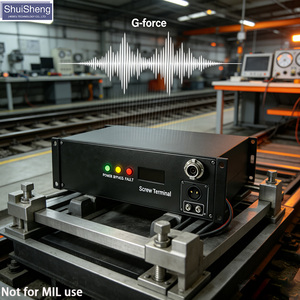
Central Japan’s rail infrastructure demands uninterrupted power for trackside signaling, barrier automation, and hydrogen-powered experimental passenger cars. RailQor® series isolated modules handle severe mechanical vibration, catenary voltage surges, and supply hold-up times compliant with EN 50155 Class S2.

Nagoya’s aerospace cluster, centered around Komaki and Central Japan International Airport (Centrair), is pioneering hydrogen fuel cell auxiliary power units (APU) for aviation. Our AeroQor® AC-DC power converters feature 400Hz variable frequency operation, tight power factor regulation, and DO-160G airborne qualification.

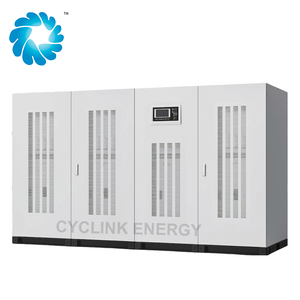
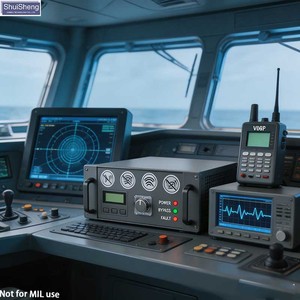
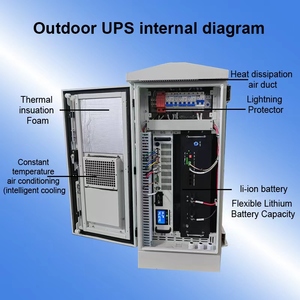
Container handling equipment and zero-emission AGVs operating in the Port of Nagoya require ruggedized outdoor UPS platforms with high lightning protection, IP68 waterproofing, and anti-salt corrosion coatings to maintain terminal telemetry under harsh typhoon conditions.
We combine cutting-edge topology innovation with rigorous U.S. manufacturing quality control to protect multi-decade industrial equipment lifecycles.
Our process-centered manufacturing organization guarantees 100% full-traceability, serialized burn-in testing, and qualification documentation that withstands stringent Japanese prime-contractor quality audits.
Replacing conventional lossy schottky diodes with actively driven MOSFETs lowers internal power dissipation, allowing equipment designers to reduce heatsink mass and maintain tight derating margins.
Industrial power projects in Japan span decades. We support long-life defense, rail, and industrial programs with guaranteed continuity of supply, archived qualification data, and backwards-compatible brick form factors.
Addressing compliance, grid compatibility, and technical derating requirements across Aichi Prefecture.
Our active Power Factor Correction (PFC) front-end modules are designed for universal AC operation (85-264Vac, 45-800Hz), naturally seamlessly syncing with Nagoya’s 60Hz commercial supply as well as mobile generators. For DC fuel cell stacks, our wide-input isolated DC-DC converters feature continuous voltage regulation down to 50% nominal input voltage, ensuring steady power supply to downstream sensors and control PLCs during dynamic stack loading sags.
Our product lines carry full qualification against EN 50155 (Railway Applications for Rolling Stock), MIL-STD-810G (Environmental Engineering Considerations), MIL-STD-461 (EMC Conducted and Radiated Emissions), and RTCA DO-160G. We also provide test reports proving compliance with Japanese VCCI noise limits and JIS industrial standards.
Yes. We offer ruggedized, encapsulated baseplate-cooled modules and fully sealed IP68 outdoor power systems specifically built to endure coastal salt fog, mold growth, and condensation. Conduction baseplate cooling allows total thermal management without sucking corrosive coastal air across exposed electrical components.
By eliminating traditional diode forward-voltage drops, synchronous rectification increases converter efficiency up to 96.5%. Lower internal power dissipation translates directly to reduced semiconductor junction temperatures. According to Arrhenius reaction rate theory, every 10°C drop in internal operating temperature doubles component mean time between failures (MTBF).
We offer direct access to Senior Application Engineers for comprehensive system derating, thermal simulations, EMI filter design optimization, and custom pinout adaptations. Our global engineering team works closely with Japanese systems integrators from prototype phase through high-volume production.
Share your input voltage profile, load dynamics, and thermal constraints with our engineering team. Receive comprehensive EMI and derating analysis tailored for the Nagoya market.
