Precision-engineered, field-proven industrial UPS systems built specifically for Nigerian power infrastructure challenges—combining wide input voltage tolerances, active PFC, IP68 enclosures, and advanced lithium battery technology.
Nigeria represents sub-Saharan Africa's largest economy, yet its industrial sectors face unmatched power quality challenges. From frequent grid collapse events on the Transmission Company of Nigeria (TCN) network to extreme voltage sags, voltage surges, and generator switching transients, standard off-the-shelf UPS hardware often experiences premature failure. Top Chinese OEM UPS exporters have specialized in manufacturing heavy-duty, rugged uninterruptible power systems custom-engineered to operate flawlessly within Nigeria's harsh electrical and environmental landscape.
Information Gain Insight: Unlike standard commercial UPS units that trip during minor grid frequency deviations (45Hz–65Hz), rugged industrial online UPS systems manufactured for the Nigerian market utilize dual DSP digital control algorithms, wide-tolerance active power factor correction (PFC), and built-in galvanic isolation transformers to ensure 100% continuous uptime without draining battery reserves.
Upstream, midstream, and offshore petroleum facilities in Port Harcourt, Warri, and Bonny Island require IP65 to IP68 certified outdoor UPS systems. Environments with corrosive salt spray, high humidity (over 90%), and airborne hydrocarbons demand anti-mold conformal coatings, stainless steel enclosures, and MIL-STD-810G vibration proofing.
Off-grid telecom infrastructure across Northern and Southern Nigeria relies heavily on rugged outdoor UPS units coupled with solar-hybrid LiFePO4 batteries. These systems withstand ambient temperatures exceeding 48°C while accepting unstable inputs from local diesel generators without damaging sensitive cellular transceivers.
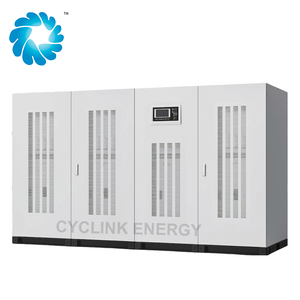
Commercial banking hubs in Victoria Island, Ikeja, and Abuja require high-capacity 3-phase online double-conversion UPS systems (such as 10kVA to 500kVA units). Featuring low input current harmonic distortion (THDi < 3%) and high efficiency up to 96%, these systems reduce cooling costs and generator oversizing ratios.
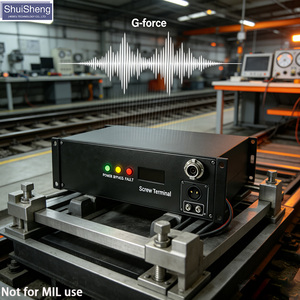
Modernized rail networks demand strict adherence to EN 50155 standards. Industrial UPS systems protect critical interlocking signaling systems, automatic train protection (ATP), and station telecom lines against severe line spikes and zero-voltage dips.
Heavy machinery, food processing lines, and plastics extrusion plants in Agbara and Kano demand UPS units with high inrush current handling (up to 300% overload for short durations) and galvanic isolation to eliminate common-mode noise generated by heavy industrial electric motors.
Hospitals in Lagos, Ibadan, and Enugu require medical-grade online double-conversion UPS complying with IEC 60601-1 standards, ensuring ultra-low leakage current, zero transfer time, and clean pure sine wave output for sensitive MRI machines, CT scanners, and surgical theaters.
The power architecture market in West Africa is undergoing a rapid technical evolution driven by three key factors: escalating diesel generator fuel costs, accelerated adoption of industrial solar microgrids, and the transition toward high-density lithium-ion energy storage systems (ESS).
Leading Chinese factory OEM designs have commercialized advanced synchronous rectification technology within isolated DC-DC and AC-DC converter topologies. By replacing legacy, high-loss silicon diode rectifiers with actively controlled power MOSFETs, internal conduction losses are dramatically diminished. When operating under continuous 40°C to 50°C ambient temperatures typical of Nigerian summers, this higher thermal headroom prevents power de-rating, reduces thermal stress on magnetic components, and doubles overall system Mean Time Between Failures (MTBF).
Standard fan-cooled UPS units frequently suffer from dust ingress and fan motor failures in dusty inland regions such as Kano, Kaduna, or Maiduguri. China's premier industrial UPS exporters utilize heavy aluminium heat-pipe chassis, sealed NEMA 4X / IP66/IP68 enclosures, and conduction-cooling architectures. This layout isolates delicate control PCB modules from ambient dust, moisture, and insects while dissipating heat through heavy external heatsink fins.
| Engineering Parameter | Standard Commercial UPS | Export-Grade Rugged Industrial UPS |
|---|---|---|
| AC Input Voltage Range | 180V - 260V AC (Trips to battery easily) | 110V - 300V AC (Wide range, zero battery drain) |
| Operating Temperature | 0°C to 40°C (Derates sharply above 30°C) | -40°C to +55°C (Full rated load capacity) |
| Enclosure Protection Class | IP20 / IP21 (Indoor commercial use only) | IP65, IP66, IP68 (All-weather anti-corrosion) |
| PCB Environmental Coating | None or single-layer varnish | Triple-thick conformal coating (Anti-salt, anti-mold) |
| Vibration & Shock Compliance | Basic commercial transport test | MIL-STD-810G / EN 50155 Rolling Stock Standard |
| Battery Compatibility | VRLA Lead-Acid only | Universal VRLA, LiFePO4, & Sodium-ion BMS integration |
As a global OEM/ODM manufacturing leader, our production infrastructure combines USA-heritage power conversion engineering standards with China's unmatched supply chain agility, high-volume cost advantages, and rigorous AS9100 / ISO-9001 quality management systems.
Every industrial UPS unit undergoes 100% component-level burn-in testing, high-potential (Hi-Pot) isolation testing, and full-load thermal imaging verification. Detailed qualification reports are archived for complete long-term program support.
We provide tailored mechanical form factors, specialized input/output voltages (110V, 220V, 380V, 415V, 480V 3-Phase), custom communication protocols (MODBUS, SNMP, CANbus), and custom branding for Nigerian system integrators.
Our export documentation team handles full SONCAP (Standards Organisation of Nigeria Conformity Assessment Programme) certification, Form M processing, and sea freight logistics directly to Apapa, Tincan Island ports, or Lagos air freight terminals.
Our rugged online double-conversion UPS models feature an ultra-wide AC input window (110V to 300V AC). Instead of transferring to battery power when the local grid drops to 160V or surges to 270V, the active front-end rectifier stabilizes the input voltage, keeping battery capacity at 100% for actual blackout events.
Yes. Commercial UPS units frequently refuse to sync with diesel generators due to frequency drift (50Hz ± 5Hz) and high voltage harmonic distortion. Our industrial systems utilize digital DSP phase-locked loops (PLL) that smoothly track generator frequencies from 45Hz to 65Hz without nuisance tripping.
Lithium Iron Phosphate (LiFePO4) batteries operate reliably at temperatures up to 60°C without experiencing thermal runaway. Standard VRLA batteries lose 50% of their operational lifespan for every 8°C rise above 25°C. LiFePO4 delivers 4,000+ deep cycles compared to 500 cycles for VRLA, dramatically reducing total cost of ownership (TCO).
Coastal salt air accelerates galvanic corrosion on internal copper traces and solder joints. Our factory applies a military-grade, triple-layer conformal coating across all circuit boards, while using stainless steel hardware and IP65/IP68 sealed enclosures to prevent short circuits.
We provide full SONCAP certification, ISO 9001 quality audit reports, CE certificates, factory test certificates, product datasheets, and Form M compliance documents required for seamless clearance through Nigerian Customs Service at Lagos or Port Harcourt ports.
Standard model manufacturing takes approximately 15 to 20 business days. Custom engineering or high-capacity 3-phase modular UPS builds take 25 to 35 days. Sea shipping from Shanghai/Ningbo/Shenzhen to Apapa Port takes approximately 30 to 40 days.
