
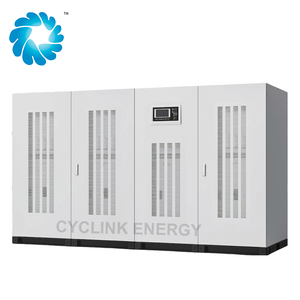
Industrial UPS for Energy, Transportation & Heavy Industry
- Integrated LiFePO4 Battery Storage System
- Compatible with Socomec/Vertiv Infrastructure
- High-Current Inductive Load Isolation
Explore our heavy-duty industrial UPS series featuring synchronous rectification, ruggedized enclosures, LiFePO4 chemistry integration, and harsh-environment durability.
Australia’s industrial sector is defined by unique geographical, environmental, and infrastructure challenges. From the arid dust storms of the Pilbara mining region in Western Australia to the high humidity and salt-fog conditions of Queensland’s coastal ports, maintaining uninterrupted electrical continuity is a critical operational imperative. Standard commercial off-the-shelf (COTS) UPS units frequently fail under Australian operational parameters due to thermal stress, lack of industrial-grade galvanic isolation, and insufficient ingress protection.
As Australia accelerates its transition toward Net Zero 2050 targets, integration of renewable energy (solar PV and wind) into microgrids across the Northern Territory, South Australia, and regional New South Wales has introduced severe grid instability. Industrial end-users face high voltage sags, rapid frequency fluctuations, and heavy inductive load surges from crushing equipment, pumps, and railway traction networks.
Leading Chinese industrial UPS manufacturers have risen as strategic supply chain partners for Australian EPC contractors, mining conglomerates, and utility operators. By combining advanced USA-pioneered synchronous-rectifier topology with high-capacity, cost-effective manufacturing footprints and rigid quality systems (ISO-9001 and AS9100 baseline standard compliance), top Chinese suppliers deliver custom-engineered UPS systems that meet or exceed AS/NZS 62040 standards at optimal lifecycle cost.
Understanding the critical engineering differences between standard IT UPS systems and heavy-industrial uninterrupted power supplies configured for Australian mining, energy, and transportation assets.
| Engineering Parameter | Standard Commercial UPS | China Heavy-Duty Industrial UPS (AU Spec) | Operational Impact in Australia |
|---|---|---|---|
| Nominal Ambient Rating | 0°C to 40°C (Deteriorates above 25°C) | -40°C to +55°C Full Load | Prevents thermal shutoffs in Outback mining sites without air conditioning. |
| Galvanic Isolation | Transformerless (Non-isolated) | Built-in Copper Isolation Transformer | Protects delicate control systems from common-mode noise & high fault currents. |
| Enclosure Protection | IP20 / IP30 (Indoor IT Room Only) | IP65 / IP66 / IP68 NEMA 4X | Blocks iron ore dust, red clay dust, and coastal salt-fog ingress completely. |
| Internal Coating | Standard Single Solder Mask | Conformal Coated PCB (IPC-CC-830 Class 3C3) | Resists corrosive atmospheric moisture, hydrogen sulfide, and fungal growth. |
| Battery Chemistry Options | VRLA / Lead-Acid (3-5 yr lifespan) | LiFePO4 with Smart Active BMS | Extends service life to 15+ years; handles high-ambient thermal degradation. |
| Standard Compliance | Basic CE / UL 1778 | AS/NZS 62040.1, .2, .3 & AS/NZS 3000 | Guarantees seamless approval by Australian electrical safety auditors (RCM). |
Examining real-world engineering implementations of Chinese industrial UPS systems across Australia's core economic sectors.
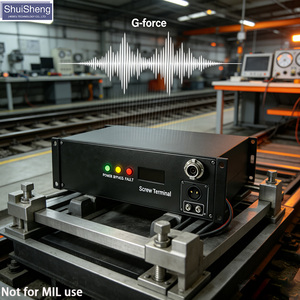
In harsh Western Australian mining camps, open-pit iron ore operations demand continuous power for SCADA cabinets, crusher control PLCs, and conveyor emergency braking systems. Industrial UPS solutions leverage vibration-damped internal sub-racks and dual-fan redundancy, ensuring zero interruption during diesel generator start-up sequences under ambient conditions exceeding 50°C.
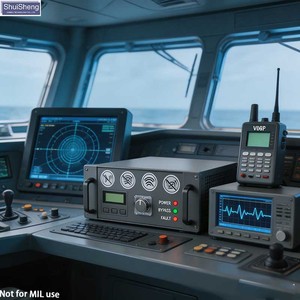
Desalination plants near Perth and LNG processing terminals along the Gladstone coastline operate in hyper-corrosive ISO 12944 C5-M marine environments. Chinese manufacturers supply industrial UPS systems built inside SS316L stainless steel enclosures featuring anti-salt, anti-mold IP68 sealed power modules, protecting critical safety shutdown equipment from saline humidity.
Trackside signaling power supplies across the Australian Rail Track Corporation (ARTC) corridors experience high lightning strike frequency and severe electromagnetic interference. Specialized 1kVA–10kVA online double-conversion rail UPS units provide high surge immunity (EN 50121-3-2), low THDi emissions, and wide dynamic input tolerance to preserve signal integrity.
Regional utility operators in South Australia and Victoria utilize compact, wind and solar-dedicated single-phase UPS systems within distributed substations. Incorporating long-life LiFePO4 battery modules, these units ensure uninterrupted breaker control power during rapid islanding transitions between grid-tied and off-grid operational modes.
Leveraging USA-developed power conversion roots, our manufacturing partners integrate high-efficiency topologies that fundamentally change thermal and operational performance.
By replacing traditional, lossy output diodes with actively driven, ultra-low RDS(on) MOSFETs, conduction losses are drastically reduced. This two-stage topology achieves converter efficiency up to 96.8%, significantly reducing waste heat inside sealed IP66 enclosures.
With an input power factor >0.99 and Total Harmonic Distortion (THDi) under 3%, our 3-phase industrial UPS systems operate in complete harmony with backup diesel generators, eliminating the risk of generator over-sizing or harmonic resonance on local site transformers.
Incorporating Lithium Iron Phosphate (LiFePO4) energy storage equipped with multi-tier battery management systems (BMS). Features cell balancing, real-time thermal runaway prevention, and wide temperature tolerance designed specifically for Australian summer heat spikes.
Procuring electrical equipment for Australian industrial projects requires strict adherence to local regulatory frameworks to clear site inspection and comply with WorkSafe and RCM regulations. Our manufacturing systems enforce end-to-end traceability across every module built.
Certified against AS/NZS 62040.1 (Uninterruptible Power Systems General Safety), AS/NZS 62040.2 (EMC Category C2/C3 Requirements), and AS/NZS 62040.3 (Performance and Test Requirements - VFI-SS-111 classification).
Manufacturing facilities operate under quality management systems exceeding ISO-9001 and AS9100 defense/aerospace standards, ensuring rigorous incoming component verification and full traceability records.
Designed with segregated neutral and earth bars, robust fault-clear capability, and compatible terminal block spacing to facilitate fast electrical installation under Australian Wiring Rules.
Get immediate clarity on technical compliance, shipping logistics, warranty support, and site integration for Australian deployments.
Our industrial UPS platforms are engineered with heavy-duty thermal derating margins and forced conduction-cooling heat sinks. Unlike standard commercial UPS units that derate rapidly above 40°C, our units maintain full nominal load delivery up to +55°C by utilizing high-temperature rated solid capacitors, Class H magnetic insulation, and synchronous rectifier topologies that minimize internal heat dissipation.
Yes. All exported industrial UPS series destined for Australia undergo stringent compliance testing against AS/NZS 62040.1 (Safety), AS/NZS 62040.2 (EMC Class C2/C3), and AS/NZS 62040.3 (VFI Double Conversion Performance). Complete test reports from accredited laboratories are provided with every FAT (Factory Acceptance Test) documentation package for easy RCM registration.
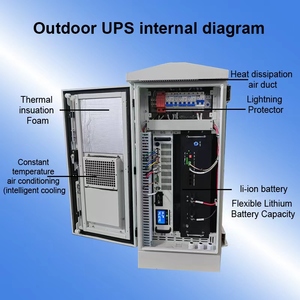
Absolutely. We offer customized cabinet manufacturing ranging from IP54 up to IP68 and NEMA 4X hermetic enclosure specs. For iron ore mining areas, we utilize double-gasketed seals and stainless steel dust filters. For marine and coastal installations, cabinets are constructed from SS316 stainless steel with C5-M high-durability polyurethane coating and IPC-CC-830 Class 3C3 conformal coated circuit boards.
We exclusively utilize Lithium Iron Phosphate (LiFePO4 / LFP) chemistry for industrial backup energy storage due to its superior thermal stability compared to NMC or Lead-Acid batteries. Every battery pack is integrated with a multi-tiered Smart BMS that monitors cell voltage, internal resistance, and multi-point temperatures, automatically isolating packs before dangerous thermal thresholds are approached.
Standard modular units have a production cycle of 2 to 3 weeks. Custom engineered UPS cabinets (with built-in isolation transformers or IP65 outdoor housings) typically require 4 to 6 weeks for manufacturing and Factory Acceptance Testing (FAT). Sea freight to major Australian ports (Sydney, Brisbane, Melbourne, Fremantle) takes approximately 12 to 16 days from our manufacturing facility.
Yes. Supported by our multi-decade manufacturing roadmap, we guarantee spare parts availability (control boards, power modules, fan assemblies) for a minimum of 15 to 20 years post-commissioning. We adhere to strict form-fit-function design principles, allowing legacy installations to upgrade internal power modules without replacing the external cabinet or cabling infrastructure.
Submit your input bus voltage, load profile, thermal constraints, and AS/NZS compliance requirements to our application engineering team. Get a detailed technical review, single-line diagram (SLD), and commercial quote within 24 hours.