Field-proven uninterruptible power systems engineered for extreme thermal derating, severe vibration immunity, anti-salt corrosion, and seamless microgrid backup in critical Japanese and global deployments.
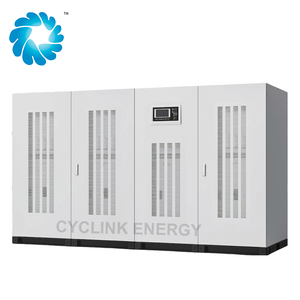
Integrated double-conversion online UPS equipped with long-life LiFePO4 battery storage, tailored for high-surge industrial loads, aviation control towers, and metallurgical plants in Osaka's coastal industrial zone.
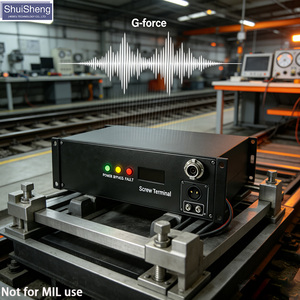
Anti-salt spray, anti-mold, and anti-corrosion tactical power enclosure. Engineered for exposed port terminals, coastal radar stations, and mobile telecom towers requiring IP68 dust-and-water protection.
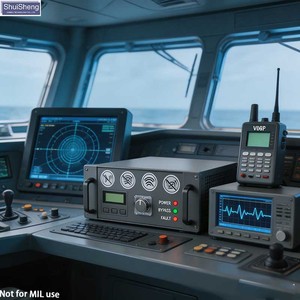
Hardened uninterruptible power core designed to withstand continuous severe mechanical shock, high dynamic loading, and vibration profiles encountered on heavy machinery and defense vehicles.
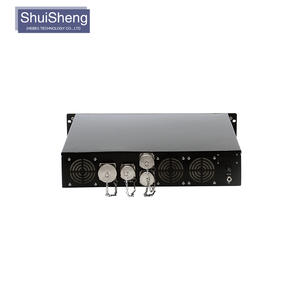
Ultra-reliable rolling stock and signaling power backup solution. Built to EN 50155 standards with low THD, wide DC/AC input ranges, and high hold-up times during catenary power dropouts.
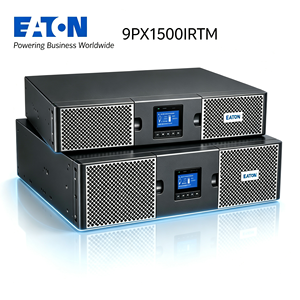
Compact 2U rack-mounted marine-grade UPS featuring unity power factor (PF=1.0). Optimized for shipboard navigation electronics, vessel bridge equipment, and compact server racks.
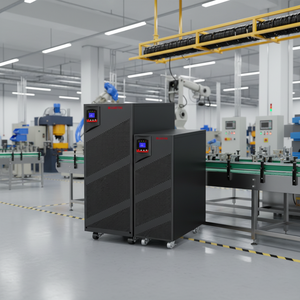
High-capacity 3-phase/1-phase online UPS engineered for heavy industrial edge processing centers, semiconductor cleanrooms, and regional data centers across Kansai.
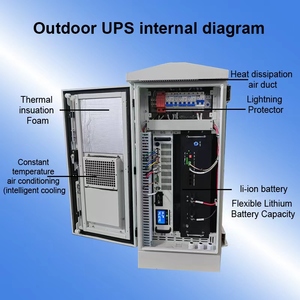
Ultra-long backup energy storage system featuring multi-stage surge and lightning protection. Built for unmanned remote telemetry, offshore weather arrays, and critical security nodes.
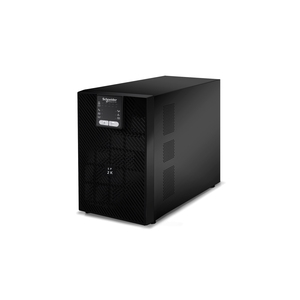
Specialized 800W/1KVA online uninterruptible power system designed for turbulent wind turbine pitch control, renewable substations, and dynamic microgrid fluctuations.
As Japan's primary economic engine in the Kansai region, Osaka serves as a pivotal nexus for international trade, high-precision semiconductor manufacturing, heavy shipbuilding, and advanced robotics development. The Hanshin Industrial Zone, stretching along Osaka Bay, hosts critical infrastructure facilities that demand uncompromising power continuity. When system downtime carries million-dollar penalty risks or threatens military defense readiness, standard commercial UPS units are fundamentally insufficient.
This whitepaper evaluates the top 10 tactical UPS manufacturers, technology providers, and export suppliers operating within and supplying to Osaka's industrial ecosystem. Tactical UPS systems differ from commercial IT-grade UPS units through their compliance with rigorous environmental standards (such as MIL-STD-810G, MIL-STD-461F, MIL-STD-704F, RTCA DO-160G, and EN 50155). These rugged systems incorporate active power factor correction (PFC), synchronous rectification topologies, conduction-cooled aluminum chassis, and advanced lithium iron phosphate (LiFePO4) energy storage cells designed to withstand extreme thermal derating and seismic shock profiles unique to the Japanese archipelago.
Information Gain Insight: Unlike standard commercial UPS platforms that suffer from high forward voltage diode losses and passive cooling limits, tactical UPS platforms supplied through USA-engineered facilities leverage active synchronous MOSFET switching. This technology achieves conversion efficiencies up to 96%, effectively cutting thermal dissipation by over 40% in sealed IP68 enclosures.
System designers and procurement officers evaluating tactical UPS exports out of Osaka must balance strict electrical quality standards with extreme mechanical resilience. Key architectural cornerstones include:
Replacing lossy Schottky diodes with actively controlled power MOSFETs lowers internal conduction losses (P = I²R_DS(on)). This topology reduces total system power dissipation, enabling compact sealed enclosures without noisy cooling fans.
Characterizing the EMI filter, active Power Factor Correction (PFC) stage, and isolated DC-DC bus converter as a single pre-tested chain eliminates parasitic line resonance, guaranteeing compliance with MIL-STD-461 and EN 50121-3-2.
Full supply-chain traceability, strict derating analysis, and multi-decade lifecycle support ensure that units deployed on naval vessels, rail systems, or automated plants remain operational without sudden component obsolescence.
Osaka’s unique geographic position and economic structure demand specialized power architecture across several key municipal and industrial zones:
| Osaka Key Economic Zone | Primary Industrial Sector | Environmental & Electrical Challenges | Recommended Tactical UPS Specs |
|---|---|---|---|
| Osaka Bay Logistics Terminal (Yumeshima / Nanko) | Maritime Container Handling, Automated Crane Systems & Port Radar | High salt-fog exposure, severe ambient humidity, airborne particulate matter, line voltage sags from heavy induction motors. | IP68 / NEMA 4X enclosure, ASTM B117 anti-corrosion coating, 3-Phase active PFC front-end, double conversion online. |
| Hanshin Industrial Corridor (Sakai / Amagasaki) | Semiconductor Fabrication, Precision Chemical Processing & Metallurgy | Zero-tolerance for millisecond micro-outages; extreme dynamic load spikes; high ambient temperatures in processing bays. | Zero-transfer static bypass switch, unit power factor (1.0), high surge capability (300% for 100ms), wide temp range (-40°C to +70°C). |
| Kansai Railway Infrastructure (JR West / Nankai Rail) | Shinkansen Signaling, Substation Monitoring & On-Board Electronics | High shock & mechanical vibration profiles; catenary voltage fluctuations; electromagnetic interference from traction drives. | EN 50155 rolling-stock certification, Class S2/C1 hold-up time, low THDi (<3%), galvanic isolation transformers. |
| Offshore Osaka Bay & Clean Energy Installations | Offshore Wind Turbines, Tidal Energy Telemetry & Coastal Defense Radar | Unattended operation; lightning strikes; broad operating frequency variations; high battery self-discharge rates. | 20kA lightning surge suppression, high-density 8000Wh LiFePO4 battery management, SNMP/MODBUS remote telemetry card. |
Industrial facilities in Osaka operate under strict architectural and electrical directives governed by the Japanese Ministry of Land, Infrastructure, Transport and Tourism (MLIT). Due to the imminent risk of Nankai Trough seismic events, tactical UPS deployments within Osaka factories must satisfy stringent vibration test standards (such as JIS C 60068-2-6 and MIL-STD-810G Method 514.6). Industrial power supplies must feature internal mechanical isolation dampers, reinforced PCB standoff assemblies, and heavy-duty structural rack tie-downs to ensure uninterrupted backup power during dynamic earth movement.
The Kansai region is undergoing a massive industrial transformation, driven by national decarbonization goals (Green Transformation / GX) and regional technological modernization. Three distinct technical trends are re-shaping tactical UPS purchasing across Osaka:
Legacy Valve-Regulated Lead-Acid (VRLA) batteries are being rapidly phased out by Osaka factories due to their high weight, poor high-temperature degradation, and short 3-year replacement cycle. Modern tactical UPS units incorporate Lithium Iron Phosphate (LiFePO4) modules that deliver 10+ year operational lifespans, 70% weight reduction, and superior thermal stability up to 60°C.
Japan operates a split-frequency utility grid: Eastern Japan runs at 50Hz (TEPCO), while Western Japan—including Osaka—operates on a 60Hz frequency managed by Kansai Electric Power Co. (KEPCO). Tactical UPS units exported or installed in Osaka must feature wide input frequency tolerance (40Hz to 70Hz) and auto-sensing phase synchronization to avoid nuisance trip-outs during grid micro-fluctuations.
With Osaka’s aggressive push toward smart factory automation (Industry 4.0), tactical UPS systems are no longer isolated emergency devices. They act as active nodes within industrial microgrids. Real-time telemetry reporting via MODBUS TCP/IP, Industrial Ethernet, and SNMP v3 allows facility managers to monitor battery state-of-health (SoH), ambient temperature derating, and phase load balance remotely.
When selecting a factory or export partner in Osaka, engineering teams evaluate technical capability across six critical parameters. The table below outlines how top-tier tactical UPS suppliers stack up against standard commercial offerings:
| Evaluation Parameter | Tactical / Mil-COTS Grade UPS | Standard Commercial UPS | Technical Advantage for Osaka Exporters |
|---|---|---|---|
| Operating Temperature Range | -40°C to +75°C (Full load derating characterized) | 0°C to 40°C (Drastic thermal shutdown above 40°C) | Ensures continuous operation inside unconditioned outdoor cabinets or engine rooms. |
| Enclosure Protection | IP65 to IP68 sealed aluminum casing with conformal coating | IP20 open steel sheet with ventilation slots | Eliminates short-circuit hazards from Osaka Bay salt spray, humidity, and conductive metal dust. |
| Vibration & Shock Rating | MIL-STD-810G (Method 514.6 / 516.6), JIS C 60068 | Basic commercial transport vibration only | Protects internal magnetic cores and solder joints during earthquakes and heavy rail transport. |
| Electromagnetic Compatibility (EMC) | MIL-STD-461 (C-F), RTCA DO-160G, EN 50121-3-2 | FCC Class A / CISPR 22 commercial standard | Prevents radio frequency interference (RFI) with critical military radar, aviation, and signaling radios. |
| Power Conversion Efficiency | Up to 96% via Synchronous Rectification | 88% - 91% using standard diode bridge output | Reduces energy costs and heat generation, significantly extending battery backup duration. |
| Lifecycle & Obsolescence Support | 20+ year program support with Form-Fit-Function replacements | 3 - 5 year commercial redesign cycles | Prevents expensive system re-certification costs for long-life industrial and defense programs. |
Answers to common technical questions submitted by Osaka-based electrical engineers, factory procurement directors, and international export managers.
Equipment deployed in Japan must comply with the Electrical Appliance and Material Safety Law (PSE Mark / JET certification) for commercial grid connectivity. For industrial and defense applications, units must adhere to VCCI Class A/B EMI guidelines, JIS (Japanese Industrial Standards) for mechanical vibration, and international standards such as MIL-STD-704F, RTCA DO-160G, or EN 50155 depending on the end-use vehicle or platform.
Western Japan, including Osaka, uses a 60Hz grid supplied by KEPCO. Tactical UPS units featuring double-conversion online architectures automatically rectify incoming AC (100V, 200V, or 3-phase 380V/415V) to a regulated DC bus before converting it back to clean AC output. This isolates connected critical loads completely from mains frequency drift, phase imbalance, and voltage sags.
In traditional power converters, output diodes incur a fixed forward voltage drop, generating substantial thermal heat under high currents. Synchronous rectification replaces diodes with ultra-low R_DS(on) MOSFETs. This lowers heat generation by up to 40-50%, allowing tactical UPS platforms to operate in completely sealed, fanless IP68 enclosures without thermal shutdown at elevated ambient temperatures.
Yes. Ruggedized UPS units exported from Osaka Port to North America, Europe, SE Asia, or Australia can be configured with wide multi-voltage inputs (85–264 VAC or 18–36 VDC) and dual 50/60Hz output selection. Facilities management can request documentation supporting METI (Ministry of Economy, Trade and Industry Japan) compliance alongside ITAR or Mil-COTS export compliance forms.
Unlike consumer electronics suppliers who refresh product lines every 2–3 years, defense-grade tactical UPS manufacturers maintain long product lifecycles (20+ years). Form-fit-function replacement strategies and archived qualification data ensure that replacement modules can be dropped into existing sub-assemblies without requiring complete system re-engineering.
Consult directly with our senior application engineers to review your input bus specifications, target EMI compliance (MIL-STD / EN / RTCA), thermal derating constraints, and battery backup requirements before finalizing your layout.
