
Executive Summary: The Technical Imperative for Synchronous Rectification in Moscow's Power Infrastructure
As the primary industrial, transportation, and data processing hub of Western Eurasia, Moscow presents a demanding operational ecosystem for power electronics. Modern power conversion architectures are shifting aggressively away from conventional diode-rectified topologies toward Synchronous Rectifier (SR) Power Modules. This engineering transition is driven by two imperative factors: the critical need to maximize electrical efficiency in space-constrained industrial systems and the requirement for thermal stability across extreme ambient operating windows ranging from sub-zero winter temperatures (-40°C) to high-density server enclosure environments (+85°C baseplate temperatures).
Traditional secondary rectification relies on Schottky barrier diodes. However, diode forward voltage drops ($V_F$), typically between 0.4V and 0.7V, introduce severe power dissipation losses ($P_{loss} = V_F \times I_{out}$) when managing high output currents (such as 3.3V, 5V, or 12V supply rails operating at tens to hundreds of amperes). In contrast, Synchronous Rectification replaces passive diodes with low-channel-resistance power MOSFETs controlled by precise timing circuitry. With drain-to-source on-resistance ($R_{DS(on)}$) engineered into single-digit milliohm ranges, conduction losses drop exponentially ($P_{loss} = I_{out}^2 \times R_{DS(on)}$). This whitepaper provides a comprehensive evaluation of the top 10 global manufacturers and exporters supplying synchronous rectifier modules, industrial UPS units, and isolated converters to Moscow's defense, railway, heavy industrial, and telecommunications sectors.
Engineering Insight: Conduction Dissipation Comparison
At a 100A output load on a 3.3V rail: A standard Schottky diode system ($V_F = 0.5\text{V}$) dissipates approximately 50 Watts as heat. A synchronous rectifier module utilizing a 2mΩ MOSFET dissipates only 20 Watts—a 60% reduction in thermal dissipation that directly shrinks heatsink volume and extends Mean Time Between Failures (MTBF).
Topological Mechanics: How Synchronous Rectification Redefines Power Density
To evaluate exporters and manufacturing partners serving Moscow, electrical design engineers must understand the two-stage topologies and active gating driver mechanics that define elite power conversion performance. Synchronous rectifier power modules rely on dynamic drive circuits that switch MOSFET switches in exact phase synchronization with the secondary winding voltage of an isolated transformer.
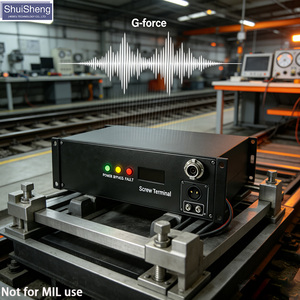
The primary advantage lies in eliminating the thermal bottleneck. In high-density quarter-brick, half-brick, and full-brick DC-DC converters, thermal management dictates overall system size. Lower heat dissipation enables complete potting and encapsulation of power modules. This is essential for Moscow's heavy machinery, metro transit (such as the Moscow Central Circle and Moscow Metro expansion), and outdoor telecommunication nodes, where modules are subjected to persistent shock, vibration, dust, and high relative humidity.
Key Architectural Criteria for Selection:
- Zero Voltage Switching (ZVS) & Zero Current Switching (ZCS): Advanced topologies incorporate soft-switching front ends (such as LLC resonant converters or phase-shifted full bridges) paired with active synchronous rectifiers to minimize turn-on and turn-off switching losses at frequencies above 300 kHz.
- Wide Input Voltage Swing: System buses in Moscow rail and industrial setups frequently experience wide transient swings (e.g., 66V–160V for 110V rail networks according to EN 50155, or 18V–36V for 24V industrial systems). Exporters must provide modules capable of continuous regulation through high transient spikes.
- Baseplate Conduction Cooling: For un-ventilated, ingress-protected IP67/IP68 enclosures operating outdoors in Moscow, power modules must route 90%+ of generated internal heat directly through an aluminum baseplate, allowing seamless coupling to external chassis heatsinks.
Localized Moscow Application Scenarios
Supplying power conversion equipment to the Moscow industrial region requires localized engineering compliance and ruggedization against specific operational demands:
1. Rail & Metro Transit Systems
The Moscow Metro and suburban commuter rail lines require EN 50155 and EN 50121-3-2 compliant isolated DC-DC converters. Synchronous rectifier modules power signaling networks, on-board passenger infotainment, LED lighting drivers, and door actuators. They must endure continuous mechanical vibration and sub-zero cold starts without output voltage drift.
2. Heavy Metallurgy & Industrial Automation
Industrial complexes around the Greater Moscow Region depend on automated motion controllers, robotics, and induction furnaces. Power modules must feature ultra-low output ripple, high isolation resistance (up to 2250VDC or 3000VAC), and immune transient filter stages to resist heavy electromagnetic interference (EMI).
3. Telecom & 5G Outdoor Infrastructure
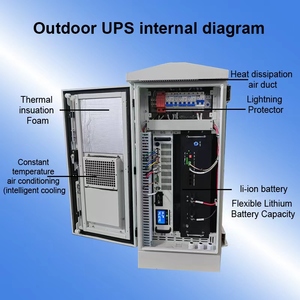
Moscow telecom base stations rely on IP68 outdoor power enclosures housing lithium-ion battery back-ups and high-efficiency AC-DC/DC-DC synchronous converters. Low thermal dissipation allows these sealed boxes to survive summer heatwaves without fan failures and winter freeze cycles without condensation degradation.
Moscow Procurement Trends & Regulatory Technical Drivers
Procurement departments in Moscow are moving away from commodity commercial-off-the-shelf (COTS) modules toward highly certified, long-lifecycle power platforms. Key drivers shaping purchasing decisions include:
- Extended Lifecycle & Obsolescence Protection: Major infrastructure projects mandate minimum product availability windows of 15 to 20 years. Exporters must guarantee form-fit-function replacement paths to avoid costly PCB redesigns.
- GOST Compliance & International Standards Alignment: Power systems must align with national technical regulations (such as GOST R IEC 60950/62368 for electrical safety and GOST R 51317 for electromagnetic compatibility) while maintaining compliance with international standards like MIL-STD-704, MIL-STD-461, and RTCA DO-160.
- High Power Factor Correction (PFC): For AC-DC power supplies and heavy-duty UPS systems deployed in Moscow commercial data centers and hospitals, active 3-phase PFC front-ends achieving >0.98 power factor are required to limit grid harmonic distortion.
Comparative Analysis Matrix: Top Global Suppliers Serving Moscow
The following technical matrix evaluates the leading 10 synchronous rectifier power module factories, industrial UPS vendors, and specialized module exporters serving the Moscow market:
| Manufacturer / Exporter | Core Product Focus | Peak Efficiency | Operating Temp Range | Key Standard Compliance | Moscow Market Suitability |
|---|---|---|---|---|---|
| SynQor | Mil-COTS, RailQor, Industrial SR DC-DC / AC-DC | 95% - 96.5% | -55°C to +100°C | MIL-STD-810G, EN 50155, AS9100 | Highest; ideal for high-rel defense, rail, and aviation |
| Vertiv (Socomec Partnered) | Heavy Industrial UPS, Lithium Battery Systems | 94.5% - 96% | -20°C to +50°C | IEC 62040-3, GOST R, CE | Excellent for data centers and power utility backup |
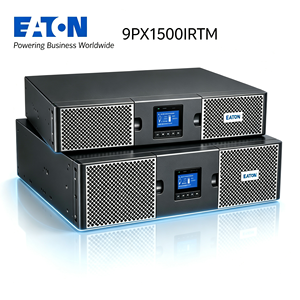
| Eaton Power | Rackmount Marine & Industrial Online UPS | 95% | -15°C to +55°C | UL 1778, IEC 62040, DNV-GL | Strong fit for commercial servers and transport hubs |
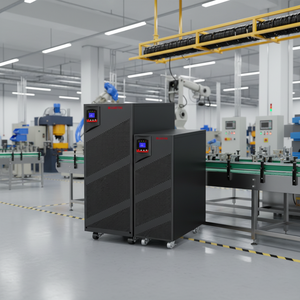
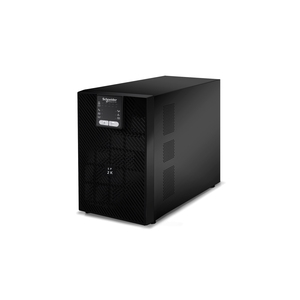
| Santak (Eaton Group) | Industrial Online UPS 3-Phase Systems | 93.5% - 95% | 0°C to +40°C | ISO 9001, IEC 61000-4 | Widely adopted in Moscow IDC data processing centers |
| Vicor Corporation | High-Density Modular Bus Converters (VTM/PRM) | 96% - 97% | -40°C to +125°C | MIL-STD-810, CE | High power density for specialized OEM electronics |
| TDK-Lambda | Industrial Board-Mount DC-DC Bricks | 92% - 94.5% | -40°C to +85°C | EN 62368-1, IEC 60950 | Standard industrial automation applications |
| Delta Electronics | Telecom DC Power Systems & Modules | 95% - 96% | -40°C to +75°C | NEBS Level 3, EN 300 132 | Telecom carrier infrastructure networks |
| Artesyn (Advanced Energy) | Isolated DC-DC Quarter/Half Brick Modules | 93% - 95% | -40°C to +100°C | UL 60950-1, EN 60950-1 | Embedded computing and enterprise networking |
| RECOM Power | Low-to-Mid Power Regulated Converter Modules | 90% - 93% | -40°C to +85°C | EN 50155, EN 60601-1 | Medical systems and distributed IoT sensors |
| COSEL Co., Ltd. | Ruggedized Enclosed & PCB Power Supplies | 91% - 94% | -20°C to +75°C | CE, Dentori, IEC 60950 | Factory equipment and machine tool integration |
In-Depth Profile of Top Exporters & Manufacturing Capabilities
1. SynQor: Technical Pioneer in Synchronous Rectification
SynQor remains the baseline benchmark for isolated DC-DC and AC-DC synchronous rectifier technology. Commercializing patented multi-stage synchronous rectification topologies, SynQor eliminated traditional secondary diode bottlenecks completely. Their MilQor® and RailQor® product lines incorporate planar magnetics, automated surface-mount assembly, and aluminum baseplate construction. Operating without optocouplers for feedback—utilizing proprietary magnetic feedback loops—ensures exceptional reliability under extreme radiation, high thermal stress, and severe mechanical shock.
2. Vertiv & Socomec Partnered Systems
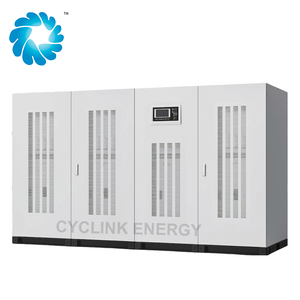
For large-scale industrial installations across Moscow's metallurgical plants and utility grids, Vertiv and Socomec deliver enterprise-grade uninterruptible power supplies. By combining lithium iron phosphate ($LiFePO_4$) chemistry with high-efficiency active front-end rectifiers, these systems maintain system efficiency above 96% even under partial load conditions. Their systems feature ruggedized enclosures designed to isolate sensitive control electronics from corrosive industrial air environments.
3. Eaton & Santak Industrial Power Division
Eaton’s 9PX series and Santak Castle online UPS platforms provide double-conversion power isolation. Utilizing active synchronous conversion stages within their DC-DC battery boosting sub-circuits, these systems achieve high power factor ratings (0.9 to 1.0 unified), ensuring Moscow enterprise data centers maximize power density per rack unit ($1U/2U/3U$) without exceeding room cooling thresholds.
Key Design Considerations for Moscow System Integrators
When selecting a manufacturing partner for synchronous rectifier power modules, engineering teams in Moscow must systematically review four critical thermal and electrical parameters:
A. Thermal Derating Curves
Power module datasheets often quote maximum efficiency at 25°C ambient temperatures. However, real-world deployment inside sealed industrial cabinets in Moscow can push internal ambient levels to 60°C or higher. Designers must review the module's Thermal Derating Curve (Output Power vs. Ambient Temperature at various airflow velocities or conduction baseplate limits). Top-tier modules maintain 100% full-rated power up to 85°C baseplate temperatures without thermal shutdown.
B. Input Transient Immunity
Grid stability and DC supply buses in heavy industrial facilities experience significant voltage spikes caused by large inductive motor switching or catenary arc interruptions. Synchronous rectifier power modules should be paired with dedicated transient suppression filter modules (e.g., MIL-STD-1275 surge protection units capable of clamping 100V transients for 500ms) to ensure continuous operational uptime.
C. EMI Suppression & Grounding Topology
High-frequency switching in synchronous rectifiers (>300 kHz) can generate common-mode and differential-mode noise. High-reliability exporters integrate internal Faraday shielding between primary and secondary windings, along with differential LC output filters. This design ensures compliance with stringent radiated and conducted emission thresholds, such as CISPR 32 Class B and MIL-STD-461G.