
1. Industry Executive Summary: Power Quality Challenges in San Francisco
The San Francisco Bay Area represents the highest density of advanced computing, artificial intelligence infrastructure, biotechnology research centers, and aerospace innovation facilities in North America. However, operating complex electronic equipment within the Northern California electrical corridor introduces severe operational risks driven by grid volatility, urban localized microgrid switching transients, rapid load shedding, and aggressive coastal environmental conditions.
As an established Surge Filter Manufacturer and Global Exporter serving the San Francisco market, our engineering mission is to resolve the gap between standard off-the-shelf surge protective devices (SPDs) and high-attenuation industrial sine-wave surge filters. Standard commercial Metal Oxide Varistors (MOVs) merely clamp catastrophic voltage spikes; they fail to clean high-frequency noise, ring-wave transients, and harmonic distortions generated by adjacent variable frequency drives (VFDs), solar power inverters, and high-density GPU switching supplies.
This technical whitepaper outlines the advanced transient mitigation architectures required to protect sensitive infrastructure across Silicon Valley, Downtown San Francisco, South San Francisco’s biotech cluster, and the East Bay industrial zones.
Active Harmonic & Noise Suppression
Combines differential-mode and common-mode LC filter networks to attenuate EMI/RFI noise up to -75dB across 10kHz to 100MHz ranges.
Sub-Nanosecond Surge Clamping
Employs multi-stage hybrid technology incorporating Silicon Avalanche Diodes (SAD) and Gas Discharge Tubes (GDT) for instantaneous response.
NEMA 4X Marine & Coastal Proofing
Conformal coated PCBs with marine-grade stainless steel enclosures designed to withstand SF salt fog, humidity, and seismic shock vibration.
2. Technical Deep-Dive: Surge Suppressor vs. Active Surge Filter
Engineers designing facilities in the San Francisco Bay Area often confuse standard Surge Protective Devices (SPDs) with true Sine-Wave Tracking Surge Filters. Understanding this distinction is vital for protecting mission-critical equipment:
- Standard Surge Protective Devices (SPDs): Designed primarily as "diverters." When a high-amplitude transient occurs (such as a direct or indirect lightning strike or primary grid utility switching), the SPD presents a low impedance path to shunt the surge to ground. However, standard SPDs remain inactive during lower-amplitude, high-frequency "ring-wave" transients that degrade digital logic cards, power supply capacitors, and medical imaging systems over time.
- Industrial Active Surge Filters: A two-tier protective system. Tier one acts as a heavy-duty surge diverter (handling up to 200kA 8/20µs impulses). Tier two incorporates a low-pass series filter that continuously tracks the AC sine wave. It filters out high-frequency impulse energy, voltage spikes (dv/dt), and electromagnetic interference (EMI/RFI) right down to the zero-crossing envelope.
Engineering Insight: IEEE C62.41.2 Location Category C3 Compliance
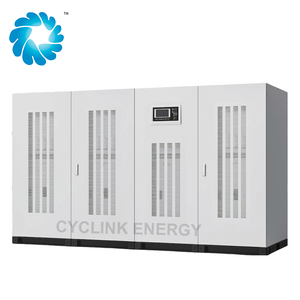
Our export-grade surge filters for the San Francisco market are engineered and third-party certified to meet IEEE C62.41.2 Category C3 (Service Entrance) and Category B (Distribution Panels) standards. Featuring continuous sine-wave tracking, our systems limit let-through voltage to under 330V for a 6kV/3kA combination surge waveform, safeguarding sensitive load cards from cumulative electrical stress.
3. Localized Application Scenarios Across the San Francisco Bay Area
San Francisco’s unique economic topography demands specialized power filtering configurations tailored to distinct localized industrial ecosystems:
A. AI Compute Clusters & High-Density Data Centers (Santa Clara / SOMA SF)
The surge in generative AI workloads has concentrated massive liquid-cooled GPU racks (utilizing high-density 480V 3-phase power delivery) in Bay Area facilities. Rapid microsecond-level load transients caused by AI model training pulses create severe voltage harmonics and back-EMF spikes. Our industrial surge filters incorporate synchronous rectification topologies and active power-factor correction (PFC) front-ends to clean power lines, prevent micro-switches from tripping, and extend server PSU lifespans.
B. Biomedical & Precision Laboratory Facilities (South San Francisco)
South San Francisco is home to global biotechnology giants operating automated gene sequencers, mass spectrometers, and nuclear magnetic resonance (NMR) imaging tools. A transient impulse of even 50 volts above nominal can corrupt multi-day biological sample runs or damage sensitive digital detectors. Our low-leakage, medical-grade (IEC 60601-1 compliant) AC filtering units isolate laboratory power buses from utility grid fluctuations, ensuring zero phase shift and pure sine-wave delivery.
C. Maritime Ports & Naval Infrastructure (Port of San Francisco / Mission Bay)
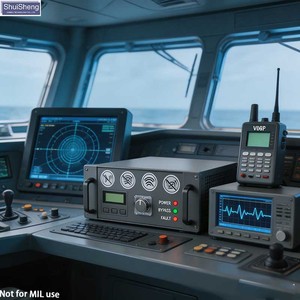
Equipment operating along the San Francisco waterfront faces severe atmospheric challenges, including dense salt fog, continuous humidity, and marine corrosion. Marine shore-to-ship power converters experience extreme inductive switching surges when vessels connect to shore power. Our IP68-rated, all-weather outdoor surge protection systems utilize anti-corrosion, anti-mold, and anti-salt-spray enclosures equipped with anti-vibration mountings to guarantee long-term operational resilience.
D. Transit & Urban Infrastructure (BART & MUNI Traction Power Networks)
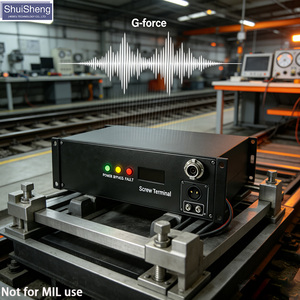
The Bay Area Rapid Transit (BART) and San Francisco MUNI light rail systems utilize heavy DC traction power networks that operate alongside sensitive signaling and telecommunications backbones. High-voltage switching transients generated by regenerative braking feed directly back into regional distribution lines. Our heavy-duty railway signaling power filters provide galvanic isolation and transient suppression tailored to withstand shock and vibration standards under EN 50155.
4. San Francisco Regional Power Trends & Compliance Benchmarks
Procurement managers and lead electrical engineers sourcing surge filtering technology for San Francisco projects must navigate stringent regional energy codes and grid compliance protocols:
- PG&E Distribution Grid Volatility: Pacific Gas and Electric (PG&E) grid operations in Northern California undergo frequent Public Safety Power Shutoffs (PSPS) and solar feed-in switching. The re-energization of commercial utility feeders generates extreme line-to-ground transient voltage surges.
- California Title 24 Energy Efficiency Compatibility: Modern SF buildings mandate automated lighting controls, solar microgrids, and battery energy storage systems (BESS). Inverters within BESS installations introduce high-frequency switching harmonics. Surge filters must be designed with minimal active power dissipation (>99% efficiency) to ensure building compliance with Title 24 mandates.
- UL 1449 5th Edition & UL 1283 Approvals: Sourcing industrial products into San Francisco requires strict adherence to UL standards. UL 1449 5th Edition governs safety against thermal runaway in surge suppressors, while UL 1283 certifies electromagnetic interference filter performance.
5. Manufacturing Superiority & Global Export Capability
As an internationally certified manufacturer and exporter, we combine military-grade engineering disciplines with high-volume, agile production lines:
- AS9100 & ISO 9001 Certified Quality Control: Every component—from low-loss nanocrystalline transformer cores to high-voltage Metal Oxide Varistors—is fully traceable. Qualification testing includes thermal shock, high-potential (Hi-Pot) insulation testing, and full spectrum surge impulse verification.
- Synchronous Rectification & Advanced Topologies: Utilizing high-efficiency active switching circuits rather than passive lossy diodes, our power filter systems minimize thermal heat dissipation, enabling fully sealed NEMA 4X/IP68 enclosures to operate without forced-air ventilation.
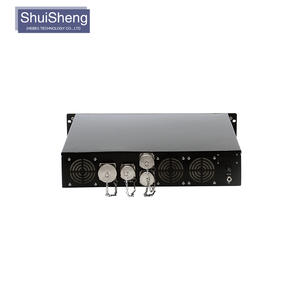
- Custom OEM/ODM Export Engineering: We provide tailored mechanical footprints, rack-mount form factors (1U to 6U), drop-in replacements for legacy installations, and specialized terminal block configurations engineered specifically for North American NEMA and Canadian CSA conduit standards.