Engineered for harsh environmental conditions, thermal endurance, and zero-down-time applications across North America.
In modern industrial, defense, transportation, and aerospace infrastructures across the United States, power conversion units operate as the vital backbone of operational integrity. As power density demands escalate and deployment footprints shrink, design engineers face unprecedented challenges regarding thermal dissipation, electromagnetic compatibility (EMC), transient voltage survival, and long-term mechanical reliability.
Traditional diode-based rectification architectures introduce severe conduction losses that generate localized thermal hot spots, drastically reducing system Mean Time Between Failures (MTBF). To overcome these thermodynamic boundaries, our manufacturing framework pioneers the commercial integration of synchronous-rectifier topology combined with multi-stage isolated power conversion. By replacing lossy Schottky diodes with actively controlled low-RDS(on) MOSFETs, internal power dissipation is slashed by up to 60%, delivering peak power conversion efficiencies reaching 96% under demanding operating conditions.
Eliminates forward diode drops, significantly reducing watt-loss dissipation and eliminating the need for bulky, forced-air cooling in sealed chassis.
Decouples input surge anomalies from sensitive point-of-load electronics, maintaining tight line and load regulation down to ±0.2% variance.
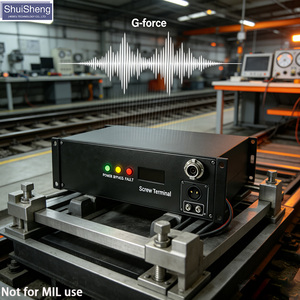
Proprietary potting compounds provide structural immunity to shock and vibration while conducting heat directly to baseplate boundaries.
The U.S. market demands compliance with stringent operational standards across diverse sector-specific environments. Our DC-DC converters and rugged power systems are explicitly engineered and qualified to survive the environmental stresses unique to North American regional deployments—from high-altitude aerospace testing grounds in the Southwest to high-humidity offshore maritime assets in the Gulf Coast.
Engineered to meet MIL-STD-1275 for 28V DC electrical systems in military ground vehicles, absorbing severe 100V spikes and cranking voltage surges without interrupting C4ISR mission computers.
Compliant with EN 50155 and U.S. Class I Railroad standards, providing reliable isolated power conversion for Positive Train Control (PTC) networks, trackside signaling, and cab electronics exposed to transient catenary surges.
Ultra-compact half-brick and quarter-brick modules meeting RTCA DO-160G standards for commercial and military airframes. Designed to withstand extreme thermal shock and 400Hz/variable-frequency AC input transients.
The landscape for power module procurement within the United States is undergoing a fundamental structural transition. Driven by strict federal mandates including the National Defense Authorization Act (NDAA) and enhanced Buy American Act requirements, U.S. OEMs are rapidly shifting away from unverified off-shore commodity suppliers toward trusted, fully traceable manufacturing partners.
1. Supply Chain Traceability and Obsolescence Management: Long-lifecycle platforms in industrial automation, medical diagnostics, and military hardware operate on decade-long field deployments. Unannounced end-of-life (EOL) component notifications from low-cost manufacturers create disastrous platform downtime. Our manufacturing ethos prioritizes multi-decade component availability, Form-Fit-Function (FFF) replacement pathways, and complete lot-code traceability backed by AS9100 quality management systems.
2. The Thermal Management Bottleneck in Sealed Enclosures: As industrial control units transition to fanless, IP67/IP68 sealed enclosures to survive corrosive atmospheric conditions, traditional heat dissipation methods fail. High-efficiency synchronous rectification eliminates internal heat generation at the silicon level, allowing baseplate conduction-cooled systems to operate continuously without thermal derating in ambient environments exceeding +85°C.
3. Advanced Electromagnetic Compatibility (EMC) Compliance: Modern smart-grid automation, 5G telecom base stations, and high-frequency military radar arrays operate in densely crowded electromagnetic spectrums. Passing MIL-STD-461 or FCC Part 15 Class B emissions testing requires integrated, pre-characterized EMI transient filter modules that eliminate noise coupling between the DC-DC converter input stage and the primary power bus.
End-to-end engineering rigor, state-of-the-art manufacturing processes, and uncompromised quality assurance.
Engineered and certified against MIL-STD, RTCA DO-160G, EN 50155, and UL/IEC 62368-1 safety frameworks.
From custom pinout configurations to specialized multi-output rail voltages, our engineering team tailors power solutions to your mechanical layout.
We supply matched input filter and converter topologies, guaranteeing pass marks during conducted emission and surge testing.
Strict process control, automated optical inspection (AOI), 100% full-load thermal burn-in, and full batch material traceability.
Expert answers to critical engineering, regulatory, and purchasing inquiries regarding ruggedized industrial DC-DC converters.
Standard isolated DC-DC converters utilize traditional Schottky diodes on the secondary output rectification stage. At high currents, forward voltage drops across these diodes generate immense thermal energy (loss = V_forward × I_out). Synchronous rectification replaces diodes with state-of-the-art power MOSFETs possessing extremely low channel resistance (RDS(on)). Conduction losses drop exponentially, driving thermal dissipation down by up to 60%. This yields higher efficiency (up to 96%), extends component lifecycle margins, and enables conduction cooling in sealed, fanless industrial enclosures.
Meeting harsh military specs requires a holistic system-level architecture. Our Mil-COTS converter lines are designed to pair directly with our transient EMI filter modules. The input stage incorporates active surge protection circuits that clamp high-energy transients (such as the 100V 50ms surge defined in MIL-STD-1275) down to safe operating levels. Furthermore, integrated differential-mode and common-mode filter networks suppress switching noise spikes, ensuring compliance with MIL-STD-461 limits for conducted and radiated emissions.
Yes. As a direct manufacturer and engineering factory, we maintain full control over PCB layout, magnetics design, and mechanical encapsulation. We regularly manufacture customized brick modules featuring wide trim ranges (+10%/-50%), non-standard isolated voltage rails (e.g., 28V, 52V, or dual ±15V outputs), specialized baseplate mounting options, and conformal coating options for extreme salt-spray or high-altitude environments.
We recognize that industrial, rail, and military platforms frequently require active field service lifetimes spanning 15 to 25 years. We protect our U.S. client base through strict change-management policies, documented Qualification Test Reports (QTR), formal Last Time Buy (LTB) notifications at least 12 months in advance, and guaranteed Form-Fit-Function (FFF) redesign pathways to ensure seamlessly continuous platform support without requiring costly re-certification of customer systems.
Submit your electrical requirements, target environmental standards, or mechanical constraints directly to our application engineering team for rapid technical analysis and sample evaluation.
Contact Us