Qualified power solutions engineered for extreme desert thermal profiles, dust resilience, and zero-downtime industrial infrastructure across Saudi Arabia.
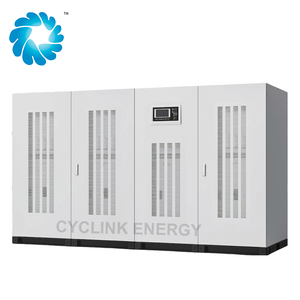
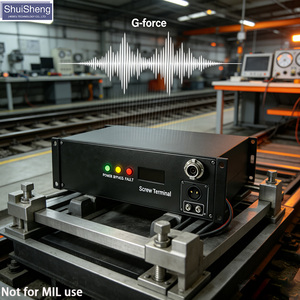
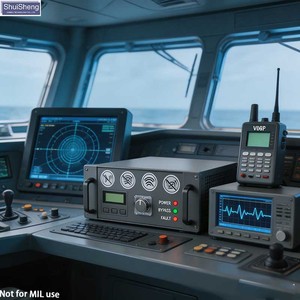
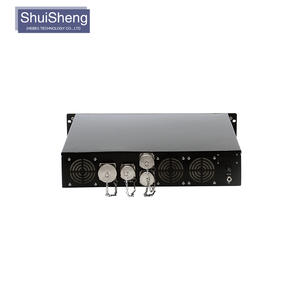
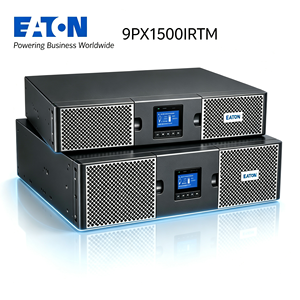
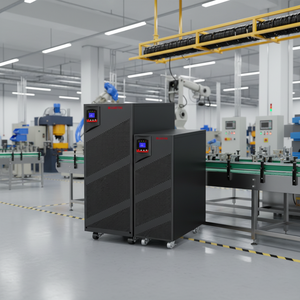
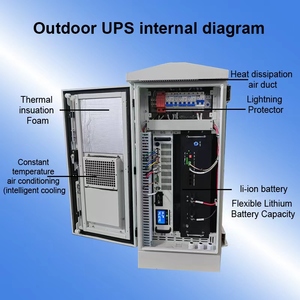
Operating critical electronic equipment across the Kingdom of Saudi Arabia presents an unprecedented challenge to industrial power distribution architectures. Ambient desert temperatures frequently exceed 50°C during peak summer months, with direct solar loading driving internal enclosure temperatures to 70°C or higher. Under these severe environmental conditions, standard commercial off-the-shelf (COTS) power converters suffer severe thermal derating, component degradation, and premature system failure driven by electrolyte dry-out in standard capacitors and thermal runaway in power semiconductors.
To establish long-term structural reliability across Saudi Arabia’s industrial landscape—ranging from Saudi Aramco’s upstream oil and gas telemetry stations to the mega-scale autonomous grid infrastructures of NEOM, the Red Sea Project, and Qiddiya—engineering teams require military-grade, fully ruggedized DC-DC converters engineered with synchronous rectification topologies and advanced conduction cooling mechanisms.
Traditional DC-DC converter designs rely on Schottky diode rectification in the secondary output stage. While simple, the diode forward voltage drop ($V_f \approx 0.4\text{V} - 0.7\text{V}$) creates substantial conduction power losses ($P_{loss} = I_{out} \times V_f$). At high current levels (e.g., 50A at 12V output), a traditional diode dissipates 20W to 35W of pure thermal heat within the module housing alone. In a sealed, non-ventilated IP65/IP68 industrial enclosure in Riyadh or Al Jubail, this additional thermal burden forces massive derating, requiring engineers to specify a 500W power supply to deliver a mere 200W of actual usable load.
Our advanced industrial DC-DC modules implement proprietary Synchronous Rectification Technology. By replacing lossy secondary diodes with custom-driven, ultra-low $R_{DS(on)}$ MOSFET switches, secondary conduction drops are reduced to millivolt levels. Conduction losses drop by up to 80%, raising conversion efficiency to an industry-leading 95% to 96%. This dramatic reduction in internal heat dissipation allows full power delivery up to +85°C baseplate temperatures without fan forced-air cooling, eliminating the single most common failure point in desert power installations: mechanical cooling fan failure due to fine quartz sand ingress.
Two-stage power architecture separates voltage transformation from tight regulation, optimizing efficiency across ultra-wide 4:1 and 8:1 input voltage ranges (9-36V, 18-75V, 180-425V).
Custom planar transformers integrated directly into low-thermal-resistance PCB substrate, providing superior thermal dissipation and consistent parasitic capacitance for repeatable EMI performance.
Full epoxy encapsulation within aluminum baseplate housings provides structural immunity to salt fog, fine quartz particulate abrasion, thermal shock, and high-g vibration.
Factories and infrastructure developers in Saudi Arabia operate under distinct geographical and regulatory specifications. Below are four primary deployment sectors where our ruggedized DC-DC converters and isolated UPS front-ends solve critical power quality and environmental protection challenges.
Coastal petrochemical facilities and oceanfront desalination plants operated by SWCC (Saline Water Conversion Corporation) present dual environmental threats: high ambient humidity combined with corrosive atmospheric salt mist. Standard power bricks experience rapid pin oxidation, tin-whisker growth, and dielectric breakdown over time.
Our export-grade DC-DC converters feature nickel-plated brass pins, hydrophobic PCB conformal coating meeting IPC-CC-830 standards, and full compliance with IEC 60068-2-52 salt fog testing standards. Coupled with input transient protection filtering, these units maintain stable 24Vdc and 48Vdc bus regulation for critical process automation sensors, SCADA remote terminal units (RTUs), and emergency valve actuators.
Saudi Arabia’s aggressive expansion into solar utility plants across the Rub' al Khali and northern provinces requires DC-DC conversion architectures capable of stepping down high string voltages (up to 1000Vdc or 1500Vdc secondary buses) to stable control power (24Vdc). Input voltage swings caused by solar irradiance fluctuation and grid switching transients require converter modules with wide dynamic range and fast transient response.
Our ultra-wide input isolated DC-DC bricks incorporate active input clamping circuits engineered to absorb surge voltages up to MIL-STD-1275 and EN 50155 Class S2 surge requirements. Built-in remote sense, active current sharing for N+1 parallel redundancy, and low output ripple make them ideal for sensitive lithium battery management systems (BMS) in off-grid energy storage sites.
The Expansion of high-speed passenger and heavy freight rail systems across the Kingdom demands power supplies capable of enduring continuous low-frequency mechanical vibration, mechanical impact shocks, and severe catenary voltage surges. Rail signaling and on-board communication systems require absolute power continuity under EN 50155 specifications.
Our railway-certified DC-DC converters support nominal inputs of 24V, 48V, 72V, and 110Vdc with continuous hold-up time matching Class C1/S2 standards. The vibration-proof pin-header mounting and solid metal baseplates ensure structural integrity across thousands of kilometers of desert railway lines.
Off-grid wellhead monitors located in remote desert sectors depend on solar-diesel hybrid microgrids. Power buses in these installations suffer from severe electrical noise, voltage sag during generator crank cycles, and extreme temperature fluctuations from 0°C at night to +55°C during the day. Converter modules designed for this environment utilize zero-optocoupler feedback loops to eliminate optocoupler aging degradation at elevated temperatures, ensuring a mean time between failures (MTBF) exceeding 2.5 million hours under MIL-HDBK-217F conditions.
The table below highlights the engineering differentiators between standard commercial-grade power modules and our high-gain ruggedized industrial converters engineered for Saudi Arabian procurement specifications.
| Engineering Parameter | Standard Commercial Converter | Ruggedized Industrial Converter (Our Factory Standard) | Impact on Saudi Industrial Operations |
|---|---|---|---|
| Full-Load Thermal Limit | +40°C to +50°C Ambient | +85°C Baseplate / +55°C Ambient Non-Derated | Eliminates active enclosure air conditioning costs in desert installations. |
| Rectification Topology | Passive Schottky Diode | Active Dual-Stage Synchronous Rectification | Reduces internal heat loss by up to 80%; improves power density. |
| Environmental Sealing | Open-frame or plastic cover | Full Aluminum Shell Baseplate Encapsulated (IP68) | Prevents failure from fine quartz sand dust and coastal salt mist corrosion. |
| Input Surge Immunity | Basic MOV / Low Transient Capable | MIL-STD-1275 / EN 50155 Level 4 Transient Clamping | Protects downstream control electronics against severe generator load shedding. |
| MTBF Expectancy (@40°C) | < 500,000 Hours | > 2,500,000 Hours (Telcordia SR-332 / MIL-217F) | Dramatically reduces maintenance truck rolls to remote off-grid infrastructure. |
| Quality Traceability | Commercial Batch ISO-9001 | AS9100 Aerospace & ISO-9001 Exceeded Traceability | Full lot-traceability required for Aramco and defense contractor audits. |
As a global OEM exporter specializing in high-reliability power modules and uninterruptible power systems, our manufacturing facilities operate under strict quality management frameworks that go far beyond standard commercial ISO guidelines. By adhering to AS9100 aerospace quality systems and rigorous U.S. and international defense standards, every single DC-DC converter and industrial UPS unit leaving our facility undergoes exhaustive qualification screening.
Failure is not an option in mission-critical applications. Every production unit undergoes a multi-stage quality assurance protocol prior to export shipment:
Industrial programs in Saudi Arabia are engineered for 15 to 30-year operational lifecycles. We guarantee component longevity through form-fit-function redesign strategies and long-term raw material inventory reserves. Program managers receive direct access to field application engineers (FAEs) for derating analysis, thermal modeling, schematic reviews, and custom pin-out engineering.
Frequently asked questions from electrical engineering consultants, procurement leads, and EPC contractors specifying power conversion hardware across KSA.
Consult with our senior application engineers today to analyze your input bus, load profiles, thermal boundary conditions, and SASO/Aramco qualification requirements.
Contact Us