Explore our high-efficiency airborne power factor correction (PFC) modules, ruggedized AC-DC power supplies, and uninterruptible power systems engineered for civil aviation, military aircraft, and harsh West African operations.
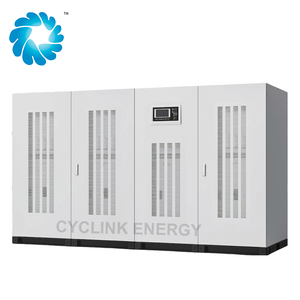
Equipped with advanced lithium battery technology, engineered for aviation ground support, telemetry systems, and critical continuous-duty operations in high ambient heat.
Contact Us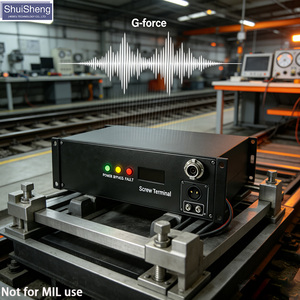
Designed with anti-salt, anti-mold, and anti-corrosion protection. Ideal for tropical coastal aviation installations and exposed naval air station environments.
Contact Us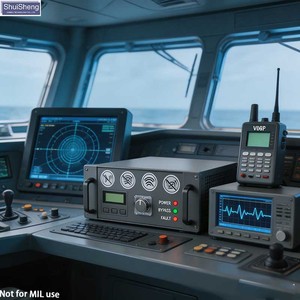
Built to withstand severe airframe vibration profiles (RTCA DO-160G Section 8) and shock loads for tactical military transport and rotary-wing aircraft in West Africa.
Contact Us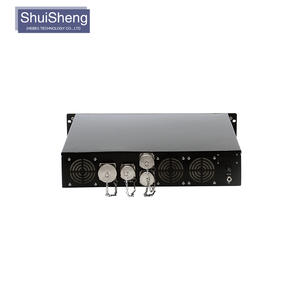
Provides ultra-clean DC power and transient-free AC backup for airborne radar, flight control computers, and mission-critical communications equipment.
Contact Us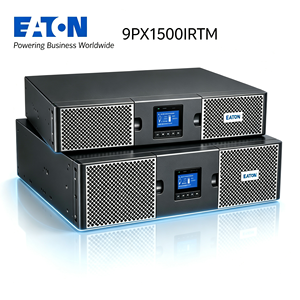
1500VA/1500W compact 1U/2U form factor delivering active power factor correction, low harmonic distortion, and compliance with airborne bus characteristics.
Contact Us
High-power 380/220VAC online double-conversion system delivering pure sine wave output for airport traffic control towers and flight simulation infrastructure.
Contact Us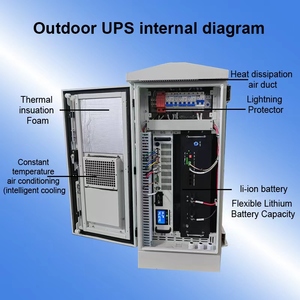
Features high energy density and extreme surge immunity to handle tropical lightning spikes (DO-160 Section 22) across airfields in regional Ghana.
Contact Us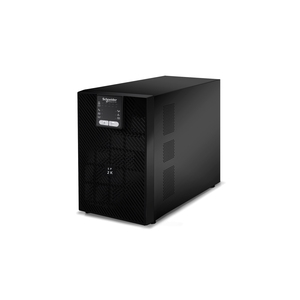
High-density synchronous rectifier power module with internal energy storage, engineered for localized line-replaceable units (LRUs) and navigation racks.
Contact UsAs commercial flight routes expand across West Africa and defense forces modernize air fleets in Ghana, the demand for ultra-reliable, environmental-hardened airborne power conversion equipment has reached an all-time high. RTCA DO-160 (Environmental Conditions and Test Procedures for Airborne Equipment) serves as the definitive global standard required by civil aviation authorities such as the Federal Aviation Administration (FAA), the European Union Aviation Safety Agency (EASA), and the Ghana Civil Aviation Authority (GCAA).
Airborne power systems must handle severe voltage spikes, harmonic distortion, frequency drift, and phase imbalances. Our converters natively support 115V AC / 400Hz fixed frequency as well as modern commercial 360Hz – 800Hz wild-frequency AC inputs. Integrated active Power Factor Correction (PFC) achieves a unity power factor (>0.99) while maintaining Total Harmonic Distortion (THD) below 3%, preventing line pollution on aircraft buses.
Equatorial climates such as Ghana experience intense atmospheric electrical activity. Our AC-DC converters feature integrated multi-stage EMI suppression filters designed to meet Category H conducted and radiated emissions without external filter components. Built-in transient voltage suppressors (TVS) ensure full compliance with Section 22 Category A-E pin injection and wave-matching lightning protection standards.
By pioneering the commercial application of synchronous rectifier MOSFET topologies in isolated AC-DC modules, we eliminate the forward voltage drop inherent in conventional Schottky diodes. Dissipation is reduced by up to 60%, allowing baseplate operating temperatures up to +100°C without forced-air fan cooling—eliminating a primary point of mechanical failure in high-humidity tropical environments.
| DO-160 Section | Parameter / Qualification | Test Level / Category | Operational Engineering Benefit |
|---|---|---|---|
| Section 4 | Temperature & Altitude | Category A1, B2, C4 (-55°C to +85°C, 50,000 ft) | Guarantees reliable cold-start at high altitude and unpressurized bay operation. |
| Section 8 | Vibration Resistance | Category S, U (Random & Sinusoidal Curve) | Prevents mechanical solder fatigue on rotary and jet airframes under severe turbulence. |
| Section 11 | Fluid Susceptibility | Category F (De-icing, Hydraulic, Jet-A Fuel) | Sealed anodized aluminum encasement shields internal PCB from chemical splash. |
| Section 16 | Power Input (AC & DC) | Category A(CF), B, Z (115V / 400Hz / Wild Freq) | Prevents power dropout during engine cross-bleed starting and generator transfer. |
| Section 20 | Radio Frequency Susceptibility | Category R, S, T (100V/m Radiated Field Immunity) | Ensures stable DC output when operating near high-power radar and SATCOM arrays. |
| Section 26 | Fire & Flammability | Category C (Self-Extinguishing Polymeric Enclosure) | Prevents smoke propagation in confined flight deck and cabin electronics bays. |
Ghana is rapidly positioning itself as the primary aviation Maintenance, Repair, and Overhaul (MRO) and logistics hub for the Economic Community of West African States (ECOWAS). Deploying military-grade and flight-certified power conversion hardware across local infrastructure requires specialized environmental adaptation.
As Accra’s Kotoka International Airport expands its cargo terminals and aircraft servicing hangars, local avionics integrators require RTCA DO-160 certified 115V AC-to-28V DC power supplies. Our compact quarter-brick and half-brick modules power ground-test equipment, cockpit displays, and airborne weather radar retrofits for regional carriers operating across West Africa.
Rotary-wing aircraft servicing the offshore oil and gas platforms off Takoradi experience extreme salt spray, high humidity, and engine vibration. Our IP68-rated and conformal-coated AC-DC power converters provide clean 28V DC power to onboard emergency locator transmitters, sonar systems, and maritime search-and-rescue radar arrays without corrosion degradation.
Military transport fleets operating out of Tamale Air Base require power systems that comply with dual-use standards: MIL-STD-704/RTCA DO-160 for flight equipment and MIL-STD-1275 for ground tactical interface. Our Mil-COTS AC-DC units deliver uninterrupted power for tactical command-and-control racks under extreme desert dust and ambient heat exceeding +45°C.
Mining charters operating in Ghana's Ashanti and Western regions demand rugged airborne power supplies capable of handling unpaved airfield landings. High shock resistance (DO-160 Section 7) ensures continuous power to satellite tracking, automated flight logging, and cargo telemetry systems operating in remote goldfield corridors.
The aviation sector in Ghana and the broader Gulf of Guinea region is undergoing rapid technical evolution. Modern aircraft architectures, decentralized ground support, and environmental challenges are reshaping power supply procurement.
Modern commercial airframes (such as Boeing 787 and Airbus A350) operating long-haul routes into Accra utilize variable-frequency 360Hz–800Hz generators to reduce weight. Legacy ground test equipment and line-replaceable units (LRUs) in West African repair facilities must be retrofitted with wide-frequency AC-DC converters featuring active PFC to accept these dynamic inputs without overheating.
Ghana’s coastal atmosphere, particularly along the Gulf of Guinea near Tema and Accra, presents intense salt-fog corrosion. Avionics program managers are replacing open-frame power supplies with fully potted, baseplate-cooled AC-DC converters compliant with RTCA DO-160 Section 14 (Salt Fog) and MIL-STD-810G, extending field operational lifespan by 300%.
With regional airports like Kumasi International and Tamale expanding international capabilities, airport operators are adopting hybrid solar-plus-storage Ground Power Units. Our rugged AC-DC front-end modules efficiently step down 3-phase grid or solar microgrid power to clean 28V DC aircraft umbilical power, reducing jet fuel burn during hangar maintenance.
With over two decades of engineering breakthrough in synchronous rectification and high-density power topology, our manufacturing infrastructure operates under stringent AS9100D and ISO-9001 aerospace quality management systems. Every product family undergoes 100% environmental stress screening (ESS) prior to customer integration.
Designed, qualified, and manufactured in our state-of-the-art U.S. facility. Program managers receive full lot-code traceability, archived burn-in data, and direct access to senior application engineers for derating and thermal modelling.
Our brick-format AC-DC modules deliver industry-leading W/in³ power density. By integrating active PFC and synchronous rectification into a two-stage isolated architecture, we reduce size and mass for weight-critical airborne payloads.
Our specialized technical engineering support team works alongside Ghanaian avionics integrators, defense procurement officers, and field technicians to optimize input filtering, transient protection, and thermal mounting strategy.
Connect with our senior technical engineering team today. Send us your system power budget, input bus specifications, thermal constraints, and RTCA DO-160 qualification target. We will provide custom derating analysis, pinout schematics, and evaluation unit support for your project.
