Engineered to withstand extreme sub-zero winter temperatures, severe vibration, and complex 600V/750V DC traction environments across the Greater Toronto and Hamilton Area (GTHA).
The Greater Toronto and Hamilton Area (GTHA) represents North America’s largest active rail expansion corridor. Delivering robust, continuous power conversion across Toronto’s transit ecosystem demands deep engineering alignment with Ontario’s unique operational grid and severe seasonal climate variations.
As Metrolinx converts the GO Transit regional rail network from diesel-haul locomotives to an overhead 25kV AC electrification system under the GO Expansion project, auxiliary power infrastructure faces stringent transient stability challenges. Power supplies operating along lines like the Lakeshore East/West, Kitchener, and Stouffville corridors must withstand sudden catenary voltage fluctuations, severe electromagnetic interference (EMI) from high-voltage overhead lines, and rapid thermal cycling.
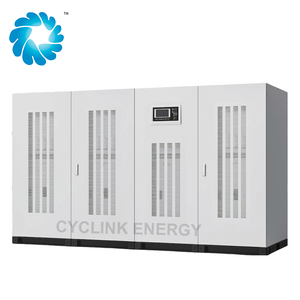
Our rail-grade power converters and industrial UPS modules deliver uncompromising hold-up times (Class S2/C1 compliant), ensuring continuous telemetry, automatic train control (ATC), and wayside signals remain fully operational during switching transients or utility grid sags.
The Toronto Transit Commission (TTC) operates a high-density 600V DC third-rail subway network (Line 1 Yonge-University and Line 2 Bloor-Danforth) alongside rapid light rail expansions including Line 5 Eglinton Crosstown, Finch West LRT, and the Ontario Line. 600V DC traction grids are notorious for severe voltage ripple, inductive kickback, and stray currents.
Our rugged outdoor and wayside power conversion systems feature double-isolated DC-DC buses, active Power Factor Correction (PFC), and advanced harmonic filter topology. Designed in compliance with AREMA and CAN/CSA-C22.2 safety standards, these systems prevent ground loops, shield sensitive wayside signal processors, and guarantee zero downtime for critical communication networks.
From passenger-facing rolling stock electronics to sealed outdoor signal bungalows along Canadian National (CN) and Canadian Pacific Kansas City (CPKC) shared tracks, explore how our power systems perform under real-world Ontario rail conditions.
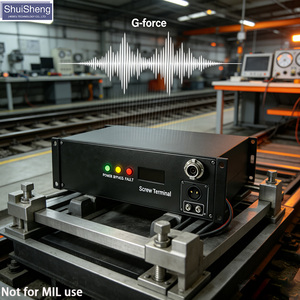
Modern passenger coaches operating on GO Transit and local LRT lines require ultra-reliable auxiliary power supplies for door control units, brake-by-wire emergency sub-systems, passenger information displays (PIDS), and Wi-Fi gateways. Our RailQor series DC-DC converters step down fluctuating vehicle battery voltages (24V, 36V, 72V, 110V nominal) to tightly regulated 12V, 24V, or 48V DC buses while conforming to EN 50155 shock and vibration specifications.
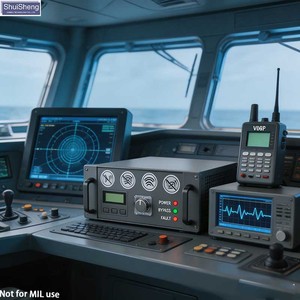
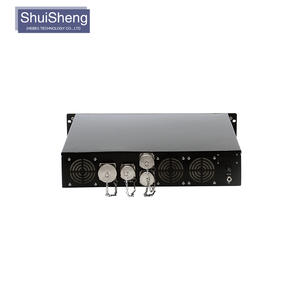
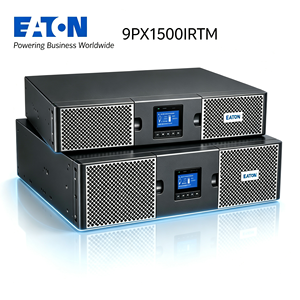
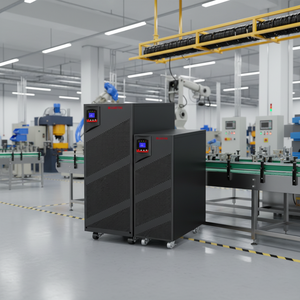
Communications-Based Train Control (CBTC) systems installed along the TTC Line 1 extension and future Ontario Line demand continuous 24/7 signal availability. Mains outages caused by severe ice storms cannot interrupt signal interlocking. Our outdoor IP68-rated and ruggedized rack-mount industrial UPS systems provide instantaneous lithium battery takeover, protecting sensitive track switches, axle counters, and radio transmission units from data corruption.
Traction Power Substations (TPSS) deployed across Ontario rail networks rely on real-time SCADA communication to monitor circuit breakers and transformer loads. Our high-efficiency, multi-channel AC-DC converters feature integrated active PFC and transient filters, preventing noise injection into high-speed fiber transceivers while surviving high voltage spikes caused by lightning or circuit breaker switching.
Standard industrial power modules rely on Schottky output diodes, causing massive thermal power dissipation at high output currents. SynQor’s proprietary synchronous rectifier power conversion topology completely redefines efficiency standards for rail and heavy industrial deployments.
Traditional diode-rectified power converters suffer from a fixed forward voltage drop (typically 0.5V to 0.9V). At a 100A output load, diode power dissipation alone wastes 50W to 90W of energy as heat, forcing engineers to add bulky heatsinks or noisy fans prone to freezing in Toronto winters.
By substituting diodes with actively controlled, extremely low RDS(on) MOSFETs driven by synchronous rectifier controller logic, conduction losses drop by up to 80%. Module efficiency reaches an industry-leading 95% to 96%, dramatically reducing localized thermal stress.
A common failure point during transit signal qualification is the unpredictable electromagnetic interaction between a third-party input EMI filter and a DC-DC converter brick. High-frequency switching noise often breaches EN 50121-3-2 and MIL-STD-461 limits when uncalibrated modules are combined.
We engineer converter and transient filter stages as a single, fully characterized electrical chain. Transient suppression modules absorb input voltage spikes up to 630V (100ms duration), guaranteeing drop-in compliance without additional external magnetics or filter tuning.
| Performance Parameter | Conventional Railway Power Modules | SynQor RailQor & Industrial UPS Architecture |
|---|---|---|
| Full-Load Efficiency | 82% – 88% (High internal heat generation) | 94% – 96% (Substantially reduced thermal dissipation) |
| Operating Temperature Range | -20°C to +60°C (Requires de-rating & fan cooling) | -40°C to +85°C baseplate (Conduction-cooled, fanless options) |
| Enclosure Protection | IP20 / Vent holes required for airflow | IP66 / IP68 Sealed Baseplate (Anti-salt spray & freeze-thaw immune) |
| Input Transient Protection | External MOV required, vulnerable to breakdown | Built-in Active Surge Stopper (EN 50155 Class S2 / C1 compliant) |
| Obsolescence Protection | 3–5 year EOL cycle for commercial ICs | 20+ Year Multi-Decade Form-Fit-Function Support |
As Metrolinx, TTC, and regional transit agencies modernize their assets, four key technological shifts are dictating power supply specification requirements across Ontario procurement contracts.
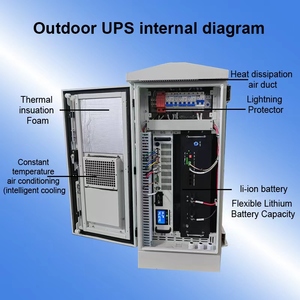
Traditional lead-acid gel batteries installed in outdoor wayside cabinets suffer severe capacity degradation when temperatures drop below zero in Toronto (-20°C can diminish battery performance by up to 50%). Ontario rail operators are rapidly standardizing on integrated Lithium (LiFePO4) energy storage systems equipped with internal heating elements and intelligent battery management systems (BMS), maintaining 100% rated backup capacity even during extreme polar vortex events.
Rather than relying on single, monolithic central UPS stations that present single-point-of-failure risks along vast rail corridors, transit engineers are installing modular, decentralized outdoor power systems directly at signal heads and wireless access points. Sealed IP66/IP68 power converters mounted along track enclosures eliminate long, lossy low-voltage cable runs and increase overall grid availability.
Historically, North American rail followed AREMA recommendations, while European rolling stock builders utilized EN 50155. Modern transit vehicles delivered to Toronto (such as Alstom Citadis, Siemens Charger, and Bombardier/Alstom BiLevel coaches) merge both specifications. Exporters catering to the Toronto market must provide dual-certified power hardware that clears AREMA environmental tests and EN 50155 electrical isolation requirements.
With 25kV AC overhead lines coming to GO Rail tracks, safety compliance with the Canadian Electrical Code (CSA C22.1) and transit-specific grounding rules is mandatory. High isolation voltage ratings (up to 4242VDC isolation) across power converter buses ensure high-voltage catenary faults do not compromise low-voltage control circuits or endanger maintenance staff.
Get authoritative answers on certification compliance, environmental testing, custom form-fit-function replacements, and Canadian supply chain support.
Over 25 years of pioneering synchronous rectification technology. Built in North America for global mission-critical programs.
Our state-of-the-art facility exceeds stringent aerospace and defense quality management mandates. Every unit shipped to Toronto transit partners carries 100% component-level traceability and documented burn-in verification data.
Design, qualification, and automated assembly take place under one roof in Salem, New Hampshire, USA. This eliminates overseas supply risk and gives Canadian transit operators direct access to lead application engineers.
From pioneering commercial synchronous rectifiers to developing high-density 3-phase railway UPS systems, our R&D engineering team continuously advances power conversion technology.
Consult with our lead power engineers today. Submit your input voltage bus, thermal boundaries, load requirements, and compliance standards for a full power chain analysis before committing to layout.