High-efficiency, continuous-duty power supply platforms built to meet strict EMC, thermal, and mechanical stress parameters across Israeli military, industrial, and telecom installations.
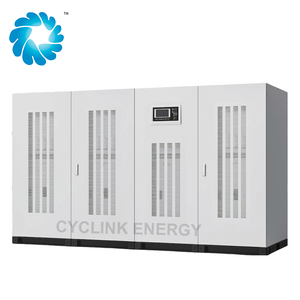
Heavy-duty Online UPS with integrated lithium battery backup, designed for critical transport, aviation hubs, and high-surge industrial grids.
Anti-salt, anti-mold, anti-corrosion sealed outdoor power architecture. Engineered for Mediterranean coastal salt spray and desert deployment.
Shockproof industrial inverter/UPS framework featuring reinforced chassis mechanics for mobile radar, military shelters, and heavy machinery.
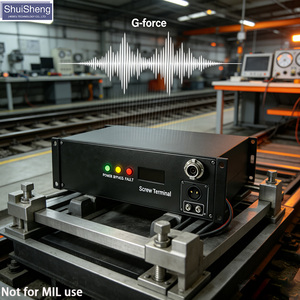
Dedicated trackside pure sine wave UPS ensuring zero-ms switching for railway signaling, automated switching gear, and transit communications.
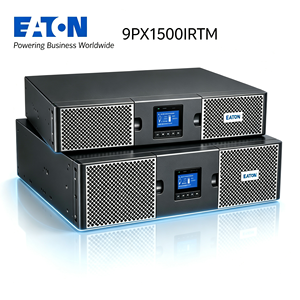
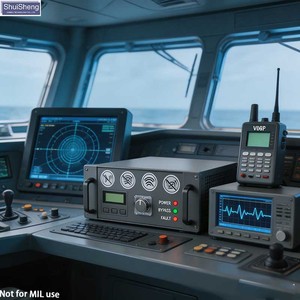
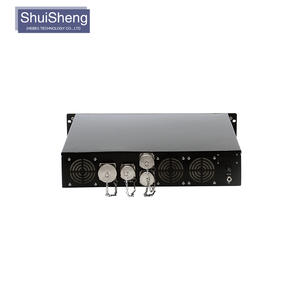
High-power-density 1U/2U rack-mounted pure sine wave inverter system optimized for marine vessels, defense server racks, and edge electronics.
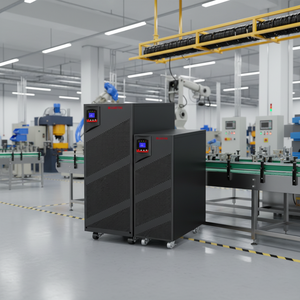
Industrial dual-conversion online power supply built for enterprise data centers (IDC), semiconductor fabs, and centralized control systems.
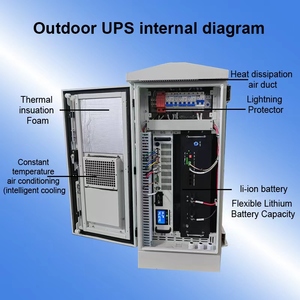
Extended-runtime, lightning-protected outdoor online UPS with 8kWh capacity. Designed for isolated monitoring stations and border surveillance.
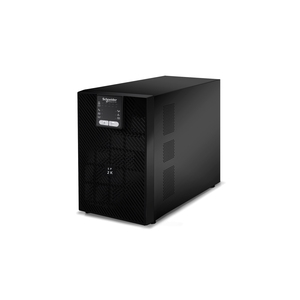
Wide-input dynamic pure sine wave inverter engineered for fluctuating renewable inputs, wind power control boxes, and microgrid synchronization.
An architectural breakdown of grid integration standards, environmental compliance, and high-frequency power switching topologies required for reliable operational continuity in Israel.
SEO Information Gain Note: Unlike consumer-grade power products, industrial pure-sine wave inverters serving the Israeli sector must harmonize strict 230V/400V 50Hz nominal grid requirements with heavy harmonic suppression, wide operating thermal windows (−40°C to +75°C), and certified electromagnetic compatibility (MIL-STD-461 / EN 50121) to operate near active RF radar and dense high-tech infrastructure.
The electricity infrastructure in Israel—managed centrally by the Israel Electric Corporation (IEC) and monitored under strict transmission policies by Noga (the Independent System Operator)—presents unique operational challenges. Supply lines along the coastal plain (from Haifa down through Tel Aviv to Ashdod) experience high atmospheric salinity and humidity. Concurrently, inland installations across the Negev Desert face severe diurnal temperature spikes exceeding 50°C ambient temperatures at localized enclosures.
Standard modified-sine or low-tier square wave inverters induce excessive core heating, high eddy current losses, and total harmonic distortion (THD) greater than 8% in sensitive industrial loads. For mission-critical infrastructure, true pure-sine wave synthesis utilizing multi-stage synchronous rectification is mandatory. By producing low-THD sine wave output (<2% for linear loads, <3% for non-linear load step profiles), pure-sine inverters guarantee that industrial automation PLCs, medical diagnostic gear, and high-frequency communication transmitters experience zero electromagnetic noise injection or unexpected thermal shutdowns.
Drawing upon decades of high-density power module engineering, modern OEM factories utilize active MOSFET synchronous rectifiers to replace traditional lossy Schottky diodes in the secondary rectification stage of isolated DC-DC bus converters and DC-AC inversion bridges.
By reducing internal forward-voltage drops down to milliohm levels of $R_{DS(on)}$, internal thermal power dissipation is lowered by up to 60%. This shift in power topology enables complete conduction cooling via aluminum cold-plates or baseplates. As a result, systems can operate inside fully sealed IP67/IP68 stainless steel or anodized enclosures without requiring external air-intake fans that invite corrosive salt aerosol or microscopic desert sand into high-voltage circuit tracks.
Our power conversion platforms are engineered and manufactured under quality frameworks exceeding traditional commercial standards, giving Israeli defense contractors, rail authorities, and industrial conglomerates absolute supply chain confidence.
Every unit undergoes complete single-piece flow testing, high-potential galvanic voltage isolation screening, and full thermal stress burn-in. Documented material lot traceability ensures auditing readiness for prime contractors.
We eliminate system integration risk by co-designing power factor correction front ends, pure sine wave output bridges, and active input transient filters as a unified topology, pre-certified to MIL-STD-461 and RTCA DO-160 standards.
We support long-lifecycle infrastructure projects spanning 15 to 30 years. Our hardware roadmaps guarantee consistent form-fit-function pinout drop-in replacements, protecting programs against unannounced component EOL risks.
From military defense installations in northern border zones to high-density tech hubs along the central plain, see how our pure-sine inverter and UPS architectures maintain continuous uptime.
Off-grid commercial arrays, agricultural kibbutz microgrids, and remote water pumping stations in Southern Israel demand robust solar inverter integration capable of operating efficiently amidst high solar irradiance and extreme ambient thermal conditions.
Facilities located near Ashdod, Palmachim, and Hadera process immense seawater volumes. Corrosive air saturated with salt mist poses a constant threat of dielectric breakdown and copper trace erosion in power conversion equipment.
Mobile defense units require ruggedized, shockproof AC power sources that conform to rigid tactical specifications while maintaining high power density within tight vehicular footprints.
The technological hubs of Herzliya, Petah Tikva, and Tel Aviv rely on continuous high-density electricity to support cloud computing nodes, financial trading networks, and nationwide 5G telecom towers.
As Israel accelerates its national clean energy goals and strengthens critical infrastructure resilience, technical procurement criteria for pure-sine wave systems are evolving rapidly.
With Israel targeting significant solar energy generation by the end of the decade, grid stability policies demand pure-sine inverters equipped with advanced grid-forming and microgrid-synchronization firmware. Suppliers must deliver fast response times to balance rapid cloud-cover transients over large desert solar installations.
Israeli procurement teams increasingly favor commercial off-the-shelf (Mil-COTS) power converters that bridge commercial efficiency with military-grade ruggedization. Utilizing standardized form factors speeds up certification cycles for local system integrators while keeping total program costs optimized.
Procurement specs have shifted away from standard indoor IP20 cabinets toward ruggedized IP65–IP68 baseplate-cooled architectures. Buyers demand verifiable salt-fog test data (ASTM B117) to withstand harsh coastal air near desalination facilities and thermal shock ratings for inland desert deployment.
Detailed technical answers to common questions asked by Israeli electrical engineers, system integrators, and procurement officers.
Our pure-sine wave inverters and online UPS systems are factory-configured specifically for the Israeli grid profile (nominal 230VAC single-phase / 400VAC three-phase at exactly 50Hz). They feature wide input voltage tolerance bands (e.g., 160VAC to 280VAC) to absorb severe grid drops or surges without prematurely switching to battery reserves. Output frequency is tightly regulated within ±0.1Hz, providing seamless compatibility with local equipment standards mandated by the Israel Electric Corporation (IEC).
All exported inverter families carry full international compliance documentation, including CE certification, IEC/EN 62109-1/2 for solar inverter safety, IEC/EN 62040 for uninterruptible power systems, and RoHS compliance declaration. For medical and defense applications, certified test reports covering EN 60601-1, MIL-STD-810G, MIL-STD-461, and EN 50155 are furnished directly from our ISO/IEC 17025 accredited laboratories to expedite SII (Standards Institution of Israel) verification and customs clearance through Haifa or Ashdod ports.
Modified sine wave or square wave units produce harmonic distortion exceeding 20-30%, which manifests as physical vibration, audible hum, and rapid overheating in AC motors, transformers, medical diagnostics, and precision power supplies. Pure-sine wave inverters deliver smooth, harmonic-clean energy (<2% THD) that mimics—and often exceeds—utility grid purity. This extends hardware operational lifespans, prevents data corruptions in local SCADA/PLC systems, and avoids costly emergency shutdowns in critical infrastructure.
Traditional fan-cooled inverters continuously draw ambient air across active components. In dusty, arid regions like the Negev, fine sand and particulate matter accumulate rapidly on circuit tracks, causing hot-spot failures and short circuits. Our baseplate-cooled inverters utilize synchronous rectification to minimize internal power dissipation, allowing heat to transfer directly through an aluminum baseplate onto a sealed cold-plate or external heatsink. This enables fully sealed IP67/IP68 chassis construction that isolates electronics entirely from sand, dust, and humidity.
We maintain structured logistics pipelines serving Israeli industrial hubs, offering air-freight options to Ben Gurion Airport (TLV) for urgent program needs and sea-freight routing to Haifa or Ashdod ports for full-container bulk orders. Every program is supported by direct access to our senior application engineering team for thermal derating calculations, custom input/output voltage configuration, EMI filter matching, and long-term lifecycle obsolescence management.
Share your input voltage range, continuous load requirements, ambient operating envelope, and environmental compliance targets with our power engineering specialists.