Precision-engineered 3-phase isolation transformers, industrial variable-frequency conditioning units, and rugged hybrid air conditioning systems designed for extreme ambient climates and voltage instability.
The Indian industrial landscape is undergoing an unprecedented modernization push under initiatives like "Make in India" and the massive expansion of high-tech manufacturing corridors across Maharashtra, Gujarat, Tamil Nadu, and Karnataka. However, electrical infrastructure development often faces severe operational challenges. Industrial facilities in India regularly experience severe voltage sags (-35% nominal), momentary voltage swells (+25% nominal), high neutral-to-earth (N-E) voltage drift, frequency fluctuations (47.5 Hz to 52.5 Hz), and high total harmonic distortion (THD) caused by unmitigated non-linear loads.
For mission-critical operations—such as multi-axis CNC machine tools, semiconductor fabrication, automated SMT assembly lines, diagnostic medical imaging (MRI/CT scanners), and railway signaling—raw utility power in India often fails to comply with IEEE 519 or IEC 61000 standards. Standard automatic voltage regulators (AVRs) or basic servo stabilizers fail to address sub-cycle spikes, high-frequency electromagnetic interference (EMI), or phase unbalance.
Leading global and domestic Power Conditioner Manufacturers & Suppliers serving the India market must provide holistic power quality architectures. True industrial power conditioning extends beyond simple voltage transformation; it combines galvanic isolation, active transient surge suppression, zero-cross solid-state regulation, and synchronous-rectifier topology to shield delicate microprocessors and power electronics from grid-borne anomalies.
To overcome Indian utility grid anomalies, power conditioning units must deploy multi-stage protection topologies engineered for extreme thermal and electrical stress.
Utilizing electrostatic shielding between primary and secondary windings (K-Factor 13 / 20 rated transformers), eliminating ground loops, reducing Neutral-to-Earth voltage to <0.5V, and isolating sensitive control logic from heavy grid surges.
Replacing mechanical carbon-brush servo motors with high-speed Insulated Gate Bipolar Transistors (IGBTs) and microsecond DSP controllers to achieve sub-cycle correction speed (<10ms) without mechanical wear or sparking.
Commercializing active MOSFET-driven synchronous rectification to replace lossy diode networks. Integrated Power Factor Correction (PFC) achieves >0.99 input power factor, drastically reducing utility kVA penalties.
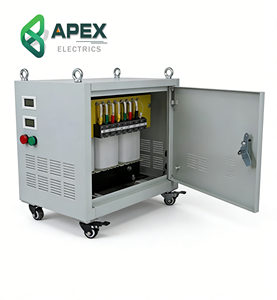
In automated machining units, line voltage sags caused by neighboring heavy induction furnaces trigger spindle drive trips and encoder position loss. High-capacity 3-phase power conditioners (such as the Apex Electrics SG-J60A 60kVA Isolation Transformer) buffer input voltage variances, providing continuous full-load power without line dropouts, preserving tool precision and reducing scrap rates by up to 42%.
High-field MRI machines and CT scanners require pristine sine wave electricity with virtually zero ground line interference. Power conditioners with integrated K-rated isolation transformers isolate delicate medical imaging receivers from high-voltage spikes caused by local diesel generator (DG) set switching, guaranteeing compliance with IEC 60601-1 standards.
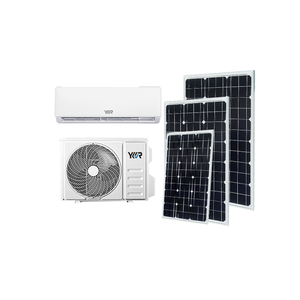
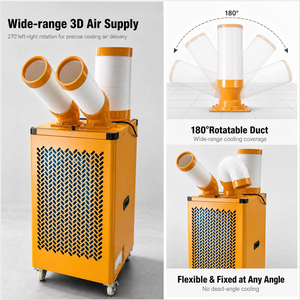
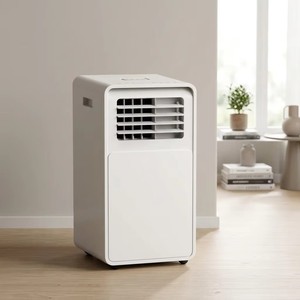
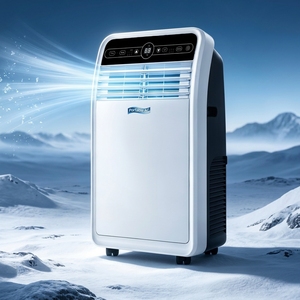
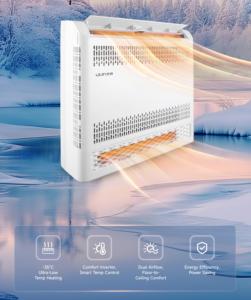
Across Rajasthan and Karnataka, hybrid renewable installations combine solar PV power with local grid connections. Specialized hybrid power conditioned climate systems (such as the Puremind DC/AC Hybrid Air Conditioner and Uniepu Solar Split Inverters) run directly off DC solar strings while drawing conditioned AC utility backup, keeping remote telecom towers operational during extended brownouts.
Northern and Central India experience ambient summer temperatures exceeding 48°C inside unconditioned industrial plant bays. Advanced power conditioning modules built to military-grade standards (exceeding MIL-STD-810G thermal profiles) utilize conduction-cooled heatsinks and high-temperature magnetic wire, eliminating thermal derating up to 55°C ambient.
A comprehensive analysis of power stabilization topologies evaluated against Indian industrial operating conditions.
| Performance Feature | Traditional Servo Stabilizers | Static Solid-State IGBT Conditioners | Isolation-Integrated Power Conditioners |
|---|---|---|---|
| Correction Speed | Slow (20V to 40V per second) | Ultra-Fast (< 10 milliseconds) | Instantaneous (< 2 milliseconds) |
| N-E Voltage Reduction | None (Pass-through) | Minimal | Complete Reduction (< 0.5V Neutral-Earth) |
| Harmonic Attenuation | Zero attenuation | Moderate (with LC Filter) | High (Integrated Electrostatic Shielding) |
| Mechanical Wear / Maintenance | High (Carbon brushes, servomotors) | Zero (Solid-state electronics) | Zero (Solid-state + Passive Transformers) |
| Suitability for Indian DG Sets | Poor (Hunting & frequency oscillations) | Good (Microprocessor regulated) | Excellent (Wide window 45Hz–65Hz support) |
| Target Applications in India | Basic pumps, general lighting | Robotics, SMT lines, Data centers | CNC Automation, Medical Diagnostic, Defense |
Building power conversion hardware capable of running continuously in harsh environments requires uncompromising manufacturing standards, rigorous component derating, and rigorous supply chain transparency. Our manufacturing facilities operate under strict quality management systems exceeding ISO 9001 and AS9100 certification requirements.
Engineered and tested under strict aerospace qualification protocols, ensuring predictable thermal management, high MTBF (>300,000 hours), and immunity to extreme EMI environments.
Form-fit-function replacement strategies and long product lifecycle guarantees protect Indian infrastructure projects from premature component obsolescence and costly redesigns.
Fully compliant across global and regional standards including MIL-STD-704, MIL-STD-461, RTCA DO-160, EN 50155 (Railway), EN 60601-1 (Medical), and BIS/IS 732 requirements for India.
Whether designing a clean room HVAC backup system, deploying split inverter climate control modules across off-grid solar farms, or installing heavy 3-phase isolation transformers in high-speed rail stations, our application engineers provide direct support for derating analysis, thermal simulation, and EMI filter pairing before system installation.
Addressing critical technical and commercial considerations for purchasing power conditioners and industrial climate control equipment in India.
In many Indian industrial zones, neutral lines carry high noise spikes and floating potentials relative to ground (often exceeding 15V to 30V N-E voltage). High N-E voltage causes micro-controller lockups, corrupts PLC communication signals, and destroys delicate logic boards in CNC machines. A galvanic isolation transformer breaks the direct electrical connection between input and output, recreating a local, clean neutral tied to dedicated earth ground (<0.5V N-E).
Servo stabilizers rely on carbon brushes driven by a motorized gear train, resulting in slow correction response times (200ms to 2000ms) and ongoing mechanical wear. IGBT-based solid-state conditioners use microprocessor-controlled switching with zero moving parts, providing instantaneous correction (<10ms), maintenance-free operation, and superior voltage stability under sudden high-inrush load demand.
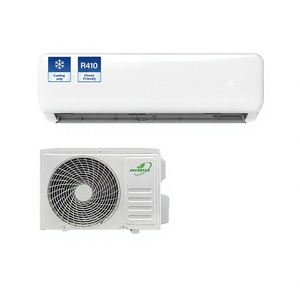
Yes. Indian facilities frequently switch to backup Diesel Generator (DG) sets during grid outages, causing temporary frequency drift (45Hz–65Hz) and voltage sags. Our industrial power conditioners and PFC-equipped inverter systems are designed with wide input voltage and frequency tolerance windows, ensuring seamless operation without hunting or switching to fault modes.
Enclosed industrial plants in states like Delhi NCR, Rajasthan, or Madhya Pradesh regularly exceed 45°C in summer. Buyers should specify power conditioners with high-temperature magnetic insulation (Class H or Class R, rated to 180°C/200°C) and heavy conduction cooling plates, guaranteeing 100% continuous full-load output without thermal power derating.
Yes. Equipment supplied for the Indian market is engineered to satisfy IS 732 (Code of Practice for Electrical Wiring Installations), IS 14700/IEC 61000 EMC standards, and CEA technical connectivity regulations regarding harmonic current suppression and power factor correction.
Hybrid solar climate systems (such as our hybrid monoblock and split DC/AC air conditioners) allow remote facilities to utilize locally generated solar PV energy directly for cooling control cabinets and shelter electronics. This minimizes reliance on unstable rural utility lines and cuts diesel generator fuel consumption during day-time peak heat hours.
Consult with our senior power conversion specialists today. We will review your grid voltage data, load characteristics, ambient thermal requirements, and isolation needs to specify the optimal power conditioning configuration.
Inquire Now