Explore our high-efficiency power conditioners, galvanic isolation transformers, and specialized inverter systems specified for European 400V/230V 50Hz grid standards and harsh industrial environments.
Berlin is undergoing one of Europe’s most aggressive urban energy transitions (Energiewende). As the local distribution grid (managed by Stromnetz Berlin GmbH) integrates massive volumes of decentralized renewable energy—such as utility-scale photovoltaics across Brandenburg and urban micro-inverters—the physical characteristics of the public utility supply are rapidly shifting.
Traditional grid architecture relied on centralized synchronous generators to maintain frequency stability and smooth sinusoidal waveforms. Today, the high density of inverter-dominated energy sources, combined with heavy industrial automation in industrial zones like Spandau, Marzahn-Hellersdorf, and Adlershof, introduces significant power quality phenomena:
Standard off-the-shelf voltage regulators merely boost or step-down RMS voltage. Modern industrial manufacturing in Germany demands total wave-shape reconstruction, active power factor correction (PFC), and galvanic decoupling.
Our industrial power conditioners are engineered to insulate downstream sensitive equipment from grid voltage deviations exceeding ±15%, restoring line waveform symmetry to within <1.5% THD under full load conditions.
From advanced biotechnology labs to automated automotive manufacturing, discover how our custom-engineered power conditioning systems resolve local power instability.
Primary Hubs: Spandau Industrial Corridor, Berlin-Neukölln Industrial Parks.
High-speed multi-axis CNC machines, laser cutters, and robotic welding arms require ultra-stable line voltage. Voltage sags cause tool chatter, dimension inaccuracies, and expensive drive fault shutdowns.
Primary Hubs: Charité Universitätsmedizin, Biotech Campus Berlin-Buch.
Medical MRI, CT scanners, and electron microscopes are exceptionally sensitive to radio frequency interference (RFI) and line harmonics conducted through the public grid.
Primary Hubs: Brandenburg Solar Farms, Urban Microgrids.
Decentralized photovoltaic arrays and commercial battery energy storage systems (BESS) experience dynamic power reverse-feeds and phase imbalance.
Combining proprietary synchronous rectification topologies with aerospace-grade quality standards to deliver unmatched thermal performance and longevity.
We pioneered actively driven MOSFET technology to replace traditional lossy diodes. This two-stage power conversion architecture dramatically cuts internal conduction losses, lowering thermal dissipation by up to 60% compared to conventional magnetic regulators.
Most system integration failures occur at the boundary between third-party input EMI filters and power conditioners. Our systems are engineered and pre-qualified as a unified chain, ensuring full compliance with MIL-STD-461, EN 50121, and EN 61000 standards.
We engineer long-lifecycle platforms for critical defense, rail, and industrial programs. With fully documented qualification data, AS9100 / ISO-9001 certified manufacturing, and form-fit-function replacement guarantees, your infrastructure is protected against redesign costs.
Review engineering specs across our primary power conditioning architectures to select the precise technology for your Berlin installation.
| Performance Parameter | Galvanic Isolation Conditioners (SG-Series) | Active Harmonic Power Conditioners | Hybrid Solar/Grid Variable Frequency ACs |
|---|---|---|---|
| Target Application | CNC Automation, Heavy Industrial Motors | Data Centers, Medical Imaging, Cleanrooms | Off-Grid Facilities, Telecommunications Hubs |
| Input Voltage Range | 400V 3-Phase ± 20% (320V - 480V) | 230V / 400V ± 15% 50Hz | DC 100V-400V / AC 220V Single Phase |
| Voltage Output Regulation | ± 1.0% Continuous RMS | ± 0.5% Instantaneous Sine Wave | Dynamic Inverter Controlled Frequency |
| Efficiency at Full Load | 96.5% - 98.2% | 95.0% - 97.0% | 94.5% (Solar Direct DC Mode) |
| Galvanic Isolation Level | Full Copper Double-Shielded Isolation (3kV) | Optional Electronic Isolation | Integrated DC-AC Isolation Barrier |
| Operating Temperature | -20°C to +55°C (Conduction/Air Cooled) | -10°C to +50°C | -25°C to +60°C (Extended Outdoor Rating) |
| Compliance Standards | CE, VDE-AR-N 4100, ISO 9001, AS9100 | EN 61000-3-2, IEC 60601-1, MIL-STD-461 | CE, EN 50155, Class A Energy Efficiency |
Key technological and regulatory shifts impacting plant managers, electrical engineers, and procurement officers in Eastern Germany.
German industrial enterprises are under strict regulatory pressure to audit energy losses. Standard magnetic regulators generate significant standby heat dissipation. Transitioning to solid-state synchronous power conditioning reduces baseline facility power usage, directly supporting ISO 50001 continuous improvement goals.
With the widespread adoption of Silicon Carbide (SiC) and Gallium Nitride (GaN) power electronics in EV fast chargers and solar inverters across Berlin, power grid noise has shifted to higher frequency spectrums (2 kHz to 150 kHz). Modern power conditioners must feature advanced active line filtering alongside traditional low-frequency transformer isolation.
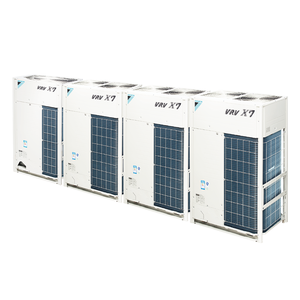
Commercial structures in central Berlin (Mitte, Charlottenburg) are replacing legacy gas systems with high-capacity variable refrigerant flow (VRF) units, such as Daikin X7 68HP systems. Conditioning the input voltage to these massive inverter drives prevents early compressor failure caused by grid voltage harmonics.
Increasingly warm summers in Central Europe place high thermal stress on distribution transformers. Voltage sags become more frequent during peak summer cooling hours. Industrial facilities equipped with localized, wide-input voltage conditioners maintain uninterruptible operational continuity during heatwaves.
Clear answers regarding compliance, local grid integration, delivery, and custom engineering support.
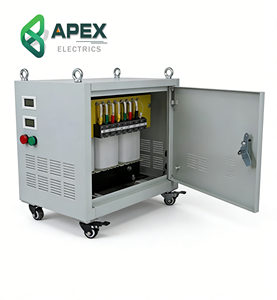
Our 3-phase power conditioning units (such as the SG-J60A series) are designed to satisfy VDE-AR-N 4100 technical connection rules. They incorporate active power factor correction and low harmonic feedback circuitry, ensuring that non-linear load noise generated inside your facility is blocked from feeding back into the public Stromnetz Berlin distribution network.
Standard power conditioners and modular units listed in our catalog are stocked for fast dispatch within Europe (typically 3 to 7 business days delivery to the Berlin-Brandenburg industrial area). Custom-engineered military or high-power industrial transformers (100kVA+) undergo full qualification testing at our facility prior to air freight, with typical lead times ranging from 3 to 5 weeks.
Many industrial parks in Berlin operate on older or heavily shared sub-distribution networks. Ground loops, neutral line shifts, and high-frequency electrical noise can corrupt sensitive CNC encoder signals and PLC logic boards. A galvanic isolation transformer physically decouples the primary input from the secondary load, establishing a fresh, clean local ground and eliminating stray currents entirely.
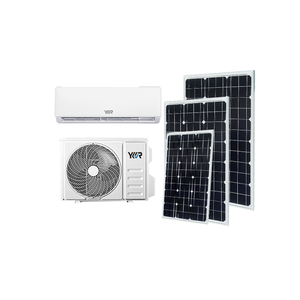
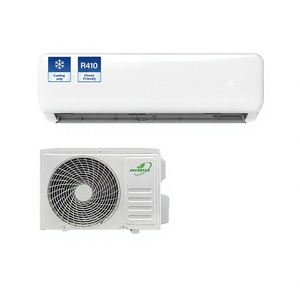
Yes. Products like the Puremind DC/AC Hybrid Solar AC and Uniepu Variable Frequency series feature dual-input MPPT control. They prioritize direct DC power from onsite photovoltaic panels and automatically blend utility AC power only when solar irradiance drops, maximizing green energy utilization while stabilizing voltage output.
Yes. Our application engineering team collaborates with local technical partners across Germany to evaluate power quality parameters—including harmonic distortion (THD), voltage sag history, and transient peak amplitudes—before proposing a specific conditioner topology (filter, front-end PFC, or isolation transformer).
Standard regulators rely on mechanical servo-motors or tap-changing transformers which are slow to respond (>100ms) and wear out mechanically over time. Our solid-state units use actively driven MOSFET synchronous rectification to continuously modulate power digitally, delivering instantaneous response times (<2ms) with zero mechanical wear components.
Specify your input bus voltage, target load capacity (kVA/kW), local compliance standards, and environmental constraints. Receive a comprehensive technical proposal tailored for your Berlin infrastructure within 24 hours.
