In high-density industrial electronics across Japan—from Tokyo’s mission-critical data infrastructure to Kansai’s precision robotics and Kyushu’s silicon manufacturing corridors—power supply design demands zero compromise on space, thermal efficiency, and electromagnetic compatibility (EMC).
Traditional power converters relying on Schottky or silicon diodes incur significant conduction losses due to fixed forward voltage drops ($V_F$). As output current requirements increase in modern 48V telecom architectures and high-voltage DC (HVDC) industrial systems, diode power dissipation creates intense thermal bottlenecks.
Our proprietary OEM/ODM Rectifier Modules integrate multi-stage active synchronous switching featuring sub-milliohm MOSFETs. By dynamically controlling the gate signals with zero-voltage switching (ZVS) and zero-current switching (ZCS) control loops, energy dissipation is reduced by up to 60% compared to legacy architectures. This allows Japanese equipment designers to implement sealed, conduction-cooled, IP67/IP68 enclosures without heavy forced-air cooling fans.
• Mechanical Form Factors: Full-Brick, Half-Brick, Quarter-Brick, 1U/2U/3U Standard Sub-Racks, and Custom Metal Stamping.
• Input Voltage Range: 85VAC–264VAC Wide Input, 3-Phase 115V/200V Delta, 3-Phase 380V/415V Wye, and 28V/48V/110V/270V DC Busses.
• Communication Protocols: PMBus v1.3, CANbus 2.0B, RS485, Modbus RTU, and Ethernet/SNMP monitoring interfaces.
• Ruggedization Options: Conformal Coating, Full Silicone Potted Baseplate Cooling, Vibration Resistance according to JIS C 60068-2-27 and MIL-STD-810G.
Japan’s unique industrial operating environment demands localized power conversion designs tailored to regional utility frequencies, extreme space constraints, severe seismic standards, and strict electromagnetic interference requirements.
Designed for JR Group and municipal metro signaling boxes, on-board communication systems, and trackside power cabinets. Our OEM rectifiers handle input voltage dips, 100Hz vibration cycles, and catenary surge spikes without micro-interruptions.
Serving Japanese telecom giants (NTT Docomo, KDDI, SoftBank) in high-density urban installations. Features compact 1U 48V rectified output, hot-swappable redundancy ($N+1$), and high operating temperature ratings for compact outdoor pole cabinets.
Optimized for expanding semiconductor manufacturing hubs in Kyushu (Kumamoto) and Tohoku. Delivers ripple-free ultra-clean DC power to extreme-ultraviolet (EUV) lithography support tools and wafer handling robotics.
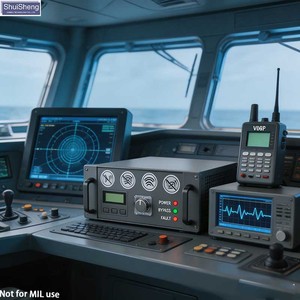
Formulated with military-grade anti-corrosion, anti-salt-spray coatings (JIS Z 2371). Ideal for marine vessel power systems and Japan’s expanding offshore floating wind farms in Sea of Japan energy corridors.
Delivers high isolation voltages ($4000\text{VAC}$) and ultra-low patient leakage current (<100µA). Fully compatible with IEC 60601-1 4th Edition EMC guidelines for MRI, CT scan systems, and precision robotic surgical units.
Engineering teams in Japan are navigating structural changes in grid topology, environmental regulations, and footprint limits. OEM custom rectifier modules provide the technology leverage required to stay competitive.
Japan’s electrical grid is split into two distinct frequency domains: Eastern Japan (TEPCO area operating at 50Hz) and Western Japan (KEPCO / Chubu area operating at 60Hz). Industrial equipment manufacturers targeting nationwide rollout require rectifier modules with active broad-frequency PFC front-ends (47Hz to 63Hz continuous) that maintain high efficiency without internal component derating when deployed across frequency borders.
Real estate and factory floor space in Tokyo, Yokohama, and Osaka command premium values. OEM design specs increasingly mandate smaller physical dimensions with higher wattages ($>40\text{W/in}^3$). Converting traditional discrete component power supplies into planar transformer-based modular rectifiers decreases footprint while eliminating complex assembly labor.
Under Japan's Green Transformation (GX) policy framework, industrial operators face strict energy efficiency metrics. Rectifier modules must achieve Power Factor Correction (PFC) values exceeding $0.99$ across $20\% \text{ to } 100\%$ load profiles while maintaining Total Harmonic Distortion (THD) below $3\%$, preventing grid pollution and minimizing reactive power penalties.
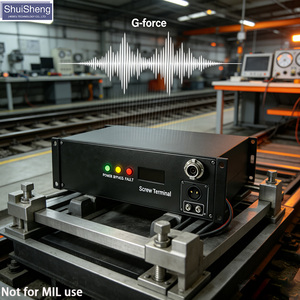
Earthquake readiness is a critical requirement for critical infrastructure in Japan. Power rectifiers integrated into emergency signaling, communications, and power back-up systems must comply with JIS C 60068 seismic vibration tests. Potted baseplate modules eliminate mechanical strain on PCB joints during high-G shock events.
Evaluate how targeted OEM/ODM rectifier design delivers superior performance over off-the-shelf commercial power supplies in demanding industrial environments.
| Specification Parameter | Standard Commercial Modules | Our Custom OEM/ODM Rectifiers (Japan Market) |
|---|---|---|
| Conversion Efficiency | 88% – 91% Peak | 94.5% – 96.5% Peak (ZVS/ZCS Topology) |
| Input Grid Flexibility | Single region static (e.g., 220V only) | Universal 85–264VAC (50Hz / 60Hz Seamless Dual Grid) |
| Operating Temperature | -10°C to +50°C (requires rapid fan cooling) | -40°C to +85°C Baseplate (Conduction/Sealed Potted) |
| Harmonic Distortion (THD) | <10% at full load | <3% Ultra-Low THD (EN 61000-3-2 Class D) |
| Japanese Standard Compliance | Generic CE / FCC only | JIS E 4031, PSE Mark Ready, JIS C 60068, EN 50155 |
| Lifecycle Support Guarantee | 3 – 5 Year EOL standard product cycle | 15 – 25 Year Multi-Decade Form-Fit-Function Lifecycle |
Combining decades of power conversion innovation with rigorous AS9100 / ISO-9001 quality systems to support tier-1 Japanese original equipment manufacturers.
Pioneers in commercial synchronous rectification technology, replacing diode loss with high-speed active MOSFET control to achieve unprecedented thermal efficiency and reliability.
Accelerated New Product Introduction (NPI) cycles. From schematic design and magnetic component winding to rapid 3D thermal modeling and prototype sampling within weeks.
Equipped with specialized EMC chambers and environmental test equipment for MIL-STD-461, DO-160G, and JIS C 60068 testing prior to final agency certification.
Complete supply chain transparency with AS9100 aerospace-grade lot traceability. We protect long-life programs against component component obsolescence.
Custom planar transformer designs integrated into multi-layer printed circuit boards, reducing module height while guaranteeing tight EMI coupling characteristics.
Direct access to expert power design engineers for derating calculations, thermal simulation analysis, and custom firmware adaptation during your system integration phase.
Clear engineering answers regarding compliance, customization lead times, thermal management, and quality control.
Our active Power Factor Correction (PFC) modules utilize dynamic wide-frequency tracking algorithms capable of processing AC inputs from 47Hz to 63Hz continuously. Whether deployed in Tokyo (50Hz TEPCO) or Osaka (60Hz KEPCO), output voltage regulation and efficiency curves remain identical, eliminating the need for regional part-number variations.
Yes. We work directly with OEM partners to ensure all custom AC-DC rectifier modules and power systems are designed in strict accordance with electrical appliance and material safety guidelines under Japan's DENAN Law (PSE Mark requirement). We provide full safety insulation distance (creepage/clearance) documentation and test data.
Our modules leverage baseplate conduction cooling paired with thermally conductive epoxy potting. By removing heat directly through the metal baseplate to the customer enclosure wall, internal ambient heat build-up is minimized, allowing fanless sealed IP67/IP68 operation across extended ambient temperature ranges (-40°C to +85°C).
Standard modified OEM variations (adjusting voltage outputs, custom pin lengths, or conformal coating specifications) take approximately 3 to 5 weeks. Full ground-up ODM developments requiring custom PCB layouts and mechanical tooling are prototyped within 8 to 12 weeks, supported by detailed engineering evaluation reports.
We implement a strict Form-Fit-Function (FFF) replacement commitment for long-life industrial platforms (15 to 25 year lifecycles). Active component lifecycles are monitored, and in the event of semiconductor EOL announcements, we manage drop-in replacement qualifications or end-of-life component stocking programs.
Yes. Rectifiers engineered for railway applications undergo rigorous multi-axis shock and random vibration testing matching JIS E 4031 Category 1 Class B (body-mounted) and Class A (bogie-mounted) specifications, ensuring uninterrupted power to train control and signaling sub-systems.
Talk directly with our senior application engineering team today. Request complete datasheets, thermal derating curves, and custom OEM proposal packages for the Japanese market.
