Field-proven uninterrupted power supplies, active PFC front-ends, and ruggedized DC-DC/AC-DC systems

Modern naval operations demand uncompromising power integrity. Shipboard electrical architectures represent some of the most challenging environments for electronic hardware engineering. Unlike terrestrial power grids, naval microgrids operate as isolated, self-contained energy islands where diesel generators, gas turbines, shaft alternators, and energy storage banks must coexist under rapidly fluctuating load profiles.
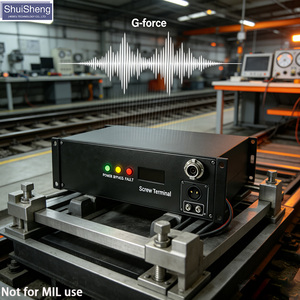
For naval surface combatants, ice-class patrol vessels, and maritime platforms operating across the Baltic, Northern Sea Route, and Far Eastern Russian sea borders, power systems face a dual crisis: extreme electrical volatility and harsh environmental stress. Naval systems must withstand ambient sub-zero thermal drops (down to -50°C), constant deck vibration, explosive structural shock profiles, salt fog corrosion, and ungrounded 3-phase delta grid imbalances.
Core Technical Advantage: Advanced synchronous-rectifier topologies combined with active two-stage conversion cut thermal losses by up to 60% compared to traditional schottky diode architectures. This low-dissipation profile allows hermetic conduction-cooling without air ingress, completely isolating internal power electronics from salt fog, mold, and industrial contaminants.
Deploying military power converters and uninterruptible power systems (UPS) on Russian naval platforms requires deep compliance with localized engineering expectations and maritime standards. Shipboard electrical distribution typically relies on ungrounded 3-phase power (such as 380V/220V 50Hz or 115V 400Hz systems), which creates distinct operating anomalies:
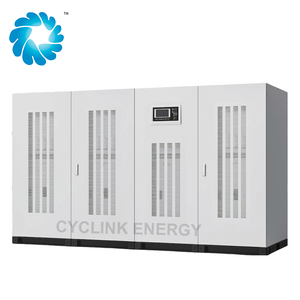
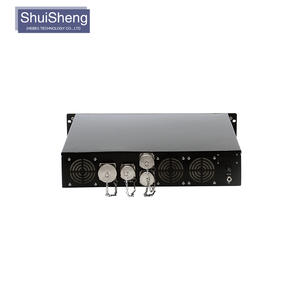
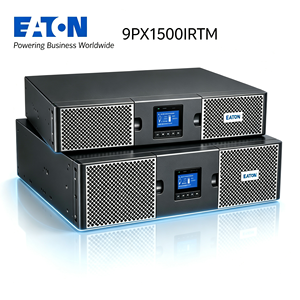
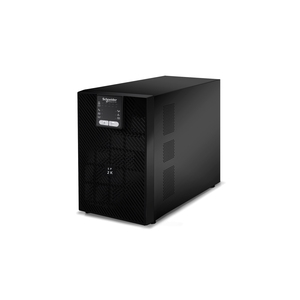
Our catalog of ruggedized marine power supplies, isolated DC-DC converters, active power factor correction (PFC) modules, and complete rack-mount uninterruptible power systems are deployed across critical naval sub-systems:
Uninterruptible, ripple-free DC bus power for fire control radars, electronic countermeasure (ECM) suites, and active towed-array sonars requiring strict low-noise EMI profiles (MIL-STD-461 compliant).
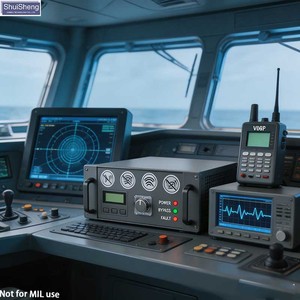
Filtered backup power for satellite comms, GLONASS/GPS positioning modules, ECDIS digital charts, and automated helm controls, preventing reboot delays during generator switchovers.
Rugged IP68 power supplies feeding valve actuators, fire suppression monitoring sensors, damage control telemetry, and engine room automation in high-ambient temperature zones.
To achieve high power density in confined shipboard spaces, power conversion modules must eliminate unnecessary heat generation at the silicon level. Legacy power supplies rely on standard p-n junction or Schottky diodes for secondary-side rectification. At high current loads, forward voltage drops across these diodes ($V_f \approx 0.5\text{V}$ to $1.0\text{V}$) generate substantial heat loss ($P = I \times V_f$).
Our naval power solutions utilize **Synchronous Rectification Technology**, replacing passive diodes with custom-driven low $R_{DS(on)}$ MOSFETs. Because the MOSFET on-state resistance is exceptionally small, conduction losses drop exponentially, driving thermal dissipation down and efficiency up to 96%. This efficiency leap yields multiple critical benefits for naval engineers:
| Performance Parameter | Standard Commercial UPS | Rugged Industrial UPS | SynQor Marine Military System |
|---|---|---|---|
| Peak Efficiency | 85% - 88% | 89% - 91% | 95% - 96.5% (Synchronous Topology) |
| Input Voltage Handling | Single Phase 220V ±10% | Single/3-Phase 380V ±15% | Wide 3-Phase 115V/380V Line-to-Line (MIL-STD-1399) |
| Harmonic Distortion (THD) | < 10% at full load | < 5% with passive filter | < 2% Active PFC (MIL-STD-461 Compliant) |
| Ingress Protection Rating | IP20 / IP30 (Indoor) | IP54 (Splash Proof) | IP67 / IP68 Hermetic Sealed (Salt/Mold Proof) |
| Operating Temp Range | 0°C to +40°C | -20°C to +50°C | -40°C to +70°C Cold-Start Extended |
| Vibration & Shock Standard | Commercial Light | Industrial Standard | MIL-STD-810G & GOST RV Shock Rated |
The modernization of maritime fleets across Northern and Eastern sea routes has accelerated demand for robust, locally compatible power equipment. Naval architects are replacing legacy analog transformers and heavy iron-core power supplies with lightweight, modular high-frequency switching units. Key trends driving engineering specifications include:
1. Dual-Grid Compatibility (50Hz / 400Hz Transitioning): Modern Russian naval vessels frequently utilize 50Hz for main power distribution alongside specialized 400Hz high-frequency buses for aviation support and high-precision radar units. Next-generation shipboard UPS units must offer wide input frequency tracking (45Hz to 450Hz) to seamlessly operate across variable generator outputs without switching to battery power.
2. Advanced Lithium Iron Phosphate (LiFePO4) Integration: Legacy lead-acid batteries are rapidly being phased out due to toxic off-gassing, heavy weight, and short cycle life under deep discharge. Shipboard power systems now standardise on LiFePO4 battery modules equipped with smart Battery Management Systems (BMS) that incorporate automatic cell-balancing, localized heating films for arctic operation, and rapid 1-hour fast charging capabilities.
3. Compliance with Strict Electromagnetic Interference (EMI) Norms: Modern warships carry ultra-sensitive digital sensor suites. Poorly filtered switching power supplies generate conducted interference that disrupts communications and degrades sonar clarity. Integrating full-brick EMI filters directly into the converter chain guarantees compliance with MIL-STD-461 (Methods CE101, CE102, CS101, CS114) and equivalent GOST standards.
Proven quality control, advanced design engineering, and complete lifecycle protection
Our production facilities maintain rigid process control, complete component traceability, and comprehensive burn-in testing, exceeding global aerospace and defense standards.
We supply the entire power ecosystem—from transient EMI filters and active PFC front-ends to isolated DC-DC converters and rack-mount UPS units—eliminating system integration risk.
Defense platforms remain active for decades. We protect programs from component obsolescence through strict form-fit-function redesign controls and extended manufacturing support.
Technical guidance for defense equipment buyers, shipyard integrators, and system architects
Submit your system voltage parameters, load profiles, thermal envelope, and target certification standards to our defense power application engineers.
Send an Inquiry