Engineered to operate under severe vibration, salt spray, shock, and extreme thermal loads. Compliant with international defense standards.
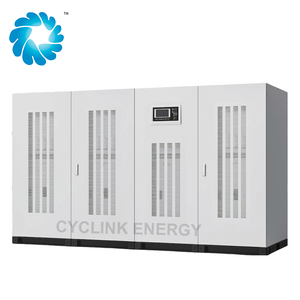
High-density lithium battery backup UPS engineered for critical energy infrastructure, aviation ground support, and heavy metallurgy installations.
Get Catalog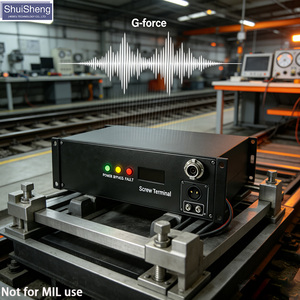
Anti-salt, anti-mold, and anti-corrosion sealed outdoor power unit designed for extreme marine coastlines and harsh industrial environments.
Get Catalog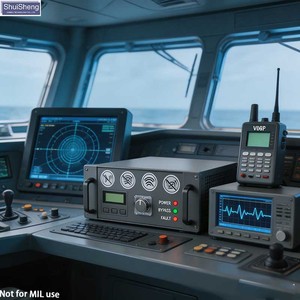
Military-grade structural casing providing active shock isolation and vibration resistance for tactical vehicles and naval machinery rooms.
Get Catalog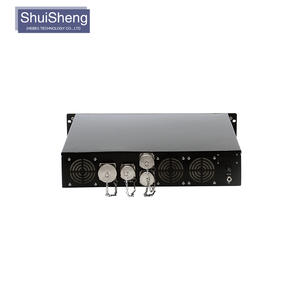
Uninterruptible power delivery optimized for trackside railway signaling systems, automated train control, and centralized transit command nodes.
Get Catalog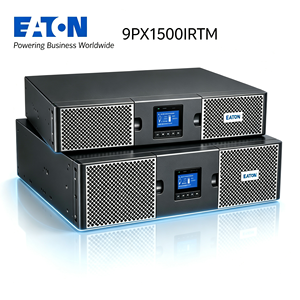
Compact 1U/2U rack-form factor naval uninterruptible power supply providing unity power factor execution for marine radar and bridge navigation systems.
Get Catalog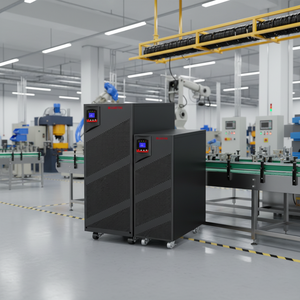
Three-phase input double-conversion online UPS configured for heavy-duty industrial data centers, command centers, and mission control rooms.
Get Catalog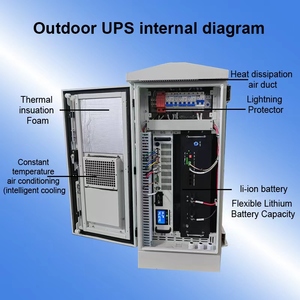
Fully weatherproofed enclosure with integrated 8000Wh battery storage and heavy-duty surge protection for remote communication installations.
Get Catalog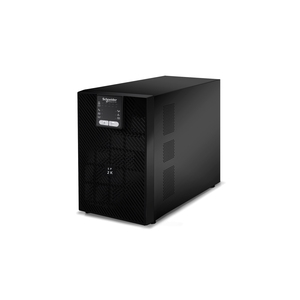
Specialized power conditioning unit with built-in battery reserves designed specifically for renewable energy turbines and unstable grid inputs.
Get CatalogModern naval defense platforms and strategic infrastructure require continuous, ultra-reliable power conditioning. Ships operating in coastal and international waters face severe electrical environments characterized by rapid load swings, high harmonic distortion, voltage spikes, aggressive salt-fog corrosion, and mechanical shock. For naval systems integrators, defense contractors, and administrative procurement headquarters situated in Mexico City (CDMX)—the central authority hub managing defense acquisitions for the Secretariat of the Navy (SEMAR) and Secretariat of National Defense (SEDENA)—specifying military-grade uninterruptible power supplies (UPS) and DC-DC/AC-DC converters demands rigorous adherence to international military standards and localized engineering parameters.
By replacing lossy Schottky diodes with actively driven MOSFETs and employing a multi-stage topology, our power architecture achieves up to 96% conversion efficiency. This directly reduces thermal dissipation by up to 50%, enabling fully sealed IP67/IP68 or conduction-cooled enclosures without relying on failure-prone internal cooling fans.
Shipboard power distribution differs fundamentally from land-based commercial grids. Naval vessels operate as isolated microgrids powered by shipboard diesel generators or gas turbines. Power systems supplied to naval programs must strictly conform to three primary standards:
When selecting military power conversion hardware, thermal management dictates system lifespan and MTBF (Mean Time Between Failures). Below is an architectural comparison of modern synchronous rectification versus conventional diode topology:
| Engineering Metric | Conventional Diode Power Topology | Advanced Synchronous Rectification (SynQor Standard) |
|---|---|---|
| Peak Conversion Efficiency | 82% – 88% Maximum | 94% – 96% Peak Efficiency |
| Thermal Dissipation Profile | High heat generation; requires large heatsinks & active fans | Minimal power loss; enables conduction cooling & fanless designs |
| Enclosure Protection Class | Typically IP20 – IP44 (Vented) | IP65 – IP68 (Fully Sealed, Anti-Corrosion) |
| Input Power Factor (PFC) | 0.75 – 0.85 (High THD) | > 0.99 Active PFC (MIL-STD-1399 Compliant) |
| Mean Time Between Failures (MTBF) | < 150,000 Hours at 45°C | > 1,500,000 Hours (MIL-HDBK-217F) |
| 3-Phase Load Balance Handling | Prone to severe line neutral imbalance | Integrated Active Neutral Stabilization |
While naval vessels operate across coastal bases such as Veracruz, Tampico, Manzanillo, and Salina Cruz, the engineering specifications, contract management, and command system integration occur predominantly in Mexico City. High-reliability power systems exported to Mexico City integrators must satisfy specific localized engineering environments:
Mexico City sits at an elevation of 2,240 meters (7,350 feet) above sea level. Standard commercial power supplies rated for sea-level operation experience significant derating at this altitude due to reduced air density (approximately 22% lower than sea level). Reduced air density degrades convective thermal cooling capacity and decreases the dielectric breakdown voltage of air gaps.
Our naval power converters and military UPS modules incorporate customized high-altitude thermal derating factors, enlarged creepage and clearance distances across power PCB traces, and high-efficiency thermal cold-plate interfaces. This guarantees that equipment bench-tested and integrated at Mexico City headquarters will operate flawlessly without thermal shutdowns or electrical arcing when deployed at sea level naval docks or high-altitude interior radar monitoring stations.
Direct support for surface combatants, patrol vessels (OPVs), and auxiliary transport ships anchored at Manzanillo and Veracruz, engineered via CDMX defense contracting channels.
Clean, ripple-free power delivery for C4ISR command setups, air defense radar systems, satellite tracking dishes, and tactical encrypted communications radios.
Backbone power systems for railway signaling, control rooms, and port logistics along the Interoceanic Corridor of the Isthmus of Tehuantepec (CIIT) and Tren Maya.
The industrial and military landscape in Mexico is undergoing a rapid transformation driven by three major market forces:
With Mexico emerging as a globally dominant nearshoring hub for industrial manufacturing and aerospace electronics, local OEMs in Mexico City and surrounding industrial corridors (Querétaro, Puebla, Monterrey) are standardizing on COTS (Commercial-Off-The-Shelf) defense-grade modules. Buying pre-qualified COTS components accelerates program launch schedules while ensuring AS9100 quality compliance.
The expansion of Mexico's maritime infrastructure along the Pacific and Gulf coastlines requires upgraded shore-to-ship power conversion, container terminal automation, and ruggedized power backup units. These units must withstand salt fog, continuous tropical humidity, and voltage surges caused by heavy crane machinery.
Traditional lead-acid battery technology is rapidly being phased out by defense integrators in favor of advanced Lithium Iron Phosphate (LiFePO4) chemistry integrated into sealed, IP68-rated UPS systems. Lithium systems offer 3x the cycle life, reduced weight, and superior performance under elevated ambient temperatures common in tropical marine ports.
Built with precision engineering, complete component traceability, and decades of field innovation.
Every shipboard UPS unit undergoes rigorous factory testing for harmonic distortion control, line-to-line 3-phase isolation, and electromagnetic compatibility.
Manufactured under strict AS9100 and ISO-9001 certified quality control, guaranteeing full lot traceability and zero counterfeit component risks.
Form-fit-function product lifecycle protection supporting long-term defense programs for 20+ years without forced redesigns.
Heavy-gauge aluminum chassis coated with chemical agent resistant coatings (CARC) and rated up to IP68 for continuous submersion protection.
Silent solid-state conversion prevents acoustic detection in stealth naval applications while adhering strictly to submarine quiet-ship directives.
Streamlined defense customs documentation, door-to-door freight routing, and technical support dedicated to Mexico City procurement teams.
Key technical and logistical insights for specifying, purchasing, and importing naval power systems.
Our engineering team designs converters with expanded dielectric spacing and enhanced cold-plate thermal paths. When bench-tested in Mexico City, our units deliver 100% full-rated load without thermal trip-outs, fully calibrated for low atmospheric density before final coastal deployment.
Yes. Our shipboard UPS systems feature active 3-phase power factor correction (PFC > 0.99) and low harmonic distortion (< 3% THD), fully complying with MIL-STD-1399 Section 300B Type I power parameters for naval surface ships and submarines.
Every shipment delivered to Mexico City includes Certificate of Conformance (CoC), AS9100/ISO-9001 quality inspection reports, detailed thermal derating test data, factory burn-in test certificates, and full customs documentation (including HS Code classification for defense/industrial equipment).
Absolutely. We manufacture modular systems capable of accepting wide 3-phase AC inputs (115V, 230V, 440V RMS) and providing multiple isolated outputs including 28VDC vehicle/naval bus power, 115V 60Hz single-phase pure sine wave, and 400Hz avionics power.
We maintain an anti-obsolescence engineering policy. If an internal semiconductor component reaches End-of-Life (EOL), our design team issues form-fit-function replacement modules, ensuring that original mechanical dimensions and electrical pinouts remain unchanged across decades.
Standard catalog COTS modules are stocked for rapid shipment within 2–4 weeks. Custom-configured rack-mount power systems or IP68 military units typically carry a lead time of 6–8 weeks, including complete factory acceptance testing (FAT).
Connect directly with our application engineers to evaluate your power architecture, request thermal modeling data, or receive a comprehensive product catalog tailored for naval defense and industrial projects in Mexico.