High-efficiency, wide-temperature online UPS architectures certified for extreme environmental conditions, oil & gas fields, railway signal backup, and remote telecommunications.
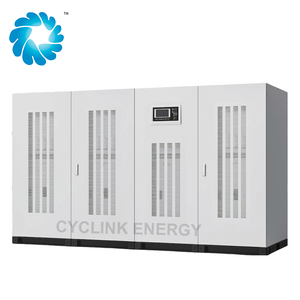
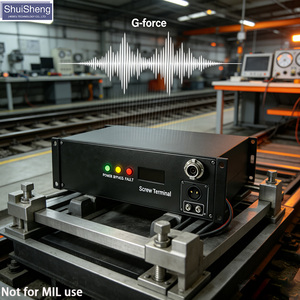

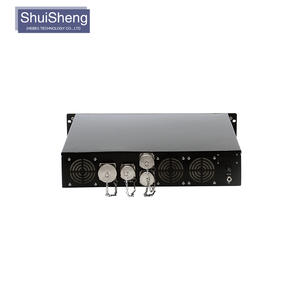
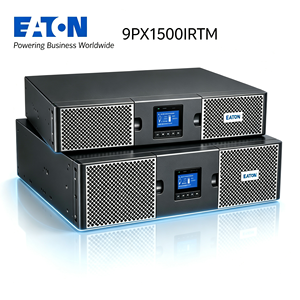
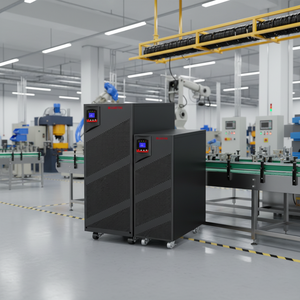
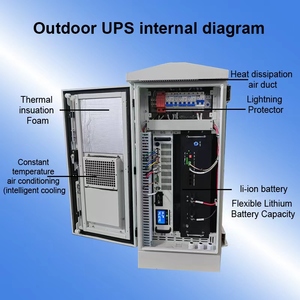
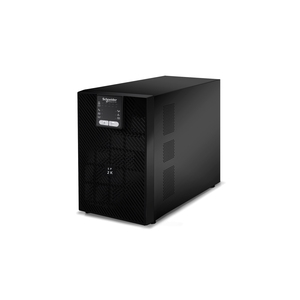
Why standard commercial UPS systems fail in Iraqi operational environments and how field-grade industrial engineering overcomes severe grid instability and desert climates.
The public electricity grid in Iraq (administered by the Ministry of Electricity) suffers from structural supply deficits, resulting in frequent rolling blackouts, extreme line-voltage sags down to 140VAC, and severe frequency drifts beyond 47Hz–53Hz. Traditional off-line or line-interactive commercial UPS systems frequently drop into battery mode during minor sags, exhausting battery reserves long before major grid failures occur. Our online double-conversion industrial UPS platforms utilize active Power Factor Correction (PFC) front-ends capable of operating across an ultra-wide input AC voltage window (160V–300V AC at full load) without draining the battery bank.
Summer ambient temperatures in Southern Iraq (e.g., Basra, Rumaila, Zubair) regularly surpass +50°C (+122°F), with internal enclosure temperatures inside remote shelter cabinets exceeding +65°C. Standard Valve-Regulated Lead-Acid (VRLA) batteries experience accelerated grid corrosion and thermal runaway at these temperatures, losing 50% of their operational life for every 8°C rise above 25°C. Our field-grade UPS systems incorporate advanced Lithium Iron Phosphate (LiFePO4) battery modules combined with high-efficiency synchronous rectification topology, minimizing internal heat dissipation and allowing full power output without thermal derating up to +55°C ambient.
Drawing from military-grade power electronics standards (such as MIL-STD-810G, MIL-STD-461, and AS9100 quality frameworks), our industrial uninterruptible power supplies integrate two-stage converter topologies with actively driven MOSFET synchronous rectifiers. By eliminating lossy passive diodes, internal heat dissipation is reduced by up to 45% compared to legacy designs. This structural efficiency allows our systems to operate reliably inside hermetically sealed IP66/IP68 dustproof enclosures without relying on high-maintenance air filtration units in particulate-heavy desert sectors.
Engineered specifically to protect critical assets and guarantee uninterrupted uptime in energy, defense, transport, and telecommunications operations across Iraq.
Upstream wellhead telemetry, Emergency Shutdown Systems (ESD), gas-oil separation plants (GOSPs), and pipeline SCADA remote terminal units (RTUs) require continuous 24VDC / 230VAC power. In remote desert locations around Rumaila and West Qurna, corrosive H2S gases and airborne sand threaten electronic components. Our field UPS cabinets feature conformal-coated PCBs, anti-salt and anti-mold galvanic isolation, and sealed heat-pipe cooling channels.
Cellular networks operating along the Baghdad-to-Erbil highway depend on isolated microwave repeaters and 4G/5G base transceiver stations (BTS). Power interruptions degrade voice and data connectivity. Outdoor IP68-rated UPS units mounted directly on towers or ground poles withstand intense sandstorms (Haboobs) while delivering clean DC/AC power supplemented by direct solar PV integrations.
Commercial banking hubs in Baghdad and enterprise data centers in Erbil require clean, high-density power conditioning. Voltage spikes generated by diesel generator-to-grid changeover switches damage sensitive rack servers. Our 10kVA to 100kVA online double-conversion UPS units provide true galvanic isolation, zero transfer time, and clean pure sine wave output with a 1.0 unity power factor.
A side-by-side engineering evaluation highlighting why commercial-grade backup supplies fail rapidly under Iraqi field conditions.
| Engineering Feature | Standard Commercial UPS | Field-Grade Industrial UPS (Our Solution) |
|---|---|---|
| Operating Temperature Window | 0°C to +40°C (Deteriorates above +30°C) | -40°C to +55°C Full Load (Up to +70°C Storage) |
| Input AC Voltage Range | 180V – 260V AC (Fails frequently to battery on sags) | 160V – 300V AC Wide Window (Active PFC Front-End) |
| Battery Technology & Life | Standard VRLA Lead-Acid (1–2 yrs life in heat) | High-Thermal LiFePO4 (8–10+ yrs Life @ +50°C) |
| Ingress Protection Rating | IP20 / IP21 (Vented slots accumulate desert dust) | IP65 / IP66 / IP68 Sealed Enclosure Options |
| Vibration & Shock Resistance | Low (Plastic chassis, PCB flex risk) | MIL-STD-810G Vibration & Heavy Steel Chassis |
| Galvanic Isolation | None or Optional External Transformer | Built-in Full Galvanic Isolation Transformer |
Key operational transformations shifting procurement requirements for Iraqi engineers, EPC contractors, and system integrators.
Driven by national clean energy initiatives and the high operational cost of continuously running diesel generators during long grid blackouts, industrial projects in Iraq are rapidly adopting Hybrid Solar-UPS Architectures. Modern field UPS units must accept multi-source energy inputs—balancing local grid AC, diesel generator output, and direct MPPT solar charge controllers. This reduces total fuel consumption at remote oil pads and military stations while ensuring uninterruptible power delivery.
Procurement specifications issued by international oil companies (IOCs) and state entities like South Oil Company (SOC) are shifting away from traditional VRLA lead-acid batteries. LiFePO4 chemistry is now mandated due to its superior thermal stability, immunity to thermal runaway, faster recharge capability (reaching 90% capacity within 1 hour), and significantly lower Total Cost of Ownership (TCO) over a 10-year operational lifecycle in desert zones.
With infrastructure spread over wide, remote geographies across the Ninawa, Anbar, and Basra provinces, manual maintenance visits are costly and hazardous. Iraqi power system operators require integrated smart monitoring protocols. Our UPS solutions feature embedded SNMP v3, Modbus RTU/TCP, and dry contact alarms that integrate seamlessly into centralized SCADA platforms, transmitting real-time battery health, temperature alerts, and load profiles.
As heavy machinery, variable frequency drives (VFDs), and heavy industrial pumps operate on the same local microgrids as sensitive telemetry and digital controls, total harmonic distortion (THD) becomes a primary failure vector. Modern Iraqi tenders specify total input harmonic current distortion (THDi) under 3% and total harmonic voltage distortion (THDv) under 2%, requiring advanced active power factor correction topology.
Combining decades of power electronics design expertise with rigorous ISO-9001 and AS9100 quality management systems, our company supplies long-life power conversion equipment engineered to perform without failure in the world's most unforgiving operational theaters.
All conversion topologies undergo end-to-end design verification, thermal mapping, stress derating, and rigorous environmental qualification.
We guarantee long product lifecycles and component availability, protecting multi-decade Iraqi infrastructure projects from sudden component obsolescence.
From custom NEMA/IP enclosures to specialized input voltage steps (e.g., 3-phase 380V/115V), our engineering team tailors solutions to project specifications.
Detailed answers addressing electrical compatibility, thermal management, lead-times, and local support for Iraq shipments.
Our online double-conversion industrial UPS models utilize a wide-range active Power Factor Correction (PFC) rectifier. The system maintains full nominal DC bus voltage and rated AC output down to 160VAC input without switching over to battery power. Between 160VAC and 110VAC, the system derates load linearly while still preserving 100% of battery capacity for complete utility blackouts.
Yes. We offer outdoor-rated enclosure configurations certified to IP65, IP66, and IP68 (NEMA 4X) standards. These cabinets feature closed-loop heat exchangers or internal thermal conduction paths, ensuring fine silica sand, dust particles, and driving moisture cannot penetrate the sensitive internal power electronics.
Diesel generators often produce dirty frequency output (drifting between 45Hz and 65Hz) and harmonic distortion under sudden step loads. Our online UPS units buffer this entirely by converting dirty generator AC into regulated DC, then synthesizing a pure sine wave AC output with <2% THDv. This prevents downstream server or instrument tripping during generator operation.
We strongly advocate for Lithium Iron Phosphate (LiFePO4) battery systems for installations where ambient temperatures exceed +35°C. LiFePO4 provides up to 3,500+ charge/discharge cycles at 80% Depth of Discharge (DoD) even under continuous +45°C to +55°C operation, compared to conventional VRLA lead-acid batteries which degrade in less than 18 months under identical conditions.
Yes. Our systems meet key international industrial standards including IEC/EN 62040-1/2/3, MIL-STD-810G (vibration/shock/humidity), MIL-STD-461 (EMC/EMI), EN 50155 (rail signaling), and ISO-9001/AS9100 quality controls, satisfying typical tender criteria issued by Shell, BP, ExxonMobil, PetroChina, and the Iraqi Ministry of Oil.
Standard industrial modular units ship within 2 to 4 weeks, while fully customized, land-based containerized or explosion-proof UPS systems ship in 6 to 8 weeks. We support sea freight shipping directly to Um Qasr Port (Basra) or air freight shipments to Baghdad International Airport (BGW) or Erbil International Airport (EBL), accompanied by full Certificate of Origin (COO), legalizations, and inspection certificates.
Submit your electrical single-line diagram (SLD), ambient operating conditions, and backup runtime requirements. Our power application engineers will provide complete system sizing, derating curves, and pricing within 24 hours.
