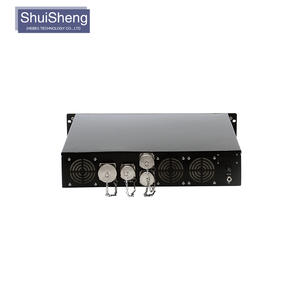
Engineered to deliver uninterrupted, high-efficiency power protection for Japan Self-Defense Forces (JSDF), defense contractors, aerospace platforms, and industrial infrastructure across Metropolitan Tokyo.
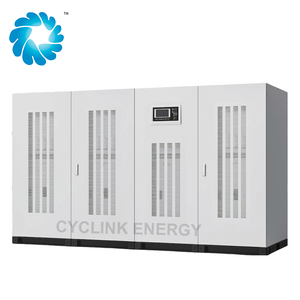
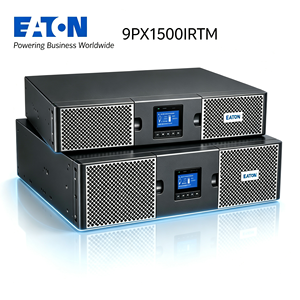
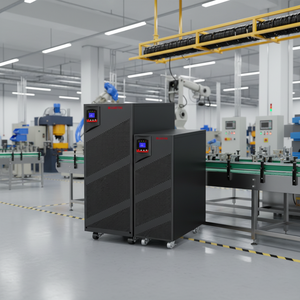
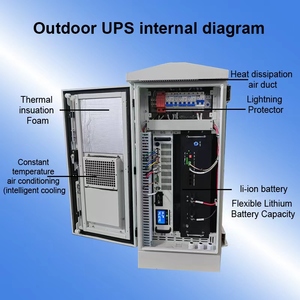
The Greater Tokyo Metropolitan Area represents one of the world's most complex defense power operating environments. As the operational heart of Japan's Ministry of Defense (MOD) in Ichigaya, alongside critical defense communication hubs, naval facilities in Tokyo Bay (Yokosuka), and tactical air units at Yokota and Tachikawa, maintaining absolute power continuity is a matter of national security. Procuring and deploying military-grade Uninterruptible Power Supply (UPS) systems in this region requires navigating distinct electrical standards, dense urban subterranean spatial constraints, and strict environmental resilience requirements.
Unlike standard commercial UPS deployments, tactical military UPS units serving the Tokyo market must solve a dual engineering challenge: integrating seamlessly with Eastern Japan’s unique 50 Hz power grid (TEPCO network) while guaranteeing zero-delay fallback to military-standard auxiliary generators, 400 Hz airborne supply lines, or 28V/270V DC tactical vehicle power buses.
Command, Control, Communications, Computers, Intelligence, Surveillance, and Reconnaissance (C4ISR) systems located in subterranean bunkers across Tokyo encounter intense electromagnetic interference (EMI) and harmonic distortions. High-density urban power feeds often transmit switching transients and load imbalances. Our custom OEM military UPS systems utilize advanced active power factor correction (PFC) topologies with synchronous rectification, maintaining input power factor above 0.99 and total harmonic distortion (THDi) below 3%. This shields sensitive signal processing and satellite uplink gear from grid-side pollution.
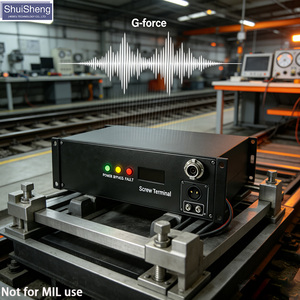
Tokyo sits within a high-consequence seismic zone (Kanto Plain). Defense installations require power backup hardware capable of enduring high-G seismic shocks without mechanical structure deformation, relay chatter, or battery cell dislocation. Our custom ruggedized enclosures incorporate internal structural ribbing, high-shear shock mounts, and locking busbars qualified to withstand severe vibration profiles (MIL-STD-810H Method 514.8) and mechanical shock (MIL-STD-810H Method 516.8), ensuring uninterrupted operation during seismic emergency events.
We bridge the gap between commercial off-the-shelf (COTS) speed and full military-grade customized endurance.
Custom-tuned front ends capable of accepting 3-phase 115V AC, 200V AC (Japanese standard), 400V AC shipboard lines, or 28V DC vehicle power. Seamless operation across 45Hz–65Hz, 400Hz avionics frequencies, or direct DC bus tie-ins.
Integration of ultra-safe Lithium Iron Phosphate (LiFePO4) and Lithium Titanate (LTO) energy storage modules. Thermal runaway prevention algorithms, individual cell balance monitoring, and 10+ year battery maintenance-free operational cycles.
IP65 to IP68 all-weather outer protection. Conformal coating on all PCBAs (MIL-I-46058C compliant), nickel-plated copper busbars, and anti-salt fog treatment meeting ISO 12944 C5-M standards for coastal Tokyo Bay deployments.
| Standard | Domain Scope | Engineering Mitigation Built Into Our OEM Units |
|---|---|---|
| MIL-STD-704 (A-F) | Aircraft Electrical Power Characteristics | Internal wide-frequency (360Hz–800Hz) active PFC filtering; zero transfer disruption during voltage phase transients and frequency sweeps. |
| MIL-STD-461 (C-F) | Control of Electromagnetic Interference | Multi-stage internal common-mode and differential-mode EMI filters; shielded aluminum/steel chassis preventing conducted and radiated emissions. |
| MIL-STD-1275 (B-E) | 28V DC Input Voltage Transient Immunity | High-energy surge suppression circuits capable of clamping +100V transients and 250V spikes without switching to battery discharge. |
| MIL-STD-1399 (Sec 300B) | Shipboard Electric Power (Naval/JMSDF) | Low-magnetic signature design, 3-phase unbalanced load handling capability, and total galvanically isolated output transformers. |
| EN 50155 / JIS E 4031 | Railway & Defense Transportation Systems | Conformal-coated sub-assemblies tested against extreme rail vibration, shock, continuous humidity, and broad DC input swings (24V–110VDC). |
How our military UPS units deliver tailored performance across critical regional defense nodes.
Underground tactical operation centers in urban Tokyo face strict dissipation restrictions and zero-air exchange constraints during emergency lockdown states. Our high-efficiency double conversion UPS systems (96%+ efficiency) minimize heat generation, reducing HVAC load requirements by up to 35% in sealed bunker environments. Ultra-compact 1U/2U/3U rack footprints allow max power density per rack slot.
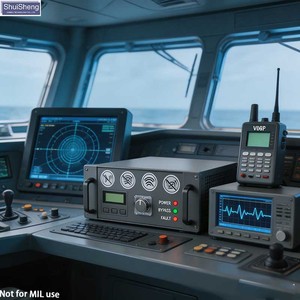
Naval support equipment along Tokyo Bay operates in extreme salt fog and high air humidity. Standard industrial UPS units suffer rapid dielectric breakdown and corrosion. Our IP68-rated outdoor sealed power units feature IP68 anti-salt coating, sealed MIL-spec circular connectors, and conduction-cooled cold-plate chassis designs, running reliably without requiring external air intake filters.
Field-deployed mobile ground radar arrays require rugged power conditioning capable of absorbing high-power pulse loads. Our custom UPS systems integrate heavy-duty DC-bus capacitors alongside rapid-response inverter topologies, preventing output voltage sagging when high-gain radar arrays cycle rapidly during surveillance operations.
During crisis response, Tokyo’s dense railway networks serve as essential troop and equipment movement corridors. Our railway-qualified UPS models conform to JIS E 4031 and EN 50155, backing up signal control units, communication switches, and emergency sensors with zero-transfer interruption during regional main-grid dropouts.
Exceeding standard quality management to deliver decades of reliable field operation.
Every step—from PCB layout design to component selection, automated surface-mount assembly, and final burn-in testing—is executed under stringent aerospace-grade quality management protocols with 100% component-level lot traceability.
Defense programs operate on multi-decade life cycles. We provide form-fit-function replacement guarantees, preventing early component obsolescence and protecting systems integrators from costly redesign phases.
Our state-of-the-art engineering center houses thermal shock chambers, vibration tables, and anechoic EMI test chambers, allowing rapid iterative prototyping and pre-certification testing before official agency audits.
Detailed technical clarity for defense system integrators, procurement officers, and engineering managers.
Tokyo and Eastern Japan operate on a 50Hz utility frequency (TEPCO network), whereas Western Japan uses 60Hz, and many naval/aerospace assets utilize 400Hz or DC buses. Our OEM military UPS architectures feature universal wide-range active power factor correction (PFC) modules. They naturally accept inputs ranging from 85V AC to 264V AC across frequencies from 45Hz to 65Hz (and up to 400Hz for airborne auxiliary lines). Output frequency and voltage are dynamically regulated via digital signal processing (DSP), outputting pure, crystal-stabilized sine waves unaffected by input grid variances or regional frequency shifts.
Our military UPS units are designed, tested, and qualified against major internationally recognized defense standards, including MIL-STD-810H (environmental testing, shock, vibration, humidity), MIL-STD-461G (EMI/EMC compliance), MIL-STD-704F (aircraft power requirements), MIL-STD-1275E (28V DC heavy vehicle transients), and MIL-STD-1399 Section 300B (shipboard power). Furthermore, we ensure alignment with Japanese Defense Standards (DSP) and local electrical safety/radio wave laws (PSE & VCCI requirements) where applicable for local dual-use installations.
For tight underground command centers or sealed vehicles in Tokyo where off-gassing and thermal runaway pose safety hazards, we recommend sealed Lithium Iron Phosphate (LiFePO4) or Lithium Titanate (LTO) battery packs. These chemistries offer superior thermal stability, zero off-gassing under high charge rates, and a cycle life up to 4x longer than traditional VRLA lead-acid batteries. Each battery module includes an integrated battery management system (BMS) with real-time CANbus or RS485 telemetry for precise state-of-health (SoH) monitoring.
Yes. We understand that defense procurement often begins with low-rate initial production (LRIP) or custom prototype trials for specific vehicle, radar, or vessel retrofits. Our agile engineering structure allows us to support custom chassis mechanical layout modifications, specialized MIL-spec connector pinouts, specific software communication protocol stacks (such as SNMPv3, MODBUS, or MIL-STD-1553 bus integration), and tailor-made electrical output configurations even for small-volume operational trials.
As a global military exporter, we maintain dedicated export compliance teams familiar with international trade controls, ITAR, EAR, and Ministry of Economy, Trade and Industry (METI) import regulations in Japan. We handle end-user documentation verification, secure protective export packaging (compliant with ISPM-15 for international sea/air freight), and partner with specialized defense logistics carriers to guarantee safe, compliant, and on-time delivery straight to your specified Tokyo or regional installation site.
Conventional UPS topologies rely on diode rectifiers, which introduce continuous conduction power losses (voltage drop across diodes times current). Our advanced synchronous rectification designs replace lossy output diodes with actively driven, ultra-low RDS(on) MOSFETs. This drastically minimizes conduction losses, driving conversion efficiency up to 96.5%. The resulting heat reduction permits smaller heat sinks, smaller internal fan requirements, and significantly reduced thermal stress on electrolytic capacitors—extending the Mean Time Between Failures (MTBF) of the UPS system beyond 150,000 operational hours.