
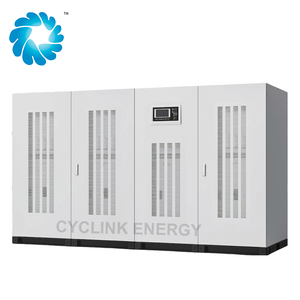
Explore our comprehensive lineup of Commercial Off-The-Shelf (COTS) power converters, online UPS systems, and harsh-environment modules available to Los Angeles defense contractors and industrial system integrators.
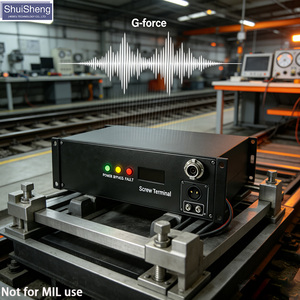
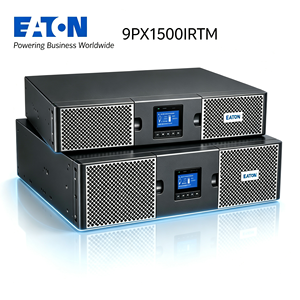
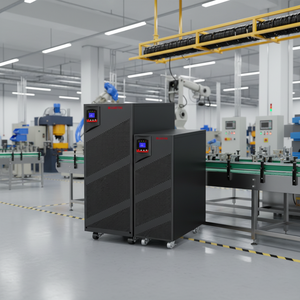
The Greater Los Angeles metropolitan area—anchored by historical defense hubs in El Segundo, Long Beach, Palmdale, and Pasadena—represents the world's most concentrated market for mission-critical aerospace, defense, and high-reliability industrial engineering. For system architects operating across the Southern California defense corridor, procuring Commercial Off-The-Shelf (COTS) power converters is no longer merely a standard component selection exercise. It is a strategic design choice that balances strict MIL-STD compliance, thermal envelope management, and multi-decade supply chain survival.
As a leading COTS converter supplier and partner in Los Angeles, we deliver advanced DC-DC brick converters, AC-DC power factor correction (PFC) modules, transient EMI filters, and integrated field-grade uninterruptible power supplies (UPS). Built upon field-proven synchronous-rectifier topologies, our power conversion systems eliminate traditional Schottky diode conduction losses, enabling thermal dissipation reductions of up to 50% in conduction-cooled and hermetically sealed enclosures.
Information Gain Insight: Modern defense platforms deployed across sea, air, and ground units require high power density within legacy envelopes. Integrating isolated Mil-COTS converters featuring two-stage power conversion topologies enables efficiency ratings up to 96%, directly mitigating micro-climatic thermal stress inside sealed Line Replaceable Units (LRUs).
Traditional DC-DC power modules utilize passive semiconductor diodes for secondary rectification. At high current loads, the forward voltage drop ($V_F$) across these diodes generates substantial thermal overhead. By substituting actively driven low-$R_{DS(on)}$ MOSFETs—a breakthrough commercialized and perfected across our core product lines—our COTS converters convert previously wasted thermal energy into operational power margin.
Active synchronous switches lower forward conduction drop, minimizing heat dissipation in high-amperage 28V, 48V, and 270V bus architectures.
Integrated transient suppression protects downstream sensitive electronics from 100V 50ms surges defined by MIL-STD-1275E and RTCA DO-160G.
Predictable switching frequencies simplify differential and common-mode filter design to achieve compliance with MIL-STD-461G CE102 limits.
System designers in Los Angeles building platforms for NAVAIR, NAVSEA, Space Systems Command (SSC), and commercial space ventures require absolute traceability and compliance data. Our Mil-COTS converter modules and EMI filters are designed and tested from inception to satisfy the most stringent military and aerospace requirements:
| Standard | Application Domain | Key Engineering Performance Target | COTS Converter Solution |
|---|---|---|---|
| MIL-STD-704 (A-F) | Airborne Tactical Power Systems | Handles 28V, 115V AC 400Hz, and 270V DC transients, voltage sags, and frequency sweeps. | MilQor® isolated DC-DC modules with wide 16-40V continuous input window. |
| MIL-STD-461 (C-F) | Electromagnetic Compatibility (EMC) | Conducted emissions (CE102) and conducted susceptibility (CS101, CS114, CS115, CS116). | Matched transient Half-Brick and Full-Brick EMI Filter modules (MCOTS-F series). |
| MIL-STD-1275 (D/E) | Heavy Ground Combat Vehicles | Surge immunity against 100V / 50ms transients and +250V voltage spikes in 28V networks. | Active clamp surge protection front-ends with reverse polarity protection. |
| RTCA DO-160G | Commercial Avionics & eVTOL | Section 16 (Power Input) and Section 21 (Emission of Radio Frequency Energy). | AeroQor® isolated AC-DC active PFC power supplies operating across 360-800Hz. |
| EN 50155 / EN 50121 | Rail & Heavy Urban Transit | Class S2 hold-up time, shock/vibration tolerance, and 66V/110V nominal battery inputs. | RailQor® DC-DC converters built for LA Metro and regional passenger rail cars. |
Southern California's industrial landscape is uniquely diversified. COTS power supplies must function flawlessly whether mounted inside an unpressurized radar pod flying over the Pacific, an automated gantry crane at the Port of Long Beach, or a ground mobile satellite link in the Mojave Desert.
High-altitude, unpressurized radar bays experience rapid thermal cycling and severe space constraints. Our low-profile full-brick COTS converters allow baseplate conduction cooling directly into the aircraft skin, providing regulated 28V or 12V rails to radar processing cards without fluid cooling loops.
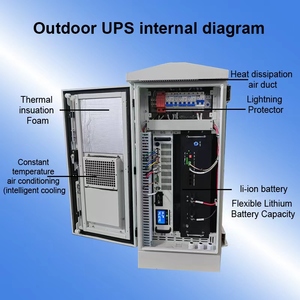
Automated Guided Vehicles (AGVs) and maritime crane monitoring electronics face perpetual salt fog, high humidity, and mechanical shock. Our IP68 anti-corrosion, anti-mold rugged outdoor UPS units deliver clean continuous power to automated container positioning sensors.
Ground communications dishes require uninterrupted power with ultra-low ripple voltage. By pairing our 3-Phase power factor correction (MPFIC) modules with online double-conversion UPS systems, regional control stations eliminate grid harmonic distortion.
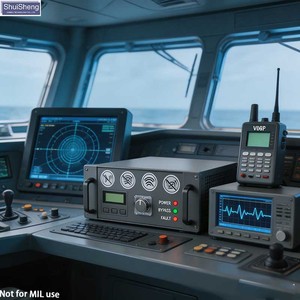
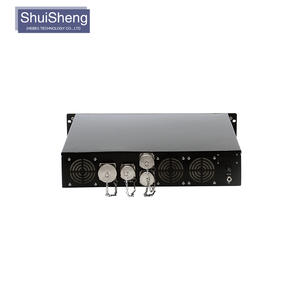
Naval surface vessels require compliance with MIL-STD-1399 Section 300B electric power. Our rack-mounted 1U 3-phase field UPS balances phase loading across shipboard generators while delivering zero-break battery backup to tactical comms.
Engineering managers and procurement officers across Southern California regularly consult our technical sales team regarding derating, compliance, and lead times. Here are answers to key procurement queries:
A true Mil-COTS converter utilizes standard commercial component footprints while incorporating screening, thermal design, and internal circuit topologies tailored to satisfy defense environmental standards (MIL-STD-810G, MIL-STD-704, MIL-STD-461). Unlike standard industrial modules, Mil-COTS units feature extended operating temperature ranges (-40°C to +100°C baseplate), rugged encasement, full traceability, and long lifecycle support without random component obsolescence.
Conducted emissions compliance requires evaluating the converter and filter as a unified electrical circuit. We manufacture matched EMI filters engineered specifically to complement the switching characteristics of our DC-DC and AC-DC modules. Using fixed-frequency switching topologies eliminates unpredictable frequency jitter, enabling predictable noise attenuation that easily passes CE102 testing.
Yes. While our COTS power modules are offered in standard brick sizes (quarter-brick, half-brick, full-brick), we support non-standard output voltage trims, customized pin lengths, special potting compounds for high-altitude operation, and specialized thermal baseplates designed for custom cold-plate interfaces.
Mean Time Between Failures (MTBF) is exponentially inverse to junction temperature ($T_j$). Synchronous rectification dramatically reduces internal power dissipation ($I^2 R_{DS(on)}$ vs $V_F \times I$). Lower thermal dissipation reduces internal ambient temperatures by 15°C to 30°C, effectively doubling component operational lifespan and driving overall system MTBF into millions of hours.
Our manufacturing and engineering facilities operate under AS9100D and ISO-9001 certified quality management systems in the USA. We maintain complete supply-chain visibility, providing local defense prime contractors with certified test data, Certificates of Conformance (CoC), ITAR compliance documentation, and stable multi-year production schedules.
Over two decades of pioneering power conversion architecture with uncompromised quality standards.
Full design, qualification testing, and assembly executed in secure U.S. facilities ensuring complete ITAR and DFARS compliance.
Form-fit-function replacement policies safeguard programs against unexpected component end-of-life (EOL) announcements.
Access thermal modeling, derating calculators, and EMI filter selection guidance directly supported by expert application engineers.
Download our complete COTS Power Conversion Product Catalog, engineering whitepapers, and mechanical drawings. Speak directly with a Southern California power engineering specialist to review your bus input and load parameters.
Get Catalog