Tested for extreme environmental stress, grid instability, and high-altitude deployments across Ethiopia
As East Africa’s fastest-growing industrial hub, Ethiopia is undergoing a monumental energy transformation. Driven by the National Electrification Program (NEP 2.0) and massive regional infrastructure initiatives such as the Grand Ethiopian Renaissance Dam (GERD), the Federal Democratic Republic of Ethiopia aims to achieve universal electricity access. However, despite rapid utility-scale expansion, commercial enterprises, industrial parks (such as Hawassa, Bole Lemi, and Kilinto), and remote telecommunications infrastructure face persistent operational challenges due to grid instability, voltage sags, and geographical de-rating constraints.
For EPC contractors, project developers, government ministries, and industrial procurement officers in Addis Ababa, sourcing high-reliability grid-tied inverters, solar microgrid converters, and industrial backup systems from tier-1 Chinese manufacturers has become a vital strategic imperative. Modern Chinese inverter engineering offers an unprecedented combination of high power density, thermal resilience at high altitudes, and modular flexibility—delivering significant Information Gain and lower Total Cost of Ownership (TCO) compared to traditional European or Western equivalents.
E-E-A-T Technical Advisory: Operating grid-tied solar inverters at high altitudes (e.g., Addis Ababa at 2,355m, Debre Birhan at 2,840m) reduces atmospheric air density, impairing thermal dissipation by 8% to 12% per 1,000 meters. Procurement teams must select Chinese factories that engineer custom internal heatsink geometries and oversized active cooling channels to prevent premature derating.
Deploying solar energy systems and industrial grid-tied inverters in Ethiopia demands rigid compliance with harsh physical and electrical parameters. Standard commercial off-the-shelf (COTS) inverters manufactured for moderate European or coastal Asian climates often experience rapid capacitor degradation, thermal shutdown, or grid-sync failure when exposed to East African conditions.
Barometric pressure drops significantly as altitude increases. In regions above 2,000 meters above sea level, dielectric strength of air diminishes, and thermal convection efficiency plummets. Top-tier Chinese OEM/ODM inverter factories overcome this through advanced thermal topology, utilizing wide-gap Silicon Carbide (SiC) and Gallium Nitride (GaN) power electronics alongside dual-stage synchronous rectification topologies. This lowers internal heat generation by up to 40% compared to traditional silicon IGBT modules.
The Ethiopian national grid (operated by Ethiopian Electric Power - EEP and distributed by Ethiopian Electric Utility - EEU) frequently experiences phase imbalance, voltage surges up to 280V AC, and sudden brownouts dropping down to 140V AC. Grid-tied inverters must incorporate dynamic reactive power compensation (Volt-VAR control) and ultra-wide MPPT (Maximum Power Point Tracking) voltage bands to harvest solar power reliably even during severe grid fluctuations.
From the arid, dust-heavy atmosphere of the Afar and Somali regions to the torrential rains of the Highland monsoon season, outdoor inverter installations demand IP65 to IP68 rating seals. Enclosures engineered with anti-mold, anti-salt spray, and anti-corrosion powder coatings guarantee a 25-year structural service life for utility and telecom infrastructure.
| Performance Metrics | Generic COTS Inverters | Top-Tier Chinese OEM Solutions | Ethiopian Grid Advantage |
|---|---|---|---|
| Altitude Derating threshold | Starts at 1,000m (5-10% loss) | Derating compensated up to 3,000m | Full rated power in Addis Ababa & Highlands |
| Voltage Tolerance Band | 180V - 250V AC | 130V - 290V AC (Ultra-Wide) | Prevents inverter dropouts during brownouts |
| Grid Synchronization Speed | > 20ms switching delay | < 4ms Zero-Transfer switching | Protects delicate medical & server loads |
| Battery Storage Compatibility | Lead-acid / Closed Protocol | Universal LiFePO4 & Smart BMS Sync | Seamless integration with high-density Lithium |
| Enclosure Protection | IP21 / IP54 (Indoor/Basic) | IP65 / Ruggedized IP68 Outdoor | Resists dust storms, humidity, and insects |
How specialized Chinese grid inverters and UPS power systems empower critical sectors across East Africa
Industrial mega-parks (Hawassa, Kilinto, Kombolcha) require high-capacity string and central inverters integrated with solar-diesel hybrid controllers. Chinese grid-tied inverters automatically throttle PV output to prevent reverse-feeding backup diesel generators during utility outages.
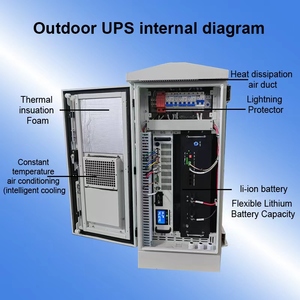
Off-grid and weak-grid cellular tower sites across Oromia, Amhara, and Somali regions rely on rugged IP68 outdoor power systems. Featuring lightning protection and 8000Wh+ capacity, these systems prevent network downtime during extended blackout cycles.
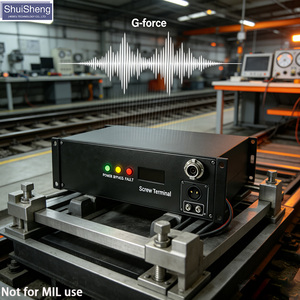
The Ethio-Djibouti Railway and Addis Ababa Light Rail Transition depend on dedicated railway signaling power units. High-vibration-proof inverter systems keep automatic signal switching, telemetry, and station safety networks continuously operational.
In the Rift Valley agricultural belt, VFD solar pump inverters convert direct DC solar current into stable 3-phase AC power. Built-in dry-run protection and sensorless vector control maximize water flow for large-scale crop irrigation.
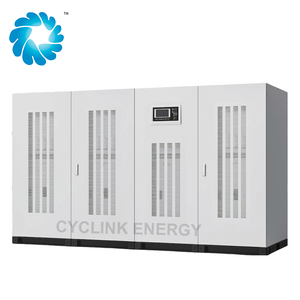
Hospitals in regional cities (Gondar, Hawassa, Bahir Dar) and cloud data infrastructure require online double-conversion 10kVA-100kVA grid inverters. Zero transfer time ensures sensitive medical imaging (MRI/CT) and servers operate without disruption.
Hybrid self-consumption inverters allow commercial real estate, hotels, and luxury residential complexes in Addis Ababa to automatically manage grid power, solar input, and lithium battery storage, significantly lowering monthly EEU utility bills.
China commands over 80% of the world’s solar power inverter manufacturing capacity. However, selecting the right supplier requires assessing advanced R&D heritage, quality control standards, and long-term support capabilities. Our partner manufacturing facilities bridge cutting-edge innovation with rigorous industrial durability.
Pioneering the commercial use of synchronous-rectifier circuits in isolated converters and grid-tied systems, our manufacturing partner replaces energy-draining passive diodes with actively controlled MOSFET transistors. This fundamental engineering advancement minimizes internal conduction loss, raises efficiency to upwards of 98.5%, and dramatically extends operational lifespan in sealed enclosures.
Unlike lower-tier suppliers, our production processes operate under rigorous quality management frameworks certified to ISO-9001 and AS9100 aerospace-grade standard compliance. Every single inverter board undergoes automated optical inspection (AOI), high-temperature full-load burn-in testing, and multi-stage electromagnetic compatibility (EMC) verification against MIL-STD-461 and IEC 61000 standards before container dispatch.
In infrastructure projects with multi-decade operating windows, component obsolescence poses a critical risk. Leading Chinese factories maintain form-fit-function replacement strategies and guaranteed spare parts availability for 15+ years post-commissioning. This offers Ethiopian state enterprises and private developers total confidence in long-term serviceability.
Addressing essential customs, technical compliance, financial, and logistical considerations
Imports into Ethiopia must comply with standards governed by the Ethiopian Standards Agency (ESA). Grid-tied solar inverters and industrial power systems require CE certification, IEC 62109-1/-2 safety compliance, IEC 61727 (grid interface), and ISO 9001 manufacturer documentation. Pre-shipment inspection (PSI) certificates from recognized international auditing firms (such as SGS or Bureau Veritas) are typically required for smooth Ethiopian Customs clearance.
Addis Ababa sits at approximately 2,355 meters above sea level. Because air density decreases with altitude, cooling efficiency drops. Standard inverters may experience thermal derating of 10% to 15% of rated AC output power. To ensure continuous full-capacity output, buyers should choose specialized Chinese high-altitude inverters equipped with forced liquid/fan cooling channels, enlarged heatsinks, or select a unit sized 15-20% higher than the maximum peak load.
Yes. Our recommended grid-tied and hybrid inverters feature programmable grid-matching algorithms. They accommodate wide input voltage swings (down to 130V AC) and feature built-in dry-contact relays for automatic generator start/stop control. This ensures zero power interruption for critical loads when switching between the EEU main grid, solar PV input, and backup diesel gensets.
The standard freight route is via ocean shipping from major Chinese ports (Shanghai, Ningbo, Shenzhen) to the Port of Djibouti. From Djibouti, cargo is transported via the Ethio-Djibouti Railway or heavy truck transport along the dry port corridor directly to Mojo Dry Port or Addis Ababa Comet Terminal. Transit time typically ranges from 22 to 30 days for sea freight, with express air cargo options available to Addis Ababa Bole International Airport (ADD) for urgent replacement modules.
Given foreign exchange allocation procedures managed by the National Bank of Ethiopia (NBE), leading Chinese manufacturers are experienced in handling Irrevocable Letters of Credit (LC) opened by major Ethiopian banks (such as Commercial Bank of Ethiopia - CBE, Awash Bank, or Dashen Bank). Flexible pro-forma invoicing, staged milestone payments, and custom HS code classification support are provided to facilitate FX approvals.
Absolutely. Modern Chinese industrial inverters feature open CAN-bus and RS485 communication protocols compatible with major lithium battery management systems (BMS). This allows real-time state-of-charge (SOC) synchronization, active cell balancing monitoring, and intelligent thermal management—ensuring optimal battery life under high cycle rates.
