Military and Industrial AC-AC Power Conversion System
Industrial Automation Heavy Machinery Power Supply
Ruggedized AC-AC Frequency Converter for Harsh Environments
High Efficiency Synchronous Rectification Testing
Engineering & Technical Procurement Guide

Industrial AC-AC Power Systems: Architectural Precision, Selection Matrix & Global Procurement

Deliver ultra-clean, frequency-isolated, and voltage-regulated AC power to high-reliability industrial automation, defense naval systems, commercial aviation ground units, and railway infrastructure. Built in the USA under AS9100 / ISO-9001 quality standards.

50Hz / 60Hz / 400HzUniversal Frequency Conversion
> 95% PeakFull-Load AC-AC System Efficiency
< 2% THDPure Sinusoidal Output Line Quality
MIL-STD & EN 50155Fully Qualified Harsh-Environment Build
Technical Whitepaper & Intent Analysis

Unlocking Performance in Next-Generation Industrial AC-AC Power Systems

In modern industrial facilities, power distribution is no longer a passive utility—it is a critical control variable. Global procurement managers, system integrators, and electrical program leads frequently encounter severe power quality challenges when deploying sensitive automated machinery, high-power motor drives, subsea pumping stations, or naval combat systems. Fluctuating line voltages, frequency instability between 50 Hz, 60 Hz, and 400 Hz grids, total harmonic distortion (THD) caused by non-linear loads, and severe phase imbalances degrade operational efficiency and accelerate hardware failure.

An Industrial AC-AC Power System serves as the primary solid-state barrier and conversion engine between volatile input power grids and sensitive load equipment. Unlike basic transformer units or passive line conditioners, advanced industrial AC-AC converters actively regulate voltage amplitude, synthesize fixed or variable output frequencies, mitigate harmonic feedback back into the primary utility grid, and provide complete galvanic isolation.

Topological Evolution: Direct Matrix Converters vs. Dual-Stage DC-Link Architectures

To satisfy complex global procurement inquiries, system architects must evaluate the two primary solid-state AC-AC converter topologies: Direct AC-AC Matrix Conversion and Indirect Dual-Stage DC-Link Conversion.

  • Direct Matrix AC-AC Converters: Matrix converters utilize a array of bi-directional semiconductor switches to directly synthesize the desired output AC waveform from the input AC line without an intermediate energy storage stage. While matrix topologies eliminate bulky electrolytic DC bus capacitors—offering compact volumetric envelope advantages—they present complex commutation requirements, lower voltage transfer ratios (typically limited to 86.6% without over-modulation), and elevated susceptibility to input line transients.
  • Indirect Dual-Stage DC-Link Power Systems (SynQor Preferred Discipline): SynQor's solid-state industrial AC-AC architecture utilizes a two-stage approach: an active Power Factor Correction (PFC) AC-DC front-end converter followed by a high-efficiency isolated DC-AC inverter stage. This topology decouples the load from line disturbances completely. The intermediate DC link provides energy hold-up, eliminates phase imbalance propagation, allows 1:1 or step-up/step-down voltage conversion, and guarantees ultra-low harmonic distortion (<2% THD) under highly non-linear load conditions.
Topological Parameter Direct Cycloconverter Direct Matrix Converter Rotary Frequency Converter SynQor Dual-Stage Solid-State AC-AC
Conversion Efficiency 88% - 91% 92% - 94% 75% - 84% 94% - 96%+
Total Harmonic Distortion (THD) High (> 8%) Moderate (4% - 6%) Moderate (3% - 5%) Ultra-Low (< 2%)
Galvanic Isolation Requires External Transformer Requires External Transformer Inherent Mechanical Isolation Integrated High-Frequency Isolation
Acoustic & Mechanical Noise Low Low High (Continuous Vibration) Silent Solid-State Operation
Maintenance & MTBF Moderate (> 50k Hours) High (> 100k Hours) Low (< 15k Hours - Bearing Wear) Extreme (> 350k+ Hours Proven)
Harsh Environment Ruggedness Limited Moderate Sensitive to Dust & Moisture MIL-STD-810G / EN 50155 Conduction Cooled

By leveraging high-frequency active switching and synchronous rectification expertise inherited from decades of military and aerospace engineering, SynQor's Industrial AC-AC Power Systems deliver unmatched power density, operational silence, and multi-decade reliability in sealed conduction-cooled enclosures.


Product Selection Matrix

Engineered to deliver clean, uninterruptible, and frequency-synthesized AC power for mission-critical industrial, aerospace, rail, and shipboard platforms.

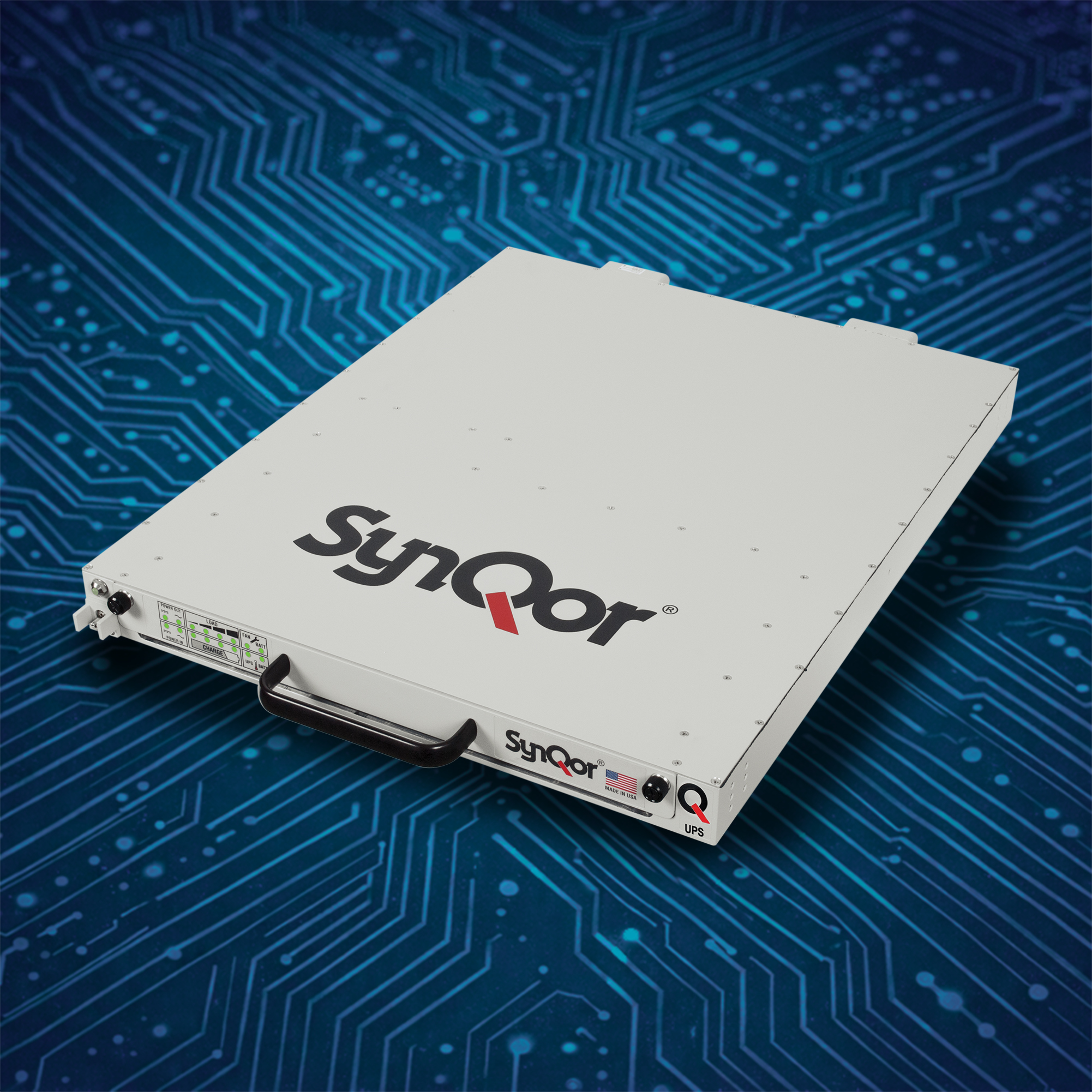
3-Phase Industrial AC-AC Power System
Rack-Mount / Field-Grade

SynQor Heavy Industrial 3-Phase AC-AC Frequency Converter

Designed for harsh industrial automation lines, subsea support units, and naval shipboard environments, this system converts non-standard or fluctuating 3-phase AC inputs (80–265 Vrms line-to-neutral, 47–63 Hz or 400 Hz) into a tightly regulated 115 Vrms or 230 Vrms pure sine wave AC output.
Continuous Rating: 1.5 kVA to 12 kVA
Input PFC: 0.99 (IEEE 519 Compliant)
Output THD: < 2.0% at Full Load
Enclosure: Sealed 1U/2U Conduction-Cooled
Isolated 3-Phase AC-AC Power Conditioning Module
Modular Building Block

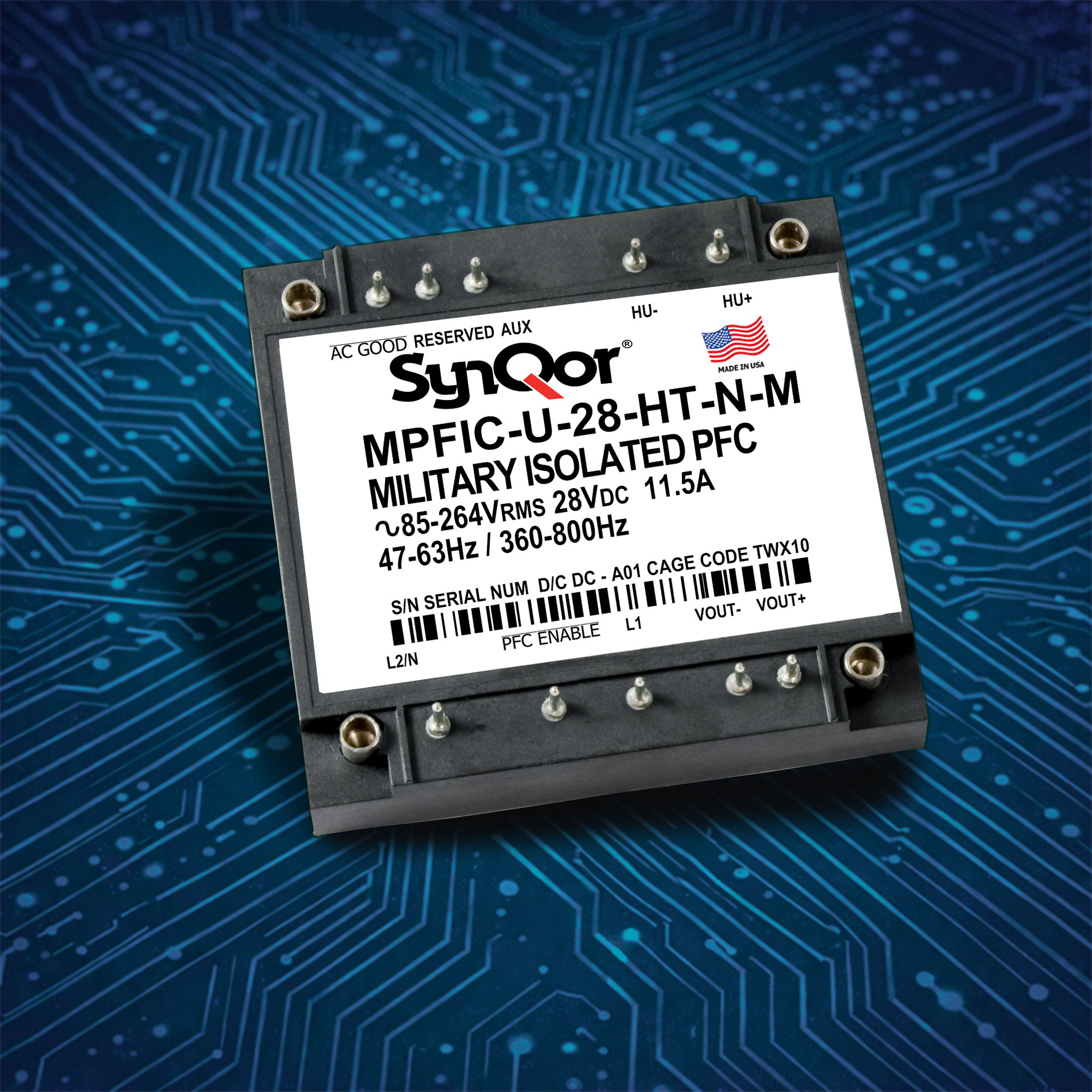
High-Efficiency Isolated AC-AC Power Conditioning Module

A full-brick modular AC-AC building block designed for direct board integration or custom chassis mounting. Integrates active 3-phase power factor correction with an isolated high-frequency transformer stage to deliver steady AC voltage synthesis for automated manufacturing cells.
Efficiency: 95.5% Peak
Isolation: 2250 Vdc Reinforced
Operating Temp: -40°C to +100°C Baseplate
Compliance: MIL-STD-704(A-F) / EN 61000
RailQor Railway AC-AC Voltage Stabilizer
Transportation & Rail

RailQor® Solid-State Railway AC-AC Line Conditioning System

Specifically engineered for railway rolling stock and wayside signaling stations under EN 50155. Handles severe catenary voltage swings, surge transients, and mechanical vibrations while outputting stable 50Hz/60Hz AC power to passenger amenities, HVAC control, and safety telemetry.
Standards: EN 50155 / EN 50121-3-2
Vibration: MIL-STD-810G Category 24
Cooling: Baseplate / Conduction
Protection: Over-Temp, Short Circuit, Over-Voltage
AeroQor Airborne 400Hz AC-AC Power System
Avionics & Defense

AeroQor® Airborne 400Hz to 60Hz AC-AC Frequency Synthesizer

Designed for commercial aircraft test benches, flight electronics bays, and ground support equipment (GSE). Converts variable 360–800 Hz airborne generator power into stable, regulated 60 Hz or 400 Hz utility AC power compliant with RTCA DO-160G and Airbus/Boeing environmental specs.
Frequency Range: 360 Hz – 800 Hz Input
EMC Compliance: MIL-STD-461(C-F) / DO-160G
MTBF: > 500,000 Hours (MIL-HDBK-217F)
Form Factor: Low-Profile Rugged Enclosure
Industry Intelligence & Market Vision

As industrial infrastructure transitions toward microgrid integration, digital twin diagnostics, and ultra-high efficiency standards, procurement directors must align hardware specifications with long-term technological roadmaps.

01

Transition to Wide Bandgap (SiC & GaN) Semiconductors

Silicon Carbide (SiC) MOSFETs and Gallium Nitride (GaN) high-electron-mobility transistors (HEMTs) are systematically replacing legacy Silicon IGBTs in AC-AC power architectures. SiC technology elevates switching frequencies beyond 100 kHz while cutting switching losses by over 60%. This shift dramatically reduces the size of passive magnetic inductors, enabling up to 40% higher volumetric power density in industrial AC-AC converters.

02

Smart Grid Interoperability & Digital Twin Monitoring

Modern industrial AC-AC power conversion systems are evolving into smart edge nodes equipped with real-time telemetry, PMBus/CANbus protocols, and predictive health monitoring. Global procurement specifications increasingly mandate digital diagnostic capabilities to measure line harmonic spectrums, thermal stress metrics, and capacitor degradation—enabling zero-unplanned-downtime maintenance strategies in automated factories.

03

Strict Harmonic Regulations & IEEE 519 Compliance

Regulatory authorities worldwide are enforcing tighter total harmonic distortion limits on industrial grid connections to prevent transformer overheating and grid disruption. Future AC-AC power procurement cycles will require active power factor correction (PFC) with input THDi < 3% across wide load ranges (10% to 100% capacity), making passive line filtering obsolete in high-power industrial installations.

04

Solid-State Transformer (SST) Integration

The convergence of high-frequency power electronics and medium-voltage isolation is driving the adoption of Solid-State Transformers (SSTs) within AC-AC power architectures. SST-based AC-AC systems replace heavy 50Hz/60Hz copper-iron isolation transformers with compact, high-frequency core topologies, offering dynamic voltage regulation, instantaneous current limiting, and reduced carbon footprints.

05

Conduction Cooling for Sealed & Harsh Environments

Industrial procurement is rapidly shifting away from fan-cooled power supplies toward fully sealed, conduction-cooled AC-AC converters. Eliminating moving fan parts prevents ingress of conductive metal dust, chemical vapors, and moisture, extending operational field life beyond 15–20 years in harsh mining, oil & gas, marine, and defense environments.

06

Modular N+1 Redundancy & Hot-Swappable Architectures

To eliminate single-point failure risks in mission-critical automated assembly lines and server power networks, procurement leads are specifying modular AC-AC systems configured in hot-swappable N+1 or N+2 parallel configurations. High-speed active current-sharing logic ensures balanced load distribution without master-slave single-point dependencies.

Why OEM Engineers Trust SynQor

Uncompromising Reliability Built on Decades of Power Leadership

Founded by former MIT electrical engineering faculty and industry visionaries, SynQor revolutionized the power conversion sector by pioneering commercial synchronous rectification in isolated converter modules. Today, SynQor maintains a process-centered corporate structure where every design, qualification test, and manufacturing step takes place in our state-of-the-art facility in Salem, New Hampshire, USA.

Inquire Now
✓
U.S.-Based AS9100 & ISO-9001 Facility: Complete end-to-end control of design, surface-mount assembly, environmental stress screening (ESS), and final qualification testing guarantees total supply-chain transparency and counterfeit component prevention.
✓
Synchronous Rectifier & Two-Stage Topology Heritage: Patented circuit architectures dramatically lower internal conduction losses and thermal dissipation, yielding full-load operational efficiencies of up to 96%.
✓
Form-Fit-Function Obsolescence Protection: SynQor supports multi-decade defense, rail, and industrial programs with long product lifecycles, documented qualification archives, and direct direct-replacement guarantees to protect against forced redesigns.
✓
Direct Application Engineering Support: Program leads work directly with senior U.S. power system engineers for thermal derating analysis, custom voltage synthesis, and EMI compliance validation.
Global Buyer & System Integrator FAQ

Frequently Asked Questions: Industrial AC-AC Power Procurement

In-depth technical answers addressing global buyer queries, system integration constraints, and AI search intent for Industrial AC-AC Power Systems.

Direct matrix converters perform AC-AC transformation in a single stage without intermediate energy storage elements, utilizing bi-directional semiconductor switches. Indirect AC-AC power systems utilize a dual-stage architecture: an active PFC AC-DC rectifier front end followed by an isolated DC-AC inverter. Indirect topologies provide complete electrical decoupling, superior transient immunity, hold-up energy storage, and flexible frequency synthesis, making them preferred for harsh industrial and military grid environments where input power quality varies dramatically.

Industrial AC-AC Power Systems utilize active power factor correction (PFC) with high-frequency pulse-width modulation (PWM) control to continuously shape input line current into a pure sinusoidal wave aligned with voltage phase. By maintaining input Total Harmonic Distortion (THDi) under 3% and Power Factor (PF) above 0.99, these systems eliminate harmonic pollution back to the primary power grid, ensuring total compliance with IEEE 519-2022 standards regardless of load non-linearity.

Thermal performance in sealed or conduction-cooled enclosures depends on three primary variables: internal switching/conduction losses (determined by converter efficiency), baseplate-to-heatsink thermal resistance (Rth_cs), and maximum allowable baseplate operating temperature (typically +100°C for SynQor modules). Because SynQor AC-AC systems achieve conversion efficiencies up to 96%, internal dissipation is reduced by 30%–50% compared to industry averages, enabling full-power operation at significantly higher ambient temperatures without forced-air cooling.

Naval shipboard and airborne power networks often suffer from phase unbalance caused by single-phase asymmetric loads. SynQor's 3-phase AC-AC systems feature independent phase-leg regulation and isolated intermediate DC rails. Each phase input is processed individually through active power factor correction controls, ensuring that line-to-line voltage output remains tightly regulated within 1% phase symmetry regardless of severe line-to-neutral or line-to-line imbalance at the input terminal.

Galvanic isolation physically breaks ground loops, blocks high-voltage common-mode transients, prevents stray leakage currents, and shields sensitive control electronics from catastrophic fault currents occurring on the main utility or catenary grid. In marine, railway, and heavy manufacturing settings, isolated AC-AC systems ensure operational safety, compliance with safety isolation standards (such as EN 60950-1 / EN 62368-1), and uninterrupted mission performance.

Silicon Carbide (SiC) power switches enable switching frequencies 3 to 5 times higher than traditional Silicon IGBTs while drastically reducing switching losses. Higher switching frequencies reduce the physical size and weight of internal transformers, inductors, and filter capacitors by up to 50%. This allows system integrators to install higher-kVA AC-AC conversion capacity within tight 1U or 2U rack footprints.

When replacing mechanical rotary frequency converters with solid-state AC-AC systems, procurement teams should evaluate: 1) Energy Efficiency Savings (solid-state systems operate at 95%+ vs. 75-80% for rotary converters, cutting electrical utility costs significantly); 2) Maintenance Costs (zero bearing replacements or brush servicing); 3) Facility HVAC Requirements (drastically lower heat output reduces cabinet cooling costs); and 4) Downtime Protection (solid-state MTBF exceeds 350,000 hours vs. continuous mechanical wear in rotary units).

SynQor designs and manufactures modules to meet severe military and rail standards by embedding compliance into the core architecture. Heavy-gauge aluminum baseplates, full encapsulation potting, ruggedized input filtering, wide transient headroom (withstanding MIL-STD-704/1275 surge spikes), and high isolation barrier construction ensure off-the-shelf compliance without requiring external custom filtering or mechanical dampeners.

Yes. SynQor's modular system topology allows flexible factory configuration of input voltage ranges (single-phase or 3-phase, 115V, 230V, 400V, or 480V nominal), input frequency synthesis (47–63 Hz, 400 Hz, or variable frequency), and customized output voltage levels. Contact our application engineering team to define exact electrical and mechanical parameters for your program.

Because all engineering, assembly, qualification, and burn-in testing are consolidated at SynQor's manufacturing facility in Salem, New Hampshire, USA, we maintain strict control over lead times and material traceability. Standard production units are delivered with industry-leading turnaround times, and long-term supply agreements protect strategic programs against component end-of-life (EOL) risks.

Need a Customized AC-AC Power Conversion Solution?

Submit your electrical input specifications, load profiles, thermal limits, and target compliance standards. Our U.S.-based engineering team will evaluate your system architecture and provide an optimized recommendation.

Inquire Now Contact Engineering Team