


Medical Grade AC-DC Power Modules
High power density open-frame and encapsulated AC-DC modules featuring active PFC, 2×MOPP isolation, and low standby power for surgical tools and portable monitors.


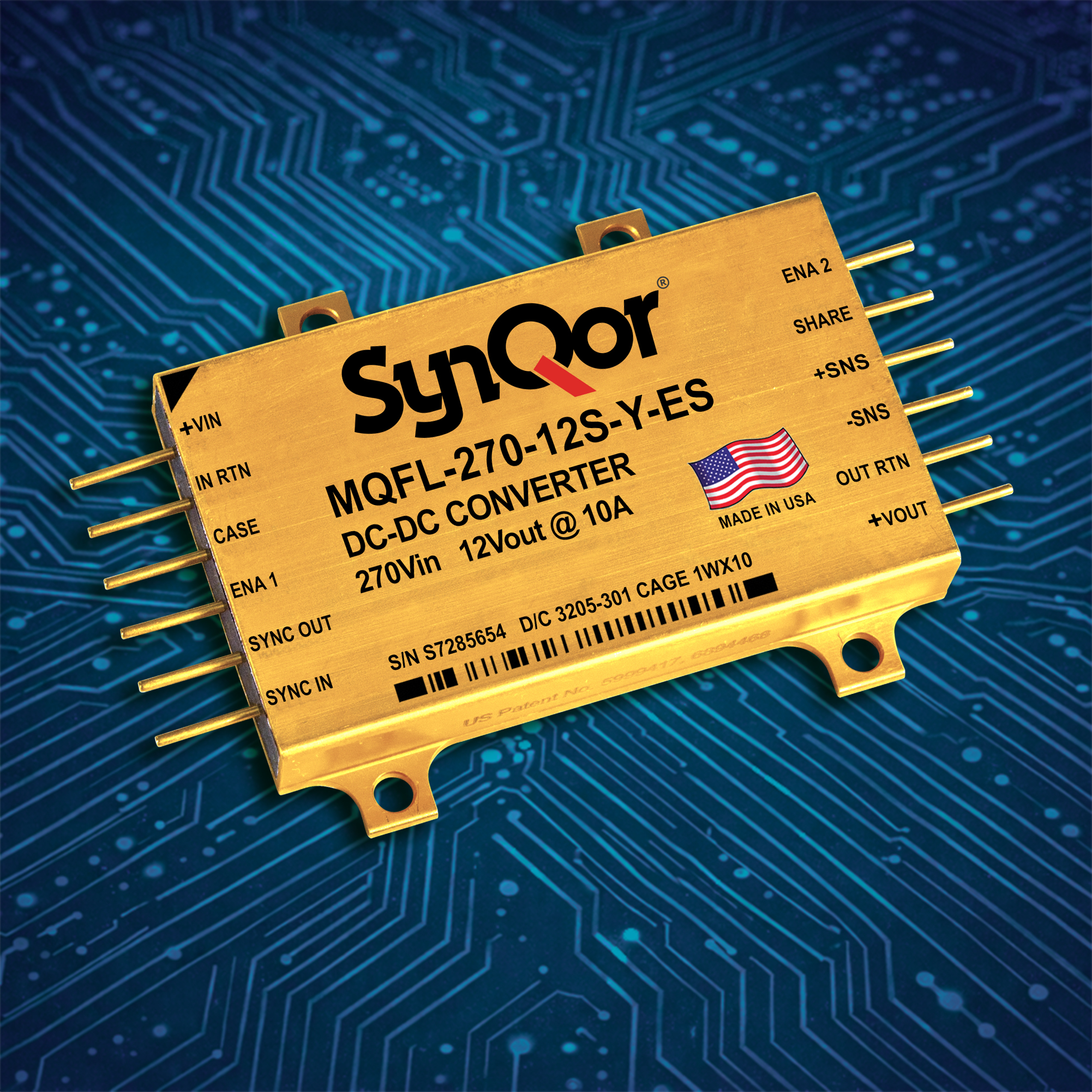
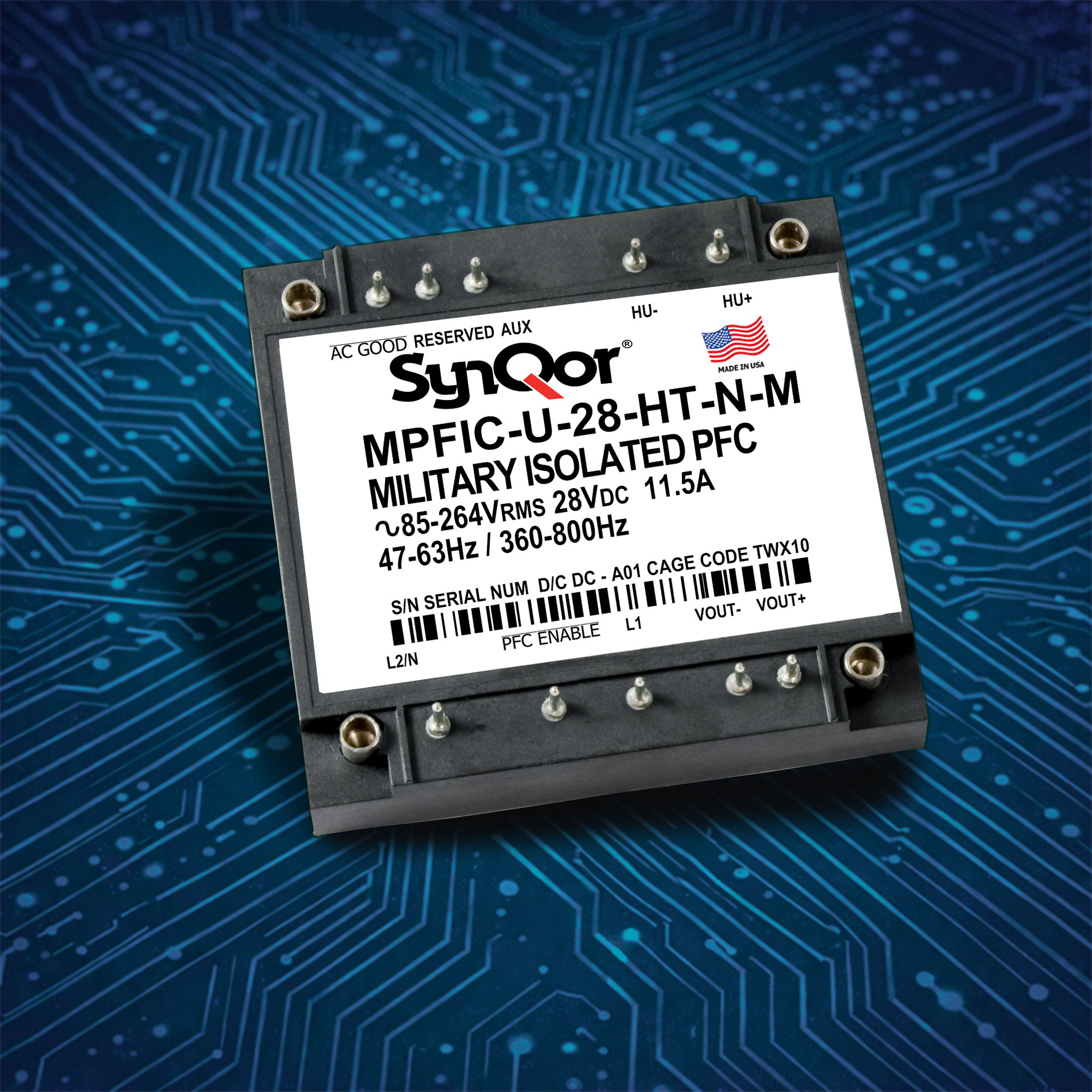
Engineered for next-generation surgical robotics, medical imaging, critical care ventilation, and portable diagnostic equipment. Delivering 2×MOPP safety isolation, ultra-low leakage currents, and full IEC 60601-1 4th Edition EMC compliance in compact, fanless architectures built in the USA.
Medical device manufacturing demands uncompromising reliability, absolute patient safety, and complete supply chain transparency. SynQor’s process-centered organization combines decades of field-proven power architecture with domestic U.S. manufacturing control.
In life-critical medical electronics—where equipment failure is never an option—power converters must perform flawlessly under thermal extremes, electrical surges, and stringent electromagnetic interference (EMI) requirements. SynQor pioneered the commercial application of synchronous rectifier technology in isolated power modules, setting the global benchmark for conversion efficiency, volumetric power density, and operational thermal management.
Unlike commercial power supply vendors that outsource production to unverified overseas contractors, SynQor designs, qualifies, and manufactures all power modules in our state-of-the-art facility in Salem, New Hampshire, USA. This vertical integration guarantees 100% component traceability, zero counterfeit risk, and long-term obsolescence protection for 15+ year medical equipment lifecycles.
Every medical AC-DC supply undergoes rigorous 100% automated optical inspection (AOI), full-load burn-in testing, and multi-stage thermal stress screening under strict quality control protocols.
Our domestic U.S. engineering headquarters ensures immediate engineering consultation, rapid custom modification turnarounds, and robust defense against global supply chain disruptions.
By replacing lossy output diodes with actively driven MOSFETs, our converters cut thermal dissipation by up to 50%, enabling compact conduction-cooled designs without acoustic fan noise.
Medical system designers face a perpetual architectural conflict: how to compress high power AC-DC conversion into tiny enclosed spaces while maintaining ultra-low leakage currents and 4000 Vac reinforced isolation.
In modern clinical environments—such as operating rooms, intensive care units (ICUs), and mobile diagnostic vehicles—space is at a premium. Medical equipment designers are continually pushed to shrink system enclosure dimensions, reduce total weight, and eliminate noisy forced-air cooling fans that circulate airborne pathogens. However, boosting power density in standard commercial AC-DC power supplies introduces severe thermal and safety penalties.
Power density (measured in Watts per cubic inch, W/in³) is governed by electrical efficiency and switching frequency. Traditional silicon diode rectifiers exhibit fixed forward voltage drops ($V_f \approx 0.7\text{V}$ to $1.0\text{V}$), resulting in significant conduction losses ($P = I \times V_f$) at high output currents. As power density increases, this waste heat builds up rapidly inside sealed medical enclosures, leading to thermal throttling, shortened electrolytic capacitor lifespan, and potential system failure.
SynQor addresses this challenge through advanced synchronous rectifier technology combined with high-frequency resonant switching topologies. By utilizing actively driven power MOSFETs with extremely low on-resistance ($R_{DS(on)}$), conduction losses drop dramatically ($P = I^2 \times R_{DS(on)}$). This topology shift unlocks several critical performance advantages for medical OEM system designers:
Under the IEC/EN 60601-1 3rd and 4th Edition harmonized standards, medical electrical equipment must incorporate specific Means of Protection (MOP) to prevent electrical shock to patients and operators. Understanding the architectural differences between Means of Operator Protection (MOOP) and Means of Patient Protection (MOPP) is vital for global procurement managers and compliance engineers.
| Isolation Parameter | 2×MOOP (Operator Protection) | 2×MOPP (Patient Protection - SynQor Standard) |
|---|---|---|
| Isolation Voltage Rating | 3000 Vac test voltage | 4000 Vac (1500 Vdc working voltage endurance) |
| Creepage Distance | ≥ 5.0 mm | ≥ 8.0 mm (enhanced surface tracking barrier) |
| Air Clearance Distance | ≥ 3.5 mm | ≥ 5.0 mm (high altitude arc mitigation) |
| Insulation Type | Basic / Operational Insulation | Double or Reinforced Isolation Transformer Barrier |
| Target Application | Non-patient contact laboratory / rack gear | Direct patient contact (B, BF, and CF applied parts) |
Designing high power density AC-DC medical supplies requires balancing electromagnetic interference (EMI) suppression with strict leakage current boundaries. To pass Class B conducted emissions (CISPR 11 / EN 55011), standard industrial power supplies utilize large common-mode Y-capacitors between the primary AC line and secondary chassis ground. However, Y-capacitors introduce AC leakage currents directly to the earth ground or patient connection.
For cardiac floating (CF) and body floating (BF) medical equipment, patient leakage currents must not exceed 10 µA and 100 µA respectively under normal operating conditions. SynQor’s medical power supplies utilize custom planar transformer geometry with internal electrostatic Faraday shielding. This proprietary construction cancels common-mode noise internally without relying on high-capacitance Y-components, delivering Class B EMC performance while keeping patient leakage current well below stringent IEC 60601-1 thresholds.
Explore our specialized portfolio of medical-grade power conversion solutions, characterized by high thermal efficiency, tight voltage regulation, and field-tested reliability across global healthcare programs.
High power density open-frame and encapsulated AC-DC modules featuring active PFC, 2×MOPP isolation, and low standby power for surgical tools and portable monitors.
Full-brick and half-brick isolated 3-phase AC-DC power factor correction modules built for heavy-duty medical imaging, CT scanners, and MRI system gradient amplifiers.
Board-mounted isolated DC-DC converters delivering regulated low-noise secondary rails with up to 4000 Vac insulation for critical sensor chains and bio-instrumentation.
Field-grade backup power units delivering clean continuous AC/DC power during hospital grid dropouts for critical life-support and clinical emergency carts.
As global healthcare systems accelerate digitization, home care expansion, and robotic surgical integration, procurement teams must align component selection with long-term technological shift patterns.
Point-of-care diagnostics, wearable dialysis units, and home ventilators demand ultra-compact AC-DC power supplies capable of operating from standard household mains (85-264 Vac) while delivering industrial-grade surge immunity and silent fanless operation.
Regulatory agencies (FDA, CE, NMPA) increasingly scrutinize electromagnetic compatibility in environments crowded with 5G, Wi-Fi 6E, and surgical telemetry. Procurement directors prioritize power modules with built-in Class B EMI margins to bypass costly testing delays.
Redesigning a certified medical device due to an obsolete power component can cost over $500,000 in clinical recertifications. Procurement strategies now mandate form-fit-function replacement guarantees and domestic supply chain visibility over 15+ years.
Emerging semiconductor physics and digital control architectures are redefining power conversion capability across clinical electronics.
Gallium Nitride (GaN) and Silicon Carbide (SiC) power switches are replacing traditional silicon MOSFETs in AC-DC front-ends. GaN devices switch up to 10 times faster with near-zero reverse recovery losses, allowing magnetic components (transformers and inductors) to shrink in physical volume by over 40% while raising efficiency past 96%.
Modern surgical suites require intelligent power monitoring. Next-generation medical AC-DC supplies incorporate PMBus or I2C digital control loops, providing real-time telemetry on output voltage rail drift, load current surges, thermal junction temperatures, and remaining capacitor health to enable predictive maintenance before hardware failure occurs.
Addressing real-world AI search queries and complex engineering questions submitted by OEM procurement teams worldwide.
High power density AC-DC medical power supplies maintain 2×MOPP (Means of Patient Protection) safety isolation within ultra-compact footprints through proprietary planar magnetic transformer designs, multi-layer ceramic barriers, and specialized high-dielectric potting compounds. Traditional wire-wound transformers require bulkier bobbin spacing to maintain mandatory 8 mm creepage and 5 mm clearance distances between primary and secondary circuits.
By leveraging planar transformers with multi-layer printed circuit board (PCB) windings separated by insulated polyimide substrates, SynQor achieves 4000 Vac dielectric strength in a fraction of the physical volume. This allows medical equipment designers to integrate complete AC-DC power conversion directly onto system motherboards or within ultra-low-profile enclosures without compromising safety certification.
The IEC 60601-1 standard categorizes medical device applied parts based on the type of patient contact and electrical shock risk:
SynQor high density AC-DC medical supplies feature ultra-low parasitic capacitance, making them fully compliant across Type B, BF, and CF system architectures.
Active Power Factor Correction (PFC) shapes the AC input current waveform to match the phase of the AC input voltage waveform, driving the power factor close to unity ($\text{PF} > 0.98$). Under EN 61000-3-2 regulations, electronic equipment consuming over 75 W must limit harmonic current distortion injected back into the utility grid.
In medical settings, uncorrected harmonic currents cause severe overheating of neutral conductors in hospital wiring, distort generator backup power supplies, and induce electrical noise into sensitive bio-potential amplifiers. SynQor's active PFC front-end modules accommodate universal AC line inputs (85 to 264 Vac, 47–63 Hz and 400 Hz airborne frequencies) while maintaining clean, sinusoidal current draw across all operating load levels.
Conventional power converters utilize passive semiconductor diodes on the secondary output side. Diodes exhibit an inherent forward voltage drop ($V_f \approx 0.5\text{V} - 0.9\text{V}$). At high output currents (such as 30 A on a 12 V rail), diode conduction power loss reaches 15–27 Watts of pure waste heat in a localized silicon die.
Synchronous rectification replaces these lossy diodes with actively controlled, ultra-low $R_{DS(on)}$ N-channel MOSFETs. When switched on during the conduction cycle, the MOSFET resistance drops to milliohm levels, cutting conduction power loss ($I^2 \times R_{DS(on)}$) by up to 80%. This massive reduction in waste heat allows SynQor AC-DC power supplies to achieve conversion efficiencies up to 96%. Lower internal operating temperatures eliminate forced-air fans, prevent heat-induced degradation of electrolytic capacitors, and significantly boost mean time between failures (MTBF).
The 4th Edition of IEC 60601-1-2 shifted compliance criteria toward environment-specific risk management (Professional Healthcare Facility, Home Healthcare Environment, and Special Environments like emergency ambulances). Key immunity requirements include higher electrostatic discharge (ESD) levels (±8 kV contact, ±15 kV air), radiated RF immunity up to 28 V/m at specific wireless telemetry frequency bands, and extended magnetic field testing.
SynQor medical power modules incorporate continuous 360-degree aluminum baseplates, internal multi-stage LC filters, and transient suppressor arrays. This robust internal shielding ensures that power units operate without output voltage deviation, reset loops, or latch-up events during extreme electromagnetic immunity testing, shielding medical OEMs from costly compliance re-tests.
Medical devices undergo long, capital-intensive clinical trials and regulatory approvals (FDA 510(k), PMA, CE MDR). When commercial chip suppliers issue End-of-Life (EOL) notices for critical power components, OEMs face catastrophic redesign and recertification costs.
SynQor protects program lifecycles by maintaining complete operational ownership of product designs and raw component supply chains. Manufacturing takes place exclusively at our Salem, NH, USA facility. We offer form-fit-function replacement paths, standard brick packaging standards, archived qualification data, and multi-decade production commitments—ensuring that the power supply specified during initial product development remains available throughout the full operational life of the medical platform.
Request our complete medical power conversion catalog, download technical application notes, or speak directly with our Senior Power Architecture Engineers in Salem, New Hampshire.