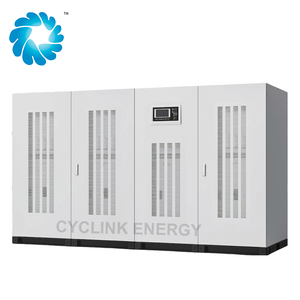
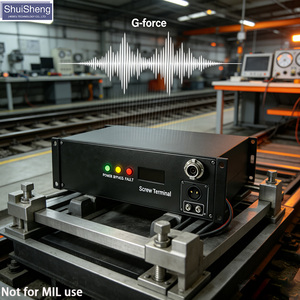
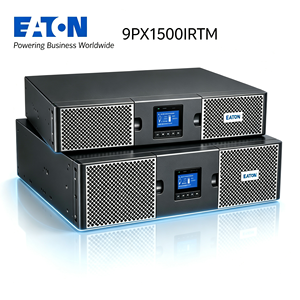
Field-proven switching power supplies, rugged telecom backup modules, and online industrial UPS units engineered to survive high vibration, salt fog, voltage surges, and grid instabilities.


Decades of field-proven synchronous rectification patents, rigorous defense-grade quality management, and uncompromising supply chain traceability.
We pioneered commercial isolated DC-DC modules utilizing synchronous rectification topology instead of lossy Schottky diodes. Replacing diodes with actively switched MOSFETs dramatically lowers internal heat dissipation, driving baseline power conversion efficiency up to 96% and lowering thermal derating penalties in sealed host enclosures.
Our state-of-the-art engineering and manufacturing operations strictly adhere to AS9100 aerospace and ISO-9001 quality management standards. From full component lot traceability to automated 100% stress burn-in and ambient thermal cycling, every unit exported guarantees long-term operational integrity on critical infrastructure programs.
Achieving regulatory compliance (MIL-STD-461, EN 50121-3-2, RTCA DO-160) requires holistic front-end filtering. We design, manufacture, and test our active Power Factor Correction (PFC) modules, isolated DC-DC brick converters, and transient suppression EMI filters as unified systems, eliminating unexpected EMC filter resonances during client qualification.
Industrial OEMs, naval defense integrators, rail system engineers, and medical device manufacturers cannot afford unexpected component obsolescence or power supply performance drift. As a trusted worldwide switching power supplier and exporter, our engineering philosophy revolves around total lifecycle management:
A whitepaper breakdown of technological shifts, supply chain resilience factors, and architectural decisions shaping power supply purchasing over the next decade.
Global procurement teams are rapidly transitioning away from traditional silicon MOSFET switching supplies toward Wide-Bandgap (WBG) materials like Silicon Carbide (SiC) and Gallium Nitride (GaN). SiC and GaN devices exhibit significantly higher breakdown electric field strengths and lower switching losses at high frequencies. This paradigm shift enables our newest generation of AC-DC and DC-DC power converters to achieve high power densities (exceeding 100 W/in³) while delivering 95%+ efficiency across varying load curves. For buyers, this translates directly to reduced thermal sink weight, smaller footprint requirements, and lower operating energy bills over multi-year installations.
As industrial automation, heavy transportation, marine propulsion, and enterprise data centers scale their power profiles, single-phase AC inputs create severe phase imbalance and harmonic distortion on localized grids. Modern procurement specifications prioritize isolated 3-phase Active PFC front-end converters compliant with EN 61000-3-2 and MIL-STD-1399 Section 300B. Modern 3-phase PFC topologies force input current waveforms to cleanly track line-to-line phase voltages, maintaining high power factors (>0.98) and suppressing Total Harmonic Distortion (THD) below 5%, shielding sensitive downstream microelectronics from power degradation.
Legacy Valve-Regulated Lead-Acid (VRLA) batteries are being systematically phased out in commercial, telecom, and industrial UPS procurement bids. Forward-looking procurement directors are standardizing on integrated Lithium Iron Phosphate (LiFePO4) battery packs due to their 3x longer operational service life (up to 10+ years), superior thermal stability, faster charge acceptance rate, and 60% reduction in physical weight. In outdoor telecom nodes and rugged railway signaling huts, LiFePO4 chemistry eliminates the need for expensive air-conditioned shelters, operating reliably in ambient temperatures ranging from -40°C to +65°C.
Unplanned operational downtime represents significant financial losses in data centers, energy extraction, and transportation networks. Consequently, international power export trends show a decisive shift toward modular switching power supplies arranged in N+1 or N+2 parallel redundant configurations. Modular designs enable hot-swappable replacements while systems remain energized under full load. Active current sharing control loops ensure equal thermal and electrical strain across all power modules, maximizing system Mean Time Between Failures (MTBF) and simplifying field technician maintenance routines.
An in-depth analysis of high-frequency topology design, digital control loops, and environmental ruggedization techniques.
Analog switching controllers are increasingly being replaced by high-speed Digital Signal Processors (DSP). DSP algorithms monitor input voltage transients, load dynamic steps, and internal component junction temperatures in real time. Digital control allows dynamic loop compensation adjustments, adaptive dead-time calibration, soft-start timing customization, and real-time power telematics reporting via PMBus, CANbus, or SNMP protocols.
Eliminating internal dust accumulation and fan failures requires advanced heat conduction modeling. Leading switching power designs utilize specialized thermally-conductive silicone potting compounds (exceeding 1.5 W/m-K thermal conductivity) to void internal air pockets. Heat generated by power MOSFETs, planar transformers, and inductors is efficiently conducted directly to an integrated metal baseplate for cold-plate chassis cooling.
Traditional wire-wound transformers suffer from high proximity losses and bulky profiles. The technological trend favors multi-layer Printed Circuit Board (PCB) planar magnetic structures. Planar transformers deliver exceptional consistency in leakage inductance, significantly lower skin-effect AC resistance at multi-megahertz switching frequencies, and optimal volumetric power density required for compact quarter-brick and half-brick footprints.
Addressing essential technical, compliance, and logistical considerations during power module evaluation and bulk procurement.
Conventional DC-DC power converters utilize Schottky diodes for secondary-side rectification. Diodes introduce a fixed forward voltage drop (typically 0.4V to 0.7V), resulting in significant conduction power loss (P = I × V) that scales linearly with output current. Synchronous rectification replaces these diodes with actively driven MOSFETs characterized by extremely low on-state resistance (Rds(on)). This slashes conduction losses by up to 75%, allowing modules to achieve peak conversion efficiencies up to 96%. Lower dissipation reduces internal component junction temperatures, extends overall MTBF, and enables compact sealed or conduction-cooled chassis designs without loud, fail-prone cooling fans.
Our power converters and uninterruptible power systems are engineered from the ground up to satisfy stringent international standards:
• Military & Defense: MIL-STD-704 (A-F) for aircraft power characteristics, MIL-STD-1275 (B-D) for 28V DC heavy vehicle inputs, MIL-STD-461 (C-F) for conducted and radiated electromagnetic compatibility (EMC), MIL-STD-1399 Section 300B for shipboard AC power, and MIL-STD-810G for environmental shock/vibration.
• Railway Transit: EN 50155 / IEC 60571 for electronics on rolling stock, EN 50121-3-2 for railway EMC, and EN 61373 for shock/vibration proofing.
• Avionics & Aerospace: RTCA/DO-160G (Sections 16–21) for airborne equipment.
• Medical Grade: ANSI/AAMI ES60601-1 / IEC 60601-1 (3rd & 4th editions) with 2xMOPP isolation pathways.
We maintain end-to-end supply chain visibility under AS9100 quality guidelines. All semiconductor die lots, magnetic cores, passive components, and circuit boards undergo rigorous receiving inspection and lot-code tracking. To protect defense, rail, and industrial OEM programs from unexpected component end-of-life (EOL) notifications, we enforce conservative component derating guidelines and engineer backward-compatible Form-Fit-Function (FFF) module upgrades. OEM clients can rely on continuous supply continuity without repeating expensive system-level re-qualification testing.
Uncorrected AC switching supplies draw narrow, high-amplitude current pulses at the peaks of the voltage waveform, resulting in poor power factor (typically 0.60 to 0.70) and high harmonic distortion. Integrated Active Power Factor Correction (PFC) shapes the AC input current waveform to mirror the sinusoidal AC input voltage. This raises the displacement and distortion power factor to >0.98, ensuring compliance with EN 61000-3-2 standards. Active PFC maximizes real usable power drawn from wall outlets, eliminates neutral wire overheating in 3-phase systems, and lowers peak demand charges on industrial electricity tariffs.
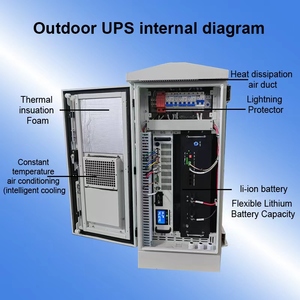
Yes. Our IP68 and NEMA 4X rated outdoor uninterruptible power systems are engineered explicitly for extreme environmental deployment. Featuring heavy-duty die-cast aluminum enclosures coated with anti-corrosion, anti-salt spray, and anti-mold polyurethane finishes, these units withstand prolonged submersion, high-pressure water jets, blowing dust, and high humidity. Internal electronics are completely encapsulated in thermal potting compounds, allowing reliable continuous full-load operation in ambient temperatures ranging from -40°C to +75°C without requiring external airflow or filter maintenance.
Our application engineering department provides direct, engineer-to-engineer technical assistance. We offer custom output voltage trimming, specialized thermal baseplate mounting options, tailored start-up sequences, and custom conformal coating applications. Furthermore, our team performs detailed thermal derating analyses, worst-case circuit analysis (WCCA), and system-level EMI filter pairing calculations based on your exact input bus dynamics, ambient thermal constraints, and load profile requirements.
Evaluate detailed electrical datasheets, mechanical drawings, thermal derating curves, and EMI test reports for our complete line of switching power supplies, Mil-COTS modules, and rugged UPS systems.