Explore our certified catalog of high-power density converters, variable frequency drives, serial modules, and broadcast signal converters designed for mission-critical operations.
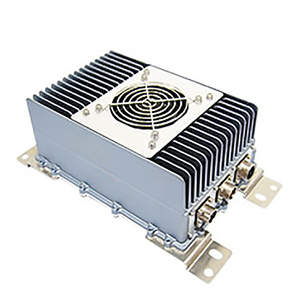
Ultra-wide input voltage range (200Vdc–800Vdc) step-down buck module delivering regulated 48V, 24V, or 12V DC output for electric vehicle power buses and energy storage architectures.
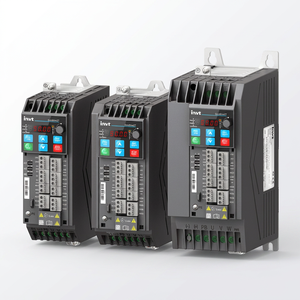
IP20 compact variable frequency drive converting 200V–240V AC 1PH input for motor control, HVAC systems, and dynamic industrial automation equipment.
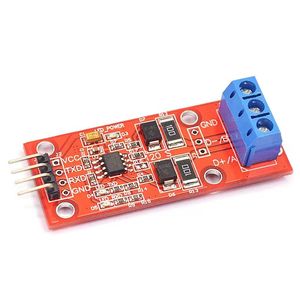
Embedded micro-module for microcontrollers and IoT development; provides high-speed, noise-immune UART serial signal conversion with automatic flow control.
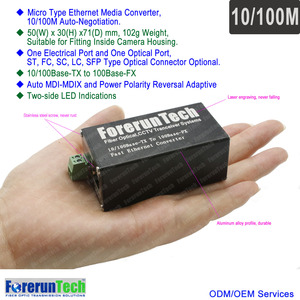
Ultra-compact Ethernet-to-Fiber transceiver module engineered for surveillance camera networks, smart city security, and harsh industrial LAN infrastructure.
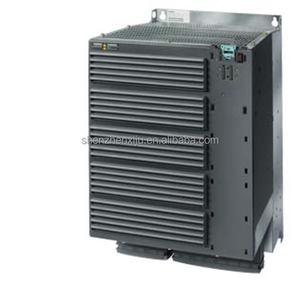
High-efficiency OEM vector control drive (6SL3210-1KE11/1KE12/1KE13) delivering high torque density and integrated safety features in space-constrained cabinets.
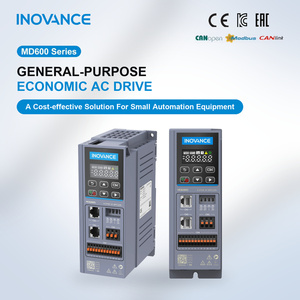
General-purpose sensorless vector drive featuring single-phase 200–240V AC input, dynamic braking capability, and high-precision motor velocity regulation.
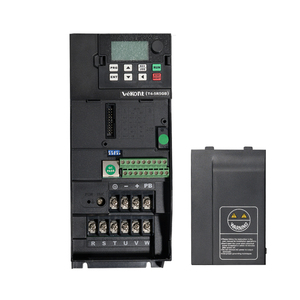
Heavy-duty 220V/380V single/three-phase variable frequency drive designed for high-load compressors, industrial pumps, and precision machine tools.
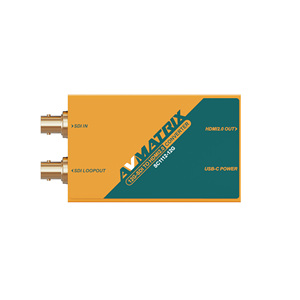
Professional studio broadcast video converter supporting uncompressed 4K UHD 60fps signal transformation between 12G-SDI and HDMI interfaces with zero latency.
Modern electrical engineering challenges demand unprecedented volumetric power density, minimal thermal dissipation, and absolute electromagnetic immunity. As a global high-reliability power conversion factory and turnkey supplier, our core design methodology revolves around eliminating internal losses through advanced synchronous rectification topologies, planar magnetic integration, and wide bandgap (GaN/SiC) semiconductor switching architectures.
Traditional converter designs rely on passive diode rectification, which introduces fixed forward voltage drops ($V_f$) that scale linearly with load current. At elevated operating currents (such as 50A to 100A output stages), diode conduction losses create severe thermal bottlenecks. By replacing lossy Schottky diodes with actively controlled, extremely low $R_{DS(on)}$ MOSFET switches synchronized to the switching cycle, our modular converters reduce internal heat generation by up to 65%. This breakthrough allows system engineers to operate conduction-cooled power supplies in sealed enclosures without forced-air fans.
Selecting a commercial-off-the-shelf (COTS) or custom compact converter requires rigorous verification against sector-specific electrical, environmental, and electromagnetic compatibility (EMC) benchmarks. Our factory qualification programs rigorously address:
Full compliance with MIL-STD-704(A-F) power quality, MIL-STD-461(C-F) conducted EMI filter limits, MIL-STD-1275 100V transients, and MIL-STD-810G shock/vibration profiles.
Engineered for EN 50155, EN 50121-3-2, and RIA 12 surge protection. Supports wide 4:1 input ranges (24V, 48V, 72V, 110V nominal inputs) with Class S2 hold-up time.
Adheres to RTCA/DO-160G power input specifications, Airbus ABD0100, and Boeing 787B3 guidelines, delivering active 360Hz–800Hz Power Factor Correction (PFC).
Certified against EN 60601-1 and IEC 60601-1-2 4th Edition EMC. Offers 2×MOPP (Means of Patient Protection) reinforced isolation and ultra-low leakage current (<5µA).
Integrated VFD frequency converters optimized for vector control, IP20/IP65 compact enclosures, sensorless speed feedback, and low harmonic distortion under EN 61000-3-2.
Ultra-low jitter video transceivers (12G-SDI / 4K UHD) and RS485/UART micro-modules operating reliably across extended operating temperatures (-40°C to +85°C).
As global supply chains navigate technological transitions and geopolitically sensitive sourcing constraints, OEM procurement teams are shifting away from standalone converter component sourcing toward validated power architecture building blocks. Below are the key structural trends shaping the procurement lifecycle for industrial, defense, and EV converter modules over the next decade.
The transition from legacy Silicon (Si) MOSFETs to Gallium Nitride (GaN) and Silicon Carbide (SiC) switches is no longer theoretical. In high-power DC-DC buck converters (e.g., 200Vdc–800Vdc down to 48V/24V) and high-power VFDs, SiC devices enable switching frequencies upwards of 500kHz to 1MHz. This 5x rise in operating frequency directly reduces the required physical footprint of inductors, transformers, and bulk capacitors—yielding power density metrics surpassing 100 Watts per cubic inch ($W/in^3$).
Historically, system integrators purchased DC-DC converters from one supplier and external EMI filters from another. During final MIL-STD-461 or EN 50155 qualification, complex LC line resonance between the uncharacterized filter and converter frequently triggered severe conducted emission spikes or system instability. Modern procurement protocols require pre-validated Converter + Filter Pairs certified together at the factory level, eliminating regulatory compliance delays during system qualification.
Defense, railway, and medical infrastructure projects require operational lifespans of 15 to 30 years. Sourcing standard commercial bricks often exposes OEMs to component End-of-Life (EOL) disruptions every 3 to 5 years. Premier suppliers maintain strict Form-Fit-Function (FFF) replacement policies, ensuring pin-compatible module drops with backwards-compatible electrical parameters for multi-decade program support.
With tightening cybersecurity policies and defense supply chain directives (DFARS compliance, AS9100 rev D certification), procurement managers increasingly prioritize state-of-the-side manufacturing facilities (such as our Salem, NH manufacturing facility) with end-to-end component lot traceability, automated optical inspection (AOI), and full Environmental Stress Screening (ESS) burning-in 100% of production units.
Our organization is built around a process-centered engineering discipline that bridges cutting-edge research with high-volume manufacturing. By maintaining full in-house capabilities—from topology design, planar transformer fabrication, automated SMT surface mounting, environmental stress screening, to automated ATE final testing—we provide distinct strategic advantages to global OEMs:
Over two decades of mastery in active synchronous rectification and zero-voltage switching (ZVS) resonant converters, maximizing energy transfer efficiency and lowering operating thermal signatures.
Headquartered in Salem, New Hampshire, our state-of-the-art facility features automated SMT lines, potted module encapsulation, thermal cycling chambers, and automated functional test stations.
Beyond our standard half-brick, quarter-brick, and eighth-brick COTS catalog, our engineering team custom-tailors voltage output trims, mounting baseplates, and mechanical enclosures for turnkey OEM integration.
Browse technical and procurement queries commonly raised by component engineers, program managers, and B2B sourcing specialists.
Synchronous rectification replaces traditional lossy schottky diodes on the secondary output stage with high-speed power MOSFETs featuring minimal ON-state resistance ($R_{DS(on)}$). In high-current applications (e.g., converting high DC voltage down to 12V, 24V, or 48V bus levels), diode conduction losses scale rapidly as $P = I \times V_f$. MOSFET losses scale quadratically with $P = I^2 \times R_{DS(on)}$. Because modern MOSFET resistance is in the milliohm range, power dissipation drops exponentially. This increases total converter efficiency up to 96.5%, dramatically decreases board-level thermal density, and allows conduction cooling via cold plates without bulky fan assemblies.
Our defense-grade MilQor® and MCOTS converter modules feature wide input voltage headroom and integrate high-energy transient suppression stages. When paired with our matched MCOTS transient filters, the system absorbs severe 100V spikes lasting for 50ms (MIL-STD-1275D/E) and withstands input voltage transients up to 630V (MIL-STD-704A). The internal active clamping circuitry clips over-voltage energy and protects downstream sensitive payload electronics without entering shutdown or interrupting power delivery.
Our medical power supply modules conform to ANSI/AAMI ES60601-1 and IEC 60601-1 3rd/4th Edition standards for 2×MOPP (Means of Patient Protection) safety requirements. They provide 4000Vac reinforced input-to-output galvanic isolation and maintain ultra-low touch/patient leakage currents (under 5µA in normal condition, under 50µA under single-fault conditions). This guarantees compliance for cardiac-floating (CF) patient contact medical devices, surgical tools, and laboratory diagnostic equipment.
We implement a proactive lifecycle management program tailored for defense, rail, and industrial capital equipment with 15–25 year program lifespans. We maintain long-standing strategic partnerships with silicon foundries, maintain buffer inventories of raw semiconductor dice, and design modules around industry-standard brick pinouts (half-brick, quarter-brick, eighth-brick). Should a sub-tier component reach End-of-Life (EOL), our U.S. design team engineers pin-compatible Form-Fit-Function (FFF) drop-in replacement modules backed by complete qualification test reports.
Yes. Our high-power DC-DC converters incorporate active current sharing algorithms (either droop share or active single-wire share networks). This allows up to 10 modules to be paralleled in N+1 redundant configuration for high-reliability electric vehicle charging buses, energy storage systems, or heavy industrial machinery—reaching power levels from 15kW to over 30kW without thermal unbalancing.
Standard COTS modules are stocked directly in our Salem, NH warehouse or distributed globally through authorized channels, yielding stock to 2-week delivery. Custom modified-standard units (e.g., custom output voltage trimming, conformal coating, non-standard baseplate thicknesses, or custom screening curves) typically ship in 4 to 8 weeks following preliminary engineering evaluation and drawing sign-off.
Need custom voltage trimming, specialized EMI filter matching, or thermal derating assistance for your mission-critical system? Speak directly with our technical team today.