Mission-Critical Flight & Ground Infrastructure

Top Trusted Aviation Power Factory & Suppliers

High-Reliability MIL-STD & RTCA DO-160 Compliant UPS, AC-DC / DC-DC Power Systems for Aviation, Avionics, & Tactical Support Operations

Enterprise Product Lineup

Standard-Setting Aviation & Industrial Power Equipment

Engineered for extreme shock, thermal stress, altitude fluctuations, and rigorous airborne/ground electromagnetic compatibility standards.

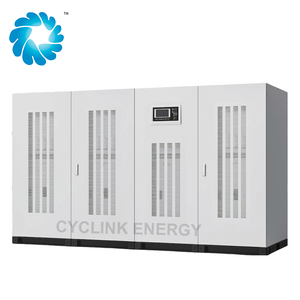
Industrial UPS for Aviation with Lithium Battery Backup

Industrial UPS with Lithium Battery for Aviation & Infrastructure

Heavy-duty industrial online double-conversion UPS powered by advanced Lithium-ion cell architecture. Offers long runtime backup, high thermal tolerance, and seamless power switching for flight tower communications and terminal control systems.
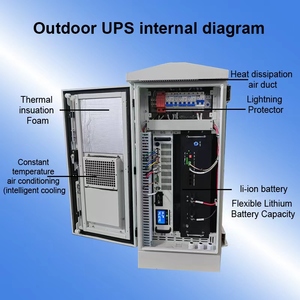
IP68 All-Weather Outdoor Rugged Telecom UPS

All-Weather IP68 Rugged Outdoor Telecom Power System

Fully sealed IP68 enclosure designed to combat salt spray, high humidity, mold, and corrosive coastal air. Features active thermal management for remote airfield radar stations and outdoor telecom ground sites.

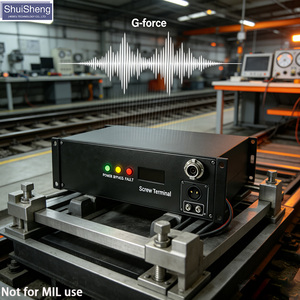
Rugged UPS System with Vibration Resistance for Harsh Environment

Ruggedized Shockproof UPS System for Harsh Operating Environments

Mil-spec shock-mounted uninterruptible power supply engineered to withstand continuous mechanical vibration and sudden physical impact. Ideal for mobile airfield support vehicles and tactical transport modules.

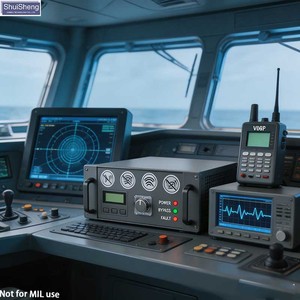
Industrial UPS for Signaling & Communication Backup

High-Reliability Industrial Power Backup for Navigation & Comms

Precision-regulated power conditioning system providing clean, uncorrupted AC voltage to critical navigation signals, runway lighting systems, and ground-to-air communication nodes.

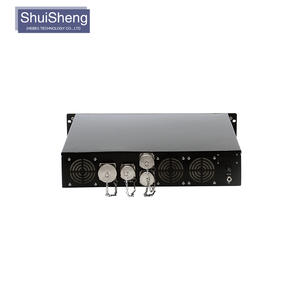
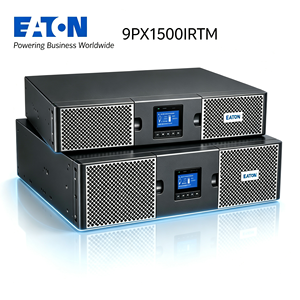
Rack-mounted Marine and Airborne UPS 1500VA/1500W

Rack-Mounted Marine & Aviation 1500VA / 1500W Pure Sine UPS

High-density 1U/2U rackable power supply engineered with unity power factor (1500W output). Meets stringent harmonic mitigation standards for airborne electronics bays and mobile military command racks.

10kVA Online UPS 380/220VAC For Industrial Data Center

10kVA Online 3-Phase Input UPS for Airport Data Centers & IDC

Heavy-duty 10kVA double-conversion online UPS system providing total isolation against line transients, voltage sags, and frequency fluctuations for aviation data centers and flight scheduling servers.

Outdoor Waterproof 1KVA Online UPS with Lightning Protection

1KVA Outdoor Waterproof UPS with Integrated Surge & Lightning Shield

Designed for remote aviation telemetry and ground equipment, offering multi-stage surge arrestors, IP65/IP66 weatherproofing, and 8000Wh battery capacity for zero-maintenance operation.

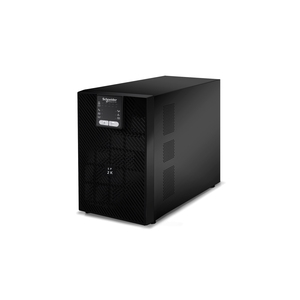
Single Phase Online UPS Power Supply Built-in Battery

Single Phase Dedicated Online UPS (800W / 1KVA Built-in Battery)

Compact, zero-transfer-time online UPS featuring intelligent battery management, wide input range protection, and high-efficiency switching for sensitive avionic testing equipment.

Engineering Rigor & Trust

Why Leading Aerospace & Defense OEMs Choose Us

Backed by over two decades of synchronous rectification innovation, U.S. and global AS9100 / ISO-9001 certified manufacturing, and full supply-chain traceability.

25+ Years
Power Conversion Pioneer
Up to 96%
Peak Module Efficiency
AS9100 / ISO
Certified Quality Facilities
0% Obsolescence
Multi-Decade Program Support
FLIGHT-READY RELIABILITY

Advanced Synchronous Rectification

By replacing lossy Schottky diodes with actively controlled MOSFETs in a proprietary two-stage topology, our converters eliminate massive thermal dissipation overhead. This enables completely sealed, conduction-cooled airborne modules operating in unpressurized bays without fan failure risks.

INTEGRATED EMC TESTING

Matched Filter & Converter Topology

Most system integration delays stem from unexpected noise ringing between third-party input EMI filters and power modules. We design and qualify EMI filters and power converters as a unified ecosystem, guaranteeing out-of-the-box compliance with RTCA DO-160G and MIL-STD-461.

TOTAL TRACEABILITY

Form-Fit-Function Lifecycle Guarantee

Defense and aerospace platforms are designed for 20 to 30 years of operational duty. We enforce strict component lifecycle tracking, engineering change notifications (ECN), and archived qualification data to ensure replacement units manufactured decades later drop in seamlessly.

Technical Whitepaper Insight

Engineering Core: Aviation Power Standards & Topologies

A granular look at the regulatory landscape, harmonic mitigation, and electrical stress envelopes governing next-generation airborne and ground aviation power systems.

Modern aircraft electrical systems demand an unprecedented level of power quality and operational robustness. Airborne line-replaceable units (LRUs), flight control computers, radar suites, and cockpit displays operate directly off line-to-line 115V AC / 400Hz or 28V DC buses subject to severe surges, lightning strikes, and harmonic feedback. Sourcing power conversion equipment from a verified aviation power factory requires a rigorous understanding of compliance parameters across major regulatory standards.

Standard / Spec Primary Target Domain Key Power Technical Requirement Consequence of Non-Compliance
RTCA DO-160G (Sec 16/17) Civilian & Commercial Aircraft Operation over 360Hz – 800Hz wide frequency range, emergency voltage spikes. Inflight power dropout, system resets, audio/radar frequency interference.
MIL-STD-704 (A through F) Military Airborne Platforms Transients up to 80V for 100ms on 28V DC bus; 3-phase phase imbalance handling. Catastrophic component destruction, localized bus collapse during engine start.
MIL-STD-461 (C through F) Defense Electromagnetic Interference Strict CE102 conducted emissions limit from 10kHz to 10MHz. High-frequency ripple bleeding into avionics radios and tactical radar arrays.
MIL-STD-1275 (D/E) Tactical Ground Vehicles & Airport Ground Equipment Withstand +100V spikes, severe engine cranking voltage drop down to 6V DC. Equipment reboot during vehicle starter engagement, thermal runaway.
EN 50155 / EN 61000-3-2 Aviation Transport & Ground Rail Interoperability Active Power Factor Correction (PFC > 0.99), low total harmonic distortion (THD < 5%). Grid overheating, line phase distortion, poor utility energy efficiency.

Wide-Frequency 400Hz / 800Hz Airborne AC-DC Conversion

  • ✓ Active 3-Phase PFC: Prevents excessive neutral current build-up in aircraft generators by keeping line current in phase with voltage.
  • ✓ Inrush Current Limiting: Soft-start active circuits limit startup current spikes to prevent nuisance tripping of aircraft thermal circuit breakers.
  • ✓ Low Harmonic Distortion: Total Harmonic Distortion (THD) kept below 3% under full load to protect neighboring avionics hardware.

Ruggedized IP68 & Environmental Hardening

  • ✓ Hermetic Conduction Cooling: Aluminum baseplate designs route heat away directly to cold plates or chassis walls without air circulation.
  • ✓ Anti-Salt Spray & Anti-Mold: Special polymer potting encapsulation shields internal components from salt aerosol and tropical moisture.
  • ✓ Mil-Spec Shock Protection: Internal board-level mechanical anchoring survives 50G shock pulses and sustained random vibrations.
Industry Roadmap

Future Procurement Trends in Aviation Power Systems

How wide-bandgap semiconductors, urban air mobility (eVTOL), and high-voltage DC distribution are reshaping global aviation procurement strategies over the next decade.

1. Adoption of SiC & GaN Wide-Bandgap Devices

Silicon Carbide (SiC) and Gallium Nitride (GaN) power transistors are fast replacing traditional silicon MOSFETs. Wide-bandgap materials allow switching frequencies in excess of 1 MHz with lower switching losses, reducing passive component sizes (chokes, inductors, capacitors) by up to 50% and vastly increasing airborne power density.

2. High-Voltage DC (HVDC) 270V & 540V Architecture

To support the massive electrical demands of hybrid-electric aircraft and Advanced Air Mobility (AAM/eVTOL) platforms, procurement is shifting away from low-voltage 28V DC toward 270V DC and 540V DC bus standards. High voltage dramatically reduces cable bundle weight while minimizing copper resistive losses ($I^2R$).

3. Modular Brick Standardization (Form-Fit-Function)

System architects are increasingly mandating open-architecture power modules (half-brick, full-brick standards). This modular procurement philosophy eliminates single-vendor lock-in, shortens qualification cycles for secondary suppliers, and simplifies field servicing in global defense maintenance depots.

4. Smart Telemetry & PMBus / CAN Health Monitoring

Modern military and commercial aviation UPS units are expected to offer real-time telemetry over isolated PMBus, Ethernet, or CAN bus interfaces. Maintenance crews leverage predictive analytics to track battery state-of-health (SoH), temperature margins, and capacitor degradation before inflight failure occurs.

5. Advanced LiFePO4 & Solid-State Energy Storage

Replacing legacy Valve-Regulated Lead-Acid (VRLA) batteries, lithium iron phosphate ($LiFePO_4$) and emerging solid-state cells deliver over 3x the gravimetric energy density while meeting ultra-strict thermal runaway safety rules (DO-311A / UN 38.3) required for airborne battery installation.

6. Dual-Use Ground/Flight Infrastructure Synergy

Procurement teams are prioritizing power converters engineered with wide input range envelopes ($18V - 40V$ DC continuous) that operate identically on mobile airport ground support equipment (GSE), naval flight decks, and high-altitude airborne platforms, reducing spare parts inventory overhead.

Procurement & Engineering FAQ

Frequently Asked Questions By Technical Sourcing Managers

Detailed insights on qualification, compliance testing, thermal design, and lead-time guarantees for aviation power supplies.

Aviation-grade power supplies undergo rigorous qualification against specialized standards such as RTCA DO-160G and MIL-STD-704. Unlike standard industrial UPS units designed for stable grid power, airborne and ground aviation power modules must handle extreme input voltage transients (e.g., 80V surges for 100ms), input frequency variations from 360Hz to 800Hz, extended temperature operational ranges (-40°C to +100°C), and harsh vibration profiles without mechanical or electrical degradation. Furthermore, aviation units require strict EMI filtering to clear MIL-STD-461 CE102 limits to avoid interfering with flight control radios.

Our manufacturing and engineering facilities feature in-house pre-compliance electromagnetic compatibility (EMC) testing chambers, highly accelerated life testing (HALT), and temperature/altitude simulation chambers. Every power converter topology is designed from the PCB layout stage with low-inductance switching loops, integrated common-mode chokes, and optimized input filter chains. Qualification test reports are maintained and archived under AS9100 quality management systems, providing full traceability for prime contractors and civil aviation authorities.

Traditional secondary-side diode rectification introduces a fixed forward voltage drop ($V_f \approx 0.5V - 1.0V$). At high current outputs (e.g., 100A), diode losses can exceed 50 Watts, generating massive thermal dissipation that requires forced-air cooling fans (a frequent single point of failure at high altitude). Synchronous rectification replaces diodes with low $R_{DS(on)}$ MOSFETs, cutting conduction losses by up to 75%. This allows the power converter to run significantly cooler, enabling conduction-cooled, fully sealed IP67/IP68 enclosures that operate reliably in unpressurized equipment bays.

Yes. Our lithium-powered UPS solutions utilize chemistry-stable Lithium Iron Phosphate ($LiFePO_4$) cells paired with smart battery management systems (BMS) equipped with redundant hardware overvoltage, undervoltage, short-circuit, and thermal runaway protection. Battery packs are certified to UN 38.3 transport standards and engineered to comply with RTCA DO-311A requirements for airborne lithium battery safety installation.

Absolutely. Defense and commercial aviation programs typically have operational lifespans of 15 to 30 years. Our factory enforces a proactive Diminishing Manufacturing Sources and Material Shortages (DMSMS) management protocol. We guarantee form-fit-function replacement availability, maintain strategic safety reserves of long-lead ICs, and provide official engineering change notices (ECN) years before any critical component reaches End-of-Life (EOL).

While we maintain an extensive catalog of standard off-the-shelf Mil-COTS modules, our engineering team routinely delivers custom modified power solutions. Whether your program requires custom multi-output DC voltages (e.g., +3.3V, +5V, +12V, -12V, +28V combined), specific mechanical pinouts, conformal coating types, or custom enclosure dimensions, our modular topology allows rapid prototyping and qualification within accelerated program deadlines.

Standard off-the-shelf power converter modules and evaluation boards are typically available from stock or within 2 to 4 weeks. Custom modified units or fully qualified ruggedized rack-mount UPS assemblies generally carry a prototype lead time of 6 to 10 weeks depending on specification complexity. Production runs are managed under customer buffer stock agreements or scheduled release purchase orders to guarantee on-time delivery.

Ready to Architect Your Aviation Power System?

Submit your electrical input parameters, bus voltage, transient requirements, and targeted certification standards (DO-160G, MIL-STD-704, IP68). Our senior power application engineers will provide a complete architecture review and quotation within 24 hours.