Explore our engineered line-up of industrial-grade uninterruptible power supplies (UPS), rugged outdoor inverters, and heavy-duty power conversion systems tailored for OEM/ODM global procurement.
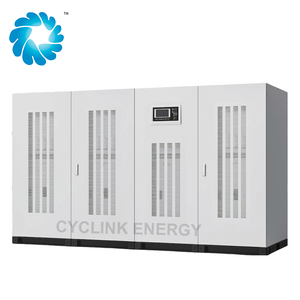
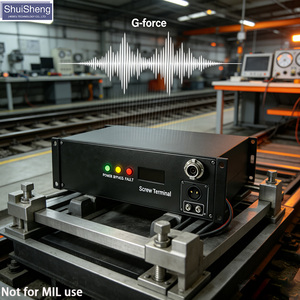

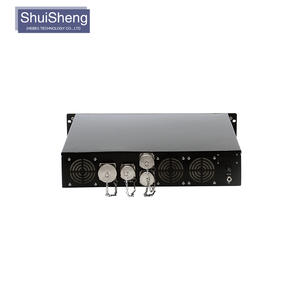
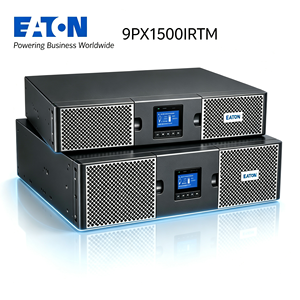
When evaluating Chinese power electronics suppliers for mission-critical industrial applications, procurement directors and hardware design engineers must understand the architectural nuances between high-frequency and low-frequency pure sine wave topologies, power factor metrics, and harmonic distortion control.
Modern Chinese tier-1 power converter manufacturers are aggressively replacing legacy Silicon MOSFETs with wide bandgap Silicon Carbide (SiC) and Gallium Nitride (GaN) devices. This reduces switching losses by up to 65%, enabling inverter switching frequencies above 100 kHz while shrinking inductive passive components by 40%.
The result is ultra-compact rackmount and module power footprints with thermal dissipation profiles compatible with totally enclosed IP68 chassis designs.
Building on pioneering synchronous-rectifier topologies, leading factories replace traditional lossy Schottky diodes with actively driven, ultra-low Rds(on) power MOSFETs. Conduction losses drop significantly, driving full-load conversion efficiency to peak figures exceeding 96.5%.
Lower thermal stress directly translates to extended Mean Time Between Failures (MTBF > 500,000 hours under MIL-HDBK-217F standard conditions).
Industrial applications—such as metallurgy plants, railway trackside signaling, and naval electronics—require severe galvanic isolation between input DC buses and AC loads. Double-isolated toroidal transformers combined with active multi-stage EMI filters ensure full compliance with MIL-STD-461, EN 50121-3-2, and RTCA DO-160G airborne standards.
This mitigates common-mode currents and prevents ground-loop damage across complex industrial topologies.
Selecting the right inverter topology depends on load dynamics, surge demands, and physical space constraints. Below is a comparative technical analysis for engineering decision-makers:
| Technical Parameter | High-Frequency Pulse Width Modulation (PWM) | Low-Frequency Toroidal Transformer Topology | Hybrid Bidirectional SiC Inverter Architecture |
|---|---|---|---|
| Primary Switching Element | High-Speed Si / GaN MOSFETs | Heavy Iron-Core / Toroidal Transformer | Silicon Carbide (SiC) Power Modules |
| Peak Conversion Efficiency | 93% - 96% | 88% - 92% | 96.5% - 98.2% |
| Surge Capacity (Motor Starts) | 200% for 100 milliseconds | 300% - 500% for 10 seconds | 300% for 2 seconds |
| Total Harmonic Distortion (THD) | < 2.5% Linear Load | < 3.0% Linear Load | < 1.2% Low Harmonic Distortion |
| Weight & Power Density | Ultra-lightweight / High power density | Heavy / Bulky chassis footprint | Optimized compact rack-mount design |
| Target Applications | Telecom, Data Centers, Solar Energy | Heavy Machinery, Pumps, Marine Motors | Smart Microgrids, EV Chargers, Aviation |
As global energy grids transition toward decentralized renewable architectures, the technical demands placed on pure-sine wave inverters and industrial UPS systems are shifting rapidly.
Traditional lead-acid battery backup solutions are being replaced by high-density LiFePO4 (Lithium Iron Phosphate) and LTO (Lithium Titanate) chemistry battery banks. Modern Chinese inverter OEMs are embedding native CANbus 2.0B, RS485 Modbus, and Ethernet IP protocols directly into pure-sine inverters to communicate seamlessly with smart Battery Management Systems (BMS).
This enables cell-level SOC (State of Charge), SOH (State of Health) reporting, and dynamic thermal throttling during high-current charging cycles.
Leading industrial inverter suppliers are implementing IoT telemetry chips and embedded DSP algorithms that continuously analyze ripple current, electrolytic capacitor ESR (Equivalent Series Resistance) degradation, and switching junction temperatures.
By monitoring high-frequency noise spikes and thermal drift, the inverter platform can alert maintenance engineers before a failure occurs—eliminating costly downtime in automated manufacturing plants and mission-critical rail communications.
The boundary between pure off-grid AC inverters and battery chargers is dissolving. The next decade will be dominated by bidirectional inverter-chargers capable of seamlessly operating in grid-tied mode, off-grid islanding mode, and Vehicle-to-Grid (V2G) feedback mode.
Top China suppliers are offering grid-forming algorithms with active frequency and voltagedroop control, permitting multiple inverters to operate in parallel without requiring hardwired master-slave communication cables.
Combining rigorous US aerospace-level quality control standards (AS9100 / ISO-9001) with China's high-efficiency electronics supply chain ecosystem to deliver unmatched reliability.
Every pure-sine inverter and industrial UPS unit undergoes rigorous component-level batch tracking. From automotive-grade MOSFET sourcing to automated SMT optical inspection (AOI) and 100% full-load thermal burn-in testing, our process-centered quality management system guarantees multi-decade operational integrity.
Our industrial power platforms are engineered to survive extreme shock, vibration, salt mist, and thermal stress. Products are certified against stringent global standards, including MIL-STD-810G, MIL-STD-704(A-F), EN 50155 for rail rolling stock, and IP68 water-immersion ratings for outdoor telecom infrastructure.
Whether you require custom input DC voltage ranges (e.g., 24V, 48V, 110V, 300VDC), non-standard AC output frequencies (400Hz for aviation or 16.7Hz for specialized railways), or compact IP65 custom enclosures, our engineering design teams deliver rapid FFF (Form, Fit, and Function) prototypes.
Key technical insights and sourcing advice for engineering managers, procurement officers, and system integrators evaluating Chinese pure-sine inverter suppliers.
A true pure sine wave inverter generates an AC waveform with Total Harmonic Distortion (THD) under 2.5%, matching or exceeding the purity of utility grid power. Modified sine wave (square wave step) inverters cause high harmonic heating, acoustic noise, and potential circuit damage in inductive loads such as AC motors, medical diagnostic pumps, linear transformers, and sensitive telecom power supplies. Pure sine wave inverters are mandatory for industrial, medical, rail, and mission-critical applications.
For defense, naval, and aerospace deployments, suppliers must comply with MIL-STD-704 (aircraft electrical power characteristics), MIL-STD-461 (EMC/EMI conducted and radiated emissions), MIL-STD-1399 (shipboard electric power), and RTCA DO-160G. Manufacturing facilities should maintain AS9100 aerospace quality management certification alongside ISO-9001 to ensure complete component traceability and long-term anti-obsolescence protection.
Synchronous rectification replaces standard silicon or Schottky rectifier diodes with actively controlled MOSFETs exhibiting ultra-low ON-state resistance (Rds(on)). This reduces the forward voltage drop from ~0.7V down to millivolts, eliminating massive watt-level thermal dissipation. In sealed (IP65/IP68) or conduction-cooled enclosures where fans cannot be used, synchronous rectification is crucial to maintain safe internal temperatures and extend component lifetime.
When auditing a factory, engineering buyers should inspect: 1) Thermal derating curves at elevated operating ambient temperatures (+50°C and above); 2) Transient response times under 0% to 100% step loads; 3) PCB conformal coating quality (essential for anti-salt spray and humidity protection); 4) Inrush current limiter circuit design; and 5) Automatic safety shutdown response times for over-voltage, short-circuit, and reverse-polarity protection.
Yes. Our engineering network specializes in custom power topologies. We manufacture pure-sine inverters capable of accepting high DC bus inputs (up to 800VDC for EV microgrids or solar strings) as well as low DC inputs (12V, 24V, 48V, 110VDC for rail and utility substations). On the output side, we provide standard 50Hz/60Hz AC utility outputs as well as 400Hz output frequencies tailored for ground-support military avionics and aircraft systems.
Submit your electrical specs, input/output voltage windows, thermal constraints, and target certifications. Our senior application engineers will analyze your circuit requirements and respond with a comprehensive OEM/ODM proposal within 24 hours.