Engineered for high power density, synchronous rectification efficiency, and extreme environmental protection across railway, defense, marine, and industrial data center applications.
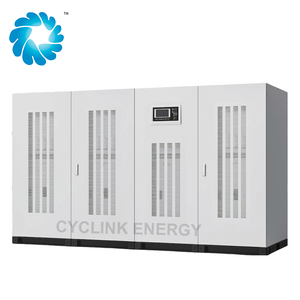
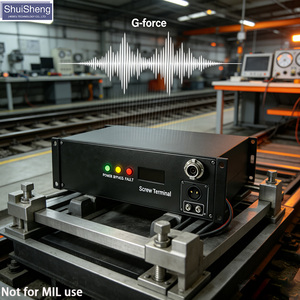
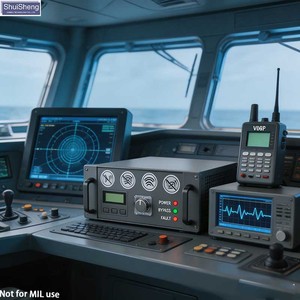
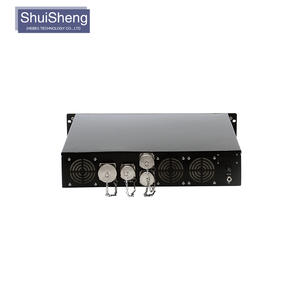
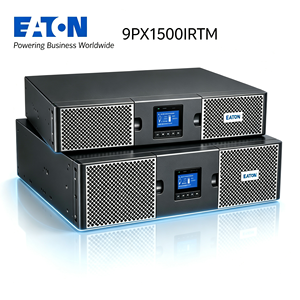
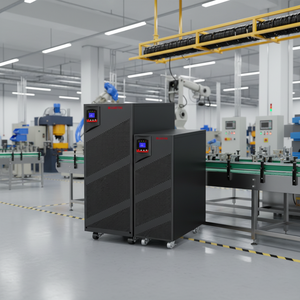
Combining US-grade synchronous-rectification design principles with China’s state-of-the-art manufacturing ecosystem. We deliver unprecedented power density, zero-defect quality control, and end-to-end supply chain security.
Our manufacturing and engineering quality systems exceed ISO-9001 and AS9100 standards. Every power system undergoes rigorous HALT/HASS testing, thermal shock profiling (-55°C to +125°C), and full compliance verification against MIL-STD-704(A-F), MIL-STD-461, and RTCA DO-160G.
We pioneered commercial-scale implementation of active synchronous rectification in isolated DC-DC and AC-DC topologies. By replacing legacy Schottky diodes with low-Rds(on) MOSFETs, power dissipation is reduced by up to 65%, eliminating bulky heatsinks and extending MTBF to >500,000 hours.
From magnetic component winding, surface-mount technology (SMT) assembly, to automated board-level conformal coating and full-load burn-in testing, our centralized facilities in China guarantee 100% component-level traceability and zero-obsolescence protection for multi-decade programs.
Our dedicated senior power engineers support custom input voltage windows (e.g., 9V-36V, 18V-75V, 180V-400V DC), custom mechanical form factors (brick, rackmount, sealed IP68 enclosures), and special pinouts to replace legacy end-of-life models from SynQor, Eaton, Vertiv, or Socomec.
An engineering analysis of high-efficiency topologies, Wide Bandgap (GaN/SiC) semiconductors, and transient suppressive power filtering in mission-critical environments.
The evolution from traditional Silicon (Si) MOSFETs to Silicon Carbide (SiC) and Gallium Nitride (GaN) devices represents a quantum leap in power conversion density. SiC devices allow switching frequencies exceeding 500 kHz with virtually zero reverse recovery losses. This drastically reduces the physical volume of magnetic inductors and EMI filter capacitors while operating at junction temperatures exceeding +175°C.
Non-linear heavy industrial loads introduce severe voltage distortion and harmonic currents into naval and industrial grids. Modern power factor correction (PFC) topologies utilize active matrix switching to achieve a power factor >0.99 with Total Harmonic Distortion (THD) <3%. This guarantees compliance with EN 61000-3-2 and MIL-STD-1399 Section 300B.
By decoupling the voltage regulation stage from the galvanic isolation transformer stage, our two-stage converter design achieves steady peak efficiency across the entire 10% to 100% load spectrum. Coupled with planar transformers and automated multi-layer PCB copper layout, thermal resistance (Rth) is reduced to less than 1.2°C/W.
| Performance Parameter | Legacy Silicon Power Converter | Next-Gen SynQor-Style Power System | China Advanced OEM Custom Solution |
|---|---|---|---|
| Full-Load Peak Efficiency | 80% – 86% | 94% – 96% | 95.5% – 97.2% (GaN/SiC Enabled) |
| Rectification Technology | Passive Diode / Schottky | Active Synchronous Rectification | Direct-Drive GaN Synchronous FETs |
| Operating Temperature | -20°C to +50°C (Forced Air) | -40°C to +100°C (Baseplate) | -55°C to +125°C (Hermetic Sealed) |
| Cooling Requirement | High CFM Forced Air Fans | Conduction / Cold-Plate Ready | Pure Conduction / Fanless IP68 Enclosure |
| EMC / EMI Compliance | Requires External Filters | Integrated Filter Modules | Pre-Qualified Chain (MIL-STD-461G / DO-160G) |
| Lithium BMS Compatibility | Limited / Lead-Acid Focus | Standard Battery Support | Smart CANbus / RS485 Native LiFePO4 Protocol |
Key technological shifts shaping how engineering procurement directors select, audit, and integrate high-reliability power systems for long-lifecycle platforms.
Global industrial operators are rapidly phasing out traditional Valve-Regulated Lead-Acid (VRLA) batteries in favor of Lithium Iron Phosphate (LiFePO4) chemistry. LiFePO4 delivers 4x cycle life (>4000 cycles at 80% DoD), 60% weight reduction, and superior thermal stability. Future power system procurement mandates integrated smart BMS protocols with real-time cell balancing.
With renewable energy, outdoor telecom 5G small cells, and mining equipment deployed in extreme salt fog and high humidity locations, demand for IP67/IP68 sealed UPS systems has grown by 34% annually. System architectures must feature fully potted power modules and anti-corrosion marine-grade aluminum chassis.
Unplanned downtime in rail signaling or IDC data centers leads to millions in operational risk. Strategic buyers are shifting from monolithic power architectures to modular N+1 or N+2 hot-swappable converter bays, enabling live maintenance and seamless capacity expansion without interrupting critical loads.
Program managers are refusing to buy standalone power bricks without documented EMC filter compatibility. Sourcing pre-qualified filter-plus-converter chains reduces standard compliance testing budgets by up to 70% and mitigates late-stage redesign risks during MIL-STD-461 testing.
A structured step-by-step framework for system architects, procurement officers, and quality assurance leads evaluating OEM/ODM suppliers.
Industrial grids and military vehicle buses suffer from extreme transient voltage spikes and brownouts. Ensure your manufacturer tests for continuous input range flexibility (e.g., 9-36V DC for 12V/24V systems, 18-75V for 48V telecom, and 180-400V for high-voltage DC networks) as well as surge immunity under MIL-STD-1275E (100V for 50ms).
Never base power ratings on nominal +25°C ambient datasheets. Request full thermal derating curves up to +85°C baseplate temperature. High-reliability suppliers provide detailed thermal simulation models and conduction-cooling baseplates that maintain 100% full-load output without forced-air fans.
Verify that the supplier’s facility operates under documented ISO-9001 or AS9100 quality control systems. Audit their component vendor lists (AVL) to ensure top-tier semiconductor sourcing (e.g., Infineon, STMicroelectronics, Texas Instruments) and complete lot-level component traceability to prevent counterfeit parts.
Our senior engineering team provides immediate technical consultation, schematic reviews, thermal derating analysis, and sample custom prototype development within 14 business days.
Detailed answers covering custom design options, standards compliance, long-lifecycle support, and manufacturing capabilities.
Our engineering team utilizes advanced synchronous rectification topologies combined with low-loss planar magnetics and high-frequency GaN switching devices. Replacing conventional diode rectifiers with actively controlled low-resistance MOSFETs minimizes conduction and switching losses, achieving up to 96.5% peak conversion efficiency. This significantly decreases power dissipation, lowers thermal stress on internal components, and extends field operation MTBF.
Our ruggedized modules and systems are engineered and tested against a broad array of global defense and industrial standards, including: MIL-STD-704(A-F) (Airborne Power), MIL-STD-461(C-F) (EMI/EMC Immunity), MIL-STD-1275 (Vehicle DC Power), MIL-STD-1399 (Naval Shipboard Power), MIL-STD-810G (Vibration/Shock), EN 50155 / EN 50121-3-2 (Railway Rolling Stock), RTCA DO-160G (Avionics), EN 61000-3-2 (Active PFC), and IEC 60601-1 4th Edition (Medical Equipment Safety).
Yes. We specialize in custom OEM engineering for long-lifecycle programs facing component end-of-life (EOL) or supplier disruption. We can match the exact mechanical dimensions, pinout configuration, voltage input/output trim ranges, and electrical characteristics of legacy products from SynQor, Eaton, Vertiv, APC, and Socomec, providing a seamless drop-in replacement without requiring system-level PCB redesigns.
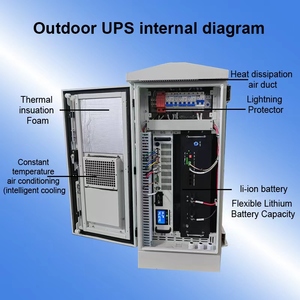
Our IP68 outdoor power systems utilize hermetically sealed die-cast aluminum enclosures protected by anti-corrosion, anti-salt-fog epoxy coatings. Heat generated by internal power conversion components is dissipated through conduction directly into outer thermal cooling fins. This fanless design eliminates airborne dust infiltration and humidity corrosion, enabling robust operation across extreme temperature ranges from -40°C to +75°C.
Standard off-the-shelf power modules and UPS units are dispatched within 5 to 7 working days. Custom OEM prototypes, specialized voltage adjustments, or custom mechanical housing builds typically require 2 to 3 weeks for full validation. We offer dedicated engineering support and qualification test reports for all evaluation samples.
We maintain full ISO-9001 and AS9100 quality control protocols throughout our automated production facility in China. Every production batch undergoes automated optical inspection (AOI), 100% full-load elevated-temperature burn-in testing, and computerized parameter verification. Furthermore, we maintain long-term component inventory buffer reserves for active contracts to guard against raw material price volatility and supply disruptions.
Ready to Upgrade Your Power System Infrastructure?