Navigating the complex landscape of AC-AC converter suppliers requires an in-depth understanding of control topologies, switching thermal margins, electromagnetic compatibility (EMC), and harsh-environment protection standards. An AC-AC converter functions as a vital power conditioning interface—converting fixed grid voltages and variable frequencies into precisely regulated AC outputs for critical applications across aviation ground support, naval transport, railway signaling, and industrial data center backup.
This comprehensive industry guide evaluates China’s top-tier AC-AC converter and industrial UPS manufacturing ecosystems. It outlines key technical evaluation criteria, high-reliability design benchmarks, long-term procurement trends, and a transparent audit framework to assist electrical engineers, system integrators, and strategic sourcing directors in securing high-yield vendor partnerships.
Explore our curated selection of high-reliability AC-AC power systems, rugged telecom UPS units, and industrial online power conversion systems engineered for mission-critical operations.
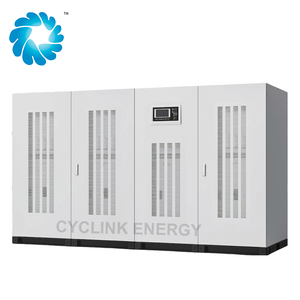
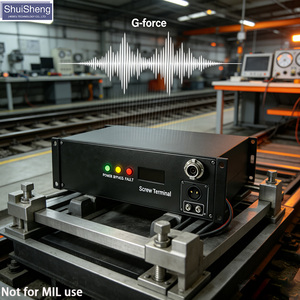

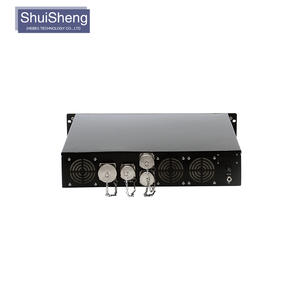
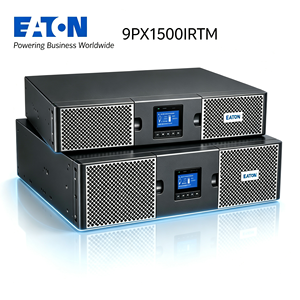
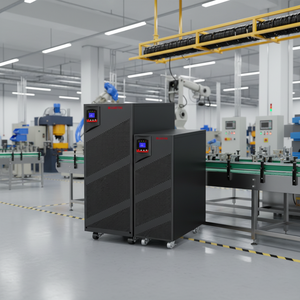
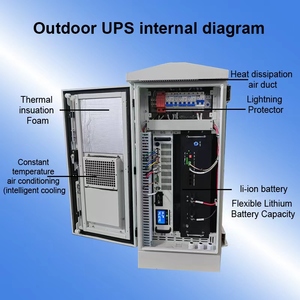
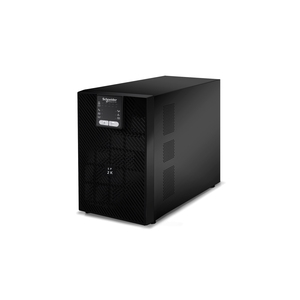
Leading Chinese suppliers set the benchmark for power density, thermal efficiency, and modular reliability through integrated engineering and rigorous quality management frameworks.
By replacing lossy output diodes with actively driven, fast-switching MOSFETs and GaN/SiC power stages, thermal dissipation is reduced by up to 45%. This allows sealed, conduction-cooled, and fanless enclosures to run effortlessly in extreme environmental conditions.
Ruggedized AC-AC systems and telecom UPS units incorporate anti-salt spray, anti-mold, and anti-corrosion conformal coatings. Enclosures meet IP67/IP68 ingress standards, featuring high vibration isolation suited for railway signaling, marine platforms, and heavy industrial metallurgy.
Tier-1 suppliers engineer power modules compliant with strict defense and industrial standards, including MIL-STD-704(A-F), MIL-STD-461 EMC, MIL-STD-1275, MIL-STD-1399, RTCA DO-160G airborne safety, and EN 50155 railway rolling stock requirements.
An AC-AC power converter transforms an incoming AC waveform—with specific voltage and frequency parameters—into a regulated, tailored AC output. Unlike standard AC-DC-AC double-conversion topologies that rely heavily on intermediate bulk DC-link capacitors, modern AC-AC systems utilize advanced topologies to maximize operational longevity and minimize footprint.
Direct Matrix Converters (DMCs) achieve single-stage power conversion without energy storage capacitors. By using bi-directional semiconductor switches connected directly between the input and output lines, DMCs deliver exceptional power density and extended field lifespans, eliminating electrolytic capacitors—historically a primary failure point in industrial power supplies.
Three-phase AC-AC power conditioning systems employ active PFC front-ends using space vector pulse width modulation (SVPWM). This maintains unity power factor (>0.99) while keeping Total Harmonic Distortion (THD) under 2%. Low THD prevents resonance and overheating in upstream transformers, making these converters ideal for sensitive healthcare, defense, and wind energy applications.
| Converter Architecture | Typical Efficiency | Capacitance Requirement | THD (Total Harmonic Distortion) | Primary Industrial Application |
|---|---|---|---|---|
| Direct Matrix Converter (DMC) | 97.5% - 98.4% | Zero Bulk Capacitors | < 2.0% | Aviation Ground Power, Marine Propulsion |
| Solid-State Tap Changer | 98.5% - 99.1% | None | < 1.0% | Grid Voltage Regulation, Heavy Metallurgy |
| Indirect Double-Conversion (AC-DC-AC) | 93.0% - 95.5% | High (Film or Electrolytic) | < 3.0% | Critical Data Centers, Railway Signaling UPS |
| Cycloconverter (Low Frequency) | 95.0% - 96.5% | Minimal | 5.0% - 8.0% | High-Power Cement Mills, Mining Drives |
The international demand for high-reliability power electronics is driving rapid evolution across Chinese manufacturing hubs. Buyers evaluating long-term supply contracts should align their procurement strategies with four key market shifts:
Silicon Carbide (SiC) MOSFETs and Gallium Nitride (GaN) HEMTs are replacing traditional Silicon IGBTs. Switching frequencies exceeding 100 kHz drastically reduce the size of passive magnetic components (transformers and inductors), slashing overall converter volume by 40% while boosting system efficiency past 98%.
Modern AC-AC power modules feature embedded microcontrollers supporting Modbus-RTU, CANopen, and SNMP protocols. Real-time telemetry tracks operational temperature, internal junction stress, input frequency drift, and capacitor degradation—enabling predictive maintenance before physical field failures occur.
Industrial facility grids increasingly integrate renewable energy sources. Next-generation AC-AC systems support bi-directional power flow, enabling regenerative braking energy from electric trains or heavy elevators to be conditioned and fed smoothly back into the primary AC grid.
Mission-critical operations reject single points of failure. Industrial power architectures rely on modular N+X parallel redundant structures, allowing hot-swapping of power blocks during live operations without interrupting downstream equipment performance.
When sourcing industrial AC-AC converters or ruggedized online UPS systems from Chinese suppliers, procurement executives must evaluate vendor qualifications beyond standard price-per-watt metrics. Use this four-pillar audit matrix during site inspections and technical vetting:
Connect directly with senior application engineers to review system specifications, request custom power designs, or obtain competitive factory pricing for bulk procurement.
