High-efficiency, EN 50155 compliant isolated DC-DC & AC-DC conversion systems engineered for rolling stock, traction control, signal gear, and ruggedized rail infrastructure.
Modern rail transit systems—ranging from high-speed intercity trains (HST) and heavy-haul freight systems to urban light rail transit (LRT) and automated people movers (APM)—operate under some of the most electrically demanding environments on Earth. Power conversion units engineered for rolling stock applications are tasked with bridging high-voltage catenary lines or battery banks with sensitive digital controls, passenger infotainment, safety braking computers, and communications equipment.
Selecting the correct OEM/ODM partner among global railway converter factories requires an extensive technical evaluation that extends far beyond simple voltage ratio matching. Modern purchasing leads and power system architects must evaluate factories based on their compliance with strict international transportation standards including EN 50155, EN 50121-3-2, IEC 60571, and RIA 12.
Rail power supplies must withstand continuous nominal input voltages of 24V, 48V, 72V, 96V, and 110V DC, while accommodating wide fluctuation ratios from 0.7 to 1.25 times nominal, alongside severe surge transients up to 1.4 times nominal for 1 second.
Conduction-cooled and sealed enclosure topologies eliminate mechanical cooling fans—which are primary points of failure—ensuring reliable thermal dissipation across harsh climate zones and sealed under-carriage cabinets.
Integrated multi-stage EMI filters suppress conducted and radiated emissions caused by traction inverter switching spikes, protecting sensitive onboard signaling and wireless communications.
To assist global procurement managers, system integrators, and engineering teams, the following evaluation matrix details the leading tier-1 and specialist power converter factories worldwide. Manufacturers are assessed across manufacturing certifications (ISO 9001, AS9100, IRIS / ISO 22163), technical capabilities, and product specialization.
| Manufacturer / Factory | Primary HQ | Key Railway Product Lines | Certifications & Standards | Core Strengths & Differentiation |
|---|---|---|---|---|
| SynQor Inc. / Zala Energy Partnership | USA / Global | RailQor® Isolated DC-DC, Active PFC AC-DC Modules | ISO-9001, AS9100, EN 50155, MIL-STD-810G | Pioneered synchronous rectification; high power density bricks with unmatched efficiency up to 96%. |
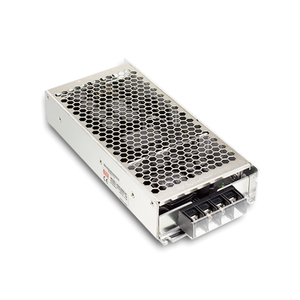
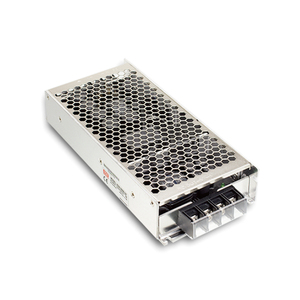
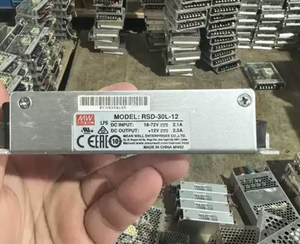
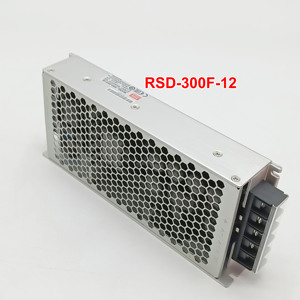
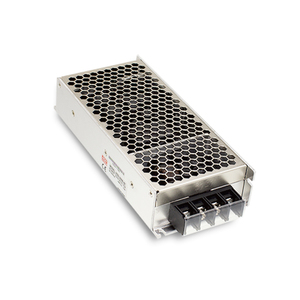
| Mean Well Enterprises | Taiwan / China | RSD-30, RSD-60, RSD-100, RSD-200, RSD-300 Series | ISO-9001, EN 50155, EN 45545-2, CE | High-volume standard chassis-mount DC-DC converters with optimal cost-performance ratios. |
| TDK-Lambda | Japan / Europe | CN-B Series, RQA Series High-Power Bricks | ISO 14001, EN 50155, IEC 61373 | Rugged baseplate cooled modules designed for severe thermal and vibration environments. |
| Vicor Corporation | USA | DCM™ Isolated DC Converter Modules, VIA Packaging | ISO-9001, EN 50155, CE | Proprietary zero-voltage switching (ZVS) topology offering extreme power density. |
| Recom Power | Austria / Taiwan | RP20-FR, RP40-FR, REM Series Brick Converters | ISO 22163 (IRIS), EN 50155 | Specialized micro-power and mid-power SIP/DIP modules with 4kVAC reinforced isolation. |
| Traco Power | Switzerland | TEP 75WI, TEP 100WIR, TEN 40WIR Series | ISO 9001, EN 50155, EN 45545-2 Fire Protection | Extensive off-the-shelf ultra-wide 4:1 and 12:1 input voltage range converters. |
| Absopulse Electronics | Canada | Custom Heavy-Duty Railway Inverters & Converters | ISO 9001, EN 50155, RIA 12 Transient | Highly customized ruggedized rack-mount and chassis system solutions for rail utilities. |
| Delta Electronics | Taiwan / China | Rail Series DC-DC Modules & DIN Rail Supplies | ISO 14001, IRIS, EN 50155 | Global high-capacity contract manufacturing infrastructure with full custom OEM/ODM capability. |
| Murata Power Solutions | Japan / USA | IRQ Series 100W–300W Quarter Brick Converters | ISO 9001, EN 50155 | Advanced surface-mount packaging with optimized thermal dissipation and planar transformers. |
| P-DUKE Technology | Taiwan | RHD, RHP, RKE Series Railway DC-DC Modules | ISO 9001, IRIS Certified, EN 50155 | Dedicated transportation power designs with 3kVAC to 5kVDC isolation ratings. |
The architectural landscape of rail power electronics is undergoing a fundamental shift. Below are the critical technological innovations driving modern railway converter manufacturing:
Traditional power converters rely on Schottky diodes for output rectification, incurring a continuous forward voltage drop ($V_f$) that converts watts of energy directly into wasted heat. Modern tier-1 factories utilize actively driven MOSFETs operating in synchronous rectification mode alongside isolated two-stage conversion circuits. This limits conduction losses, raising conversion efficiency from legacy ~82% levels up to 96%.
Rail rolling stock operates across multiple line voltages (e.g., 24V in light rail, 72V/110V in heavy locomotives). Advanced converters incorporate ultra-wide input voltage topologies (such as 14V to 160V continuous range) allowing a single converter model to be deployed across global rail networks without hardware redesign.
Galvanic isolation protects downstream microprocessors from catenary spikes and ground loop faults. Furthermore, compliance with EN 45545-2 (Hazard Level HL1 to HL3) requires specialized potting materials, silicones, and printed circuit boards that prevent toxic smoke emission and flame propagation in enclosed passenger cars.
As global rail networks transition toward decarbonization, autonomous signaling (CBTC), and enhanced passenger digital services, procurement strategies are evolving rapidly. Technical buyers should prepare for three major structural shifts:
Before issuing a Request for Proposal (RFP) to railway converter suppliers, project managers should verify compliance with the following six core parameters:
Verify nominal voltage compatibility (24V, 48V, 72V, 96V, 110V DC) and dynamic drop tolerance down to 0.6 $V_n$ for startup interrupts.
Ensure hold-up times meet EN 50155 Class S2 (10ms interrupt supply protection) without requiring large external electrolytic banks.
Must withstand mechanical shock up to 30g and random vibration profiles for body-mounted or axle-mounted electronics.
Military-grade polyurethane or acrylic coating to prevent conductive dust, moisture condensation, and fungal growth.
Check full power delivery up to 70°C ambient without derating, and continuous operation up to 85°C with conduction cooling.
Request Telcordia SR-332 or MIL-HDBK-217F MTBF reports proving >500,000 operational hours at 40°C.
Standard industrial converters typically operate under controlled ambient temperatures (-20°C to +60°C) with standard isolation (1.5kVDC) and moderate vibration tolerances. In contrast, EN 50155 certified railway converters undergo extreme testing for wide voltage fluctuations (0.7 to 1.25 $V_n$), severe electrical surges (up to 1.4 $V_n$), higher isolation ratings (3kVAC to 4kVDC), extended temperature classes OT4 (-40°C to +85°C), high humidity, conformal coating, and strict shock/vibration compliance under IEC 61373.
Under EN 50155, railway converters are classified by their ability to maintain stable output voltage during brief input supply interruptions caused by pantograph bouncing or contact shoe discontinuities. Class S2 requires a 10ms hold-up time, while Class S3 demands a 20ms hold-up time under full load. Advanced converters utilize internal high-energy storage capacitors or active hold-up controller circuits to guarantee continuous power to critical onboard electronics.
Synchronous rectification replaces conventional diode rectifiers on the secondary side of the converter with low $R_{DS(on)}$ MOSFETs. Diodes suffer from fixed forward voltage drops ($V_f \approx 0.5\text{V to } 1.0\text{V}$), generating significant heat at higher currents. Synchronous MOSFET switches drop minimal millivolts, reducing power dissipation by up to 60%. This enables sealed, fanless chassis designs, shrinks heatsink dimensions, and increases power density.
The primary EMC standard is EN 50121-3-2, which governs conducted and radiated emissions alongside immunity requirements for rolling stock apparatus. For transient surge protection, RIA 12 (UK standard) is widely referenced globally, specifying protection against high-energy voltage surges up to 3.5 times the nominal voltage for 20 milliseconds. Converters matching these specifications feature robust front-end transient suppressors (TVS) and pi-filters.
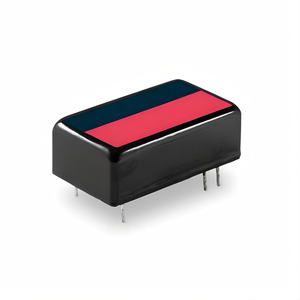
Yes. Leading OEM factories provide custom modified-standard and full custom design services. Common form factors include standard brick packages (full-brick, half-brick, quarter-brick), chassis-mount enclosures with screw terminal blocks, 19-inch rack-mount sub-racks, and direct DIN-rail mounting configurations designed to fit existing vehicle spaces during retrofits.
