An Executive Analysis of High-Density Isolated DC-DC Power Conversion, Synchronous Rectification Topologies, and Global OEM Engineering Solutions
In modern industrial automation, telecom infrastructure, defense avionics, and railway power networks, the standard Quarter-Brick DC-DC converter (2.30 x 1.45 x 0.50 inches / 58.4 x 36.8 x 12.7 mm) remains the cornerstone of distributed power architecture (DPA) and intermediate bus architecture (IBA).
Replacing traditional Schottky diodes with actively driven, low RDS(on) MOSFETs reduces conduction losses by up to 65%, pushing module thermal efficiency beyond 95% at full continuous load.
Adherence to Distributed-power Open Standards Alliance (DOSA) ensures drop-in form-fit-function mechanical replacement, reducing single-source supply chain vulnerabilities across long-life OEMs.
Engineered to survive extreme vibration, wide input swings (such as EN 50155 rail or MIL-STD-704/1275 aircraft/ground vehicle buses), and offer galvanic isolation up to 4242Vdc.
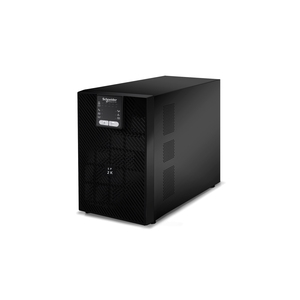
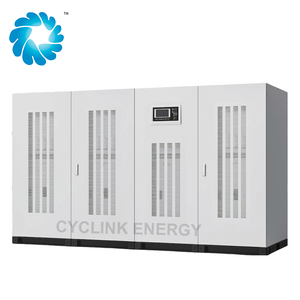
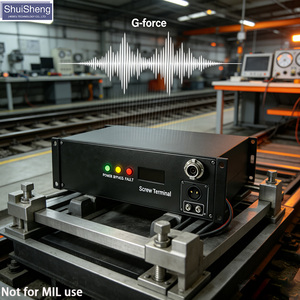
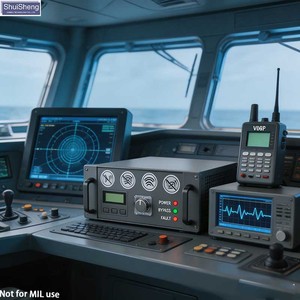
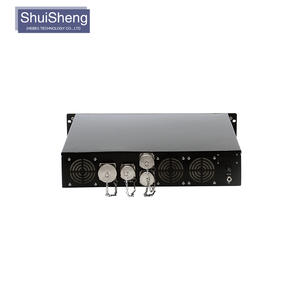
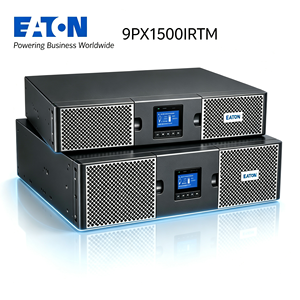
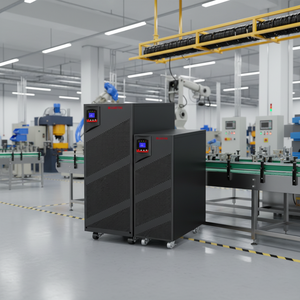
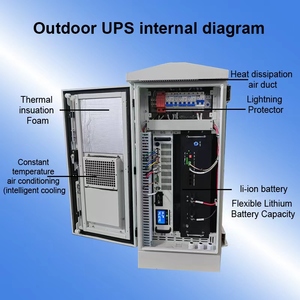
Explore high-reliability power supply modules, outdoor ruggedized online UPS platforms, and railway-grade converters engineered for zero down-time applications.
A rigorous evaluation of market share, technical capabilities, quality certifications (AS9100, ISO-9001), and power density innovations across top global suppliers.
Pioneered commercial synchronous rectification in isolated DC-DC converters. Renowned for multi-decade life cycles, MilQor® series military-grade bricks, and U.S.-based AS9100/ISO-9001 manufacturing with full component traceability.
Specializes in high-density brick converters using proprietary Zero-Voltage Switching (ZVS) topologies. Offers specialized ChiP and VI Chip modules alongside traditional brick form factors for extreme power density demands.
The world’s largest power supply provider. Delta’s Delphi series quarter-bricks cover wide input ranges (-48V telecom, 24V/72V/110V industrial/railway) with high automated manufacturing consistency.
Offers comprehensive DOSA-compliant isolated quarter-bricks. Their Ultra-Wide Input series (up to 10:1 ratio) provides flexible deployment across complex rail (EN 50155) and remote industrial telemetry systems.
A premier supplier of digitally controlled DC-DC converters (such as BMR492 series). Incorporates PMBus interfaces for active thermal telemetry, voltage margining, and dynamic output adjustments in datacenters.
Following the acquisition of Artesyn Embedded Power, Advanced Energy provides wide-ranging quarter-brick modules with baseplate cooling options, severe transient protection, and medical isolation (2xMOPP).
Bel Power’s isolated DC-DC quarter-bricks cater directly to heavy industrial and electric mobility infrastructure, delivering high power density with robust ambient temperature operation up to +100°C baseplate.
Features the iQL and GQA series quarter-bricks designed for harsh outdoor telecom and industrial automation. Known for exceptionally low noise signatures and long operational MTBF (>2 million hours).
RECOM’s RP240Q and RPA300Q quarter-brick series provide wide input ranges tailored for 24V, 48V, and 110V nominal inputs, complete with integrated thermal management for fanless sealed chassis.
Delivers cost-effective, high-reliability isolated quarter-brick modules for mid-tier industrial equipment OEMs requiring quick prototyping turnarounds, flexible pin options, and comprehensive safety approvals.
A side-by-side technical evaluation across core parameters required by electrical engineering leads during power chain design.
| Manufacturer | Max Efficiency | Max Power (Quarter-Brick) | Input Voltage Ranges | Standards Compliance | Manufacturing Base |
|---|---|---|---|---|---|
| SynQor | 96.0% | 500W | 9-36V, 18-75V, 66-160V, Mil-Spec | MIL-STD-704/461/1275, EN 50155, AS9100 | USA (Salem, NH) |
| Vicor | 95.5% | 400W | 36-60V, 18-36V, High-Voltage DC | ISO-9001, CE, UL60950 | USA (Andover, MA) |
| Flex Power | 96.5% | 1300W (Direct Bus) | 36-60V (-48V Telecom Nominal) | PMBus 1.3, DOSA, IEC/EN 62368-1 | Sweden / Asia |
| Delta Electronics | 94.5% | 600W | 9-36V, 18-75V, 36-75V | ISO 14001, UL94V-0, DOSA | Taiwan / China |
| Murata Power | 94.0% | 400W | 9-60V, 16-160V (10:1 Ratio) | EN 50155, DOSA, IEC 60950-1 | USA / Japan / China |
| TDK-Lambda | 94.5% | 500W | 18-36V, 36-75V | IEC/EN 62368-1, MIL-STD-810G | Japan / USA / UK |
Understanding the engineering tradeoffs in topology, thermal dissipaters, and electromagnetic compatibility (EMC) filters.
Traditional DC-DC converters rely on Schottky diodes on the secondary output winding. At high output currents (e.g., 50A at 12V), a diode's forward voltage drop ($V_f \approx 0.5V$) consumes 25W in pure heat ($P = I \times V_f$). Synchronous rectification replaces diodes with power MOSFETs featuring ultra-low $R_{DS(on)}$ (often under 2mΩ), reducing secondary conduction losses to less than 5W. This 20W reduction in thermal loss directly enables sealed, baseplate-cooled enclosures without forced-air fans.
In high-reliability military and rail environments, convective airflow is non-existent due to sealed IP67/IP68 enclosures. Quarter-brick modules designed with aluminum or copper baseplates provide a direct thermal conduit ($\theta_{JC} < 1.0 ^\circ\text{C}/W$) to an external cold plate. Modern thermal interface materials (TIM) and potless plastic encapsulated designs ensure uniform thermal expansion across the PCB substrate, preventing micro-cracking in ceramic capacitors during rapid thermal cycling ($-40^\circ\text{C}$ to $+100^\circ\text{C}$).
Achieving compliance with MIL-STD-461 (CE102 conducted emissions) or EN 50155 (rail transients up to 1.4kV) requires precise matching between the converter's switching frequency (typically 250kHz–400kHz) and the input EMI filter stage. Integrated filter-converter pairs mitigate differential-mode and common-mode noise without introducing instability at the input LC tank circuit, avoiding input filter oscillation issues outlined by Middlebrook's stability criterion.
How GaN devices, 48V architecture shifts, and supply chain security are shaping future procurement for system integrators.
Gallium Nitride (GaN) power transistors enable switching frequencies over 1 MHz with near-zero reverse recovery losses. This shrinkage in passive components allows Quarter-Bricks to deliver up to 1000W output power in form factors previously restricted to Half-Bricks.
With AI GPU clusters and high-performance telecom base stations demanding kilowatts per board, traditional 12V intermediate buses incur unmanageable $I^2R$ copper losses. Procurement trends indicate a permanent shift toward 48V input quarter-bricks down-converting directly to point-of-load (POL) regulators.
Geopolitical turbulence and component shortages have led defense and industrial buyers away from non-traceable generic manufacturers. Multi-decade program longevity requires sourcing from ITAR-compliant, domestic manufacturing plants offering guaranteed form-fit-function support.
Answers to common technical and sourcing questions raised by procurement officers and power supply design teams.
A standard Quarter-Brick converter measures precisely 2.30 x 1.45 x 0.50 inches (58.4 x 36.8 x 12.7 mm). According to DOSA (Distributed-power Open Standards Alliance) guidelines, standard pin placement includes positive/negative input, positive/negative output, remote sense lines, and a remote ON/OFF control pin. Some high-power variants include a trim pin for dynamic output voltage tuning (+/-10%).
Synchronous Rectification replaces passive diodes with low-resistance MOSFET switches driven synchronously with the main power transformer. Because MOSFETs exhibit an extremely low linear resistance ($R_{DS(on)}$), power loss drops exponentially compared to fixed diode forward voltage drop ($P = I^2 \times R_{DS(on)}$ vs $P = I \times V_f$). This efficiency boost (typically from 86% up to 96%) reduces heat dissipation inside sealed IP67 or IP68 enclosures, eliminating the need for internal cooling fans.
Thermal derating charts provided by manufacturers specify the maximum allowable output power versus baseplate temperature ($T_B$). For example, a 300W module may deliver 100% full power up to $T_B = 100^\circ\text{C}$. Beyond this temperature, output power must be linearly derated to 0W at $T_B = 125^\circ\text{C}$ to protect the internal primary MOSFET junction temperature ($T_J$). System designers calculate cold plate thermal resistance ($\theta_{HS}$) to ensure baseplate temperatures remain below maximum rating during peak ambient operating conditions.
Railway power modules must comply with EN 50155 (Railway Applications - Rolling Stock Electronic Equipment). Key parameters include wide input voltage ranges (e.g., 66V to 160V for 110V nominal catenary batteries), hold-up time requirements (Class S2/C1 interrupting time), immunity to 1.4kV transients, and compliance with EN 50121-3-2 for electromagnetic compatibility and EN 61373 for shock and vibration resistance.
Yes, provided the modules feature built-in Active Current Sharing or single-wire droop current sharing circuitry. Without active current sharing, slight variances in output set-point voltages between two bricks will cause one module to carry the entire load up to its current-limit threshold, leading to thermal overload. Synchronous rectifier quarter-bricks with dedicated sharing pins automatically balance output currents within +/-5% across parallel modules.
AS9100 includes all ISO-9001 requirements plus stringent additions specific to aerospace, defense, and high-reliability sectors. Sourcing quarter-brick converters from an AS9100 certified manufacturer guarantees full lot traceability of every ceramic cap, inductor, and semiconductor, documented process control, strict change notification policies (PCN), and protection against counterfeit electronic components.
Combining proprietary high-efficiency topology design with domestic manufacturing control for high-reliability systems.
Factory-direct engineering teams offer non-standard output voltages (e.g., 28V for military avionics, 52V for PoE networks), custom pin lengths, potted enclosures, and thermal baseplate configurations tailored to specialized mechanical constraints.
Application support engineers assist OEMs with finite element thermal modeling, derating curve calculations, and custom EMI filter board layouts prior to hardware freeze, cutting qualification testing iterations by half.
All production modules undergo automated HALT/HASS stress screening, high-potential (Hi-Pot) breakdown testing up to 4242Vdc, and thermal shock cycling under strict AS9100 and ISO-9001 certified quality control systems.
Submit your electrical requirements—input voltage range, output profile, thermal constraints, and required compliance standards. Our engineering team will review your system architecture within 24 business hours.