Explore top-tier power conversion solutions, rugged outdoor UPS units, and military-spec power systems engineered for zero-fail environments in telecom, rail, naval, and industrial automation platforms.
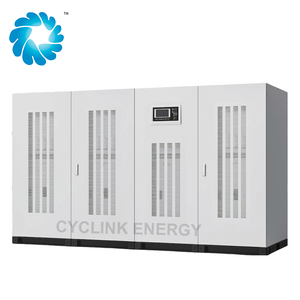
Heavy-duty industrial online UPS integrated with LiFePO4 battery storage, optimized for extreme load surges in metallurgy, aviation ground support, and energy grids.
Sealed, conduction-cooled outdoor power system engineered for coastal and desert telecommunications infrastructure with high salt-fog and humidity resistance.
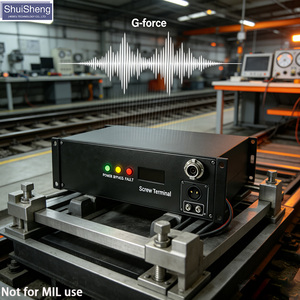
Shock-isolated power unit meeting MIL-STD-810G vibration standards for heavy manufacturing, mining vehicles, and mobile command centers.
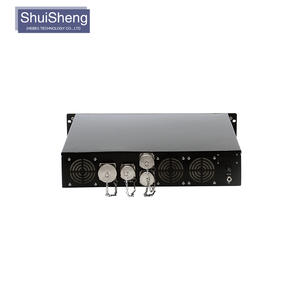
EN 50155 compliant signaling UPS engineered for continuous trackside power backup, zero-ms switching transfer, and extended temperature stability.
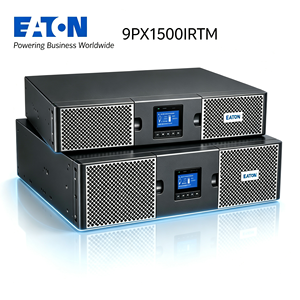
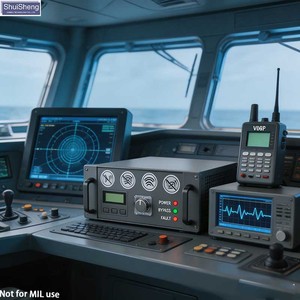
Unity power factor (1500W/1500VA) rack-mount marine UPS with online double-conversion topology for shipboard navigation and radar power protection.
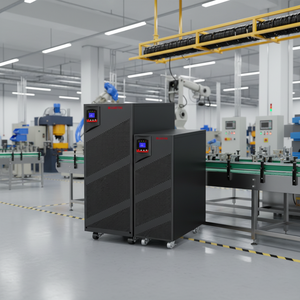
High-capacity 10kVA 3-phase online UPS delivering ultra-low total harmonic distortion (THDi) and clean sine-wave output for critical enterprise compute nodes.
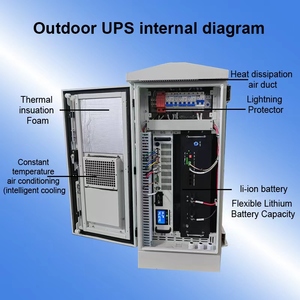
Ruggedized 1kVA outdoor UPS equipped with 10kV surge/lightning protection and an integrated 8000Wh energy storage system for isolated cell towers.
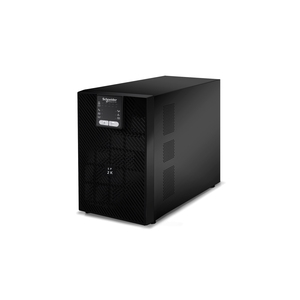
Specialized single-phase online UPS tailored for wind turbine pitch control systems and off-grid renewable control cabinets subject to extreme voltage fluctuations.
In modern industrial, defense, aerospace, and critical infrastructure projects, the Power Supply Unit (PSU) and Uninterruptible Power System (UPS) are no longer treated as simple peripheral commodities. They represent the foundational reliability bedrock of mission-critical systems. Selecting a manufacturing partner from the global pool of power unit factories and suppliers requires rigorous technical evaluation that goes far beyond initial unit costs.
As industrial automation shifts toward Industry 4.0, telecommunications transitions to edge-computed 5G micro-sites, and defense platforms demand higher power density under severe environmental stress, procurement directors and systems engineers must evaluate suppliers across strict E-E-A-T (Experience, Expertise, Authoritativeness, and Trustworthiness) metrics. A failure in an un-isolated power converter or a non-ruggedized outdoor UPS can trigger catastrophic system downtime, premature hardware degradation, and multimillion-dollar operational losses.
Core Procurement Rule: High-performance power units must demonstrate verified electrical efficiency (≥94%), robust thermal dissipation topologies (conduction/fanless cooling), full electromagnetic compatibility (EMC) integration, and multi-decade obsolescence protection.
When engineering teams qualify OEM/ODM power unit suppliers, four critical engineering vectors determine long-term operational success:
Advanced synchronous rectification topologies replace lossy diodes with actively controlled MOSFETs, eliminating heat at the point of conversion and allowing fanless conduction cooling in sealed enclosures.
Top-tier factories operate under AS9100 and ISO-9001 quality management systems, delivering pre-qualified compliance with MIL-STD-704, MIL-STD-461, EN 50155, and RTCA DO-160G.
Suppliers that design and manufacture matched transient EMI filters alongside DC-DC/AC-DC converters eliminate impedance mismatches, ensuring pass-grade compliance during first-pass EMC testing.
To assist system architects and procurement specialists in selecting the exact class of power unit, the table below outlines the performance benchmarks across standard industrial, harsh industrial, and defense-grade platforms.
| Performance Specification | Standard Commercial / Data Center | Harsh Industrial & Outdoor Telecom | Military & Aerospace Field-Grade |
|---|---|---|---|
| Operating Temperature Range | 0°C to +40°C | -40°C to +75°C | -55°C to +100°C (Baseplate) |
| Enclosure Protection Class | IP20 / Rackmount IP30 | IP65 / IP67 / IP68 Sealed | HERMETIC / Sealed NEMA 4X & MIL-STD-810G |
| Efficiency Architecture | Standard Diode / Passive PFC | Active PFC / High-Density Switching | Synchronous Rectification (Up to 96.5%) |
| EMC / EMI Compliance | EN 55032 Class A/B | EN 61000-6-2 / EN 50121-3-2 | MIL-STD-461 (C-F) / RTCA DO-160G |
| Transient Immunity | Basic Surge protection (1-2kV) | Enhanced Surge (6-10kV lightning protection) | MIL-STD-1275 / MIL-STD-704 (A-F) Transients |
| Supply Chain Traceability | Commercial Standard Lot Tracking | Full Batch Traceability | Complete Component-Level Traceability (AS9100) |
At the core of premier power unit suppliers is a commitment to topology innovation that solves physical engineering limits. Commercial diode rectification has long been a bottleneck in high-power conversion due to inherent forward-voltage drops ($V_f$). In high-current applications, this results in excessive power dissipation, elevated internal enclosure temperatures, and reduced Mean Time Between Failures (MTBF).
Industry-leading manufacturers, epitomized by pioneer facilities in the United States and high-tier precision plants, solved this efficiency barrier by commercializing Synchronous Rectification Technology. By replacing Schottky diodes with actively driven, low $R_{DS(on)}$ MOSFETs paired with a two-stage power conversion topology, internal conduction losses are reduced by up to 60%.
The primary driver of component degradation in industrial power units is thermal stress. According to the Arrhenius rate law, every 10°C rise in semiconductor junction temperature reduces operating life by half. High-efficiency synchronous rectifier power modules yield significant operational benefits:
Supply Chain Security Note: Top-tier defense and industrial programs mandate suppliers with documented Obsolescence Protection. Form-fit-function replacement strategies ensure multi-decade platform sustainment without costly board re-layouts.
As global energy infrastructure transitions toward renewable inputs, electrified transit, and localized microgrids, the requirements for power unit procurement are rapidly evolving. Systems engineers and sourcing directors must align with factories investing in next-generation power conversion paradigms.
Gallium Nitride (GaN) and Silicon Carbide (SiC) switches are transforming the power unit manufacturing industry. Operating at switching frequencies up to 5x higher than conventional Silicon MOSFETs, WBG devices dramatically shrink magnetic components (transformers and inductors), leading to ultra-compact power units with power densities surpassing 100 Watts per cubic inch.
Traditional Valve-Regulated Lead-Acid (VRLA) batteries in industrial UPS systems are rapidly being phased out in favor of engineered Lithium Iron Phosphate (LiFePO4) modules. LiFePO4 chemistry provides 3x the cycle life, superior performance in extended temperature ranges (-20°C to +60°C), built-in intelligent Battery Management Systems (BMS), and a 60% weight reduction—making them mandatory for marine, telecom, and railway signaling installations.
Modern power units are increasingly designed as hot-swappable, N+1 redundant modular systems. In critical installations such as IDC data centers, oil & gas platforms, and naval combat systems, modular architecture guarantees zero downtime during maintenance and continuous operation even in the event of a single power module fault.
Address key technical challenges and evaluation questions raised by program managers during supplier qualification.
Advanced power converters utilize synchronous-rectifier technology combined with a custom two-stage power topology. By replacing lossy diodes with actively controlled, ultra-low resistance MOSFETs, conduction losses are drastically minimized. This topology yields peak efficiencies up to 96.5%, dramatically reducing power dissipation, lowering thermal stress, and eliminating the need for noisy, failure-prone cooling fans in sealed enclosures.
A top-tier high-reliability power unit factory must design and qualify products against stringent global standards, including:
Electromagnetic interference (EMI) issues frequently arise from unpredictable impedance interactions between standalone input filters and power converter stages. Leading power unit suppliers design, test, and document filter-and-converter pairs as a unified chain. This integrated engineering approach guarantees first-pass compliance with MIL-STD-461 and RTCA DO-160 standards, saving months of expensive EMC lab re-testing.
AS9100 and ISO-9001 certified manufacturing facilities operate under strict process control, raw material verification, and full supply-chain traceability. For aerospace, defense, and heavy industrial buyers, sourcing from vetted manufacturing plants ensures complete protection against counterfeit electronic components, verified lot control, and documented qualification test reports required by tier-1 prime contractors.
Rugged IP68 outdoor power systems utilize fully sealed aluminum or stainless steel enclosures with conformal-coated internal electronics. Conduction-cooling design routes heat outward to integrated heat-sink fins without taking in outside air. This prevents salt fog, mold, industrial dust, and humidity from penetrating internal power circuits, ensuring multi-year continuous operation in harsh coastal telecom and offshore applications.
Leading high-reliability power unit factories support multi-decade program lifecycles by offering form-fit-function (FFF) replacement commitments, maintaining archived engineering baseline data, and utilizing discrete component derating models. When specific semiconductor components reach end-of-life (EOL), suppliers provide pin-compatible drop-in replacement modules without altering mechanical mounting or electrical pinouts.
Consult with our senior application engineers to review your input bus specifications, thermal constraints, EMI requirements, and target compliance standards before committing to final hardware layouts.
Contact Us