Executive Summary: The Strategic Value of Mil-COTS Power Architectures
In modern military electronics, land vehicle systems, airborne avionics, and naval command centers, power conversion is no longer an afterthought—it is the foundation of platform survivability and operational readiness. Military Commercial-Off-The-Shelf (Mil-COTS) power supplies have revolutionized how defense OEMs design electronic systems. By bridging the gap between field-tested commercial efficiency and stringent military compliance standards (such as MIL-STD-704, MIL-STD-461, MIL-STD-1275, MIL-STD-1399, and RTCA DO-160G), Mil-COTS solutions significantly reduce development lead times, total lifecycle costs, and overall program risk.
Historically, prime contractors relied on custom-designed power supplies. These fully custom solutions required multi-year engineering cycles, immense Non-Recurring Engineering (NRE) costs, and often suffered from supply chain single-point failures. Today, the global Mil-COTS market enables systems engineers to procure standardized, high-density brick converters and rack-mount power systems that deliver certified compliance out of the box.
Key Technical Drivers: SWaP-C Optimization
Defense programs across North America, NATO allies, and the Asia-Pacific region are universally governed by SWaP-C metrics: Size, Weight, Power, and Cost. The introduction of advanced synchronous rectification topologies—pioneered by industry leaders like SynQor—has fundamentally shifted efficiency curves. Replacing conventional Schottky diodes with actively driven MOSFET switches minimizes conduction loss and thermal dissipation. Consequently, systems can utilize smaller heat sinks, achieve higher power densities, and run reliably inside hermetically sealed, conduction-cooled enclosures.
| Architecture Attribute |
Legacy Custom Power Design |
Modern Mil-COTS Topology |
Operational Impact |
| Conversion Efficiency |
78% – 85% Efficiency |
90% – 96% Efficiency |
Up to 50% reduction in dissipated thermal energy. |
| Development Lead Time |
18 to 36 Months (High NRE) |
Off-the-shelf to 6 Weeks |
Accelerates field deployment and platform qualification. |
| EMC Qualification Risk |
High risk of late-stage filter failure |
Pre-qualified Converter + Filter pairs |
Guaranteed compliance with MIL-STD-461 (C-F). |
| Obsolescence Lifecycle |
Component end-of-life vulnerabilities |
Form-Fit-Function multi-decade support |
Protects long-term program sustainment (20+ years). |
Top 10 Mil-COTS Power Suppliers & Exporters (2026 Industry Benchmark)
Selecting the right power converter manufacturer requires evaluating certified quality systems (AS9100D, ISO-9001), engineering qualification rigor, manufacturing location, and field-proven reliability (MTBF). Below is the authoritative benchmark of the world's leading Mil-COTS power manufacturers and exporters.
Headquarters: Salem, New Hampshire, USA
Certifications: AS9100D, ISO-9001
Primary Product Lines: MilQor®, RailQor®, AeroQor®
Technical Analysis: SynQor stands at the apex of the Mil-COTS power industry due to its commercialization of synchronous rectifier technology in isolated DC-DC converters. Operating entirely out of its state-of-the-art manufacturing facility in Salem, NH, SynQor provides 100% U.S.-designed and manufactured converters, EMI filters, PFC modules, and military field-grade uninterruptible power supplies (UPS). Their two-stage power converter topology yields efficiencies up to 96%, drastically reducing thermal stress in conduction-cooled defense systems. SynQor’s modular approach ensures full compliance with MIL-STD-704, MIL-STD-461, MIL-STD-1275, MIL-STD-1399, and RTCA DO-160G.
Headquarters: Andover, Massachusetts, USA
Certifications: ISO-9001, AS9100
Primary Focus: Factorized Power Architecture (FPA)
Technical Analysis: Vicor is globally recognized for high-density modular power components. Their Factorized Power Architecture (FPA) and ChiP (Converter housed in Package) technology enable extreme power densities for tethered drones, radar arrays, and high-performance computing on defense platforms. Vicor exports robust VIA and COTS modules that withstand stringent military environmental specs.
Headquarters: Denver, Colorado, USA
Certifications: ISO-9001, ISO-13485
Primary Focus: Modular AC-DC & High-Voltage Modules
Technical Analysis: Following key acquisitions including Excelsys and Artesyn, Advanced Energy provides configurable COTS power supplies used in military ground equipment, tactical displays, and medical field hospitals. Their modular AC-DC series offers field-configurable output voltages with rapid turnaround times.
Headquarters: Singapore / Pangbourne, UK
Certifications: ISO-9001, AS9100
Primary Focus: Sealed DC-DC & High-Voltage Power
Technical Analysis: XP Power supplies an extensive lineup of defense-grade DC-DC converters and AC-DC power solutions tailored for tactical electronics, naval communications, and avionics. Their defense modules emphasize tight line/load regulation, wide operating temperature ranges (-55°C to +105°C), and integrated transient protection.
Headquarters: Tokyo, Japan
Certifications: ISO-9001, ISO-14001
Primary Focus: Rugged Programmable & Board-Mount Supplies
Technical Analysis: TDK-Lambda delivers heavy-duty COTS power supplies, ruggedized programmable DC power units, and PCB-mounted converters. Their COTS-filtering modules and brick converters are widely integrated into industrial automation, trackside rail networks, and defense support equipment across Europe and Asia.
Headquarters: Murphy, North Carolina, USA
Certifications: ISO-9001, AS9100
Primary Focus: VITA 62 Power Supplies & Military Inverters
Technical Analysis: Aegis Power Systems specializes in VITA 62 compliant power supplies engineered for VPX chassis applications in military aircraft and combat vehicles. Their product portfolio includes AC-DC, DC-DC, and multi-output power systems designed specifically to satisfy strict military thermal and shock constraints.
Headquarters: Lynnwood, Washington, USA
Certifications: AS9100, MIL-PRF-38534
Primary Focus: Interpoint® High-Reliability DC-DC Converters
Technical Analysis: Crane’s Interpoint brand is legendary in high-reliability military, aerospace, and space applications. Utilizing thick-film hybrid microcircuit technology, Crane delivers ultra-rugged, hermetically sealed DC-DC converters for satellites, missiles, and fighter jets where absolute zero-failure tolerance is mandatory.
Headquarters: Dublin, Ireland / Cleveland, Ohio, USA
Certifications: ISO-9001, DNV-GL Marine
Primary Focus: Marine Rack-Mount UPS & Heavy Power Distribution
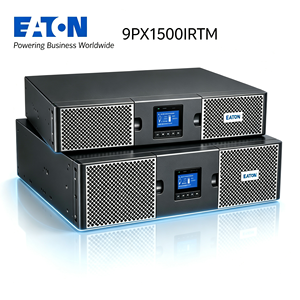
Technical Analysis: Eaton is a worldwide leader in heavy industrial and marine power backup solutions. Their 9PX Marine and ruggedized rack-mount series offer dual-conversion online topology, robust seismic/vibration mountings, and compliance with maritime classification societies for shipboard installations.
Headquarters: Columbus, Ohio, USA
Certifications: ISO-9001, ISO-14001
Primary Focus: Industrial Data Center & Telecom UPS
Technical Analysis: Vertiv specializes in high-capacity uninterruptible power systems and thermal management for military command posts, containerized data centers, and global telecom networks. Their lithium-ion industrial UPS platforms provide high power availability in harsh environmental operating windows.
Headquarters: Benfeld, France
Certifications: ISO-9001, ISO-14001
Primary Focus: Heavy Industrial UPS & Energy Storage
Technical Analysis: Socomec is an established European exporter of industrial UPS systems designed for transportation networks, airport ground infrastructure, and metallurgical facilities. Their double-conversion platforms feature exceptional fault-clearing capabilities and robust galvanically isolated output options.
Engineering Fundamentals: Mastering Defense Compliance Standards
Achieving compliance with defense standards requires an integrated system engineering approach. Simply pairing a commercial power converter with an off-the-shelf filter rarely passes formal laboratory testing. Below is an engineering overview of the primary military environmental and electrical standards:
1. MIL-STD-704 (A through F): Aircraft Electric Power Characteristics
Specifies the electrical power characteristics delivered to the input terminals of airborne equipment. Key challenges include surviving over-voltage transients up to 80V for 100ms on 28V DC buses, and maintaining continuous operation during AC line frequency variations (360Hz to 800Hz in variable-frequency generator systems).
2. MIL-STD-461 (C through F): Electromagnetic Interference (EMI) Control
Defines conducted emissions (CE101, CE102) and conducted susceptibility (CS101, CS114, CS115, CS116). SynQor solves CE102 compliance by offering matched differential and common-mode input filters designed to work in synergy with the switching frequency profile of their DC-DC converter modules.
3. MIL-STD-1275 (D/E): Characteristics of 28 Volt DC Electrical Systems in Military Vehicles
Governs land vehicle platforms (such as Bradley, Stryker, and JLTV). Power converters must withstand severe voltage spikes up to +250V for 70µs (induce by starter-generator load dumps) and steady-state surges of +100V for 50ms without component degradation or output interruption.
4. MIL-STD-810G: Environmental Engineering Considerations
Ensures hardware survives environmental stressors including altitude immersion, thermal shock (-55°C to +125°C baseplate temperatures), fungus, salt fog, and high-g mechanical shocks experienced during ballistic firing or carrier-assisted landings.