Industry Roadmap
Future Technological Trends in Medical Power Architectures
The convergence of surgical robotics, portable clinical diagnostics, and smart hospital networks is accelerating the development of next-generation power conversion platforms.
1. Adoption of Wide-Bandgap (GaN & SiC) Semiconductors
Silicon Carbide (SiC) and Gallium Nitride (GaN) switching devices are reshaping high-density medical power supplies. Operating at switching frequencies beyond 500 kHz to 1 MHz, GaN-based front-ends enable magnetic components (transformers and inductors) to shrink by up to 50% in physical volume. This allows medical device manufacturers to integrate multi-kilowatt power conversion stages directly into handheld ultrasound systems, surgical laser chassis, and mobile X-ray carts without thermal penalties.
2. Smart Lithium Energy Storage Systems (BESS) in Critical UPS
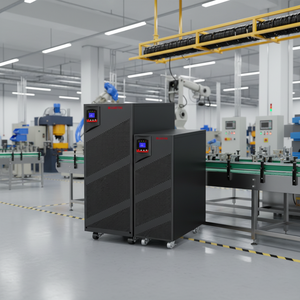
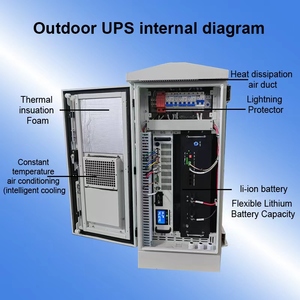
Traditional valve-regulated lead-acid (VRLA) batteries are rapidly being phased out in medical UPS applications in favor of advanced Lithium Iron Phosphate (LiFePO4) chemistry. Modern medical lithium UPS systems provide 3x the cycle life, 60% lower weight, and faster recharge cycles. Integrated Battery Management Systems (BMS) continuously communicate over SMBus or CAN bus, providing real-time telemetry on cell health, remaining runtime, and thermal status directly to central hospital monitoring networks.
3. Digital Power Management & PMBus 1.3 Integration
Analog feedback loops are increasingly giving way to fully digital control ICs. Microcontroller-driven power supplies utilizing PMBus 1.3 protocol allow remote configuration of output voltage trimming, over-current thresholds, and active power sharing across redundant N+1 arrays. In clinical settings, predictive maintenance algorithms can analyze subtle shifts in switching noise or operating temperature to warn hospital technicians of component aging before a system outage occurs.
4. Conduction-Cooled Cleanroom & Zero-Noise Topologies
In surgical suites and cleanroom laboratories, forced-air cooling fans are undesirable due to acoustic noise and the displacement of sterile airflow. The industry is shifting toward baseplate-cooled and conduction-cooled power modules. By encapsulating power circuitry in thermal potting compounds and transferring waste heat directly to equipment chassis aluminum heat sinks, power converters achieve totally silent, fanless operation with IP65+ ingress protection.