
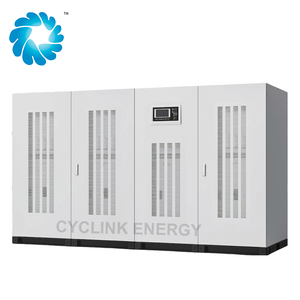
Industrial UPS for Energy, Transportation, Aviation & Metallurgy (Lithium Backup)
Designed for heavy industrial continuous power, compatible with zero-emission fuel cell microgrids and high-drain lithium-ion energy storage systems.
Send an InquiryPrecision-engineered, heavy-duty UPS architectures optimized for fuel-cell integration, harsh environmental deployment, and extreme vibration resistance.
Designed for heavy industrial continuous power, compatible with zero-emission fuel cell microgrids and high-drain lithium-ion energy storage systems.
Send an Inquiry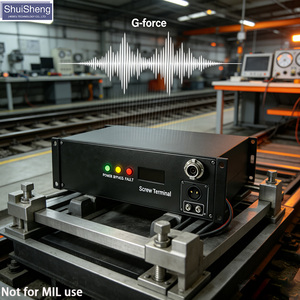
Full anti-salt, anti-mold, and anti-corrosion protection. Engineered to deliver stable power conditioning in marine, off-grid, and coastal hydrogen setups.
Send an Inquiry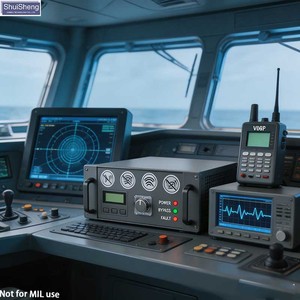
Built to survive extreme physical dynamics in mobile military command posts, mining haul trucks, and dynamic fuel-cell power generation units.
Send an Inquiry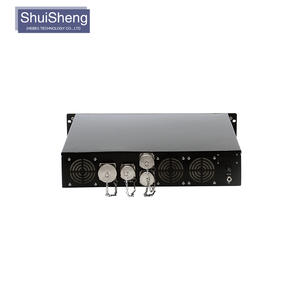
Compliant with stringent railway standards (EN 50155). Offers low harmonic distortion and high surge immunity for tracksides and rolling stock power management.
Send an Inquiry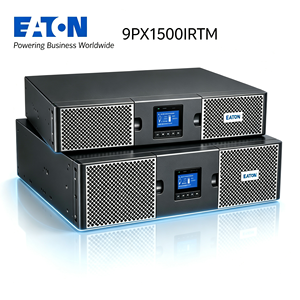
High-density 1U/2U form factor delivering unity power factor performance. Ideal for shipboard electronics, hydrogen vessel propulsion, and avionics bays.
Send an Inquiry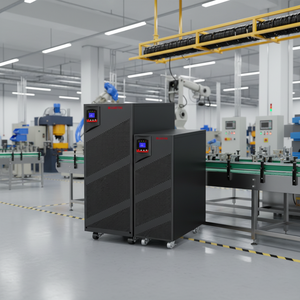
Designed for enterprise server rooms and industrial data centers requiring uninterrupted power architecture paired with hydrogen power generators.
Send an Inquiry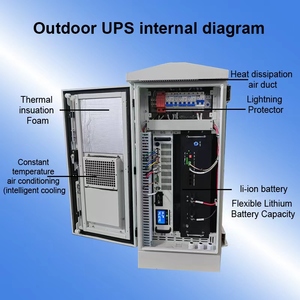
Ultra-reliable outdoor power hub featuring integrated surge arrestors, extended battery storage, and high-efficiency thermal management for remote sites.
Send an Inquiry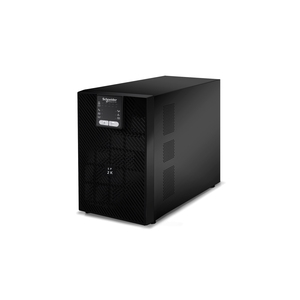
Optimized for hybrid wind, solar, and fuel-cell installations. Provides seamless voltage stabilization and internal lithium-ion battery management.
Send an InquiryThe global transition toward net-zero decarbonization has fundamentally reshaped mission-critical electrical infrastructures. Proton Exchange Membrane Fuel Cells (PEMFC) and Solid Oxide Fuel Cells (SOFC) have rapidly evolved from alternative power technologies into core baseline energy sources across defense, telecom infrastructure, heavy transport, and industrial microgrids. However, integrating fuel cells into live power distribution networks presents unique engineering challenges, specifically dynamic voltage drift, slow transient load response, and cold-start latency.
Top global manufacturers and exporters are bridging this performance gap by pairing fuel-cell stacks with high-efficiency, military-grade uninterruptible power supplies (UPS) and synchronous-rectifier DC-DC converters. This multi-stage hybrid topology protects sensitive downstream electronics while absorbing load steps during fuel cell ramping cycles.
Information Gain Insight: Fuel cell voltage output varies inversely with current load (typically dropping 30% to 40% from zero-load to full-load rating). Deploying isolated wide-input DC-DC converters with active power factor correction (PFC) guarantees a rock-steady regulated bus voltage despite fluctuating fuel-stack dynamics.
Instantaneous energy delivery via ultra-capacitors or lithium battery banks while hydrogen fuel supply pumps scale up to meet peak electrical load demands.
Active filtering prevents high-frequency inverter ripple from injecting destructive harmonic currents back into the fuel-cell catalytic stack.
Conduction-cooled, fanless modular designs qualified for extended operation from -40°C arctic starts to +85°C high-ambient industrial enclosures.
When procuring fuel-cell power converters and rugged UPS hardware for industrial applications, engineering teams must weigh efficiency, power density, compliance certifications, and lifecycle cost. The comparison table below highlights why industry leaders are shifting away from traditional diode-rectified converters toward synchronous-rectifier topologies.
| Performance Parameter | Legacy Diode Converter Units | SynQor Class Synchronous Converters | System Level Advantage |
|---|---|---|---|
| Full-Load Efficiency | 82% – 88% Max | 95% – 96.5% Peak | Reduces internal heat load by up to 60%; eliminates liquid cooling loops. |
| Input Voltage Range | Narrow (±15% Nominal) | Ultra-Wide (4:1 or 8:1 Ratio) | Seamlessly absorbs fuel cell stack degradation voltage drop over time. |
| Cooling Method | High-CFM Forced Air Fans | Conduction Baseplate / Fanless | Prevents dust/moisture ingress; achieves IP67/IP68 hermetic seals. |
| EMC / EMI Compliance | Requires External Heavy Filters | Integrated Multi-Stage Filters | Directly meets MIL-STD-461, EN 50155, and RTCA DO-160G standards. |
| MTBF (MIL-HDBK-217F) | < 150,000 Hours | > 500,000 Hours | Protects multi-decade defense and rail programs against early failure. |
Modern industrial plants are moving toward microgrid architectures that blend renewable solar/wind generation with local green hydrogen electrolyzers and fuel-cell generators. Sourcing directors are prioritizing UPS systems capable of bi-directional power flow, fast DC-bus switching, and seamless communication with industrial SCADA systems via Modbus, CANopen, or Ethernet/IP protocols.
Deployments in maritime, offshore wind stations, remote telecom towers, and railway tracksides require power electronics that withstand aggressive environmental conditions. Demand is rapidly surging for modular N+1 and N+2 redundant power systems featuring hot-swappable building blocks. Sourcing sealed IP68 units with anti-salt fog, anti-fungus, and shockproof coatings ensures operational continuity without requiring climate-controlled shelters.
Capital equipment in aerospace, naval defense, and rail signaling typically operates across 20- to 30-year lifecycles. System integrators are penalizing suppliers who execute sudden product end-of-life (EOL) strategies. Elite global exporters guarantee long-term supply-chain visibility, continuous component derating, and drop-in Form-Fit-Function (FFF) replacement modules for legacy systems.
As a world-class designer, manufacturer, and global exporter of mission-critical power equipment, our engineering philosophy revolves around foundational hardware reliability, absolute process control, and total vertical integration.
Our quality management system exceeds rigorous aerospace and defense standards, guaranteeing 100% serial-number component traceability and full qualification testing records.
Design, thermal modeling, qualification, and high-volume SMT manufacturing are executed under one roof in Salem, NH, securing your critical supply chain against geopolitical disruptions.
Over two decades of patented leadership in replacing power loss diodes with actively driven MOSFETs, continuously advancing the global industry efficiency curve.