Field-grade Uninterruptible Power Supply (UPS) systems represent a specialized category of ruggedized power conversion architecture designed explicitly to withstand operational environments that would instantly destroy standard commercial off-the-shelf (COTS) UPS units.
Modern defense tactical units, railway signaling hubs, off-grid telecom infrastructure, aviation ground support, and heavy industrial metallurgy facilities demand unbroken operational continuity. Achieving this requires an architectural pivot toward high-frequency synchronous rectification, wide-bandgap (SiC/GaN) semiconductors, sealed conduction-cooled IP65-IP68 enclosures, and high-energy LiFePO4 / LTO battery chemistries. This benchmark guide evaluates the top global manufacturers supplying field-grade power systems and provides procurement teams with the engineering specifications required to qualify vendors.
Select from qualified tactical, industrial outdoor, railway, and maritime uninterruptible power supplies built for maximum MTBF and extreme survivability.
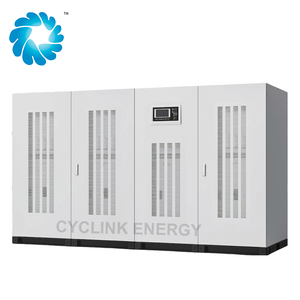
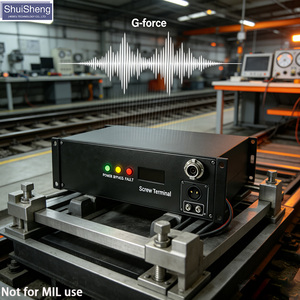
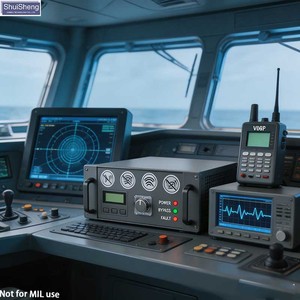
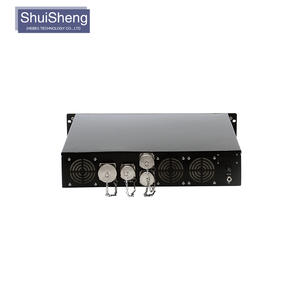
Our power conversion systems are designed, qualified, and manufactured in Salem, New Hampshire, USA, operating under quality systems that far exceed ISO-9001 and AS9100 requirements.
By replacing lossy output diodes with actively driven MOSFET switches combined with a proprietary two-stage topology, our power architectures achieve up to 96% efficiency. This dramatically lowers internal heat generation, allowing full-power operation inside fully sealed, IP67 conduction-cooled enclosures.
Most standard UPS system failures during program qualification occur due to unexpected interactions between input EMI filters and the power stage. We engineer and build both the filter modules and isolated power converters under one roof, guaranteeing full MIL-STD-461, MIL-STD-704, and RTCA DO-160 compliance out of the box.
Military, railway, and energy platforms operate across 20- to 30-year lifecycles. We guarantee long-term component availability, form-fit-function replacement paths, complete obsolescence protection, and direct access to senior application engineers for thermal derating and custom backplane integration.
An evaluation of the premier engineering firms manufacturing field-grade, military-spec, and heavy industrial uninterruptible power systems.
Specializing in military field-grade power supplies built in Salem, NH, USA. SynQor leads the market in ultra-lightweight, 1U/2U rack-mount chassis featuring 115Vrms line-to-line 3-phase PFC inputs that eliminate phase unbalance issues on ground vehicles, naval ships, and aircraft.
Vertiv delivers heavy-duty industrial UPS systems for oil & gas refineries, substation utility automation, and harsh edge-telecom deployments. Their industrial Liebert series features isolation transformers, extreme temperature batteries, and advanced Modbus/SNMP monitoring.
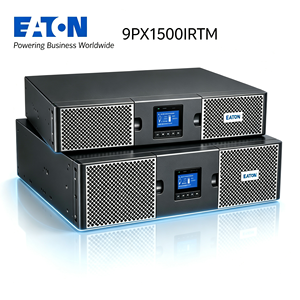
Eaton’s marine-certified 9PX systems are widely deployed across naval fleets, offshore oil platforms, and heavy commercial shipping lines. Built to withstand continuous marine vibration, humidity, and wide voltage swings with DNV-GL certification.
European engineering titan Socomec focuses on harsh industrial applications including rail transport signaling, steel metallurgy plants, and chemical refining. Their IP31/IP42/IP54 modular cabinets feature high fault-clearing capabilities.
US-based manufacturer supplying custom ruggadized COTS uninterruptible power systems specifically tailored for military tactical shelters, ground vehicles, and naval command stations built into shock-isolated transport cases.
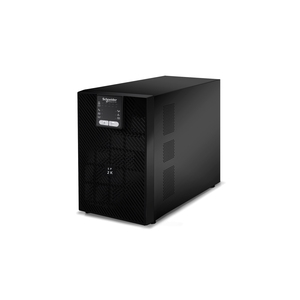
Schneider Electric offers specialized field variants such as the SP1K-W tailored for wind turbine nacelles and severe outdoor industrial locations, leveraging high-temperature batteries and hardened firmware.
Widely recognized across Asian heavy industry and telecommunications networks. Santak provides robust double-conversion online UPS units engineered for unstable electrical grids and harsh dust environments.
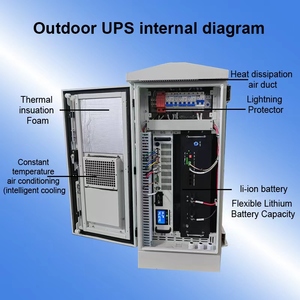
EnerSys’ Alpha division specializes in pole-mount, traffic control, broadband telecom, and utility outdoor UPS enclosures capable of running under extreme arctic cold and desert thermal heat.
Pioneers in supercapacitor-based short-term hold-up field UPS units, eliminating chemical battery maintenance entirely for remote industrial robotics, oil rigs, and high-vibration manufacturing floors.
ABB’s Decentralized Parallel Architecture (DPA) provides heavy industrial process plants with true N+1 redundant hot-swappable UPS modules, minimizing mean-time-to-repair (MTTR) in continuous processing plants.
Compare core engineering parameters to understand why commercial-grade UPS architectures fail in operational tactical environments.
| Engineering Parameter | Commercial/Datacenter UPS | Field-Grade / Military-Spec UPS | Operational Impact |
|---|---|---|---|
| Operating Temperature | 0°C to +40°C | -40°C to +74°C (MIL-STD-810G) | Prevents thermal shutdown in unconditioned tactical shelters or desert poles. |
| Mechanical Shock & Vibration | Basic commercial shipping drops | MIL-STD-810G (Method 514.6 / 516.6) shock cases | Survives off-road military vehicle vibration, shipboard shock waves, and railway vibration. |
| EMI / EMC Compliance | FCC Part 15 / EN 55022 Class A | MIL-STD-461G (CE102, CS114, RE102, RS103) | Prevents radio frequency interference with tactical radar, communications, and avionics. |
| Enclosure Ingress Protection | IP20 (Vented open chassis) | IP65, IP67, IP68 fully sealed conduction-cooled | Total protection against salt fog, sand, torrential rain, mold, and chemical washdowns. |
| Power Input Tolerance | Narrow ±10% AC sinusoidal | Wide 80-265VAC, 3-Phase 115Vrms, 45-800Hz | Operates seamlessly on dirty tactical generators, 400Hz aircraft buses, and line unbalance. |
| Battery Chemistry | VRLA Sealed Lead-Acid | Advanced LiFePO4 / LTO (Lithium Titanate) | Delivers 3x energy density, 10-year cycle life, and ultra-fast recharge at sub-zero temperatures. |
Strategic guidance for program directors, procurement executives, and system architects specifying next-generation power infrastructure.
The transition from traditional Silicon IGBTs to Silicon Carbide (SiC) and Gallium Nitride (GaN) MOSFETs enables switching frequencies above 200kHz. This shrinks internal inductors and magnetic transformers by up to 60%, reducing total UPS weight—a critical metric for airborne and mobile tactical vehicles.
While LiFePO4 remains the standard, Lithium Titanate (LTO) batteries are rapidly gaining ground in extreme field UPS designs. LTO eliminates thermal runaway risk completely and allows safe charging at -30°C without internal heating pads, offering over 15,000 operational charge cycles.
Field-grade UPS units connected to SNMP, Modbus TCP, or CAN Bus networks now represent key vector points for cyber-attacks on industrial facilities. Next-gen field UPS systems incorporate TPM 2.0 cryptoprocessors, secure boot firmware verification, and encrypted SNMPv3 protocol suites.
Direct technical answers addressing derating, certification, topology, and integration challenges.
