Selected high-reliability power supplies, continuous backup systems, and heavy-duty DC-DC/AC-DC solutions designed for mission-critical operations.
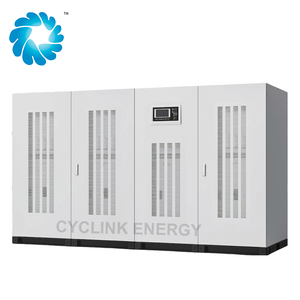
Heavy-duty lithium battery backup UPS engineered for transportation, aviation, and metallurgical infrastructure requiring zero millisecond transfer continuous power safety.
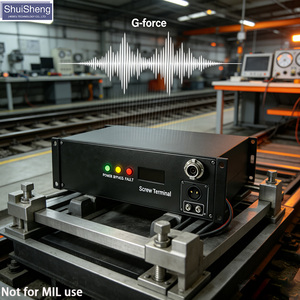
Anti-salt spray, anti-mold, anti-corrosion sealed outdoor power cabinet built for extreme tropical and coastal telecom base stations with passive conduction cooling.
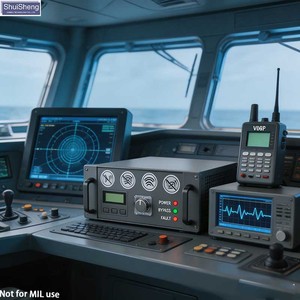
Military-grade shock and vibration resistant topology meeting MIL-STD-810G requirements for mobile command units, naval vessels, and mining equipment.
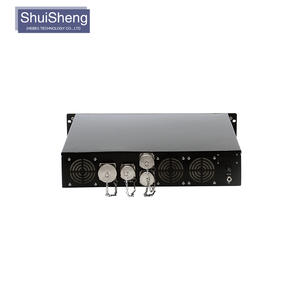
EN 50155 certified railway power backup system ensuring uninterrupted signaling, track control, and communication stability under severe input surges.
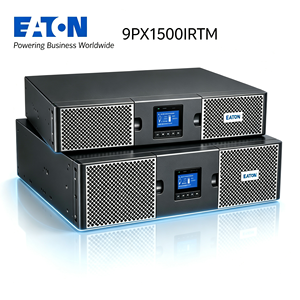
Compact 1U/2U online double-conversion power module designed for high-density rack servers, shipboard electronics, and offshore platform communications.
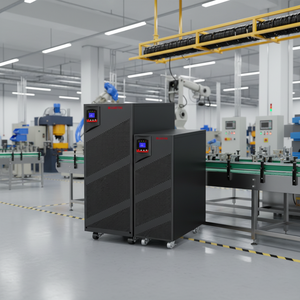
Three-phase input power conditioning unit delivering ultra-pure sine wave regulation for large-scale data facilities, edge compute clusters, and automation lines.
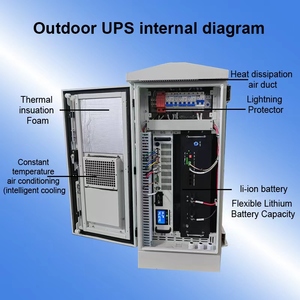
Integrated 8kWh energy storage system equipped with multi-stage lightning surge arrestors for remote monitoring stations and outdoor wireless backhaul.
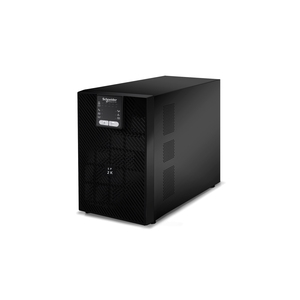
Specialized 1kVA/800W continuous converter optimized for fluctuating input voltages present in wind turbine pitch control and solar farm distribution boxes.
In modern industrial, defense, rail, medical, and aerospace engineering, the DC-DC converter standard has evolved far beyond basic voltage step-down or step-up functionality. Today’s mission-critical platforms require high-power-density, isolated power modules capable of operating flawlessly in harsh environmental conditions while delivering peak electrical efficiency. Choosing the right global supplier and exporter requires a comprehensive evaluation of topology innovations, thermal dissipation strategies, electromagnetic compatibility (EMC), and multi-decade supply chain stability.
Historically, commercial DC-DC power conversion relied on conventional diode rectification topologies. However, forward voltage drops across semiconductor diodes lead to severe power losses, excessive heat generation, and heavy thermal sink requirements. The breakthrough in high-efficiency power conversion came with the pioneering commercialization of Synchronous Rectification Technology. By replacing lossy Schottky diodes with actively controlled low-resistance N-channel MOSFETs, engineers drastically reduced conduction losses, pushing module conversion efficiencies beyond 95% and establishing new benchmarks for conduction-cooled micro-architectures.
When system architects select high-reliability (Hi-Rel) or Military Commercial-Off-The-Shelf (Mil-COTS) brick converters, four non-negotiable engineering vectors determine product viability:
To provide high information gain for procurement officers and senior electrical engineers, the table below outlines the core parameters across three generations of DC-DC conversion topologies.
| Topology Architecture | Typical Efficiency | Thermal Dissipation Profile | Best Application Fit | Standard Compliance Profile |
|---|---|---|---|---|
| Conventional Diode Rectification | 78% – 85% | High thermal dissipation; requires forced air or large heatsinks | Legacy industrial systems, low-cost commercial units | Basic CE / UL 60950-1 |
| Advanced Synchronous Rectification | 92% – 96.5% | Ultra-low dissipation; ideal for sealed conduction-cooled plates | Mil-COTS defense, avionics, railway rolling stock, medical units | MIL-STD-704/461/1275, EN 50155, DO-160G |
| Next-Gen GaN / SiC Wide-Bandgap | 95% – 98% | Minimal loss at ultra-high switching frequencies (>1 MHz) | Space-constrained UAVs, satellite power, advanced radar systems | Emerging MIL-STD-810H & Space-Grade Spec |
The global power module export market is led by top-tier manufacturers categorized by engineering specialization, manufacturing heritage, and compliance capability. Below is the industry benchmark list of leading suppliers specified by global OEMs.
Among global suppliers, **SynQor (Zala Energy)** stands out as the premier technological benchmark for mission-critical applications. Pioneering commercial synchronous-rectifier topology, SynQor manufactures 100% of its product lines in Salem, New Hampshire, USA. Operating under stringent **AS9100 and ISO-9001** certifications, SynQor provides unparalleled supply chain traceability and product longevity—making its MilQor®, RailQor®, and AeroQor® converter families the primary choice for prime defense contractors and global rail integrators.
As industrial automation, naval electrification, airborne avionics, and 5G telecommunications evolve, procurement managers must align their purchasing strategies with emerging engineering shifts. Key trends shaping the next decade include:
Modern platforms demand ultra-wide input range converters (such as 12:1 or 8:1 continuous ratios) that can bridge multiple nominal bus voltages (e.g., 24V, 48V, 72V, and 110V continuous) within a single stocking part number, dramatically reducing inventory management overhead.
Single-stage procurement of pre-qualified filter and converter pairs ensures immediate compliance with strict military conducted emissions standards like MIL-STD-461G and transient requirements like MIL-STD-1275D, mitigating costly system-level EMC re-testing.
With program lifecycles spanning 20 to 30 years in defense, naval, and railway deployment, leading exporters now contractually guarantee form-fit-function pin-compatible modules, isolating system operators from component end-of-life risks.
Our power conversion ecosystem is engineered around uncompromising reliability, rigorous qualification standards, and technical expertise. Below are the structural advantages built into every power architecture we deliver:
Engineered and tested to surpass global standards including MIL-STD-704(A-F), MIL-STD-461(C-F), MIL-STD-1275, MIL-STD-1399, MIL-STD-810G, RTCA DO-160G, and rail standard EN 50155.
All qualification testing, design derating, and high-volume production are housed within fully integrated facilities, guaranteeing 100% component supply-chain transparency and zero gray-market vulnerability.
Our specialized medical converter line provides up to 4400Vac reinforced isolation with active power factor correction (PFC) compliant with EN 60601-1 and IEC 60601-1-2 ed. 4.0 EMC requirements for patient-contact systems.
Answers to common engineering and procurement inquiries regarding DC-DC module integration, isolation ratings, and testing protocols.
Synchronous rectification replaces traditional lossy Schottky diodes on the secondary output side with actively driven low-resistance N-channel MOSFETs. Because MOSFET conduction losses ($I^2 R$) are significantly lower than fixed diode forward voltage losses ($I \times V_f$), power dissipation drops dramatically. This boosts efficiency up to 96%, reduces internal operating temperatures, extends component MTBF, and enables conduction cooling without noisy fan assemblies.
For military ground vehicles, compliance with MIL-STD-1275 (voltage surges up to 100V and spikes) is mandatory. For airborne power buses, MIL-STD-704(A-F) dictates input voltage limits, while RTCA DO-160G covers commercial avionics. System-wide electromagnetic compatibility requires compliance with MIL-STD-461(C-F) for conducted and radiated emissions. Environmental durability is proven via MIL-STD-810G shock and vibration testing.
Unfiltered switching DC-DC converters generate differential and common-mode conducted noise back onto the main power bus. Standard off-the-shelf discrete filters often interact unpredictably with converter input stages, inducing instability or resonance. Using matched EMI filters designed specifically for the target converter brick guarantees compliance with standards like MIL-STD-461 without trial-and-error component selection during qualification.
These terms define standardized physical dimensions and pinout configurations for isolated DC-DC converters. Full-brick modules measure 4.6 × 2.4 inches; half-bricks measure 2.3 × 2.4 inches; quarter-bricks measure 2.3 × 1.45 inches. Standardized footprints allow procurement managers to source form-fit-function replacements without modifying PCB trace layouts or mechanical mounting structures.
Yes. Railway rolling stock experiences severe voltage fluctuations on catenary supply lines. Railway-rated converters (such as the RailQor® line) offer wide input voltage ranges (e.g., 66V to 160V continuous for 110V nominal systems) and include built-in circuitry to handle Class S2/C1 hold-up times and severe electrical transients required by EN 50155.
Top-tier suppliers maintain process-controlled manufacturing facilities and retain long-term component inventory strategies. Furthermore, commitment to form-fit-function replacement products guarantees that when underlying silicon components evolve, the overall brick module remains electrically and mechanically identical to the legacy unit qualified decades earlier.
High-efficiency synchronous converters dissipate very little heat, allowing them to be manufactured with integrated aluminum baseplates. These baseplates mount directly against cold-plates, chassis walls, or thermal heatsinks, enabling 100% rated output power operation via conduction cooling without requiring forced air movement.
Contact our senior application engineers to review your input bus characteristics, EMI constraints, thermal envelopes, and custom power conversion requirements today.
Inquire Now