Qualified against extreme military, rail, and aviation standards. Explore our high-reliability OEM/ODM modular power systems engineered for zero-downtime performance.
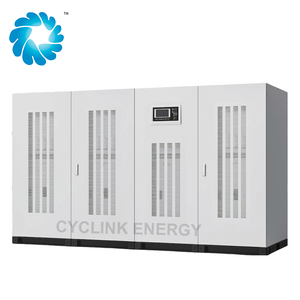
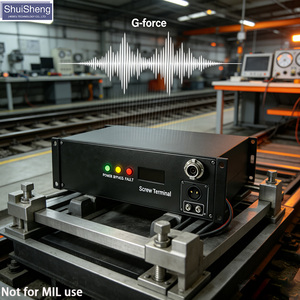
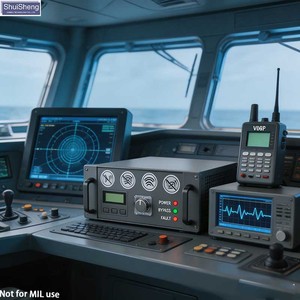
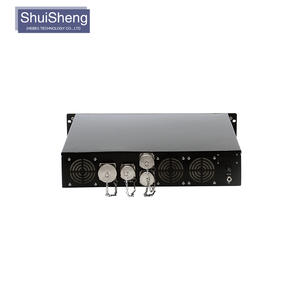
Navigating heavy vehicle electrical architectures requires deep mastery over voltage transients, mechanical vibration, thermal dissipation, and international regulatory compliance.
Our automated manufacturing plants exceed standard industrial quality bars. With end-to-end component traceability, Automated Optical Inspection (AOI), and full serialisation, every vehicle power converter and UPS unit leaving our floor carries verified qualification documentation compliant with defense and aerospace standards.
By replacing legacy lossy diodes with actively controlled power MOSFETs in a proprietary two-stage power topology, our factory-engineered power modules achieve up to 96% energy conversion efficiency. This drastically reduces thermal dissipation, allowing fanless conduction cooling in sealed IP67/IP68 vehicle enclosures.
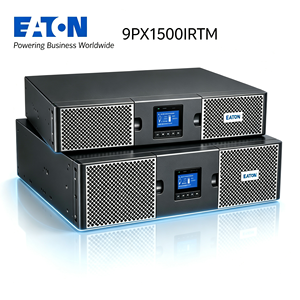
We specialize in custom electrical, mechanical, and thermal design tailoring. Whether your platform requires low-profile 1U rackmount chassis, custom rugged connectors (MIL-DTL-38999), or specialized input ranges (12V, 24V, 48V, 110V, 280V DC), our engineering team guarantees long-term product lifecycle support with zero unexpected obsolescence.
Proven reliability parameters verified in high-shock ground combat vehicles, commercial rail, and industrial mobile machinery.
As off-highway machinery, military vehicles, commercial fleets, and railway networks undergo rapid electrification, system integrators must align with forward-thinking OEM/ODM manufacturing partners.
Global Tier-1 vehicle manufacturers are transitioning away from traditional Silicon IGBTs toward Silicon Carbide (SiC) and Gallium Nitride (GaN) switching components. In custom vehicle power factories, integrating SiC MOSFETs allows switching speeds 5x faster with a 60% reduction in passive filter weight. Procurement teams are placing heavy weight on suppliers capable of high-frequency magnetic design to maximize power density (W/in³).
Traditional Lead-Acid and standard Lithium-ion batteries in vehicle UPS systems are being superseded by safe, high-cycle LiFePO4 and emerging solid-state chemistries. Vehicle power factories must now offer advanced Smart Battery Management Systems (BMS) with real-time state-of-charge (SoC), state-of-health (SoH) telemetry via CANbus J1939 protocols, and active cell balancing optimized for extended vibration exposure.
Engineers are no longer purchasing discrete power modules and external surge suppression filters separately due to unpredictable electromagnetic interference (EMI) interactions during field testing. Modern OEM/ODM procurement strategies demand unified power bricks where transient protection (MIL-STD-1275, MIL-STD-704, EN 50155) and active EMI filtering are validated together as a fully qualified sub-system.
Defense and rail vehicles operate on 15-to-30-year life cycles, whereas commercial power ICs obsolesce within 3 to 5 years. Leading OEM/ODM vehicle power factories provide standardized pinout architecture and guaranteed form-fit-function redesign protection, ensuring vehicle platforms retain drop-in replacement options without requiring costly recertifications.
Understanding how next-generation power electronics topologies solve harsh vehicle environment challenges: transient spikes, thermal stress, salt corrosion, and ground loops.
Legacy converters operate within narrow ±20% input windows. Next-gen vehicle power units utilize wide 12:1 input range architecture (e.g., handling continuous inputs from 14V up to 160V DC). This allows a single OEM power module to serve 24V military vehicles, 48V telecom platforms, and 110V railway rolling stock without redesigning the core board.
Moving components like internal cooling fans represent the single primary point of failure in dusty or marine vehicle environments. Advanced vehicle power factories are pioneering aluminum cold-plate potting techniques. Heat generated by internal switches is directly conducted to the vehicle chassis, achieving IP68 protection against dust, water immersion, and salt fog.
Integration of embedded microcontrollers allows real-time digital monitoring of internal capacitor ESR, MOSFET junction thermal trends, and battery cell impedance. Vehicle operators receive predictive failure alerts days before an electrical fault occurs, eliminating field downtime in remote mining, agricultural, or combat operations.
| Standard Designation | Target Application Platform | Core Voltage / Environmental Parameter | OEM/ODM Factory Mitigation Topology |
|---|---|---|---|
| MIL-STD-1275D/E | Military Ground Heavy Vehicles | 28V DC Nominal (Surges up to 100V for 50ms, Spikes ±250V) | Active High-Voltage Transient Clamp & Reverse Polarity Protection |
| MIL-STD-704F | Aircraft / Airborne Electronics | 115V AC / 400Hz 3-Phase or 28V DC Bus | High-Frequency Active Power Factor Correction (PFC > 0.99) |
| EN 50155 | Railway Rolling Stock | 24V, 48V, 72V, 96V, 110V DC Input (S2 Hold-Up Class) | Wide-Input Isolated DC-DC Bricks with Custom Hold-Up Capacitors |
| RTCA/DO-160G | Commercial Aviation Avionics | Extreme Altitude, Temperature Shock, Cat. B Conducted EMI | Multi-Stage Passive Line Filters & Silicone Encapsulated Potting |
| MIL-STD-810G | Rugged Tactical & Heavy Industrial | Method 514.6 Shock & Vibration, Salt Fog, Mold Growth | Structural Aluminum Monocoque Cage & Conformally Coated PCBs |
Clear, expert responses to technical procurement, design verification, and factory customization inquiries.
Our OEM/ODM factory pioneered the application of synchronous rectification in isolated vehicle DC-DC converters. Traditional power supplies use schottky diodes for secondary rectification, which suffer from a fixed voltage drop (typically 0.5V to 0.7V). At high current outputs (e.g., 100A), this translates into 50W to 70W of wasted heat. By substituting diodes with low Rds(on) MOSFETs driven in active synchronization, conduction losses are drastically reduced. This yields efficiency up to 96%, minimizes internal thermal stress, extends component mean time between failures (MTBF), and allows completely sealed, fanless IP68 chassis designs.
Vehicle electrical buses frequently suffer from severe inductive load dumps (such as engine starting or turret motor actuation) that generate severe overvoltage spikes. Our OEM/ODM vehicle power factories integrate front-end active transient suppression modules (such as our transient half-brick filters). These modules clamp high-energy incoming voltage surges up to 100V for 50ms and high-voltage spikes up to ±250V down to a safe continuous operating voltage, allowing downstream DC-DC converters and sensitive electronics to run uninterrupted without reset or component degradation.
We provide full turnkey OEM/ODM engineering services. Mechanical options include 19-inch rackmount chassis (1U to 4U), sealed die-cast aluminum enclosures, custom cold-plate mounting, and MIL-DTL-38999 circular connectors. Electrically, we can configure single, dual, or quad isolated outputs with customized trim ranges, active current sharing for parallel redundant (N+1) configurations, and custom communication interfaces including CANbus, RS485, and Ethernet SNMP management.
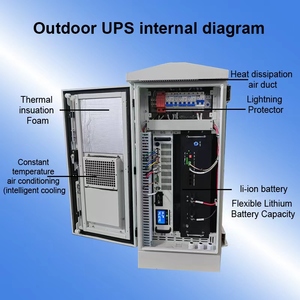
All battery-integrated vehicle UPS solutions utilize high-grade LiFePO4 or specialized low-temperature chemistries backed by smart thermal control circuits. Internal heating elements are automatically engaged at sub-zero temperatures to bring battery cells to safe charging thresholds before accepting charge current. At elevated operating temperatures (+50°C to +85°C), high-efficiency active equalization and temperature-compensated charging algorithms prevent thermal runaway and preserve battery cycle life.
Standard catalog modules and evaluation units are typically available with short 2-to-4-week lead times. For custom OEM/ODM vehicle power designs requiring custom PCB layouts, specialized thermal enclosures, and qualification testing (shock, vibration, EMI), initial prototype samples are delivered within 8 to 12 weeks. We support low-rate initial production (LRIP) runs for defense and specialized vehicle programs without requiring restrictive MOQs.
Engineering, high-reliability qualification testing (HALT/HASS, environmental stress screening), and primary manufacturing are conducted at our state-of-the-art facilities certified under ISO-9001 and AS9100 quality management systems. This guarantees total supply-chain transparency, counterfeit component protection, and full compliance with international trade and defense procurement requirements.
Require assistance with thermal modeling, transient derating, or MIL-STD/EN50155 qualification? Connect directly with our Senior Power System Engineers to review your electrical schematic and thermal profile.
