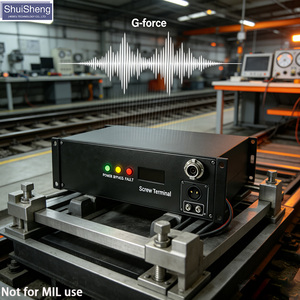
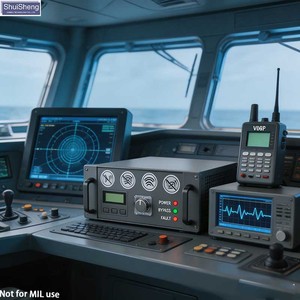
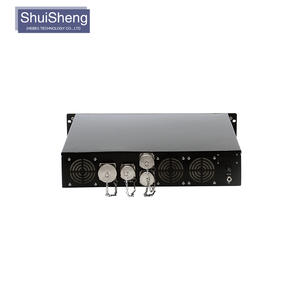
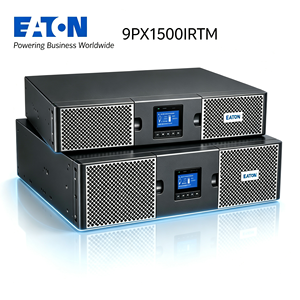
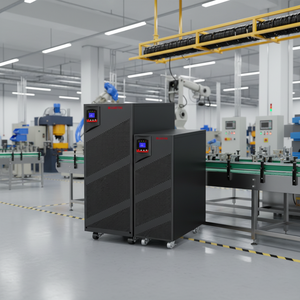
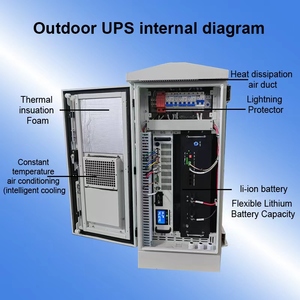
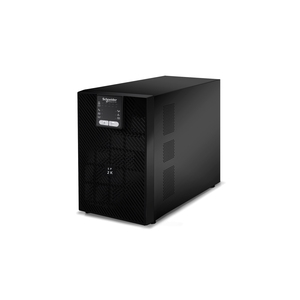
Explore our custom-engineered uninterruptible power supply (UPS) units, rugged outdoor power systems, and high-efficiency AC/DC rectifiers designed to meet stringent global standards including MIL-STD-810G, EN 50155, and IP68 isolation compliance.
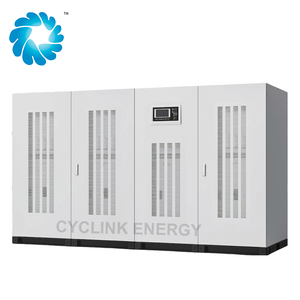
As telecommunication networks transition from 5G Standalone (SA) to cloud-native 6G readiness and dense edge-computing nodes, power delivery networks (PDNs) face unprecedented demands for thermal management, volumetric power density, and continuous fault tolerance.
Traditional power conversion architectures relied heavily on Schottky diode rectification within the secondary stage of isolated DC-DC and AC-DC topologies. However, under high-current telecom workloads (e.g., -48V nominal distribution buses delivering hundreds of Amperes to remote radio heads), the forward voltage drop ($V_f$) across semiconductor diodes accounts for substantial thermal dissipation ($P_{loss} = V_f \times I_{out}$).
Our proprietary OEM/ODM power platforms utilize advanced Synchronous Rectification (SR) paired with Wide Bandgap (WBG) Gallium Nitride (GaN) and Silicon Carbide (SiC) power MOSFETs. By actively driving low $R_{ds(on)}$ channels in synchronized timing with primary-side pulse-width modulation (PWM), conduction losses drop by up to 65%.
A conventional 3kW diode-rectified front-end operating at 91% efficiency dissipates approximately 296 Watts as pure thermal heat. Upgrading to our active synchronous GaN-based topology elevates system-level efficiency to 96.5%, reducing wasted heat down to 108 Watts. This 188W reduction directly translates to a 55% reduction in required heatsink mass, enabling sealed IP68 fanless enclosure designs suitable for extreme desert or coastal deployments.
To streamline engineering evaluation for system integrators and telecom procurement specialists, the following matrix outlines standard baseline performance parameters across our primary product platforms:
| System Series | Input Voltage Range | Peak Efficiency | Operating Temp | EMC / EMI Compliance | Environmental Protection |
|---|---|---|---|---|---|
| IP68 Rugged Outdoor UPS | 85 VAC – 300 VAC (Wide) | 95.2% | -40°C to +75°C | EN 55032 Class B, MIL-STD-461G | IP68 / NEMA 4X (Anti-Salt C5-M) |
| Industrial Data Center UPS | 380/220 VAC 3-Phase | 96.8% | -10°C to +55°C | IEC/EN 62040-2 Category C2 | IP31 / IP42 Custom Chassis |
| Railway Signaling Backup | 24 VDC / 110 VDC Nominal | 94.5% | -40°C to +85°C | EN 50155 / EN 50121-3-2 | Vibration & Shockproof (IEC 61373) |
| Renewable Dedicated UPS | 120 VAC / 230 VAC Single-Phase | 93.8% | -25°C to +65°C | FCC Part 15 Class A | Corrosion-Resistant Powder Coat |
From complete structural CAD customization to rapid firmware optimization for Modbus, CAN Bus, and SNMP v3 remote monitoring, our advanced manufacturing center delivers end-to-end supply chain security and uncompromising engineering quality.
Our manufacturing footprint adheres to aerospace-grade AS9100 and ISO-9001 quality management systems. Every single production batch undergoes 100% automated full-load thermal burn-in testing under elevated ambient temperatures prior to dispatch.
Eliminate single-point system failures. Our custom power shelves support true N+1 and N+2 hot-swappable rectifier modules, allowing live maintenance without dropping sub-millisecond power delivery to critical 5G core baseband units.
We provide guaranteed 15 to 20-year Form-Fit-Function (FFF) component availability for defense, rail, and telecom programs. Our direct line engineering teams archive build profiles to prevent premature product end-of-life redesign risks.
As telecommunications infrastructure operators face dual pressures of soaring energy costs and aggressive zero-carbon sustainability mandates, global power system procurement is undergoing structural realignments.
Legacy Valve-Regulated Lead-Acid (VRLA) batteries are rapidly being phased out across outdoor macro cell sites. Next-generation procurement heavily prioritizes Lithium Iron Phosphate ($\text{LiFePO}_4$) and emerging Sodium-Ion battery chemistry due to their 3x longer cycle life ($>4000$ cycles at 80% DoD), higher volumetric power density, and wider operating temperature envelope without requiring air-conditioned cabinets.
Off-grid and weak-grid telecom base stations in developing regions are abandoning full-time diesel generator operation. Modern OEM rectifiers must feature multi-input MPPT (Maximum Power Point Tracking) solar chargers integrated directly into the DC bus architecture, prioritizing renewable harvesting while reducing fuel consumption by up to 80%.
Telecom power supplies are evolving into active distributed energy assets. Through cloud-connected SNMP v3, MQTT, and NB-IoT protocols, network operators leverage installed energy storage reserves to perform peak shaving and load shifting, selling backup capacity back to national power grids during peak demand hours.
To meet the ultra-low latency requirements of 5G Edge Data Centers and harsh environment deployments, our engineering R&D pipeline focuses on four fundamental vectors:
Utilizing planar transformers, high-frequency GaN switching topologies ($>500\text{ kHz}$), and 3D direct-liquid cooling plates, our upcoming power modules achieve unprecedented spatial efficiency. This allows system integrators to free up critical rack space for additional compute and baseband processing hardware.
Coastal and offshore telecom equipment faces rapid degradation due to salt-laden airborne moisture. Our outdoor product series incorporates vacuum-impregnated conformal coatings, electro-phoretic aluminum enclosures, and IP68 military-spec connectors capable of enduring continuous C5-M high-corrosion environments.
Technical insights and operational clarifications for senior electrical engineers, procurement directors, and global supply chain managers.
Our flexible manufacturing system supports both low-volume high-mix (LVHM) defense projects and mass-scale commercial telecom rollouts. Standard OEM modified off-the-shelf units typically carry an MOQ of 50 to 100 units with a 4 to 6-week lead time. Fully custom ODM engineering (including custom PCB layout, structural enclosure design, and agency certifications) generally requires 12 to 16 weeks from schematic sign-off to mass production tooling validation.
Our outdoor IP68 UPS enclosures utilize natural conduction and convection cooling via patented internal thermal bridge structures. By bonding high-dissipation power components (MOSFETs, inductors, rectifiers) directly to an exterior die-cast aluminum heat sink chassis, we eliminate vulnerable external cooling fans. Systems operate at full rated load without thermal derating across ambient temperatures ranging from -40°C up to +75°C.
Yes. Our power conversion systems feature customizable digital control loops running firmware compatible with standard RS485, CAN 2.0B, Modbus RTU, and SNMP communication protocols. We support automated handshaking with leading LiFePO4 BMS architectures (including Vertiv, Huawei, Socomec, and Eaton standards), allowing dynamic control of charge curves, temperature compensation, and SOC/SOH reporting.
Our standard platforms are pre-compliant with global EMC standards including FCC Part 15 Class B, CISPR 32 / EN 55032 Class B, and IEC 61000-4 series surge/immunity mandates. For defense, aviation, and railway applications, we offer customized filtering stages compliant with MIL-STD-461G (CE102/RE102), RTCA DO-160G, and EN 50121-3-2.
MTBF is calculated using Telcordia SR-332 (Issue 4) or MIL-HDBK-217F reliability prediction models at 25°C and 40°C ground benign/fixed environments. Most of our industrial-grade power modules exhibit an MTBF exceeding 500,000 hours. Empirical field failure rates are continuously monitored via our ISO-9001 quality system, maintaining an overall field return rate of less than 0.05% globally.
Partner with a trusted OEM/ODM power supply manufacturer. Contact our senior engineering team today to review your electrical specifications, request customized prototypes, or download full product technical catalogs.