
Lithium LiFePO4
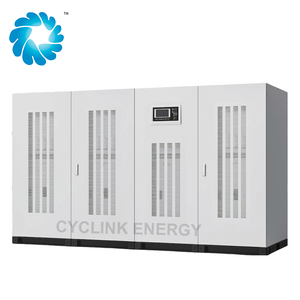
Industrial Marine UPS with Lithium Energy Backup
- Dual Galvanic Isolation & Active PFC
- High Energy Density LiFePO4 Chemistry
- Naval Aviation & Submarine Operational Ready
Explore our engineered line of high-reliability shipboard uninterruptible power systems (UPS), all-weather telecom backup units, and transient-hardened DC-DC power conversion modules.
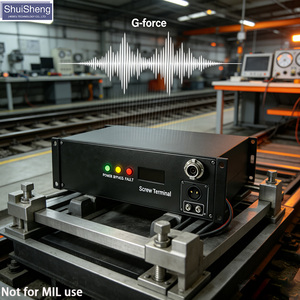
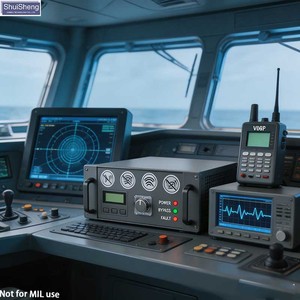
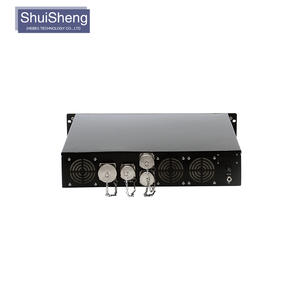
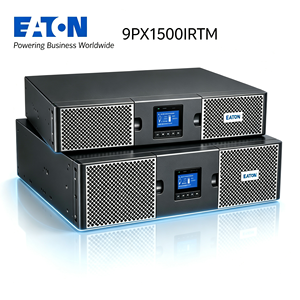
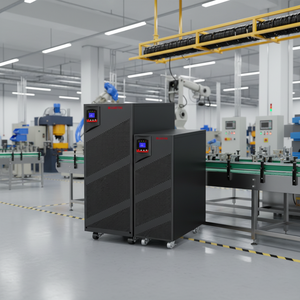
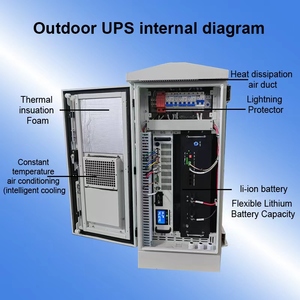
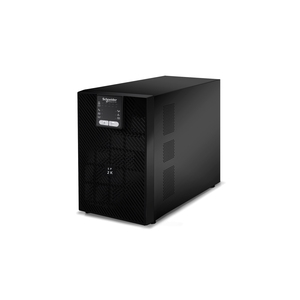
Naval shipboard electrical environments present harsh, unpredictable operating parameters—including extreme line-to-line phase imbalances, high switching surges, continuous salt-fog exposure, and severe vibration. Our factory provides end-to-end custom engineering to ensure platform longevity.
We engineered commercial isolated power converters utilizing actively driven MOSFETs in place of lossy diodes. Combined with a proprietary two-stage power conversion topology, our designs achieve up to 96% peak efficiency, drastically reducing heat dissipation in hermetically sealed marine enclosures.
Every OEM/ODM shipboard power architecture is qualified against stringent military and international maritime specifications, including MIL-STD-1399 Section 300B, MIL-STD-704 (A-F), MIL-STD-461 (C-F), MIL-STD-810G/H, MIL-STD-1275, RTCA DO-160G, and ABS/DNV marine class requirements.
Our manufacturing facilities operate under a rigorous quality management system exceeding standard industrial ISO requirements. We guarantee full component supply-chain traceability, strict lot controls, and multi-decade obsolescence protection with direct access to application engineering support.
From custom 1U–6U rack-mount form factors to modular conduction-cooled power blocks, our engineering team collaborates with prime contractors to develop drop-in replacement units that eliminate redesign risk and accelerate system qualification schedules.
Electrical power distribution networks aboard naval surface vessels and submarines are isolated 3-phase floating grids (typically 115V or 440V RMS line-to-line). Unlike grounded land-based utilities, naval power distribution exhibits continuous voltage unbalance, severe harmonic distortions, high switching voltage spikes, and potential line-to-deck fault conditions.
To overcome these environmental challenges, our OEM/ODM custom shipboard UPS and DC-DC power converter modules incorporate advanced multi-stage power topologies with dual galvanic isolation transformers and high-frequency active Power Factor Correction (PFC).
Naval defense procurement is undergoing a major paradigm shift toward integrated electrical power systems (IPS) and high-density energy storage. Here are the core procurement vectors driving global marine power sourcing over the next decade.
Modern naval surface combatants and commercial electric vessels are moving away from traditional legacy AC distribution grids in favor of centralized 1000V+ high-voltage DC (HVDC) microgrids. This shift demands modular, bidirectional high-power DC-DC converters capable of handling massive load transients from directed-energy radar and electric propulsion systems without disrupting critical mission computers.
Fleet engineers increasingly mandate modular power conversion blocks that support hot-swappable replacement during live operations. Modular N+1 and N+2 redundant UPS topologies prevent single-point-of-failure vulnerabilities, enabling continuous combat readiness and dramatically lowering mean time to repair (MTTR) while at sea.
Naval procurement guidelines are phasing out legacy flooded lead-acid and AGM battery banks due to hydrogen off-gassing risks and maintenance overhead. High-safety LiFePO4 chemistry—coupled with smart Battery Management Systems (BMS) over NMEA 2000 or Modbus protocols—offers 3x energy density, faster recharging, and a 10+ year operational lifespan.
Next-generation shipboard power supplies must integrate cyber-secure telemetry interfaces. Sourcing officers now mandate hardware-level cryptographic chips and secure SNMPv3 / CANbus protocols to protect power electronics from remote network intrusions and ensure real-time predictive health monitoring (PHM).
Discover how continuous advancements in wide-bandgap semiconductors, material science, and thermal management are transforming shipboard OEM/ODM power design.
Replacing traditional silicon MOSFETs with wide-bandgap (WBG) SiC and GaN devices allows power converters to switch at frequencies exceeding 500 kHz. This yields a 40% reduction in magnetics and filter sizes, boosting power density beyond 100W/in³ for space-constrained naval electronics bays.
To resist continuous salt fog, 100% relative humidity, and corrosive mold, state-of-the-art power modules utilize full thermal polymer encapsulation. This ruggedized construction eliminates internal air gaps, protecting delicate PCB surface-mount components from condensation corrosion and structural vibration fatigue.
Traditional passive LC EMI filters are bulky and generate substantial thermal losses. Modern defense-grade power systems combine passive multi-stage chokes with active electronic noise suppression circuits to clear strict MIL-STD-461 RE102 / CE102 radiated and conducted emission thresholds in compact enclosures.
Get authoritative answers regarding custom OEM/ODM shipboard power design, compliance testing, lead times, and platform lifecycle management.
Our custom OEM/ODM shipboard power supplies incorporate high-energy transient suppression stages (MOV arrays, silicon transient voltage suppressors, and active clamping circuits) upfront in the input filter. These components absorb severe voltage spikes—up to ±2500V peak transients—without tripping protective breakers or interrupting downstream regulated DC outputs to critical command-and-control hardware.
Commercial marine UPS units are typically designed for grounded 50/60Hz AC grids on commercial transport ships. True defense-grade shipboard UPS units are engineered for floating, ungrounded 3-phase delta electrical grids under MIL-STD-1399 Section 300B. They undergo rigorous environmental testing for mechanical shock (MIL-S-901D Grade A hammer shock tests), vibration immunity (MIL-STD-167-1A), and EMI control (MIL-STD-461G), ensuring continuous operation during combat conditions.
Standard rectifier diodes introduce a fixed forward voltage drop (0.7V to 1.0V), which dissipates considerable thermal energy at high current levels. Synchronous rectification replaces these diodes with ultra-low RDS(on) MOSFETs, cutting conduction losses by up to 70%. This dramatic efficiency boost enables full-load operation via cold-plate conduction cooling inside hermetically sealed IP66/IP68 enclosures without relying on external cooling fans that fail in salt fog environments.
Yes. We specialize in form-fit-function (FFF) replacement engineering for legacy naval power supplies and rack-mount UPS units. Our engineering team replicates original mechanical mounting footprints, pinouts, and electrical interface protocols while upgrading internal power conversion topologies with high-efficiency modern components, extending platform life without costly deck space redesigns.
All internal circuit assemblies undergo IPC-CC-830 certified multi-layer conformal coating or full solid polymer encapsulation. Structural enclosures are fabricated from marine-grade 316L stainless steel or passivated, powder-coated aluminum alloy, equipped with fluorosilicone conductive gaskets to provide dual environmental sealing (IP67/IP68) and continuous 360-degree EMI shielding.
We maintain an active component lifecycle management program with strict obsolescence tracking. Because we control the original engineering schematics and PCB layouts in our certified manufacturing facilities, we offer guaranteed long-term support agreements (15–20+ years), bonded component inventory reserves, and seamless form-fit-function hardware updates.
Typical lead times for initial functional prototypes range from 6 to 12 weeks depending on system complexity and specialized chassis tooling. Non-Recurring Engineering (NRE) costs are tailored based on target qualification requirements (e.g., MIL-S-901D shock testing vs. standard ABS marine class certification). Detailed NRE proposals and milestone schedules are provided following initial technical reviews.
You can begin by submitting your system electrical specifications (input bus range, output load profiles, thermal envelope, dimension constraints, and targeted standards) via our live quote request system. Our senior power application engineers will review your requirements and provide an initial technical feasibility feedback report within 24–48 hours.
Consult directly with our defense application engineers. Submit your input/output power parameters, mechanical constraints, and certification requirements for a complete technical evaluation and customized quote.