Explore our specialized line of OEM/ODM power conditioners, variable frequency drives, pure sine wave isolation units, and environmental power systems manufactured to international safety and efficiency benchmarks.
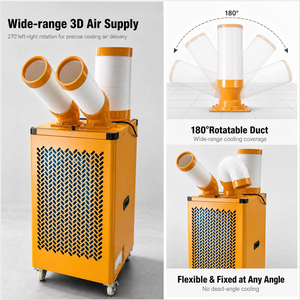
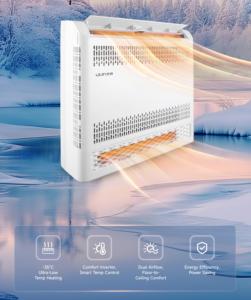
In modern industrial and commercial environments, power quality directly dictates equipment longevity, operational uptime, and total cost of ownership (TCO). Unconditioned electrical supply—characterized by transient voltage spikes, harmonic distortion, phase imbalances, and voltage sags—causes premature component degradation in automated systems.
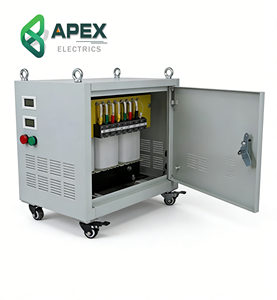
Industrial power conditioners incorporating multi-shielded galvanic isolation transformers effectively decouple primary utility transients from secondary sensitive loads. By breaking ground loops and mitigating high-frequency common-mode noise (up to -120dB attenuation), critical CNC logic controllers and medical imaging devices are shielded from utility-grid disturbances.
Unlike traditional tap-changing transformers that introduce discrete step-voltage transitions, modern OEM/ODM power conditioners utilize microprocessor-controlled Solid-State Voltage Regulation (SSVR) or active IGBT switching. This enables continuous, seamless voltage correction within ±1% regulation tolerance under dynamic load fluctuations exceeding 100% step changes.
Non-linear loads such as variable frequency drives (VFDs), solar hybrid inverters, and switching power supplies inject non-sinusoidal currents back into the supply distribution network. Custom OEM power conditioners integrate active power factor correction (PFC) and harmonic filtering to maintain Total Harmonic Distortion (THD < 3%), complying fully with IEEE 519 standards.
| Technology Topology | Voltage Response Time | THD Mitigation Capability | Efficiency Benchmark | Ideal B2B Application |
|---|---|---|---|---|
| Galvanic Isolation Servo-Stabilizers | < 20 ms / Volt | Moderate (Passive Filtering) | 98.5% | Heavy CNC Machining, Industrial Plants |
| Solid-State Static Power Conditioners (IGBT) | < 2 ms (Instantaneous) | High (Active PFC & Filtering) | 96.5% | Medical Imaging, Semiconductor Labs |
| Hybrid Solar Inverter Conditioners | Dynamic Grid-Tied Response | Very High (< 2.5% Output THD) | 97.2% | Off-Grid Telecom & Commercial Solar HVAC |
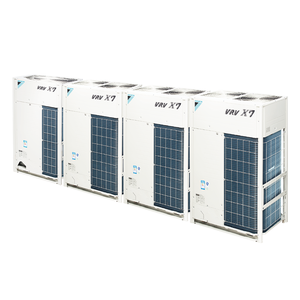
| Variable Frequency VRF Environmental Conditioners | Continuous Load-Adjusted | Integrated DC Bus Smoothing | 94.8% | Data Hubs, Shopping Malls, High-Rise Facilities |
Combining over 25 years of power conversion innovation with aerospace-grade quality standards, we deliver tailored turnkey OEM/ODM engineering services for mission-critical deployments worldwide.
Our state-of-the-art production facility operates under rigorous quality control frameworks exceeding standard commercial mandates. Every power conditioner, isolation transformer, and inverter assembly undergoes 100% automated full-load burn-in testing, elevated temperature testing, and insulation resistance verification prior to dispatch.
By pioneering actively driven MOSFET synchronous rectification in place of lossy diodes, our power conditioning modules achieve market-leading thermal efficiency up to 96%. Lower internal heat dissipation enables fully sealed, conduction-cooled IP65/IP67 enclosures suitable for harsh military and industrial sites.
Our custom hardware configurations are pre-tested against strict global compliance parameters including MIL-STD-704 (A-F), MIL-STD-461 (C-F) for EMI/EMC, MIL-STD-1275, MIL-STD-1399, RTCA DO-160G for airborne power systems, and EN 50155 for railway rolling stock electronics.
We guarantee form-fit-function replacement strategies and long-term component availability for long-life industrial and defense programs. OEM buyers gain direct line-of-communication with senior application engineers for custom PCB layout, derating analysis, and thermal modeling.
As global industries transition toward electrified microgrids, wide-bandgap semiconductors, and IoT-enabled predictive maintenance, procurement teams must align with forward-thinking power conditioning manufacturers.
Next-generation OEM power conditioners are rapidly replacing legacy silicon switching elements with GaN and SiC devices. This technological pivot permits switching frequencies exceeding 500 kHz, allowing magnetics and isolation transformer sizes to contract by over 40% while raising total system efficiency beyond 97.5% under variable loads.
Modern B2B buyers now mandate digital connectivity in heavy-duty voltage stabilizers and conditioners. Integrated IoT gateways with Modbus TCP, SNMPv3, or CANbus interfaces send real-time waveform analytics, THD tracking, and thermal metrics to enterprise SCADA networks, enabling AI models to predict component fatigue before failure occurs.
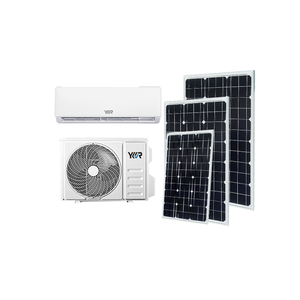
The convergence of renewable microgrids and industrial HVAC/manufacturing has created huge demand for hybrid DC/AC power conditioners. Sourcing trends favor monoblock units capable of accepting direct solar PV input, battery storage DC buses, and utility AC lines simultaneously—eliminating double-conversion power losses.
Detailed engineering answers regarding OEM custom design options, quality certifications, harmonic limits, and global sourcing lead times.
Off-the-shelf Automatic Voltage Regulators (AVRs) typically rely on simple auto-transformers with mechanical relays, providing slow response times (>100ms) and coarse step adjustments that generate transient voltage surges. Custom OEM/ODM industrial power conditioners utilize microprocessor-driven solid-state topologies combined with dual-shielded galvanic isolation transformers. This ensures instantaneous voltage regulation (<2ms), active harmonic attenuation (THD < 3%), zero phase-shift, and full compliance with severe industrial EMC environments (MIL-STD-461 / EN 61000-6-4).
Our engineering team specializes in wide-input voltage tolerance designs (e.g., ±30% nominal range) suitable for unstable remote utility grids or heavy industrial sites. Thermal management is engineered via conduction cooling, heat-pipe distribution, or liquid-cooled baseplates paired with high-efficiency synchronous rectification. This allows custom power conditioning modules to operate across extended ambient temperature ranges (-40°C to +85°C) without forced-air fan dependency.
Every OEM/ODM order includes complete AS9100 / ISO 9001 quality traceability documentation. Standard deliverable packages include Certificate of Conformance (CoC), full factory Acceptance Test Procedure (ATP) reports, high-potential dielectrical withstand test data, insulation resistance logs, and full compliance certificates for international standards such as CE, UL 1778 / UL 62368-1, EN 50155, or RTCA DO-160G depending on the target sector.
Yes. Our hybrid DC/AC solar inverter conditioning systems (such as the Puremind and Uniepu series) feature intelligent dual-input power management. They prioritize direct DC voltage from solar PV arrays. When solar irradiance drops, the system seamlessly blends grid AC power or battery storage supply without dropping inverter output or creating phase disruptions, ensuring 24/7 continuous operation for remote telecom and industrial enclosures.
Engineering prototype turnaround depends on topology complexity. Standard modifications to existing base platforms (such as custom connector pinouts, specific enclosure IP ratings, or altered output voltages) typically deliver in 4 to 6 weeks. Ground-up custom ODM architectures require 10 to 14 weeks from initial schematic sign-off to qualified prototype delivery. Minimum order quantities are flexible, designed to accommodate low-volume high-mix defense/industrial programs as well as high-volume commercial production.
Galvanic isolation physically separates the electrical input network from the output load via Faraday-shielded magnetic coupling. This eliminates direct metallic conductive paths, preventing high-voltage utility spikes, lightning surges, and ground potential fluctuations from penetrating the downstream control electronics. Furthermore, it filters common-mode noise that causes memory corruption, encoder drift, and controller lockups in high-precision CNC automation.
Submit your specific input voltage requirements, target load profiles, thermal envelope, and regulatory compliance targets to our senior application engineering team. We provide rapid feasibility assessments, thermal modeling, and circuit derating reviews.
