In modern electronic warfare, naval combatants, tactical ground shelters, and heavy industrial automation, dirty utility power, total blackout, or severe voltage surges can degrade system readiness and destroy high-value C4ISR equipment. High-reliability OEM/ODM Military Uninterruptible Power Supply (UPS) systems serve as the critical line of defense. Unlike off-the-shelf commercial UPS units that fail under thermal stress, mechanical shock, or harsh electromagnetic environments, military-grade systems utilize synchronous rectification, active power factor correction (PFC), localized EMI filtration, and ruggedized conduction-cooled heat dissipation to deliver continuous, clean, double-conversion online power.
Explore our qualified lineup of online double-conversion UPS, rackmount naval backup systems, all-weather IP68 telecom power modules, and industrial energy backup solutions ready for OEM/ODM customization.
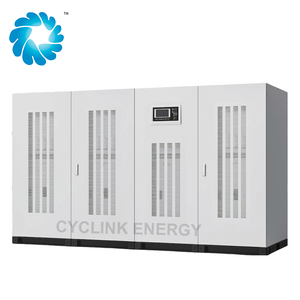
Designed for heavy industrial grids, rail substations, and aviation ground support. Features high-density Lithium iron phosphate (LiFePO4) storage, multi-tier galvanic isolation, and rapid recharge capability compatible with Socomec and Vertiv framework architectures.
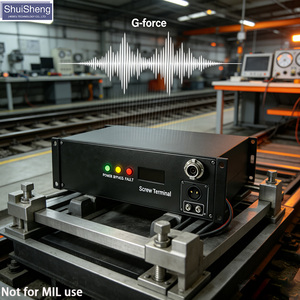
Engineered for extreme outdoor deployment. Anti-salt spray, anti-mold, and anti-corrosion die-cast aluminum chassis. Delivers zero-drop continuous AC backup power for remote radar installations, border telemetry, and offshore telecom nodes.
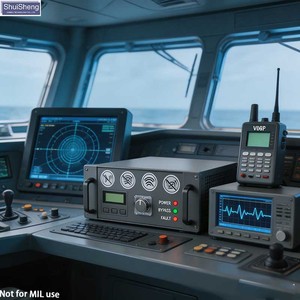
Internal shock isolation pads and conformal-coated heavy copper PCBs built to survive mobile military vehicle tracks, armored transport, and high-impact industrial machinery operating under continuous mechanical stress.
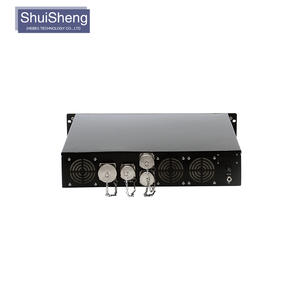
EN 50155 and EN 50121-3-2 compliant power backup system tailored for rail rolling stock, wayside signaling, and central dispatch communications. Ensures seamless phase regulation and lightning surge suppression.
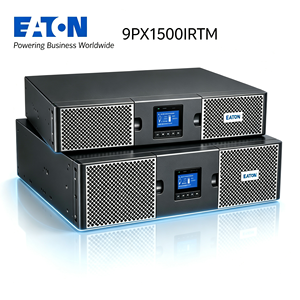
Optimized 1U/2U form factor for shipboard racks. Built to handle unbalanced 3-phase line voltages, severe pitch and roll, and maritime salt haze. Fully integrated active power factor correction (PFC) with low THD output.

Heavy-duty 3-phase online UPS engineered for high-density command shelter data centers, defense cloud servers, and industrial command posts. Dual-mains input support with modular bypass switches.
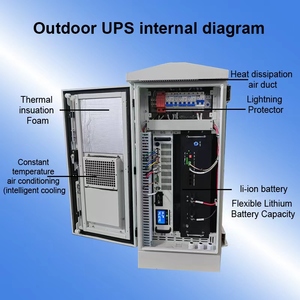
Pole-mount or ground-deployable tactical online UPS featuring multi-stage lightning surge arrestors, extended 8000Wh battery capacity, wide input voltage windows, and remote SNMP/GSM management capabilities.
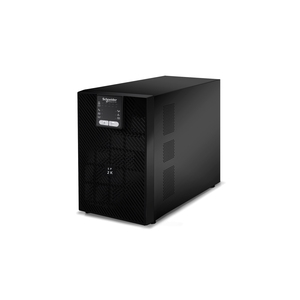
Specially calibrated for wide frequency variations (45Hz–65Hz) and volatile voltage fluctuations found in wind farms, microgrids, and field military generators. Integrated high-rate charging circuitry.
Selecting the correct power backup architecture requires understanding the operational environment. Below is a comparative engineering breakdown illustrating why specialized OEM/ODM military UPS topology is mandatory for defense programs.
| Performance Specification | Commercial Off-The-Shelf (COTS) | Rugged Industrial UPS | Military-Grade OEM/ODM UPS |
|---|---|---|---|
| Operating Temperature | 0°C to 40°C (Standard office) | -20°C to +55°C (Extended) | -40°C to +75°C (MIL-STD-810G Cold/Hot) |
| Electromagnetic Interference | FCC Class A / EN 55022 | IEC 61000-6-2 / 6-4 | MIL-STD-461G (CE102, RE102, CS114, RS103) |
| Shock & Vibration Immunity | Minimal (Light transit drop) | Industrial IEC 60068-2-6 | MIL-STD-810G Method 514.6 & MIL-S-901D (High-Impact Shock) |
| Enclosure Sealing & Coating | IP20 (Vented steel sheet) | IP54 / IP65 (Confection cooled) | IP67 / IP68 Fully Sealed, Anti-Salt, Anti-Mold Conformal Coating |
| Power Topology & Efficiency | Line-Interactive (90-92%) | Double-Conversion Online (92-94%) | Synchronous Rectification Double-Conv. Online (Up to 96%) |
| Input Voltage / Hz Tolerance | ±15% Nominal / 50-60Hz | ±25% Nominal / 45-65Hz | MIL-STD-704F / 1399 Sec 300B (80V-300V, 47-800Hz Airborne/Naval) |
| Product Lifecycle Support | 3 to 5 Years (Fast EOL) | 7 to 10 Years | 15 to 20+ Years Form-Fit-Function Obsolescence Protection |
With over two decades of synchronous-rectifier power conversion innovation, our US and global AS9100D/ISO-9001 certified manufacturing facilities deliver full turnkey OEM and ODM custom military UPS solutions.
Our power systems are engineered from the schematic level to withstand severe military transients, harmonics, and field shock. Certified in-house testing for MIL-STD-810G, MIL-STD-461G, MIL-STD-704F, and MIL-STD-1399 guarantees zero qualification delays.
Whether you require ultra-compact 1U rackmount enclosures, custom 28V DC bus outputs, 3-phase 115V line-to-line airborne topologies, or IP68 sealed tactical field packs, our engineering team tailors form, fit, and function to your exact mechanical footprint.
By replacing lossy output diodes with actively controlled MOSFET switches, our proprietary power stages slash thermal dissipation, boost power density, and allow extended operation in sealed, conduction-cooled, zero-airflow environments.
Defense programs require reliable spare parts and exact replacements for 15 to 25 years. We guarantee component traceability, rigorous derating guidelines, complete documentation packages, and direct support from senior application engineers.
Integrated state-of-the-art LiFePO4 and Lithium Titanate (LTO) chemistries paired with smart BMS telemetry. Provides automatic cell balancing, thermal runaway prevention, state-of-health (SoH) tracking, and rapid charge cycles under harsh ambient conditions.
Multi-stage MOV, TVS diode, and active clamping front-ends eliminate deadly high-voltage spikes caused by nearby lightning strikes, generator load shedding, or intense electromagnetic pulse (EMP) interference in field operations.
The global military power supply ecosystem is undergoing a rapid technological paradigm shift. OEMs and defense procurement agencies are prioritizing higher efficiency, weight reduction, cyber-secure firmware, and advanced energy storage integration.
Transitioning from silicon MOSFETs to Gallium Nitride (GaN) and Silicon Carbide (SiC) semiconductors enables switching frequencies exceeding 500kHz. This dramatically reduces passive magnetic components (transformers and inductors), yielding up to 40% reduction in UPS weight and size while pushing energy efficiency beyond 97%.
Traditional VRLA lead-acid batteries are rapidly being phased out due to weight, slow recharge times, and thermal runaway risks. Future defense UPS procurement mandates Lithium Iron Phosphate (LiFePO4) and Lithium Titanate Oxide (LTO) cells, offering up to 5,000 charge cycles, operating ranges down to -40°C, and complete thermal stability.
Modern military power systems are adopting embedded DSP architecture capable of transmitting real-time operational health data over secure MIL-STD-1553, Ethernet/IP, or CAN bus networks. Predictive analytics algorithms monitor capacitor ESR degradation and internal battery impedance to warn technicians before component failure occurs.
With smart power supplies connected to microgrids and command networks, cybersecurity at the power layer has become mandatory. Next-generation OEM/ODM military UPS devices integrate hardware root-of-trust, encrypted firmware bootloaders, and compliance with CMMC 2.0 Level 2 data security standards.
Procurement officers and defense system integrators are shifting from off-the-shelf single-unit sourcing to strategic, multi-decade OEM/ODM partnership models. Understanding these key sourcing trends ensures supply chain stability and lower Total Cost of Ownership (TCO).
Defense ministries across NATO, the US DoD, APAC, and Allied nations are enforcing strict supply chain traceability. Sourcing UPS platforms manufactured under AS9100D certified facilities eliminates counterfeit component risks and ensures compliance with ITAR/EAR regulations and Buy American / NDAA guidelines.
Military forces demand zero-downtime field maintenance. Procurement specifications increasingly mandate N+1 or N+2 parallel redundant UPS modules housed within 19-inch rackmount chassis. This allows field technicians to swap faulty power modules in minutes without powering down critical tactical hardware.
Deployments in forward operating bases (FOBs) require UPS systems capable of dynamically blending inputs from multiple sources—including tactical diesel generators, solar PV arrays, micro-hydro systems, and degraded local AC utility grids—while maintaining pure, regulated sine-wave output.
Detailed technical answers to common questions regarding environmental testing, military power standards, customization parameters, and export compliance.
Require a custom OEM/ODM ruggedized UPS solution, MIL-STD compliance review, or technical quote for your program? Submit your power architecture specs, input/output requirements, and environmental parameters for an immediate engineering assessment.