Explore our field-proven range of heavy-duty, outdoor, rackmount, and custom industrial UPS systems optimized for defense, rail, energy, telecom, and critical manufacturing automation.
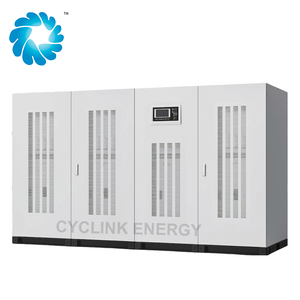
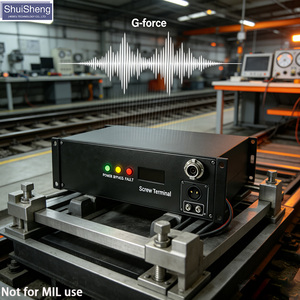
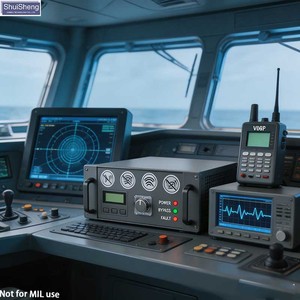
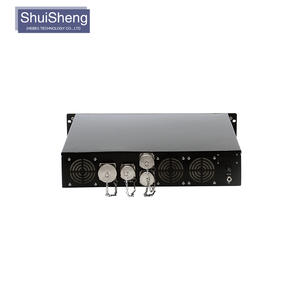
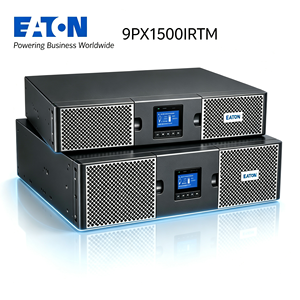
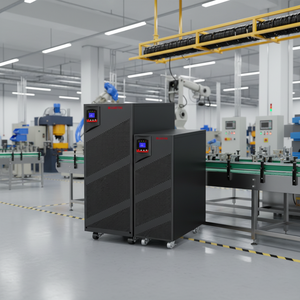
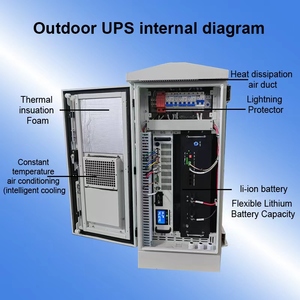
In modern industrial infrastructure, generic commercial-off-the-shelf (COTS) uninterruptible power supplies frequently fail when exposed to real-world electrical stress, thermal extremes, and harsh atmospheric contaminants. As a premier OEM/ODM Industrial UPS Manufacturer & Factory, our engineering paradigm is built around solving the toughest power topology challenges. We integrate military-grade component discipline, synchronous-rectification technologies, and advanced Digital Signal Processor (DSP) control algorithms into fully customized AC and DC backup power systems.
Unlike commercial data center UPS units designed for climate-controlled server rooms, true industrial-grade UPS architectures must deliver continuous full-rated power across extreme operating envelopes—from -40°C to +75°C. Our turnkey OEM/ODM engineering capabilities cover every phase of product realization: custom PCB layout design, electromagnetic interference (EMI) filter integration, structural NEMA 4X / IP66 / IP68 thermal chassis design, conformal coating application, and rigorous environmental stress screening (ESS).
Technical Information Gain: Standard commercial UPS topologies rely on basic diode rectifiers which exhibit poor power factor (typically 0.7-0.8) and produce substantial harmonic distortion (THDi > 30%). Our OEM/ODM industrial UPS platforms utilize two-stage power conversion with active synchronous MOSFET rectification and 3-phase Active Power Factor Correction (PFC). This achieves a 0.99 Input Power Factor, cuts total harmonic distortion to < 3%, and reduces internal heat dissipation by over 40% compared to legacy architectures.
By replacing lossy silicon diodes with actively driven MOSFETs and wide-bandgap Silicon Carbide (SiC) devices, our power converters eliminate fixed forward-voltage drop losses. At high output current levels, this engineering choice translates to dozens of avoided thermal watts, shrinking heatsink mass, enabling completely sealed conduction-cooled enclosures, and dramatically extending component mean time between failures (MTBF).
Custom mechanical design catering to severe physical stress, marine corrosion, and industrial washdown environments.
Flexible electrical designs engineered around critical industrial bus voltages, transient thresholds, and isolation requirements.
Advanced energy storage compatibility engineered for demanding discharge cycles and remote telematics telemetry.
The global industrial power infrastructure landscape is undergoing a profound structural shift driven by decarbonization mandates, smart grid decentralization, and the rapid deployment of edge compute nodes in extreme outdoor settings. As industrial buyers, EPC contractors, and system integrators evaluate power systems for the next decade, several key sourcing trends have emerged:
1. Accelerated Transition to Lithium Iron Phosphate (LiFePO4) & LTO Chemistries: Traditional Valve-Regulated Lead-Acid (VRLA) batteries are rapidly being phased out in mission-critical industrial procurement. LiFePO4 chemistry provides up to 4x longer operational service life (10-15 years vs. 3-5 years for VRLA), operates across a vastly broader temperature range without severe capacity degradation, and offers a 60% reduction in total footprint weight. For remote oil & gas pipelines, railway signaling relays, and wind farm substations, the total cost of ownership (TCO) advantage of LiFePO4 is overwhelmingly decisive.
2. Wide-Bandgap Semiconductor Adoption (SiC & GaN): Next-generation industrial UPS systems are dropping legacy silicon IGBTs in favor of Silicon Carbide (SiC) MOSFETs. SiC enables switching frequencies 5 to 10 times higher while reducing switching losses by up to 75%. This allows manufacturers to shrink magnetic components (inductors and transformers) dramatically, yielding ultra-compact 1U/2U high-power-density UPS modules with peak conversion efficiencies surpassing 96%.
3. Grid-Interactive UPS (VPP & Peak Shaving Capabilities): Modern industrial facilities no longer treat UPS equipment purely as passive insurance against grid outages. Advanced industrial UPS units are increasingly specified as Virtual Power Plant (VPP) assets. Through bi-directional grid-tied inverters, smart industrial UPS systems can perform demand-response peak shaving, inject active power back to the localized microgrid, and store low-cost renewable energy during off-peak hours.
A technical comparison illustrating how OEM/ODM industrial UPS platforms differ from standard commercial power supplies across key operational parameters:
| Engineering Metric | Standard Commercial UPS | Industrial OEM/ODM UPS Platform | Performance & Reliability Gain |
|---|---|---|---|
| Operating Temperature | 0°C to +40°C (Forced Air) | -40°C to +75°C (Conduction/Natural Convection) | Operation in unconditioned ambient environments without thermal shutdown. |
| Design Life Horizon | 3 to 5 Years | 15 to 20+ Years (Form-Fit-Function Protection) | Eliminates premature capital expenditure and component obsolescence risks. |
| Galvanic Isolation | None (Transformerless) | Full Copper Double-Shielded Isolation Transformer | Complete attenuation of common-mode electrical noise, ground loops & neutral spikes. |
| Ingress Protection | IP20 (Vented steel chassis) | IP65 / IP66 / IP68 (Hermetically Sealed Enclosure) | Absolute immunity to dust, conductive particulates, moisture, and corrosive vapors. |
| Semiconductor Tech | Standard Silicon Diodes / IGBTs | Synchronous Rectification + Silicon Carbide (SiC) | 40% reduction in thermal dissipation, boosting power density & peak efficiency to 96%. |
| Compliance Standards | UL 1778, CE Commercial | MIL-STD-704/461/1275/1399, EN 50155, RTCA DO-160G | Qualified for defense platforms, railway rolling stock, aviation, and medical isolation. |
The convergence of industrial automation, industrial IoT (IIoT), and ultra-reliable communications demands uncompromised power continuity. Industrial UPS technology is evolving along four critical engineering dimensions:
Modern industrial UPS systems incorporate embedded real-time impedance spectroscopy and AI-driven predictive health monitoring. Rather than relying on simple calendar-based battery replacements, modern system controllers continually analyze internal resistance, thermal dissipation trends, electrolyte state of health (SoH), and capacitor ripple current to forecast component end-of-life weeks before failure occurs.
High-availability manufacturing plants, oil platforms, and railway data nodes cannot afford maintenance downtime. Advanced industrial UPS systems are designed around true decentralized parallel architecture (DPA). Each individual power module contains its own independent DSP controller, active PFC rectifier, inverter, and static bypass switch—ensuring no single point of failure exists across the entire power chain.
Industrial power grids in developing regions or isolated installations (such as mining camps or offshore rigs) frequently suffer from severe voltage sags, surges, and frequency instability (+/- 20%). Next-generation industrial online double-conversion UPS designs utilize wide-input rectifiers capable of operating seamlessly down to 50% nominal input voltage without drawing upon battery energy reserves.
With industrial control systems increasingly targeted by cyber threats, connected industrial UPS hardware must comply with stringent cybersecurity standards such as IEC 62443. Custom ODM designs incorporate encrypted bootloaders, hardware Root of Trust (RoT), signed firmware verification, and secure network protocols (HTTPS, SSH, SNMPv3, IPsec) to safeguard critical power telemetry from unauthorized network intrusion.
Our state-of-the-art power electronics engineering and manufacturing facility enforces rigorous process control and total traceability from raw component sourcing to final system burn-in testing.
Engineered and tested to conform with stringent military and aerospace environmental and electrical specifications:
Built for extreme mechanical stress, continuous vibration, and strict medical or railway safety mandates:
Protecting your multi-decade platforms from component obsolescence and costly architectural redesigns:
In-depth technical answers addressing common design, integration, and procurement queries from system architects and engineering buyers.
Synchronous rectification replaces standard silicon power diodes in the converter's secondary stage with actively controlled, ultra-low RDS(on) MOSFETs or Silicon Carbide (SiC) devices. Diodes introduce a fixed forward voltage drop (typically 0.7V to 1.2V), which at high current output results in significant continuous heat dissipation. Synchronous MOSFETs exhibit purely resistive conduction behavior, reducing power dissipation by up to 40-60%. This reduction in internal thermal stress allows industrial UPS systems to operate reliably inside hermetically sealed IP66/IP68 conduction-cooled enclosures without relying on failure-prone internal cooling fans.
Commercial transformerless UPS topologies pass electrical noise, common-mode ground transients, and DC offset directly through the system. An industrial UPS equipped with a heavy-duty copper galvanic isolation transformer physically isolates the input AC source from the output load via magnetic coupling. This eliminates ground loops, prevents DC current injection into critical loads, attenuates high-frequency voltage spikes, and ensures clean, stable neutral-to-ground reference voltages—vital for sensitive industrial automation PLCs, medical equipment, and railway signaling relays.
Standard commercial UPS units begin sharp power derating past 25°C or 40°C. In contrast, our industrial OEM/ODM UPS designs are thermally engineered for full-rated continuous output up to +55°C ambient, with predictable linear derating up to +75°C. When specifying a system for high-ambient deployments, system architects must evaluate semiconductor thermal resistance, electrolytic capacitor ripple current ratings (utilizing 105°C long-life capacitors), and magnetic insulation class (Class H 180°C rating), ensuring the UPS retains adequate short-circuit clearing current without triggering thermal protection trips.
Our factory supports extensive custom OEM/ODM engineering across mechanical, electrical, and firmware domains. Mechanical customizations include tailored rackmount chassis dimensions (1U to 6U), custom NEMA/IP wall-mount enclosures, ruggedized connectors (MIL-DTL-38999, Amphenol), and specialized shock mounts. Electrical customizations include non-standard input/output voltage buses (e.g., 110Vdc, 250Vdc, 400Hz airborne input), active harmonic filtration, custom battery charger curves, and multi-rail DC output taps. Firmware modifications support proprietary CANbus/Modbus telemetry maps and custom emergency power off (EPO) logic.
Lithium Iron Phosphate (LiFePO4) cells cannot be safely charged at sub-zero temperatures (< 0°C) without risking lithium plating and permanent cell damage. Our industrial UPS systems utilize smart BMS units with integrated thermal management circuits. When sub-zero ambient temperatures are detected, the system directs internal auxiliary power to internal silicone heating blankets bonded to the battery modules. Once the internal cell temperature reaches a safe operating threshold (+5°C), the BMS automatically initiates high-rate charging while maintaining continuous health telemetry over CANbus.
Naval and offshore industrial installations require compliance with strict marine standards such as MIL-STD-1399 Section 300B (Interface Standards for Shipboard Systems), DNV-GL certification, and ABS (American Bureau of Shipping) standards. These mandate severe harmonic distortion limits, high immunity to unbalance 3-phase line inputs, structural resistance to inclination/pitch/roll, and strict insulation resistance tests under high-humidity, salt-laden marine air conditions.
Consult directly with our senior power conversion engineering team. Submit your input voltage bus, load profile, thermal constraints, enclosure footprint, and target compliance specifications for a detailed technical proposal.
